
Jock Serong
Author of The Rules of Backyard Cricket
About the Author
Jock Serong is the author of Quota, which won the Ned Kelly 2015 award in the category of Best First Novel. (Bowker Author Biography)
Works by Jock Serong
Associated Works
Breathing Space Essays poems and stories about Tasmanians changing relationship with nature (2021) — Contributor — 2 copies
Tagged
Common Knowledge
Members
Reviews
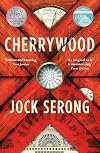
You know how sometimes you're reading a book, contentedly enjoying it and suddenly there's a moment when you know you are absolutely hooked?
It's on page 77 of Jock Serong's new novel Cherrywood.
The novel is in two time frames, beginning near the turn of the 20th century, when Thomas Wrenfether becomes the richest child in all of Scotland. He's only a boy when both his parents die in a car crash, so he lives with his Edinburgh cousins until he comes of age, inherits the wealth, marries the show more lovely Lucy, and in 1912 they have a sweet child called Annabelle. (Not without some difficulty but that's the way it was in those days.)
However. Thomas lacks his father's ruthlessness in business and occasionally gets outflanked by less decent men. Lucy suggests striking out in some other direction and thus sets in train his impressive ambition to use imported cherrywood to build a paddle-steamer to ferry passengers and cargo across Melbourne's Port Phillip Bay. (Those of us who know the bay and its moods have a bad feeling about this.) (And we have a bad feeling about his supplier Ximenon, from Azerbaijan.) (Plus we have a bad feeling that maybe Thomas, despite his best intentions, might inherited The Gene for Impetuous Behaviour from his father. Whose death was the result of an impetuous decision.)
In chapter Five, time shifts and it's the winter of 1993. Martha is on her way home from work in a taxi. She's a lawyer with ambitions to work in the Human Rights field but is instead stuck doing corporate stuff for Caspian Lawyers, the powerful commercial firm that occupied ten floors of a glass tower in the central business district. She's worked hard to get there, but having missed out on her preference...
Martha has skipped the obligatory Friday afternoon drinks because she's got a dinner party with three other junior litigators. She is dreading it. She knows she should get out more, but not with other people who shared a sixty-hour working week. Nevertheless she slips into a pub called the Cherrywood to buy the obligatory bottle of wine... and her life changes.
Well, she doesn't know that yet, and neither do we, but Jock Serong knows how to lay a subtly enticing trail!
There are many aspects of this novel to love but to remain #SpoilerFree I'll just mention just two...
To read the rest of my review please visit https://anzlitlovers.com/2024/10/15/cherrywood-2024-by-jock-serong/ show less
It's on page 77 of Jock Serong's new novel Cherrywood.
The novel is in two time frames, beginning near the turn of the 20th century, when Thomas Wrenfether becomes the richest child in all of Scotland. He's only a boy when both his parents die in a car crash, so he lives with his Edinburgh cousins until he comes of age, inherits the wealth, marries the show more lovely Lucy, and in 1912 they have a sweet child called Annabelle. (Not without some difficulty but that's the way it was in those days.)
However. Thomas lacks his father's ruthlessness in business and occasionally gets outflanked by less decent men. Lucy suggests striking out in some other direction and thus sets in train his impressive ambition to use imported cherrywood to build a paddle-steamer to ferry passengers and cargo across Melbourne's Port Phillip Bay. (Those of us who know the bay and its moods have a bad feeling about this.) (And we have a bad feeling about his supplier Ximenon, from Azerbaijan.) (Plus we have a bad feeling that maybe Thomas, despite his best intentions, might inherited The Gene for Impetuous Behaviour from his father. Whose death was the result of an impetuous decision.)
In chapter Five, time shifts and it's the winter of 1993. Martha is on her way home from work in a taxi. She's a lawyer with ambitions to work in the Human Rights field but is instead stuck doing corporate stuff for Caspian Lawyers, the powerful commercial firm that occupied ten floors of a glass tower in the central business district. She's worked hard to get there, but having missed out on her preference...
...she began to see herself as a battery chicken, a productive unit entrapped in a box, selling her life in six-minute pieces to her employers, who on-sold her life to clients, who passed the cost of buying Martha's life, by then wholesaled and retailed to their clients in the form of some miniscule mark-up. (p.30)
Martha has skipped the obligatory Friday afternoon drinks because she's got a dinner party with three other junior litigators. She is dreading it. She knows she should get out more, but not with other people who shared a sixty-hour working week. Nevertheless she slips into a pub called the Cherrywood to buy the obligatory bottle of wine... and her life changes.
Well, she doesn't know that yet, and neither do we, but Jock Serong knows how to lay a subtly enticing trail!
There are many aspects of this novel to love but to remain #SpoilerFree I'll just mention just two...
To read the rest of my review please visit https://anzlitlovers.com/2024/10/15/cherrywood-2024-by-jock-serong/ show less
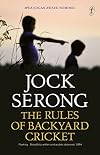
I loved this book.
We start with Darren, Daz, Keefe tied up in a car boot, knee cap shot, lying on a shovel with a bag of quicklime for company, contemplating his predicament and how on earth it should happen that he end up here.
Darren starts his journey to the boot from memories of playing cricket in the back yard against his big brother Wally. Its 1976 and Darren is in grade two and Wally in grade four, 19 months older. Serong perfectly captures the adhoc rules of any backyard cricket show more game.
"And in the current memory, the stump is an arm’s length behind me as I stare down my brother. The bat in my hands is an SP, as used in Tests by England captain Tony Greig. He’s tall, implacable, patient. All the things I’m not. The dog at our feet is Sam, a grossly obese staffy. The lawn’s kept down by an ancient handmower that’s always been there. Razor sharp blades made to look innocuous by rust. It didn’t come from anywhere and it’ll never go anywhere.
Those deep shades of autumn are last year now, when we were smaller. Here in high summer, where my memories crowd more, sunlight is a scatter of bleaches and reflections. At backward point there’s a banksia. At extra cover, a holly bush where Sam likes to shit. At mid-off, a bare patch where nothing, not even grass, grows. It’s lightning fast if you send a drive through there. Off drive I mean. I assume you’re keeping up. I’m a lefty.
Mid-on’s the vegie patch, never grows anything but tomatoes this time of year, stinging nettles along the back. Dirty bare feet in there come out red-welted. Midwicket is the shortest boundary, formed by the Apostouloses’ fence. Directly behind those palings, separated by a spindly pittosporum, is their kitchen. If you really middle a pull shot—wrap the handle around your ribs and smack that ball sweet off the end of the blade—it makes the finest sound hitting the timbers out there. I can only imagine how it sounds at the Apostas’ kitchen sink.
Fine leg is into the corner, towards the crappy asbestos outhouse that contains the second dunny and the laundry. Something about the plumbing in there; there’s a smell even when no one’s been.
Keeper and slips are automatic: the big sheet of trellis that Mum put up to grow climbing roses. Snick it onto the trellis on the full and you’re gone. Hit the dog and it makes a hollow thud.
Sam’s a random element in all this, wandering around sniffing the air. Occasionally he lies on his back and does that thing fat dogs do when they wriggle around just scratching the bejesus out of their backs. You can’t shoo him away. You have to get on with it no matter where Sam is located, and you can’t hit him. Hit him and you’re gone. If Sam decides he wants to stop and eat a bee off a clover flower right in the middle of the pitch, you play around him. In future years, under greater pressures, I sometimes wonder if Wally and I learned to stare through distraction because we had to play around a fat dog."
Cricket is meant to be played with two teams of 11 players, but to be honest is flexible enough to accommodate any number with the minimum being two, batsman and bowler. Backyard cricket between siblings is fierce, uncompromising and not for the faint hearted. Many a hotly disputed decision is decided by physical combat.
"Voices would be raised, equipment thrown. Unless Mum intervened, it would end in a red-faced tangle with fingers in eyes and gappy milk teeth sunk into soft flesh: an itchy, grunting wrestle that never produced a clear winner."
In the playing of cricket ;ironically a game for 'gentlemen' where the saying "that's not cricket' would mean having something that is unjust or just plain wrong done to someone or something, we learn all we need of the character of Darren and Wally. The boys used to wait outside the local tennis courts, waiting for an errant lob to clear the fence and they'd be off on their Malvern Stars with a new ball for their next game.
"And right there you have an essential distinction between the Keefe brothers. I would do these things for the sheer joy of it. Busting free, sending my blood roaring in the knowledge I’d flouted the rules and disappointed expectations. The problem for me is that the more times you do it and the more you get caught, the lower the expectations become. Correspondingly, the lesser the thrill."
We alternate between Darren's attempts to extricate himself from the boot and the continuing story of the two brothers and their rise through the grades to higher and higher levels of cricket. Serong covers all the highs and lows of the professional sportsman, contrasting the dour buttoned up Wally with the flamboyant, larrikin that Darren became.Serong uses the contrasts between Darren and Wally to illustrate the rise of the celebrity sportsman as a product to be sold, torn between the purity of the game and the ugliness of the corporatisation of sport and the pressure to entertain.
Darren keeps chasing the next high, sporting or drug induced it doesn't seem to matter to him, Wally winds himself tighter and tighter, paring away all spontaneity in order to fulfill his idea of how a top sportsman should behave.
For both men there are consequences.
I did not see this ending the way it did. Serong does a brilliant job keeping the suspense of Darren's predicament going while we inexorably follow his story to the surprising denouement.
For those of who have no idea what cricket is or what any of the aussie lingo means, you'll have to find a friendly interpreter from a cricket playing nation to assist. It will be well worth the discussion. show less
We start with Darren, Daz, Keefe tied up in a car boot, knee cap shot, lying on a shovel with a bag of quicklime for company, contemplating his predicament and how on earth it should happen that he end up here.
Darren starts his journey to the boot from memories of playing cricket in the back yard against his big brother Wally. Its 1976 and Darren is in grade two and Wally in grade four, 19 months older. Serong perfectly captures the adhoc rules of any backyard cricket show more game.
"And in the current memory, the stump is an arm’s length behind me as I stare down my brother. The bat in my hands is an SP, as used in Tests by England captain Tony Greig. He’s tall, implacable, patient. All the things I’m not. The dog at our feet is Sam, a grossly obese staffy. The lawn’s kept down by an ancient handmower that’s always been there. Razor sharp blades made to look innocuous by rust. It didn’t come from anywhere and it’ll never go anywhere.
Those deep shades of autumn are last year now, when we were smaller. Here in high summer, where my memories crowd more, sunlight is a scatter of bleaches and reflections. At backward point there’s a banksia. At extra cover, a holly bush where Sam likes to shit. At mid-off, a bare patch where nothing, not even grass, grows. It’s lightning fast if you send a drive through there. Off drive I mean. I assume you’re keeping up. I’m a lefty.
Mid-on’s the vegie patch, never grows anything but tomatoes this time of year, stinging nettles along the back. Dirty bare feet in there come out red-welted. Midwicket is the shortest boundary, formed by the Apostouloses’ fence. Directly behind those palings, separated by a spindly pittosporum, is their kitchen. If you really middle a pull shot—wrap the handle around your ribs and smack that ball sweet off the end of the blade—it makes the finest sound hitting the timbers out there. I can only imagine how it sounds at the Apostas’ kitchen sink.
Fine leg is into the corner, towards the crappy asbestos outhouse that contains the second dunny and the laundry. Something about the plumbing in there; there’s a smell even when no one’s been.
Keeper and slips are automatic: the big sheet of trellis that Mum put up to grow climbing roses. Snick it onto the trellis on the full and you’re gone. Hit the dog and it makes a hollow thud.
Sam’s a random element in all this, wandering around sniffing the air. Occasionally he lies on his back and does that thing fat dogs do when they wriggle around just scratching the bejesus out of their backs. You can’t shoo him away. You have to get on with it no matter where Sam is located, and you can’t hit him. Hit him and you’re gone. If Sam decides he wants to stop and eat a bee off a clover flower right in the middle of the pitch, you play around him. In future years, under greater pressures, I sometimes wonder if Wally and I learned to stare through distraction because we had to play around a fat dog."
Cricket is meant to be played with two teams of 11 players, but to be honest is flexible enough to accommodate any number with the minimum being two, batsman and bowler. Backyard cricket between siblings is fierce, uncompromising and not for the faint hearted. Many a hotly disputed decision is decided by physical combat.
"Voices would be raised, equipment thrown. Unless Mum intervened, it would end in a red-faced tangle with fingers in eyes and gappy milk teeth sunk into soft flesh: an itchy, grunting wrestle that never produced a clear winner."
In the playing of cricket ;ironically a game for 'gentlemen' where the saying "that's not cricket' would mean having something that is unjust or just plain wrong done to someone or something, we learn all we need of the character of Darren and Wally. The boys used to wait outside the local tennis courts, waiting for an errant lob to clear the fence and they'd be off on their Malvern Stars with a new ball for their next game.
"And right there you have an essential distinction between the Keefe brothers. I would do these things for the sheer joy of it. Busting free, sending my blood roaring in the knowledge I’d flouted the rules and disappointed expectations. The problem for me is that the more times you do it and the more you get caught, the lower the expectations become. Correspondingly, the lesser the thrill."
We alternate between Darren's attempts to extricate himself from the boot and the continuing story of the two brothers and their rise through the grades to higher and higher levels of cricket. Serong covers all the highs and lows of the professional sportsman, contrasting the dour buttoned up Wally with the flamboyant, larrikin that Darren became.Serong uses the contrasts between Darren and Wally to illustrate the rise of the celebrity sportsman as a product to be sold, torn between the purity of the game and the ugliness of the corporatisation of sport and the pressure to entertain.
Darren keeps chasing the next high, sporting or drug induced it doesn't seem to matter to him, Wally winds himself tighter and tighter, paring away all spontaneity in order to fulfill his idea of how a top sportsman should behave.
For both men there are consequences.
I did not see this ending the way it did. Serong does a brilliant job keeping the suspense of Darren's predicament going while we inexorably follow his story to the surprising denouement.
For those of who have no idea what cricket is or what any of the aussie lingo means, you'll have to find a friendly interpreter from a cricket playing nation to assist. It will be well worth the discussion. show less
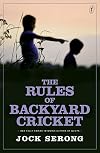
The Rules of Backyard Cricket is the story of two cricketing prodigies from the wrong side of the tracks. Darren, the narrator, is a gifted tearaway with scant regard for the rules, whereas his older brother Wally is a gimlet-eyed disciplinarian dedicated to his career.
The novel starts with Darren bound and gagged in the boot of a car, heading up the Geelong Road to Melbourne. In each chapter, he reveals a little more of his and Wally's backstory, and how things led up to his current show more predicament.
This book is best thought of as a "ripping yarn" style of novel rather than a whodunit, as there are few surprises. On that level it's very good, with a pacy plot told in a very engaging style.
Fans of cricket are going to have fun spotting character traits and incidents that Serong borrows; people acquainted with Melbourne's true crime stories are also going to recognise a few allusions. I think this is overdone though, to the point where I really wouldn't recommend this book to people not au fait with, or interested in, cricket.
Whoever designed the cover of this book should be fired; it pretty much gives away the ending show less
The novel starts with Darren bound and gagged in the boot of a car, heading up the Geelong Road to Melbourne. In each chapter, he reveals a little more of his and Wally's backstory, and how things led up to his current show more predicament.
This book is best thought of as a "ripping yarn" style of novel rather than a whodunit, as there are few surprises. On that level it's very good, with a pacy plot told in a very engaging style.
Fans of cricket are going to have fun spotting character traits and incidents that Serong borrows; people acquainted with Melbourne's true crime stories are also going to recognise a few allusions. I think this is overdone though, to the point where I really wouldn't recommend this book to people not au fait with, or interested in, cricket.
When THE RULES OF BACKYARD CRICKET opens Darren Keefe is trussed up in the boot of a moving vehicle. He believes he is being taken somewhere to be killed and doesn’t seem terribly surprised by the fact. For him the only real mystery is whether or not he’ll be forced to dig his own grave before death. A difficult proposition given his left hand hasn’t worked properly since the broken thumb of years before. And he’s been shot in one knee.
For a long time this is really all we learn show more about Darren’s present-day life. Over the rest of the book there are brief return visits to the boot, where Darren is making half-hearted attempts to free his cable-tied limbs. But before we can find out why Darren is in this predicament we have to learn what led up to it. Darren’s story begins on the backyard pitch where he and his older brother Wally fight for supremacy
From the day – lost now in the Kodachrome blur – when we take up backyard cricket, we are an independent republic of rage and obsession. Our rules, our records, our very own physics. Eye-to-eye and hand-to-hand combat. By the time we emerge into the world beyond the paling fences, it surprises us to learn that anyone considers this a team sport.
You might not have grown up in a cricket-mad household. The names Lillee, Thomo and the rest may mean nothing to you. And it’s possible that you don’t know mid-on from fine leg (the vegie patch and the asbestos outhouse respectively in the Keefe backyard, the small rose garden and the rumpus room wall in the backyard of my own youth). You may never have known the anguish of watching a whole Test only to have it end in a rain-soaked draw on the final day. But even if all this is true you couldn’t fail to miss the authenticity in the depiction of Darren and Wally’s lives. It’s not just that the pages of the book have absorbed Australian cricketing lore in a physical way. It’s that the obsession the boys display for it is entirely believable. The most natural thing in the world. Their single mother works dead-end barmaid jobs to keep her sons in cricket gear. The game – and their skill at it – is the best chance they have of not re-living her own hard life and Pamela Keefe is almost as determined as her boys.
But, like many brothers that have come before them, the Keefes are not equal in all things. Wally is disciplined, focused, responsible, emotionally impenetrable. Qualities which are almost as important as his talent in securing him the ultimate prize – the Australian captaincy. Darren is none of these things. To call him a risk taker would be misleading; implying as it does that he weighs up the potential consequences of his actions. Darren doesn’t put nearly enough thought into things for that. On the field his innate ability and the fact that his boyhood tussles with Wally were tougher than almost anything anyone else can dish out take him a long way. But a combination of hubris and lack of forethought bring on the game-changing injury to his hand. He never reaches the heights he imagined for himself as a kid. Though high enough that his fall from grace, when he becomes “…a man who retains a public profile, but with all the good parts eaten away”, is deeply painful to watch.
That was the first surprise for me here. As someone who normally wavers between disgust and boredom at the adoration and sycophancy heaped upon sports stars – even those who continuously engage in juvenile, debauched and often illegal activities – I was not predisposed to feeling much other than scorn for Darren Keefe. And some of that is there. He really does have no one but himself to blame for his circumstances. But Serong’s portrait is so nuanced…so honest…that I will, somewhat grudgingly, admit to feeling much more. At times my heart ached. Because I saw that to be angry at Darren for his inability to behave sensibly would be akin to scoffing at a paralysed person for not walking up a flight of stairs. Like there is free will involved in either case.
The resolution to the story was the second surprise. In the way that being struck from behind with a brick might be. The noir label is thrown around with far too much abandon for my liking but as I closed the back cover of this book I thought it might just be the most perfect example of the genre I’ve read. In forever. For me noir is at its finest when the inevitable quality to the ending is only visible in hindsight and I am left physically aching for a different outcome while knowing such a thing would be both impossible and imperfect. The very definition of bittersweet.
I would recommend this book to everyone. Except I am a bit worried about how those who still think of cricket as the gentleman’s game might fare with it. There’s nothing genteel about any of the cricket in this book. Not the war waged in the Keefe’s backyard and not the big, sometimes corrupt business they are involved with as adults. But everyone who isn’t afraid of losing their wide-eyed innocence about the sport should read this book. It is beautifully written, brutally honest and gets the balance of aching sadness and dark humour just right. An outstanding read. show less
For a long time this is really all we learn show more about Darren’s present-day life. Over the rest of the book there are brief return visits to the boot, where Darren is making half-hearted attempts to free his cable-tied limbs. But before we can find out why Darren is in this predicament we have to learn what led up to it. Darren’s story begins on the backyard pitch where he and his older brother Wally fight for supremacy
From the day – lost now in the Kodachrome blur – when we take up backyard cricket, we are an independent republic of rage and obsession. Our rules, our records, our very own physics. Eye-to-eye and hand-to-hand combat. By the time we emerge into the world beyond the paling fences, it surprises us to learn that anyone considers this a team sport.
You might not have grown up in a cricket-mad household. The names Lillee, Thomo and the rest may mean nothing to you. And it’s possible that you don’t know mid-on from fine leg (the vegie patch and the asbestos outhouse respectively in the Keefe backyard, the small rose garden and the rumpus room wall in the backyard of my own youth). You may never have known the anguish of watching a whole Test only to have it end in a rain-soaked draw on the final day. But even if all this is true you couldn’t fail to miss the authenticity in the depiction of Darren and Wally’s lives. It’s not just that the pages of the book have absorbed Australian cricketing lore in a physical way. It’s that the obsession the boys display for it is entirely believable. The most natural thing in the world. Their single mother works dead-end barmaid jobs to keep her sons in cricket gear. The game – and their skill at it – is the best chance they have of not re-living her own hard life and Pamela Keefe is almost as determined as her boys.
But, like many brothers that have come before them, the Keefes are not equal in all things. Wally is disciplined, focused, responsible, emotionally impenetrable. Qualities which are almost as important as his talent in securing him the ultimate prize – the Australian captaincy. Darren is none of these things. To call him a risk taker would be misleading; implying as it does that he weighs up the potential consequences of his actions. Darren doesn’t put nearly enough thought into things for that. On the field his innate ability and the fact that his boyhood tussles with Wally were tougher than almost anything anyone else can dish out take him a long way. But a combination of hubris and lack of forethought bring on the game-changing injury to his hand. He never reaches the heights he imagined for himself as a kid. Though high enough that his fall from grace, when he becomes “…a man who retains a public profile, but with all the good parts eaten away”, is deeply painful to watch.
That was the first surprise for me here. As someone who normally wavers between disgust and boredom at the adoration and sycophancy heaped upon sports stars – even those who continuously engage in juvenile, debauched and often illegal activities – I was not predisposed to feeling much other than scorn for Darren Keefe. And some of that is there. He really does have no one but himself to blame for his circumstances. But Serong’s portrait is so nuanced…so honest…that I will, somewhat grudgingly, admit to feeling much more. At times my heart ached. Because I saw that to be angry at Darren for his inability to behave sensibly would be akin to scoffing at a paralysed person for not walking up a flight of stairs. Like there is free will involved in either case.
The resolution to the story was the second surprise. In the way that being struck from behind with a brick might be. The noir label is thrown around with far too much abandon for my liking but as I closed the back cover of this book I thought it might just be the most perfect example of the genre I’ve read. In forever. For me noir is at its finest when the inevitable quality to the ending is only visible in hindsight and I am left physically aching for a different outcome while knowing such a thing would be both impossible and imperfect. The very definition of bittersweet.
I would recommend this book to everyone. Except I am a bit worried about how those who still think of cricket as the gentleman’s game might fare with it. There’s nothing genteel about any of the cricket in this book. Not the war waged in the Keefe’s backyard and not the big, sometimes corrupt business they are involved with as adults. But everyone who isn’t afraid of losing their wide-eyed innocence about the sport should read this book. It is beautifully written, brutally honest and gets the balance of aching sadness and dark humour just right. An outstanding read. show less
Lists
Awards


You May Also Like


Associated Authors
Statistics
- Works
- 9
- Also by
- 1
- Members
- 374
- Popularity
- #64,495
- Rating
- 3.9
- Reviews
- 35
- ISBNs
- 61
- Languages
- 2