
Tony Birch
Author of The White Girl
About the Author
Tony Birch was born in 1957 in Melbourne, Victoria, Australia. He studied at the University of Melbourne and has a PhD in Urban cultures and histories. He is a poet, short story writer and novelist. Some of his work includes the novels Blood (2011), and Ghost River which won the 2016 Victorian show more Premier's Literary Award for Indigenous Writing. His three short story collections are Shadowboxing (2006), Father's Day (2009) and The Promise (2014). He is also a contributor to ABC local and national radio and a regular guest at writers' festivals, and is a Senior Research Fellow at Victoria University. (Bowker Author Biography) show less
Works by Tony Birch
Associated Works
Tagged
Common Knowledge
- Birthdate
- 1957
- Gender
- male
- Education
- University of Melbourne
- Occupations
- writer
- Awards and honors
- Dr Bruce McGuinness Indigenous Research Fellowship (2015)
- Nationality
- Australia
- Birthplace
- Melbourne, Victoria, Australia
- Places of residence
- Melbourne, Victoria, Australia
- Associated Place (for map)
- Melbourne, Victoria, Australia
Members
Reviews
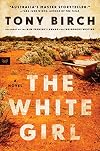
I was immediately swept away into the world of Australia's post-colonial past when I began reading Tony Birch's The White Girl. Australia's treatment of the Aborigines mirrors that of the U.S. government's treatment of Native Americans. In Australia, the policy of separating Indigenous children from their families is now referred to as the Stolen Generations, and Odette Brown is desperately trying to keep her granddaughter from vanishing into an uncaring government's maw.
Odette lives on the show more outskirts of a rural small town where Aborigines are only permitted in town on Saturday mornings between eight and noon when they are allowed to shop at the company store. Tony Birch had me walking down the road, side by side with Odette. He had me worrying about her bright little granddaughter, who was still so naive about the world she lived in. When by-the-book Sergeant Lowe came to town, it soon became apparent that he loved having the power of life or death over people. Birch's writing is so evocative, so powerful, that I not only cared for Odette and Sissy, I not only worried about them, but I became very angry over how they were forced to live.
One passage in particular broke my heart: "The first children of the mission had been buried in nameless unmarked graves...The only indicators of the presence of the children beneath the earth were the wildflowers that revealed themselves each year. The seeds had been sown by mothers."
The White Girl is so incredibly powerful that it will remain with me for a long, long time. Read it. show less
Odette lives on the show more outskirts of a rural small town where Aborigines are only permitted in town on Saturday mornings between eight and noon when they are allowed to shop at the company store. Tony Birch had me walking down the road, side by side with Odette. He had me worrying about her bright little granddaughter, who was still so naive about the world she lived in. When by-the-book Sergeant Lowe came to town, it soon became apparent that he loved having the power of life or death over people. Birch's writing is so evocative, so powerful, that I not only cared for Odette and Sissy, I not only worried about them, but I became very angry over how they were forced to live.
One passage in particular broke my heart: "The first children of the mission had been buried in nameless unmarked graves...The only indicators of the presence of the children beneath the earth were the wildflowers that revealed themselves each year. The seeds had been sown by mothers."
The White Girl is so incredibly powerful that it will remain with me for a long, long time. Read it. show less
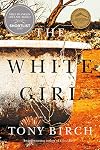
This is a sweet, well-characterised piece of fiction, and I think perhaps an important read at this point in time. In the early 1960s, Odette, an old lady in a small country town, cares for her illegitimate granddaughter Sissy. Odette has lived long enough to watch the transition of Australia from colonial outpost to modern nation, but along the way she has never been considered worthy of owning a piece of the pie for one simple reason: she is Aboriginal. Sissy, too, of course is Aboriginal show more but her father is white and she has been blessed - the characters would say - to have very light skin. As a result, her place in the culture is both more assured (there is some opportunity to "pass" as white) but also more dangerous - Sissy is still, like all Aboriginal people, a ward of state, and thus it is very easy for certain people to assume they have ownership rights over her. When the town's crop of unpleasant white men begin showing an interest in Sissy, Odette is forced to reckon with the truth about what happened to Sissy's mother, and to find a route for the two of them to get the heck out of Dodge.
Birch is a straightforward writer of general fiction, and The White Girl is an easy read. Birch draws clear dividing lines between his good and evil characters, which would frustrate in a more literary work, but here feel instead like reflections of the cultural forces pulling at Sissy from both sides. To achieve this, Birch uses the literary toolkit of a Charles Dickens, drawing his supporting characters in broad strokes to better bring out the essential goodness of his protagonist (in contrast to the Emile Zola school of writing, where every character must be at least a little bit angelic and a wee bit cruel).
As Odette gradually narrates her past to Sissy, I was reminded how rarely older women get to play a leading role in fiction, and how rarely the grandmother/granddaughter relationship is permitted to be a positive force. The novel is also suffused with that strange melancholy of "historical fiction" set within what is - for some - still living memory. (For me, I had to occasionally check my assumptions that this was taking place in the distant past. No; only three decades after the events of this story, I myself would be growing up in a country town of my own. Admittedly, mine was more like the regional hub from which residents of Deane visit for their shopping and to gawk at the latest inventions of modernity.)
Nevertheless, I am surprised to see The White Girl among the finalists for this year's Miles Franklin Award. When I think of that award's goal to target the "highest literary merit", I think of many of Birch's fellow nominees - Peggy Frew's elegant prose, John Hughes' sparse determination, Philip Salom's inventiveness, and the sheer sublimity of Tara June Winch. I think instead we would be wise to celebrate Birch for his own strengths, and his ease of readership, rather than elevating popular fiction just so that awards panels can widen their audience base.
Still, none of this is Birch's fault. I would recommend The White Girl to all those interested in Australian history, but with a caveat that this is a Dickensian view of the world, not a Zolaesque one. show less
Birch is a straightforward writer of general fiction, and The White Girl is an easy read. Birch draws clear dividing lines between his good and evil characters, which would frustrate in a more literary work, but here feel instead like reflections of the cultural forces pulling at Sissy from both sides. To achieve this, Birch uses the literary toolkit of a Charles Dickens, drawing his supporting characters in broad strokes to better bring out the essential goodness of his protagonist (in contrast to the Emile Zola school of writing, where every character must be at least a little bit angelic and a wee bit cruel).
As Odette gradually narrates her past to Sissy, I was reminded how rarely older women get to play a leading role in fiction, and how rarely the grandmother/granddaughter relationship is permitted to be a positive force. The novel is also suffused with that strange melancholy of "historical fiction" set within what is - for some - still living memory. (For me, I had to occasionally check my assumptions that this was taking place in the distant past. No; only three decades after the events of this story, I myself would be growing up in a country town of my own. Admittedly, mine was more like the regional hub from which residents of Deane visit for their shopping and to gawk at the latest inventions of modernity.)
Nevertheless, I am surprised to see The White Girl among the finalists for this year's Miles Franklin Award. When I think of that award's goal to target the "highest literary merit", I think of many of Birch's fellow nominees - Peggy Frew's elegant prose, John Hughes' sparse determination, Philip Salom's inventiveness, and the sheer sublimity of Tara June Winch. I think instead we would be wise to celebrate Birch for his own strengths, and his ease of readership, rather than elevating popular fiction just so that awards panels can widen their audience base.
Still, none of this is Birch's fault. I would recommend The White Girl to all those interested in Australian history, but with a caveat that this is a Dickensian view of the world, not a Zolaesque one. show less
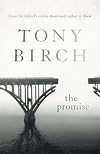
Tony Birch’s new collection of short stories, The Promise, sees him stretching himself a bit beyond the milieu of Melbourne’s inner suburbs that typified Shadowboxing. His old stamping grounds are well represented in stories like The Toecutters but he also sets some of these stories in the outer suburbs and in the countryside. Distance captures the dry heat of a tiny Victorian railway siding so well, you almost feel the glare in your eyes.
Some of the stories are about young half-caste show more indigenous men, and you feel that Birch has drawn very much on his own life experience here. The best of these stories are about working class and lower middle class men facing up to the major disappointments in their lives, and somehow finding a way to get through. After Rachel is a particularly good example, where a life is turned around by simple things: an olive tree and an old record player.
That may sound like heavy going, but Birch writes with a light touch and none of these stories are difficult reads. He can be funny when he chooses to be; The Money Shot’s story of an attempted sting gone wrong borders on farcical.
Birch and I are contemporaries and both Melbournians, and he has the ability to snap some of my childhood memories into sudden focus, with mentions of things like the Johnson St bridge, and Bernard’s Magic Shop. That occasional added pleasure makes his writing even better, and this collection doesn’t disappoint. show less
Some of the stories are about young half-caste show more indigenous men, and you feel that Birch has drawn very much on his own life experience here. The best of these stories are about working class and lower middle class men facing up to the major disappointments in their lives, and somehow finding a way to get through. After Rachel is a particularly good example, where a life is turned around by simple things: an olive tree and an old record player.
That may sound like heavy going, but Birch writes with a light touch and none of these stories are difficult reads. He can be funny when he chooses to be; The Money Shot’s story of an attempted sting gone wrong borders on farcical.
Birch and I are contemporaries and both Melbournians, and he has the ability to snap some of my childhood memories into sudden focus, with mentions of things like the Johnson St bridge, and Bernard’s Magic Shop. That occasional added pleasure makes his writing even better, and this collection doesn’t disappoint. show less
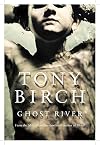
At certain points as I read this novel, I kept coming across characteristics of people and places I recalled as a child. That sense of what the city of Melbourne was like was all too familiar. Though our experiences are different, the place, the character of people, their values were all so vividly real. The sensation too of being young and separate from adults was captured well in this book. The treatment of outsiders like the river men, warm and engaging, looks from 2020, like a vanished show more part of the local character. We've become unlike the people we were in Australia. Connection to people, not just our family seemed stronger, more open. Perhaps it was, or was in the location of the novel. still, I'm left with that haunting sensation that something was lost, not childhood innocence, but something we miss, but can't seem to locate. It's bonds and relationships to landscape and place, really. We who are now so wonderfully international and chic, so committed to the perpetual elsewhere we can hide behind, that digitised non real we want so desperately to be real and we hide behind it so we dont have to face anything else. Yes, I had the sensation as I read this that the tangible, the real is something we can turn our back on, allow it to vanish. That is the river, turned into a freeway, bulldozed, like who we once were. Loyalty, believing in justice when all around is corrupt, these are valuable, like the places we treasure because we call them ours. Who can call a river 'ours' now? We can't seem to protect anything from harm. Though the river is trashed, contaminated, a danger, the boys, Sonny and Ren form an intimacy with it. Harm is something different, they can't see it until there's a plan to destroy it. That harms them. Not the contaminants, the 'film' that covers the skin after swimming in it. Imagine if we could save a river from a freeway today? Could we, would we? Did progress improve us, or harm us? show less
Lists
Awards


You May Also Like


Associated Authors
Statistics
- Works
- 19
- Also by
- 9
- Members
- 578
- Popularity
- #43,350
- Rating
- 3.8
- Reviews
- 30
- ISBNs
- 87
- Languages
- 3