
John Thaw (1942–2002)
Author of Inspector Morse - Complete Collection [TV series]
About the Author
Image credit: digiguide.tv
Works by John Thaw
Inspector Morse Set Four: The Infernal Serpent / Deceived by Flight/ The Secret of Bay 5B (1989) — Actor — 9 copies
Inspector Morse: Set Three - The Last Enemy, Last Bus to Woodstock, Ghost in the Machine (1988) — Actor — 8 copies
Inspector Morse: Set Six: Fat Chance 7 copies
Inspector Morse: Set Eleven: The Wench Is Dead — Creator; Actor — 4 copies
Britain at War in Colour 3 copies
The Sweeney Series One 3 copies
The Sweeney Series Four 2 copies
Inspector Morse — Actor — 2 copies
Stanley And The Women 2 copies
Kavanagh QC,deel3 — Actor — 1 copy
QC Kavanagh,deel 1 — Actor — 1 copy
Redcap - Series 2 [DVD] 1 copy
The Sweeney Series Two 1 copy
Associated Works
Inspector Morse 02: The Silent World of Nicholas Quinn [Videorecording] (2004) — Actor — 11 copies, 1 review
Inspector Morse: Set Ten: Twilight of the Gods — Actor — 7 copies
Inspector Morse: Episodes 1-5, 11, 18 — Actor; Actor — 5 copies
Inspector Morse: Episodes 19-33 — Actor — 4 copies
Inspector Morse, episodes 17-24 from "Inspector Morse - The Complete Series" [DVD] — Actor — 3 copies, 1 review
The Coward's Revenge: The Sins of the Fathers: Driven to Distraction [Videorecording] — Actor — 3 copies, 1 review
Inspector Morse, episodes 09-16 from "Inspector Morse - The Complete Series" [DVD] — Actor — 3 copies
Kavanagh Q.C. — Actor — 2 copies
Inspector Morse Volume 1 — Actor — 2 copies
Inspector Morse: Last Bus to Woodstock / The Ghost in the Machine — Actor — 2 copies
Home to Roost [1985-1990 TV series] — Actor — 1 copy
Kavanagh Q.C.: The Complete Collection — Actor — 1 copy
Tagged
Common Knowledge
- Birthdate
- 1942-01-03
- Date of death
- 2002-02-21
- Gender
- male
- Occupations
- actor
- Nationality
- UK
- Associated Place (for map)
- UK
Members
Reviews
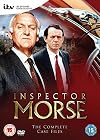
Last Bus to Woodstock (1975)
Last Seen Wearing (1976)
The Silent World of Nicholas Quinn (1977)
I suspect many more people know Colin Dexter's stories through the excellent TV performances of John Thaw as Inspector Morse than they do from reading the original novels, although these too are very popular. This volume contains the first three novels in the series.
Covering three different books in one review is not easy so one has to look for themes and commonalties. It is safe to say that, as one show more would expect, Dexter gets better with practice. The final novel in the sequence ['Quinn'] is far better than the first ['Woodstock'].
They are novels of their time. The Inspector Morse of these books strikes me as only superficially similar to John Thaw's famous characterisation. I won't be reading any more of them but not because I think they are bad (they are not) but because complicated puzzles don't interest me.
Morse likes crossword puzzles and one suspects that Dexter does too -a great deal. Indeed, the books are attractive to many readers precisely because Dexter is very good at plotting complex mysteries with many twists and turns and surprises, perfect for people with that sort of mind.
Morse himself very often gets it horribly wrong at times (reflecting how people puzzle out crossword clues) as he relies on leaps of intuition and the logic of incomplete information. The final result is tied up neatly based on Dexter working back from his envisioning of the original crime.
Unfortunately I got lost quite a way into the stories and largely because I did not care enough to go beyond my intuition that Morse's imaginative responses to the data were not really police work so much as channelling his author. The author being Morse's God revealing Truth through Morse.
Police work was looser in the 1970s than today but Morse strikes me, even under those conditions, as having been given far too much leeway by his superiors although it was good to see him being a little kinder to Lewis (who is brighter than in the TV series) than Thaw's grumpy character.
In fact, Morse is not particularly grumpy or depressive here. He is distinctly more lively. Carlton/Central TV's scriptwriters built Thaw's character up into something a little different from Dexter's via the many clues given in the book. These are not the same men.
Morse is actually not very personally interesting in the books. He is an intuition machine designed to get us through the puzzle, test our wits and surprise us. You cannot build a TV drama up on a central character who is an intuition machine.
This is not to say that Dexter is a bad writer. In fact, he holds the attention well but the puzzle aspect (the very purpose of crime fiction) eventually crowds out the rest and conventionalities (like set piece scenes that have 'everyone in the room') do appear.
The most interesting aspect of the novels is something different entirely - the strange obsession with sex. Dexter may or may not have given us an interest into his own mind but he has certainly given us an insight into why many women think of men as 'misogynistic'.
Frankly, the first book is downright nasty in this respect. Although Dexter very much moderates his content in the two subsequent books, some of the assumptions about and attitudes to women go beyond the stereotypical into something that can only be described as crass.
This is the most marked difference between Dexter's Morse and Thaw's Morse. Dexter's Morse is a lascivious sexual oaf at root whose character seems to owe something to the pulp fiction of an earlier era whereas Thaw's Morse is an introvert romantic who simply can't find a soul partner.
If Thaw's Morse is misogynistic, it is well hiddden and an attribute (if it is there) of his introversion whereas Dexter's Morse, if not truly misogynistic, nevertheless seems prone to lascivious fantasy and a liking for blue movies with all that charm provided by single sex education in the 1950s.
This was a bit of a surprise and even distasteful in the first book, moderated though still present in the second book and largely made tolerable in the third. It wasn't going to be the reason I might not read on (I've given that reason) but only because I sensed he had 'grown up' over time.
Dexter only started writing in his mid-40s and had hitherto been little more than a retired classics teacher. The third book owes a lot to his own deafness and to a later job in the examinations system. Perhaps we are seeing a displaced mid-life crisis and sexual frustration.
The books are defined by the man's mind - a crossword puzzle aficionado and a former classics teacher who 'tried his hand' at detective fiction and discovered that his puzzling academic mind could create an alter ego that, in turn, could become iconic in the hands of the TV industry.
If you like complicated puzzles in which (I cannot actually vouch for whether this is true or not since I do not have that sort of mind myself) the solution is as possible to you as to Morse with the right leaps of intuition and a use of logic based on shared facts, then you might enjoy these books.
Be aware of the 1970s attitude to women in the first novel but don't let it put you off because he is clearly getting a grip of himself by the third. Enjoy the plotting and the Oxford ambience while you work out the mystery. As I say, I won't be reading any more but that is me. I'll stick with Thaw. show less
Last Seen Wearing (1976)
The Silent World of Nicholas Quinn (1977)
I suspect many more people know Colin Dexter's stories through the excellent TV performances of John Thaw as Inspector Morse than they do from reading the original novels, although these too are very popular. This volume contains the first three novels in the series.
Covering three different books in one review is not easy so one has to look for themes and commonalties. It is safe to say that, as one show more would expect, Dexter gets better with practice. The final novel in the sequence ['Quinn'] is far better than the first ['Woodstock'].
They are novels of their time. The Inspector Morse of these books strikes me as only superficially similar to John Thaw's famous characterisation. I won't be reading any more of them but not because I think they are bad (they are not) but because complicated puzzles don't interest me.
Morse likes crossword puzzles and one suspects that Dexter does too -a great deal. Indeed, the books are attractive to many readers precisely because Dexter is very good at plotting complex mysteries with many twists and turns and surprises, perfect for people with that sort of mind.
Morse himself very often gets it horribly wrong at times (reflecting how people puzzle out crossword clues) as he relies on leaps of intuition and the logic of incomplete information. The final result is tied up neatly based on Dexter working back from his envisioning of the original crime.
Unfortunately I got lost quite a way into the stories and largely because I did not care enough to go beyond my intuition that Morse's imaginative responses to the data were not really police work so much as channelling his author. The author being Morse's God revealing Truth through Morse.
Police work was looser in the 1970s than today but Morse strikes me, even under those conditions, as having been given far too much leeway by his superiors although it was good to see him being a little kinder to Lewis (who is brighter than in the TV series) than Thaw's grumpy character.
In fact, Morse is not particularly grumpy or depressive here. He is distinctly more lively. Carlton/Central TV's scriptwriters built Thaw's character up into something a little different from Dexter's via the many clues given in the book. These are not the same men.
Morse is actually not very personally interesting in the books. He is an intuition machine designed to get us through the puzzle, test our wits and surprise us. You cannot build a TV drama up on a central character who is an intuition machine.
This is not to say that Dexter is a bad writer. In fact, he holds the attention well but the puzzle aspect (the very purpose of crime fiction) eventually crowds out the rest and conventionalities (like set piece scenes that have 'everyone in the room') do appear.
The most interesting aspect of the novels is something different entirely - the strange obsession with sex. Dexter may or may not have given us an interest into his own mind but he has certainly given us an insight into why many women think of men as 'misogynistic'.
Frankly, the first book is downright nasty in this respect. Although Dexter very much moderates his content in the two subsequent books, some of the assumptions about and attitudes to women go beyond the stereotypical into something that can only be described as crass.
This is the most marked difference between Dexter's Morse and Thaw's Morse. Dexter's Morse is a lascivious sexual oaf at root whose character seems to owe something to the pulp fiction of an earlier era whereas Thaw's Morse is an introvert romantic who simply can't find a soul partner.
If Thaw's Morse is misogynistic, it is well hiddden and an attribute (if it is there) of his introversion whereas Dexter's Morse, if not truly misogynistic, nevertheless seems prone to lascivious fantasy and a liking for blue movies with all that charm provided by single sex education in the 1950s.
This was a bit of a surprise and even distasteful in the first book, moderated though still present in the second book and largely made tolerable in the third. It wasn't going to be the reason I might not read on (I've given that reason) but only because I sensed he had 'grown up' over time.
Dexter only started writing in his mid-40s and had hitherto been little more than a retired classics teacher. The third book owes a lot to his own deafness and to a later job in the examinations system. Perhaps we are seeing a displaced mid-life crisis and sexual frustration.
The books are defined by the man's mind - a crossword puzzle aficionado and a former classics teacher who 'tried his hand' at detective fiction and discovered that his puzzling academic mind could create an alter ego that, in turn, could become iconic in the hands of the TV industry.
If you like complicated puzzles in which (I cannot actually vouch for whether this is true or not since I do not have that sort of mind myself) the solution is as possible to you as to Morse with the right leaps of intuition and a use of logic based on shared facts, then you might enjoy these books.
Be aware of the 1970s attitude to women in the first novel but don't let it put you off because he is clearly getting a grip of himself by the third. Enjoy the plotting and the Oxford ambience while you work out the mystery. As I say, I won't be reading any more but that is me. I'll stick with Thaw. show less
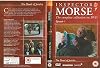
The very first Morse episode, wherein Morse meets Lewis for the first time. Two plot lines are well interwoven by the scriptwriter (Anthony Minghella) and some good performances among the supporting cast. Morse's car gets bashed about a lot more than in subsequent episodes. As so often in this series, his romantic ambitions are thwarted.

You May Also Like


Associated Authors
Statistics
- Works
- 48
- Also by
- 65
- Members
- 198
- Popularity
- #110,928
- Rating
- 4.5
- Reviews
- 3
- ISBNs
- 7