
James Ramsey Ullman (1907–1971)
Author of Banner in the Sky
About the Author
Works by James Ramsey Ullman
Americans on Everest: The Official Account of the Ascent Led by Norman G. Dyhrenfurth (1964) 73 copies, 1 review
Damned by the rainbow 2 copies
Island of the Blue Mountains 1 copy
La Piccola Guida Alpina 1 copy
The Age of Mountaineering 1 copy
And Not To Yield 1 copy
Associated Works
Lands and Peoples Volume 1: British Isles and Western Europe (1955) — Author, some editions — 71 copies, 1 review
The Best of Both Worlds: An Anthology of Stories for All Ages (1968) — Contributor — 25 copies, 1 review
My Most Inspiring Moment: Encounters with Destiny Relived by Thirty-Eight Best-Selling Authors (1965) 12 copies
Cricket Magazine, Vol. 4, No. 11, July 1977 — Contributor — 2 copies
Best-in-Books: Concubine / Flight and Pursuit / My Darling Clementine / The Day (1964) — Contributor — 1 copy
Tagged
Common Knowledge
- Birthdate
- 1907
- Date of death
- 1971-07-05
- Gender
- male
- Education
- Princeton University
- Occupations
- writer
mountaineer - Nationality
- USA
- Birthplace
- New York, New York, USA
- Place of death
- Boston, Massachusetts, USA
- Associated Place (for map)
- USA
Members
Reviews
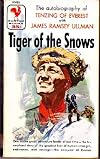
An excellent, if somewhat old-fashioned, read. Tenzing Norgay -- better known, perhaps, as Tenzing of Everest -- was illiterate, so it's difficult to know how much of this story is his and how much of it can be attributed to this book's co-author. While other reviewers have complained, what "Tiger of the Snows" isn't, really, is a book about climbing. There are a few technical terms here, but this is clearly a book for a general audience. That didn't bother me in the least. As a person who's show more walked with a crutch since my mid-thirties, it's all I can do to climb a flight of stairs. To be fair, "Tiger of the Snows" does describe a large number of instances of high drama that took place at high altitude, and the authors have a real talent for describing how the human body can be pushed to its very limits by the enormous physical and mental strain that extreme forms of mountaineering. But, as it usually is with me, it was the cultural information that was included as background in this one that interested me most. And Tenzing has a lot of interesting stuff to talk about, from his impoverished childhood in a tiny Sherpa village to his days tending yaks in the shadow of Everest to the adventures had and relationships he built on the various expeditions that he participated in before he became ultra-famous for being one of the first two climbers to successfully summit Mount Everest. By the time he climbed the world's highest mountain. He was both an ace climber and an experienced sirdar -- or expedition manager -- and his impressions of his employers and his stories of how he kept the peace between Nepali porters, sherpas, and Western climbers are more captivating than you'd expect. We even learn about Tibetan tea -- which is brewed with salt and rancid yak butter -- and whether Tenzing thinks the Yeti exists. He is, for the record, a believer. This book takes its time getting to, and then up, Everest, but I didn't mind at all.
But we hear mostly about Tenzing himself, and this book makes a good case that he is, in some sense, an interesting and admirable person. He disdains politics throughout "Tiger of the Snows" and speaks with reverence of the "mountain way. His love for both the mountains he climbed and the people he climbed them with are obviously genuine. "Tiger of the Snows" is also interesting because both Tenzing's country of origin and his country of residence went from being British colonies to independent states during his lifetime, but he consistently downplays concepts of nationality or parochial exclusivity. It occurred to me that these sections of the book may reflect some brotherhood-of-man ideas that were popular during the late-modern period, but Tenzing seems to consider himself a part of a larger alpine brotherhood made up only of those who've risked their lives together on seriously difficult mountains. He seems to have deep reverence for the divine, though he isn't exactly an orthodox Bhuddist and seems familiar enough with Hindu ideas. Over the course of this book, he speaks clearly and forthrightly about how he put himself in danger for the good of his climbing companions and for the sheer glory of mountaineering. I've never understood why people feel the need to climb mountains, and, at one point in "Tiger of the Snows," Tenzig admits that he and other sherpas are essentially glorified baggage handlers. Still, his love for the for mountains in which he grew up and his enthusiasm for mountain climbing is impossible to doubt. He seems like the kind of man who would have wanted to climb Everest -- or any other challenging peak -- for the sheer joy of it. I got to thinking that his adventures in the high Himalayas had gotten him close to some sort of universal human experience.
I don't know if they write books like "Tiger of the Snows" anymore. It often seems precisely like the sort of book that motivated young people who read it to think about how big the world was and how much of it they might get to see. In its closing pages, Tenzing reflects on how little of the world he would have seen had he stayed in the village in Nepal where he had been born. Just a few paragraphs previously, he tells us how proud he was that his English was fluent enough to have a brief conversation with the newly coronated Queen Elizabeth II. He also married and had at least two daughters. Now that's a life well-lived.
In closing, I'd like to say that I wouldn't have been shocked if my own father might have once been part o the target market for this book. He grew up in a Massachusetts mill town, joined the Peace Corps to avoid the draft during the Vietnam War, and ended up living in the high Andes for a couple of years. He's lived in Latin America for the last fifty years or so and seen all sorts of things. My uncle once told me that this never really surprised him: as a kid, my father had loved travel features and adventure literature. Maybe my dad's got a bit of Tenzig's spirit in him. Oh, and according to LibraryThing's legacy libraries project, Ernest Hemingway bought this one. Now, that doesn't surprise me at all. show less
But we hear mostly about Tenzing himself, and this book makes a good case that he is, in some sense, an interesting and admirable person. He disdains politics throughout "Tiger of the Snows" and speaks with reverence of the "mountain way. His love for both the mountains he climbed and the people he climbed them with are obviously genuine. "Tiger of the Snows" is also interesting because both Tenzing's country of origin and his country of residence went from being British colonies to independent states during his lifetime, but he consistently downplays concepts of nationality or parochial exclusivity. It occurred to me that these sections of the book may reflect some brotherhood-of-man ideas that were popular during the late-modern period, but Tenzing seems to consider himself a part of a larger alpine brotherhood made up only of those who've risked their lives together on seriously difficult mountains. He seems to have deep reverence for the divine, though he isn't exactly an orthodox Bhuddist and seems familiar enough with Hindu ideas. Over the course of this book, he speaks clearly and forthrightly about how he put himself in danger for the good of his climbing companions and for the sheer glory of mountaineering. I've never understood why people feel the need to climb mountains, and, at one point in "Tiger of the Snows," Tenzig admits that he and other sherpas are essentially glorified baggage handlers. Still, his love for the for mountains in which he grew up and his enthusiasm for mountain climbing is impossible to doubt. He seems like the kind of man who would have wanted to climb Everest -- or any other challenging peak -- for the sheer joy of it. I got to thinking that his adventures in the high Himalayas had gotten him close to some sort of universal human experience.
I don't know if they write books like "Tiger of the Snows" anymore. It often seems precisely like the sort of book that motivated young people who read it to think about how big the world was and how much of it they might get to see. In its closing pages, Tenzing reflects on how little of the world he would have seen had he stayed in the village in Nepal where he had been born. Just a few paragraphs previously, he tells us how proud he was that his English was fluent enough to have a brief conversation with the newly coronated Queen Elizabeth II. He also married and had at least two daughters. Now that's a life well-lived.
In closing, I'd like to say that I wouldn't have been shocked if my own father might have once been part o the target market for this book. He grew up in a Massachusetts mill town, joined the Peace Corps to avoid the draft during the Vietnam War, and ended up living in the high Andes for a couple of years. He's lived in Latin America for the last fifty years or so and seen all sorts of things. My uncle once told me that this never really surprised him: as a kid, my father had loved travel features and adventure literature. Maybe my dad's got a bit of Tenzig's spirit in him. Oh, and according to LibraryThing's legacy libraries project, Ernest Hemingway bought this one. Now, that doesn't surprise me at all. show less
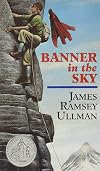
I thought that this Newbery honor book was going to be just another boy's historical adventure, and that I'd get fed up with it and choose to DNF. I was wrong.
It is an adventure. It is about a world which was not relevant to women. But it's about a 16 yo boy who, through the course of the book, becomes a man. And it's cleanly, crisply written, easy enough to read that I stayed up way past my bedtime and finished it.
What's most interesting about it is all the lying and other moral quandaries show more and ambiguities. Not only does the boy have trouble *doing* the right thing, but *all* the people have trouble *knowing* the right thing. There are questions not only of courage, but of honor, loyalty, identity, brotherhood. Small-scale politics and economics even play a role.
And yet it's still a very readable adventure.
Highly recommended to reluctant readers. Teen males, of course. but also girls and adults who want more insight into the minds of those who feel the compulsion to prove themselves against a potentially deadly challenge. show less
It is an adventure. It is about a world which was not relevant to women. But it's about a 16 yo boy who, through the course of the book, becomes a man. And it's cleanly, crisply written, easy enough to read that I stayed up way past my bedtime and finished it.
What's most interesting about it is all the lying and other moral quandaries show more and ambiguities. Not only does the boy have trouble *doing* the right thing, but *all* the people have trouble *knowing* the right thing. There are questions not only of courage, but of honor, loyalty, identity, brotherhood. Small-scale politics and economics even play a role.
And yet it's still a very readable adventure.
Highly recommended to reluctant readers. Teen males, of course. but also girls and adults who want more insight into the minds of those who feel the compulsion to prove themselves against a potentially deadly challenge. show less

It stands unconquered, the last great summit of the Alps. Only one man has ever dared to approach the top, and that man died in his pursuit. He was Josef Matt, Rudi Matt's father.
At sixteen, Rudi is determined to pay tribute to the man he never knew, and complete the quest that claimed his father's life. And so, taking his father's red shirt as a flag, he heads off to face the earth's most challenging peak. But before Rudi can reach the top, he must pass through the forbidden Fortress, the show more gaping chasm in the high reaches of the Citadel where his father met his end. Rudi has followed Josef's footsteps as far as they will take him. Now he must search deep within himself to find the strength for the final ascent to the summit - to plant his banner in the sky. show less
At sixteen, Rudi is determined to pay tribute to the man he never knew, and complete the quest that claimed his father's life. And so, taking his father's red shirt as a flag, he heads off to face the earth's most challenging peak. But before Rudi can reach the top, he must pass through the forbidden Fortress, the show more gaping chasm in the high reaches of the Citadel where his father met his end. Rudi has followed Josef's footsteps as far as they will take him. Now he must search deep within himself to find the strength for the final ascent to the summit - to plant his banner in the sky. show less

It stands unconquered, the last great summit of the Alps. Only one man has ever dared to approach the top, and that man died in his pursuit. He was Josef Matt, Rudi Matt's father.
At sixteen, Rudi is determined to pay tribute to the man he never knew, and complete the quest that claimed his father's life. And so, taking his father's red shirt as a flag, he heads off to face the earth's most challenging peak. But before Rudi can reach the top, he must pass through the forbidden Fortress, the show more gaping chasm in the high reaches of the Citadel where his father met his end. Rudi has followed Josef's footsteps as far as they will take him. Now he must search deep within himself to find the strength for the final ascent to the summit - to plant his banner in the sky. show less
At sixteen, Rudi is determined to pay tribute to the man he never knew, and complete the quest that claimed his father's life. And so, taking his father's red shirt as a flag, he heads off to face the earth's most challenging peak. But before Rudi can reach the top, he must pass through the forbidden Fortress, the show more gaping chasm in the high reaches of the Citadel where his father met his end. Rudi has followed Josef's footsteps as far as they will take him. Now he must search deep within himself to find the strength for the final ascent to the summit - to plant his banner in the sky. show less
Lists
Newbery Adjacent (1)
Sonlight Books (1)
Awards


You May Also Like


Associated Authors
Statistics
- Works
- 26
- Also by
- 12
- Members
- 2,938
- Popularity
- #8,717
- Rating
- 3.7
- Reviews
- 34
- ISBNs
- 52
- Languages
- 2