
Campbell Armstrong (1944–2013)
Author of Raiders of the Lost Ark
About the Author
Campbell Armstrong is the author of such critically acclaimed books as "Jig" & "Concert of Ghosts." He lives in Ireland. (Bowker Author Biography)
Disambiguation Notice:
Campbell Armstrong is a pseudonym of Scottish author Campbell Black. He also wrote under the pseudonym Thomas Altman.
(ita) Campbell Armstrong is a pseudonym of Scottish author Campbell Black. He also wrote under the pseudonym Thomas Altman.
Image credit: http://www.zam.it/biografia_Campbell_Black
Series
Works by Campbell Armstrong
Associated Works
Tagged
Common Knowledge
- Other names
- Altman, Thomas (pseudonimo)
Armstrong, Campbell (pseudonimo) - Birthdate
- 1944
- Date of death
- 2013-03-01
- Gender
- male
- Education
- University of Sussex (Philosophy)
- Occupations
- scrittore
- Nationality
- UK
- Birthplace
- Glasgow, Scotland, UK
- Places of residence
- Arizona, USA
Ireland - Place of death
- Dublin, Ireland
- Disambiguation notice
- Campbell Armstrong is a pseudonym of Scottish author Campbell Black. He also wrote under the pseudonym Thomas Altman.
Members
Reviews

It is unsettling to read a cold-war thriller now when, in hindsight, the historical events were so different. I missed Campbell Armstrong’s Estonian-related “Mazurka” when it was first released under the title of “White Light” in 1988 and only caught up with it in 2016.
It is quite a contrast between a fictional revitalized group of “Metsavennad” (Forest Brotherhood in Estonian) planning an 11th hour assault on a dying Soviet Union while the historical Estonia, Latvia & show more Lithuania were in the midst of the Singing Revolution and acts of passive resistance such as the 2-million person human chain of the Baltic Way. However, the idea that factions of the CIA and KGB would be the secret guardians of such a plot in the hopes that the resulting repressions would lead to a return of the cold-war status quo perhaps isn’t that far-fetched given such historical events as the failed 1991 coup d’etat against Brezhnev. The book was also likely inspired by the real-life event of German pilot Mathias Rust’s landing his Cessna aircraft in Red Square on May 28, 1987 despite a supposedly impregnable Soviet air defense system.
So how does it read as a thriller now? It is big on betrayals and stretching out the mystery of why seemingly opposing forces would be somehow cooperating in a conspiracy. So that does keep you reading although some might find it too stretched out. There isn’t that much action until the final pages. The CIA and KGB henchmen seem to get off too lightly in the end, but that isn’t much different from reality either. So even if it is all a bit far-fetched in hindsight, it was a reasonable fictional extrapolation by the author using some ideas from the late cold war period. It also earns an extra accolade for the research on the Baltic Nations which seems to have been primarily sourced from Bruno Laan and JBANC (Joint Baltic American National Committee).
Stray observations
• Lead character Frank Pagan of Scotland Yard (who was a series character, Mazurka is the 2nd of 5 novels where he is featured) meets several Estonian characters during the course of the book, so it is odd that not a single one of them mentions that his last name “pagan” is also a mild curse word in Estonian, along the lines of saying “drat” or “damn".
• Several passages of Estonian are quoted in the text, with some minor misspellings. The best known are the concluding lines of the verse epic Kalevipoeg: The Estonian National Epic:
"Küll siis Kalev jõuab koju
oma lastel õnne tooma,
Eesti põlve uueks looma!”
(Surely Kalev will then come home to
Bring his people fortune true,
Build Estonia anew.)
• Author Campbell Armstrong also wrote under his own name of Campbell Black, including movie novelizations such as Raiders of the Lost Ark. show less
It is quite a contrast between a fictional revitalized group of “Metsavennad” (Forest Brotherhood in Estonian) planning an 11th hour assault on a dying Soviet Union while the historical Estonia, Latvia & show more Lithuania were in the midst of the Singing Revolution and acts of passive resistance such as the 2-million person human chain of the Baltic Way. However, the idea that factions of the CIA and KGB would be the secret guardians of such a plot in the hopes that the resulting repressions would lead to a return of the cold-war status quo perhaps isn’t that far-fetched given such historical events as the failed 1991 coup d’etat against Brezhnev. The book was also likely inspired by the real-life event of German pilot Mathias Rust’s landing his Cessna aircraft in Red Square on May 28, 1987 despite a supposedly impregnable Soviet air defense system.
So how does it read as a thriller now? It is big on betrayals and stretching out the mystery of why seemingly opposing forces would be somehow cooperating in a conspiracy. So that does keep you reading although some might find it too stretched out. There isn’t that much action until the final pages. The CIA and KGB henchmen seem to get off too lightly in the end, but that isn’t much different from reality either. So even if it is all a bit far-fetched in hindsight, it was a reasonable fictional extrapolation by the author using some ideas from the late cold war period. It also earns an extra accolade for the research on the Baltic Nations which seems to have been primarily sourced from Bruno Laan and JBANC (Joint Baltic American National Committee).
Stray observations
• Lead character Frank Pagan of Scotland Yard (who was a series character, Mazurka is the 2nd of 5 novels where he is featured) meets several Estonian characters during the course of the book, so it is odd that not a single one of them mentions that his last name “pagan” is also a mild curse word in Estonian, along the lines of saying “drat” or “damn".
• Several passages of Estonian are quoted in the text, with some minor misspellings. The best known are the concluding lines of the verse epic Kalevipoeg: The Estonian National Epic:
"Küll siis Kalev jõuab koju
oma lastel õnne tooma,
Eesti põlve uueks looma!”
(Surely Kalev will then come home to
Bring his people fortune true,
Build Estonia anew.)
• Author Campbell Armstrong also wrote under his own name of Campbell Black, including movie novelizations such as Raiders of the Lost Ark. show less

This book is a mystery. There is no question about it. From the very beginning you are taken on a wild ride by the author, into a gray area that begins in the sixties and might as well end with a drug-induced hallucination. The mystery itself is that bizarre. But it is thoroughly enjoyable. It surprised me that I couldn't put the book down, even as life inside of it was getting stranger and stranger with every page I turned.
You can't properly describe this book to other readers, you simply show more have to ask them to experience it. The writing is so perfect that at times you can physically feel the essence of silence or the complete emptiness in knowing you aren't who you think you are. There is just no way to explain this experience, which is fitting with the sixties, I think. It isn't often you come across a book where the writing so perfectly mimics the setting that it makes the hair stand up on your arms. show less
You can't properly describe this book to other readers, you simply show more have to ask them to experience it. The writing is so perfect that at times you can physically feel the essence of silence or the complete emptiness in knowing you aren't who you think you are. There is just no way to explain this experience, which is fitting with the sixties, I think. It isn't often you come across a book where the writing so perfectly mimics the setting that it makes the hair stand up on your arms. show less
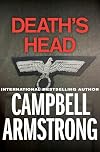
Grunwald has lost his wife and son to the Nazis, taken away to camps before the war. It's now after the war and he is in Berlin when he encounters Dr. Schwarzenbach, now going under the name Luetze whom he remembered from before in the Polish camps. Schwarzenbach had been engaged in despicable "experiments" on camp victims ostensibly to learn how much pain a human could take. Grunwald is tormented by guilt for having assisted Schwarzenbach in his experiments in order to save his own life. show more Events are driving the two inexorably together after Grunewald recognizes Schwarzenbach.
Ironically, each had been urged to leave: Schwarzenbach by his Nazi colleagues who are escaping to Spain and then elsewhere, and Grunwald by a woman who befriends him and says he return to his hometown, Munich. Schwarzenbach realizes that Grunwald can betray him to the Americans, already suspicious of him and so he decides Grunwald must be killed. The allies are eager to root out any Nazis who now find it expediant to grovel before their new masters.
A very interesting novel dealing with guilt, responsibility, and the randomness of life that doesn't always bring the guiltless to the top. The ending is frightenly ambiguous. show less
Ironically, each had been urged to leave: Schwarzenbach by his Nazi colleagues who are escaping to Spain and then elsewhere, and Grunwald by a woman who befriends him and says he return to his hometown, Munich. Schwarzenbach realizes that Grunwald can betray him to the Americans, already suspicious of him and so he decides Grunwald must be killed. The allies are eager to root out any Nazis who now find it expediant to grovel before their new masters.
A very interesting novel dealing with guilt, responsibility, and the randomness of life that doesn't always bring the guiltless to the top. The ending is frightenly ambiguous. show less

Being sucker for Irish mysteries, I picked this one up. It's first in the Frank Pagan series. Pagan is a British cop sent over to the U.S. in pursuit of an IRA assassin, nicknamed Jig, who, in turn has been told to track down those who had stolen $10 million intended for the IRA. Throw in a psychotic Protestant minister with his own agenda and the FUV (Free Ulster Volunteers) and things get surprisingly messy with colliding agendas. Pagan and Jig are forced to link up in order to sort things show more out as ostensible IRA terrorism comes to the United States. To say more would ruin the surprises.
While I wouldn't say this was a favorite book, I will look for more titles by Campbell Armstrong, whose books are being reissued by OpenRoadMedia. Armstrong died in 2013. show less
While I wouldn't say this was a favorite book, I will look for more titles by Campbell Armstrong, whose books are being reissued by OpenRoadMedia. Armstrong died in 2013. show less
Lists
You May Also Like


Associated Authors
Statistics
- Works
- 54
- Also by
- 1
- Members
- 2,430
- Popularity
- #10,558
- Rating
- 3.4
- Reviews
- 27
- ISBNs
- 267
- Languages
- 10
- Favorited
- 1
