
Richard L. Bushman
Author of Joseph Smith: Rough Stone Rolling
About the Author
Richard Lyman Bushman is Gouverneur Morris Professor of History, Emeritus, at Columbia University.
Image credit: Jeanne Daniels
Series
Works by Richard L. Bushman
From Puritan to Yankee: Character and the Social Order in Connecticut, 1690-1765 (1967) — Author — 200 copies
The Great Awakening: Documents on the Revival of Religion, 1740-1745 (Institute of Early American History & Culture) (1970) 88 copies
The Mormon History Association's Tanner Lectures: The First Twenty Years (2006) — Contributor — 9 copies
Parallels and Convergences: Mormon Thought and Engineering Vision (2012) — Foreword; Editor — 6 copies
Associated Works
Colonial America: Essays in Politics and Social Development (1983) — Contributor, some editions — 176 copies, 1 review
Book of Mormon Authorship: New Light on Ancient Origins (Volume Seven in the Religious Studies Monograph Series) (1982) — Contributor — 63 copies
Book of Mormon Authorship Revisited: The Evidence for Ancient Origins (1997) — Contributor — 62 copies
The Many Legalities of Early America: A Conference Sponsored by the Institute of Early American History and Culture and the Institute of Bill of Rights Law, November 22-24, 1996,… (2001) — Contributor — 47 copies
The Transformation of Early American History: Society, Authority, and Ideology: How the Writings and Influence of Bernard Bailyn Have Changed Our Understanding of the American… (1991) — Contributor — 39 copies, 2 reviews
Joseph Smith And the Doctrinal Restoration: The 34th Annual Sidney B Sperry Symposium (2005) — Contributor — 36 copies
The Worlds of Joseph Smith: A Bicentennial Conference at the Library of Congress (2006) — Contributor — 30 copies
A Reason for Faith: Navigating LDS Doctrine and Church History (2016) — Contributor — 29 copies, 2 reviews
Joseph Smith: The prophet, the man (Religious Studies Center monograph series) (1993) — Contributor — 27 copies
The Council of Fifty: What the Records Reveal about Mormon History (2017) — Contributor — 25 copies, 1 review
Nearly Everything Imaginable: The Everyday Life of Utah's Mormon Pioneers (Studies in Latter-Day Saint History) (1999) — Contributor — 24 copies
By Study and Also by Faith: Essays in Honor of Hugh W. Nibley, Vol. 2 (1990) — Contributor — 23 copies
The Development of a Revolutionary Mentality: Papers Presented at the First Library of Congress Symposium on the American Revolution, May 5 and 6, 1972 (1972) — Contributor — 23 copies
From Darkness Unto Light: Joseph Smith's Translation and Publication of the Book of Mormon (2015) — Foreword — 20 copies
Faithful History: Essays on Writing Mormon History (Essays on Mormonism Series) (1992) — Contributor — 17 copies
New Views of Mormon History: A Collection of Essays in Honor of Leonard J. Arrington (1987) — Contributor — 16 copies
A Firm Foundation: The History of Church Organization and Administration (BYU Church History Symposium) (2011) — Contributor — 14 copies
Producing Ancient Scripture: Joseph Smith's Translation Projects in the Development of Mormon Christianity (2020) — Contributor — 14 copies
Approaching Antiquity: Joseph Smith and the Ancient World (2015) — Contributor — 12 copies, 1 review
Expanded Canon: Perspectives on Mormonism and Sacred Texts (UVU Comparative Mormon Studies) (2018) — Contributor — 12 copies
To Be Learned is Good: Essays on Faith and Scholarship in Honor of Richard Lyman Bushman (2018) — Contributor — 10 copies
Mormonism and American Politics (Religion, Culture, and Public Life Book 18) (2015) — Contributor — 10 copies
The Prophet Puzzle: Interpretive Essays on Joseph Smith (Essays on Mormonism Series) (1999) — Contributor — 10 copies
From the Outside Looking In: Essays on Mormon History, Theology, and Culture (2015) — Introduction — 9 copies
Joseph Smith and His First Vision: Context, Place, and Meaning, 2020 Church History Symposium (2021) — Contributor — 8 copies
Charting a New Millennium: The Latter-Day Saints in the Coming Century (1998) — Contributor — 7 copies
New Perspectives in Mormon Studies: Creating and Crossing Boundaries (2013) — Contributor — 6 copies
Shifting Borders and a Tattered Passport: Intellectual Journeys of a Mormon Academic (2012) — Foreword — 6 copies
To All the World: The Book of Mormon Articles from the Encyclopedia of Mormonism (2000) — Contributor — 6 copies
A New Light Breaks Forth. Essays in Mormon History. Edited By Lyndon W. Cook & Donald Q. Cannon. (1980) — Contributor — 5 copies
Dialogue: A Journal of Mormon Thought - Volume 35, Number 3 (Fall 2002) (2002) — Contributor — 3 copies
Dialogue: A Journal of Mormon Thought, Volume 5, Number 1, (Spring 1970) (1970) — Contributor — 2 copies
Latter-day Saint Essentials: Readings from the Encyclopedia of Mormonism (2002) — Contributor — 2 copies
Dialogue: A Journal of Mormon Thought, Volume 4, Number 4, (Winter 1969) (1969) — Contributor — 2 copies
Dialogue: A Journal of Mormon Thought - Volume 45, Number 3 (Fall 2012) (2012) — Contributor — 1 copy
Dialogue: A Journal of Mormon Thought - Volume 44, Number 3 (Fall 2011) (2011) — Contributor — 1 copy
Dialogue: A Journal of Mormon Thought - Volume 13, Number 3 (Fall 1980) (1980) — Contributor — 1 copy
Dialogue: A Journal of Mormon Thought - Volume 21, Number 2 (Summer 1988) (1988) — Contributor — 1 copy
Dialogue: A Journal of Mormon Thought - Volume 37, Number 4 (Winter 2004) (2004) — Contributor — 1 copy
Dialogue: A Journal of Mormon Thought - Volume 4, Number 1 (Spring 1969) (1969) — Contributor — 1 copy
Dialogue: A Journal of Mormon Thought - Volume 14, Number 1 (Spring 1981) (1981) — Contributor — 1 copy
Dialogue: A Journal of Mormon Thought - Volume 1, Number 2 (Summer 1966) (1966) — Contributor — 1 copy
Dialogue: A Journal of Mormon Thought - Volume 1, Number 3 (Autumn 1966) (1966) — Contributor — 1 copy
Tagged
Common Knowledge
- Legal name
- Bushman, Richard Lyman
- Birthdate
- 1931-06-20
- Gender
- male
- Education
- Harvard University (AB, AM, and PhD)
- Occupations
- historian
university professor - Organizations
- The Church of Jesus Christ of Latter-day Saints (patriarch)
Harvard University
Brigham Young University
Boston University
University of Delaware
Claremont Graduate University (show all 10)
Columbia University
Mormon History Association
Mormon Scholars Foundation (founder)
Center for Latter-day Saint Arts (co-director) - Awards and honors
- Phi Alpha Theta prize
Evans Biography Award (Mountain West Center for Regional Studies)
H. Rodney Sharp Professor of History, University of Delaware
Howard W. Hunter Chair of Mormon Studies, Claremont Graduate University
Gouverneur Morris Professor of History, Columbia University - Relationships
- Bushman, Claudia Lauper (spouse)
- Nationality
- USA
- Birthplace
- Salt Lake City, Utah, USA
- Places of residence
- New York, New York, USA
Portland, Oregon, USA - Associated Place (for map)
- USA
Members
Reviews

Richard Lyman Bushman is a recognized and distinguished historian. He is also a believing, practicing Mormon. So, though his book is the best researched biography of Mormon prophet and founder Joseph Smith and well-written, it is also a sly apologetic for Joseph Smith.
First, the good. It is a fine update when compared to Fawn Brodie's No Man Knows My History, which was written by a historian who was an apostate from the Church of Jesus Christ of Latter-day Saints. There is some good new show more material out there that Brodie never had. Also, while Bushman's book suffers from being too laudatory of Joseph Smith, Brodie's book suffered from always taking the negative when it came to Smith. (Though, I lean more towards Brodie's less than flattering view of Joseph Smith.)
Now, the bad. There are numerous instances where Bushman tries to explain away any bad aspects of Joseph Smith's life, character, and prophethood. There are numerous instances where Bushman just takes Joseph Smith's word for it. (Or some random Mormon apologist's word for it.)
Bushman does not see the Smith family's sorcery, magick, and money-digging treasure seeking as signs of occult practices and devilry, but actually states that it was necessary for the Smith family to believe in spirits, angels, and magick in order for them to believe the spirits, angels, and miracles of Mormonism. Bushman treads down the well-trod path of stating that the unschooled Joseph Smith was too uneducated to have come up with the complex Book of Mormon out of his own head: it must be God-breathed. (Or, as later Mormon doctrine would have it, one-of-the-planetary-gods-breathed.) Joseph Smith could have written the meandering mess. He was a smart enough fellow. Bushman blithely and naïvely accepts Joseph Smith's version of the "lost 116 pages" incident. Bushman accepts Martin Harris's faulty account of the Anthon transcript debacle. Bushman absolves Joseph Smith of blame for almost any bad incident, be it the anti-Bank in Kirtland, or the fiasco of Zion's Camp, or the idea that Adam-ondi-Ahman is where Adam and Eve lived. Take Bushman's account of the Book of Abraham and the Egyptian papyri that Joseph Smith supposedly translated. Bushman has a large section trying to explain why Joseph Smith's translation of the rather late (400 BC), standard Egyptian funerary documents are not really a translation but an inspired "translation" that just used the papyri as a springboard for divine revelation. It's a sad attempt to absolve Joseph Smith of fabrication and mendacity. We have sections of Joseph Smith's papyri still extant. They are nothing like the "Book of Abraham" (written directly by the biblical patriarch Abraham!) Joseph Smith said they were. And the "Egyptian Characters" document Bushman fobs off on Joseph Smith's secretaries. Bushman absolves Joseph Smith of any blame for the Danites and their actions, though he has to admit that Joseph Smith spoke at Danite meetings all over Missouri. Bushman absolves Joseph Smith of any wrongdoing in the Missouri Mormon War. Bushman mentions but then quickly dismisses Joseph Smith's "translation" of the Kinderhook plates, which were a hoax from the get-go. (Shouldn't a prophet had known that? But, no, Joseph Smith declares: "I have translated a portion of [the plates] and find they contain the history of the person with whom they were found. He was a descendant of Ham, through the loins of Pharaoh, king of Egypt, and that he received his kingdom from the ruler of heaven and earth.")
Pshaw!
The worst, though, is how Bushman tries to absolve Joseph Smith of any moral turpitude when it comes to polygamy. Bushman takes Joseph Smith's argument at face value in the Fanny Alger affair, when Joseph Smith said, basically, "Hey, it wasn't technically adultery, was it?" Poor Oliver Cowdery. And the Bushman tries to insinuate several times that Joseph Smith wasn't marrying women for sexual reasons, just for spiritual, religious reasons. "Look he wed an old lady," Bushman basically says. But then he is forced to slyly and quickly admit several paragraphs later that Joseph Smith is indeed bedding some of his teenaged and twentysomething plural wives. And, again, Bushman takes Joseph Smith's word when it comes to polygamy. Joseph Smith straight up told people and his congregations (and for a long time his wife) that he was not practicing polygamy, when indeed he was (ostensibly because he viewed society's definition of polygamy differently than he viewed his idea of Mormon plural wives). I'm sorry, but Joseph Smith let his "prophecy" and power go to his head and started bedding the comely daughters of his friends (a true cultic power play), and threatened the young, deluded girls with hellfire and damnation if they did not bend to his (and "God's") will. It's sad and degenerate, and Bushman downplays and excuses all the lies and skullduggery behind it. Bushman doesn't mention, for instance, that one of Joseph Smith's prophecies, it's in the official Doctrines and Covenants, a scripture of the Church of Jesus Christ of Latter-day Saints, 132:51-54, that God would destroy Joseph Smith's wife Emma if she did not accept Joseph Smith's plural wives. Destroy. Bushman doesn't mention it. (Doctrine and Covenants 132:51-54: " And let mine handmaid, Emma Smith, receive all those that have been given unto my servant Joseph.... But if she will not abide this commandment she shall be destroyed, saith the Lord; for I am the Lord thy God, and will destroy her if she abide not in my law." Destroy!)
Phooey!
Because this book is so fawning to Joseph Smith and so much of an apologia for his "prophecy," skullduggery, and turpitude, it fails as a definitive biography of Joseph Smith. I would recommend Fawn Brodie's work first. Then read this one for an opposite view, then read Remini's short bio for a sort of middle ground. (Then read Turner's Brigham Young: Pioneer Prophet/, then read anything by Jerald and Sandra Tanner.) show less
First, the good. It is a fine update when compared to Fawn Brodie's No Man Knows My History, which was written by a historian who was an apostate from the Church of Jesus Christ of Latter-day Saints. There is some good new show more material out there that Brodie never had. Also, while Bushman's book suffers from being too laudatory of Joseph Smith, Brodie's book suffered from always taking the negative when it came to Smith. (Though, I lean more towards Brodie's less than flattering view of Joseph Smith.)
Now, the bad. There are numerous instances where Bushman tries to explain away any bad aspects of Joseph Smith's life, character, and prophethood. There are numerous instances where Bushman just takes Joseph Smith's word for it. (Or some random Mormon apologist's word for it.)
Bushman does not see the Smith family's sorcery, magick, and money-digging treasure seeking as signs of occult practices and devilry, but actually states that it was necessary for the Smith family to believe in spirits, angels, and magick in order for them to believe the spirits, angels, and miracles of Mormonism. Bushman treads down the well-trod path of stating that the unschooled Joseph Smith was too uneducated to have come up with the complex Book of Mormon out of his own head: it must be God-breathed. (Or, as later Mormon doctrine would have it, one-of-the-planetary-gods-breathed.) Joseph Smith could have written the meandering mess. He was a smart enough fellow. Bushman blithely and naïvely accepts Joseph Smith's version of the "lost 116 pages" incident. Bushman accepts Martin Harris's faulty account of the Anthon transcript debacle. Bushman absolves Joseph Smith of blame for almost any bad incident, be it the anti-Bank in Kirtland, or the fiasco of Zion's Camp, or the idea that Adam-ondi-Ahman is where Adam and Eve lived. Take Bushman's account of the Book of Abraham and the Egyptian papyri that Joseph Smith supposedly translated. Bushman has a large section trying to explain why Joseph Smith's translation of the rather late (400 BC), standard Egyptian funerary documents are not really a translation but an inspired "translation" that just used the papyri as a springboard for divine revelation. It's a sad attempt to absolve Joseph Smith of fabrication and mendacity. We have sections of Joseph Smith's papyri still extant. They are nothing like the "Book of Abraham" (written directly by the biblical patriarch Abraham!) Joseph Smith said they were. And the "Egyptian Characters" document Bushman fobs off on Joseph Smith's secretaries. Bushman absolves Joseph Smith of any blame for the Danites and their actions, though he has to admit that Joseph Smith spoke at Danite meetings all over Missouri. Bushman absolves Joseph Smith of any wrongdoing in the Missouri Mormon War. Bushman mentions but then quickly dismisses Joseph Smith's "translation" of the Kinderhook plates, which were a hoax from the get-go. (Shouldn't a prophet had known that? But, no, Joseph Smith declares: "I have translated a portion of [the plates] and find they contain the history of the person with whom they were found. He was a descendant of Ham, through the loins of Pharaoh, king of Egypt, and that he received his kingdom from the ruler of heaven and earth.")
Pshaw!
The worst, though, is how Bushman tries to absolve Joseph Smith of any moral turpitude when it comes to polygamy. Bushman takes Joseph Smith's argument at face value in the Fanny Alger affair, when Joseph Smith said, basically, "Hey, it wasn't technically adultery, was it?" Poor Oliver Cowdery. And the Bushman tries to insinuate several times that Joseph Smith wasn't marrying women for sexual reasons, just for spiritual, religious reasons. "Look he wed an old lady," Bushman basically says. But then he is forced to slyly and quickly admit several paragraphs later that Joseph Smith is indeed bedding some of his teenaged and twentysomething plural wives. And, again, Bushman takes Joseph Smith's word when it comes to polygamy. Joseph Smith straight up told people and his congregations (and for a long time his wife) that he was not practicing polygamy, when indeed he was (ostensibly because he viewed society's definition of polygamy differently than he viewed his idea of Mormon plural wives). I'm sorry, but Joseph Smith let his "prophecy" and power go to his head and started bedding the comely daughters of his friends (a true cultic power play), and threatened the young, deluded girls with hellfire and damnation if they did not bend to his (and "God's") will. It's sad and degenerate, and Bushman downplays and excuses all the lies and skullduggery behind it. Bushman doesn't mention, for instance, that one of Joseph Smith's prophecies, it's in the official Doctrines and Covenants, a scripture of the Church of Jesus Christ of Latter-day Saints, 132:51-54, that God would destroy Joseph Smith's wife Emma if she did not accept Joseph Smith's plural wives. Destroy. Bushman doesn't mention it. (Doctrine and Covenants 132:51-54: " And let mine handmaid, Emma Smith, receive all those that have been given unto my servant Joseph.... But if she will not abide this commandment she shall be destroyed, saith the Lord; for I am the Lord thy God, and will destroy her if she abide not in my law." Destroy!)
Phooey!
Because this book is so fawning to Joseph Smith and so much of an apologia for his "prophecy," skullduggery, and turpitude, it fails as a definitive biography of Joseph Smith. I would recommend Fawn Brodie's work first. Then read this one for an opposite view, then read Remini's short bio for a sort of middle ground. (Then read Turner's Brigham Young: Pioneer Prophet/, then read anything by Jerald and Sandra Tanner.) show less
Building the Kingdom : A History of Mormons in America (Religion in American Life) by Claudia L. Bushman
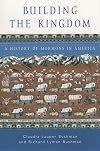
It's not possible to write a history without a viewpoint. The trick is to choose the right one. Of course, when the subject of the history is a schismatic religion, there may be disagreement about what is the right one.
That is definitely the issue with this short, readable history. It is a history of Mormonism told very much from the Mormon standpoint. How did Mormonism come to be? It of course began with the... proclamations... of Joseph Smith. The questions about those gives us a good show more perspective on the book. The foremost biographer of Smith, Fawn M. Brodie, who was herself a Mormon, came to the agonized conclusion that Smith was engaged in a get-rich scheme. Alternately, Smith's revelations began when he was about the age when schizophrenics start to experience the symptoms of their horrid illness. Or, of course, Smith could have been the recipient of a genuine revelation.
This matter is not really discussed. Revelation is basically assumed. For readers who are members of the Saints, this will obviously be desirable. For readers who are not, it leaves glaring holes. And this tendency continues. For a book whose primary author is a woman, it seems surprisingly sympathetic to polygamy: it was doctrine, so it must have been right.
Also, it is worth noting that, when Joseph Smith died, Mormonism fractured. Brigham Young gathered by far the largest faction of the denomination, and took it to Utah -- but the other various sects are all Mormons, they just aren't "the" Mormons. But all we read is a brief mention of the Reorganized Church of the Latter-Day Saints. It is not wrong, but it is parochial and not what I would consider a complete history.
I would also say that the interesting part of the sect's history is the time from when Smith had his revelation until they abandoned polygamy in the 1890s. After that, although the Mormons were still extremely schismatic in theology, they were basically just another separatist sect in an America full of peculiar sects, large and small. But the book still devotes half its length to this relatively dull period.
Bottom line: If you are a Mormon, this is probably a good brief history. But if you are not, it raises far more questions than it answers, and it leaves out a lot of the good stuff to focus on the routine. A bad book? Not really. But one with a viewpoint that I find neither particularly interesting nor particularly useful. show less
That is definitely the issue with this short, readable history. It is a history of Mormonism told very much from the Mormon standpoint. How did Mormonism come to be? It of course began with the... proclamations... of Joseph Smith. The questions about those gives us a good show more perspective on the book. The foremost biographer of Smith, Fawn M. Brodie, who was herself a Mormon, came to the agonized conclusion that Smith was engaged in a get-rich scheme. Alternately, Smith's revelations began when he was about the age when schizophrenics start to experience the symptoms of their horrid illness. Or, of course, Smith could have been the recipient of a genuine revelation.
This matter is not really discussed. Revelation is basically assumed. For readers who are members of the Saints, this will obviously be desirable. For readers who are not, it leaves glaring holes. And this tendency continues. For a book whose primary author is a woman, it seems surprisingly sympathetic to polygamy: it was doctrine, so it must have been right.
Also, it is worth noting that, when Joseph Smith died, Mormonism fractured. Brigham Young gathered by far the largest faction of the denomination, and took it to Utah -- but the other various sects are all Mormons, they just aren't "the" Mormons. But all we read is a brief mention of the Reorganized Church of the Latter-Day Saints. It is not wrong, but it is parochial and not what I would consider a complete history.
I would also say that the interesting part of the sect's history is the time from when Smith had his revelation until they abandoned polygamy in the 1890s. After that, although the Mormons were still extremely schismatic in theology, they were basically just another separatist sect in an America full of peculiar sects, large and small. But the book still devotes half its length to this relatively dull period.
Bottom line: If you are a Mormon, this is probably a good brief history. But if you are not, it raises far more questions than it answers, and it leaves out a lot of the good stuff to focus on the routine. A bad book? Not really. But one with a viewpoint that I find neither particularly interesting nor particularly useful. show less
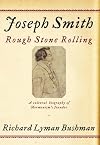
Bushman is a respected historian and a devout Mormon. The blend didn’t work for me when Bushman got into commentary on Smith’s revelations. The rest of the history is interesting, and you definitely get a sense almost despite Bushman of how frustrating it was to deal with Smith, but Bushman repeatedly insists that, given Smith’s limited education and poor upbringing, it’s hard to imagine how he could have come up with such elaborate stories, especially ones that have some show more correspondences with other Biblical apocrypha, absent divine inspiration. I have a couple of things to say about that. (1) Humans are really inventive and creative, even ones from bad circumstances! It’s kind of our thing. Bushman sounds like a Shakespeare truther when he insists that such a lowly creature couldn’t have created an elaborate cosmology. (2) Bushman acknowledges that prophets of Smith’s type were thick on the ground in the US and England in this period, as part of the Christian revival that was ongoing, but he neglects the resulting base-rate problem: even if we accept that producing an elaborate, successful set of revelations was unlikely for any given prophet, people do win lotteries! Bushman is of course free to believe, but I wish he hadn’t neglected the idea of survivor bias if he was going to opine on the unlikelihood of non-divine revelations. (3) As for correspondences, the corollary of human inventiveness is our tendency towards tropes. I’m actually not shocked that both Smith and earlier apocrypha independently produced a story of Abraham’s father worshiping idols in Abraham’s pre-Yahweh youth—are you? show less
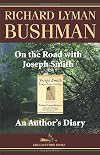
I'll start with a quote from a letter written by Richard Bushman:
"[H]ow can a reasonable historian even pretend the events of the Book of Mormon were true? That is a fact of life for Mormons all the time. They live with the realization that much of the world they believe to exist is nonsense for everyone else. It is disorienting for Mormons to live that way, and now I am discovering it is disorienting for non-Mormons who think they understand their Mormon friends but then realize they show more don't."
This paragraph struck me as a good thesis statement for "On the Road with Joseph Smith." Bushman is a well-respected historian and a faithful Mormon, who decided to write a biography of Joseph Smith that could satisfy both believing Mormons and skeptical academics.
Whether or not he succeeded (or if the task he set for himself was even possible to achieve) is a matter of opinion; this diary chronicles the first year after "Rough Stone Rolling" was released, including a travelogue of speeches and book signings, and Bushman's responses to reviews, both positive and negative.
For those who are used to Bushman's academic style, a peek into his more personal thoughts may be surprising. He's very hard on himself and very concerned that he act as a "servant of Jesus Christ" in everything he does.
This book will be of interest to those who have read "Rough Stone Rolling," and especially to Mormons who are interested in the exploration of balancing a personal religious life with a public academic persona. show less
"[H]ow can a reasonable historian even pretend the events of the Book of Mormon were true? That is a fact of life for Mormons all the time. They live with the realization that much of the world they believe to exist is nonsense for everyone else. It is disorienting for Mormons to live that way, and now I am discovering it is disorienting for non-Mormons who think they understand their Mormon friends but then realize they show more don't."
This paragraph struck me as a good thesis statement for "On the Road with Joseph Smith." Bushman is a well-respected historian and a faithful Mormon, who decided to write a biography of Joseph Smith that could satisfy both believing Mormons and skeptical academics.
Whether or not he succeeded (or if the task he set for himself was even possible to achieve) is a matter of opinion; this diary chronicles the first year after "Rough Stone Rolling" was released, including a travelogue of speeches and book signings, and Bushman's responses to reviews, both positive and negative.
For those who are used to Bushman's academic style, a peek into his more personal thoughts may be surprising. He's very hard on himself and very concerned that he act as a "servant of Jesus Christ" in everything he does.
This book will be of interest to those who have read "Rough Stone Rolling," and especially to Mormons who are interested in the exploration of balancing a personal religious life with a public academic persona. show less
Lists
Awards


You May Also Like


Associated Authors
Statistics
- Works
- 22
- Also by
- 88
- Members
- 1,981
- Popularity
- #12,977
- Rating
- 4.1
- Reviews
- 26
- ISBNs
- 54
- Favorited
- 1