
Shelley Puhak
Author of The Dark Queens: The Bloody Rivalry That Forged the Medieval World
Works by Shelley Puhak
Tagged
Common Knowledge
- Gender
- female
- Occupations
- poet
Professor of Creative Writing - Nationality
- USA
- Birthplace
- Washington, D.C., USA
- Associated Place (for map)
- D.C., USA
Members
Reviews

My review of The Dark Queens is probably going to come across a bit like damning with faint praise. As a "narrative non-fiction" account of the lives of two Merovingian queens, Fredegund and Brunhild, written by a non-specialist, it's better than I expected it to be. Shelley Puhak has clearly read the limited primary sources carefully, contextualising them with archaeological evidence and secondary scholarship, and she does try to grapple with the methodological issues of using fragmentary show more and opinionated sources to do medieval women's history. I could see this working well in the college classroom, not because I agree with all the choices Puhak made in narrating what she imagines of Fredegund and Brunhild's lives—there's use of imaginative "must haves" to fill in the inevitable gaps—but because I think it could be a useful springboard to get students to grapple with methodological and conceptual choices.
The "Fredegund felt this" and "Brunhild may have done that" parts did irk me, but it feels churlish to critique Puhak for them overly when she's very clear that she's not writing a traditional academic history. But what actually made me pencil the most question marks in the margins of The Dark Queens were the tired invocations of the tropes of "the women who've been written out of history"/"I never read about these women when I was younger therefore everyone must have been ignoring them"/"why don't historians write more about these women", etc.
It's undeniable that because of sexism and/or misogyny, medieval chroniclers paid far less attention to women than they did to men, and that as best we can tell those chroniclers were men. But to say that Fredegund and Brunhild were erased from history isn't true—how then would we know anything at all about them? What we have is a historiographical tradition which often caricatures these queens in service of later political goals, as Puhak touches on in her last chapter—a less sexy proposition but a more complex one to grapple with. The fact that Brunhild and Fredegund don't crop up much in history books for kids in the U.S.—nor, I would imagine, do many Merovingians, male or female—might tell us something about geographical biases in the Anglophone world, but it doesn't mean that children everywhere are ignorant of who they are.
And I'm increasingly irritated with the kind of pop history that breathlessly decries how historians! don't! write! about! medieval! women! When since the 1970s there's been a steadily widening body of scholarship (building on a foundation laid from the late 19th century on) on women in the Middle Ages, generally by women scholars. But all that careful work on medieval women and power, ethnicity, memory, patronage, religion, lordship, etc, isn't as sexy as the promise of "the women they don't want you to know about." Ironic. show less
The "Fredegund felt this" and "Brunhild may have done that" parts did irk me, but it feels churlish to critique Puhak for them overly when she's very clear that she's not writing a traditional academic history. But what actually made me pencil the most question marks in the margins of The Dark Queens were the tired invocations of the tropes of "the women who've been written out of history"/"I never read about these women when I was younger therefore everyone must have been ignoring them"/"why don't historians write more about these women", etc.
It's undeniable that because of sexism and/or misogyny, medieval chroniclers paid far less attention to women than they did to men, and that as best we can tell those chroniclers were men. But to say that Fredegund and Brunhild were erased from history isn't true—how then would we know anything at all about them? What we have is a historiographical tradition which often caricatures these queens in service of later political goals, as Puhak touches on in her last chapter—a less sexy proposition but a more complex one to grapple with. The fact that Brunhild and Fredegund don't crop up much in history books for kids in the U.S.—nor, I would imagine, do many Merovingians, male or female—might tell us something about geographical biases in the Anglophone world, but it doesn't mean that children everywhere are ignorant of who they are.
And I'm increasingly irritated with the kind of pop history that breathlessly decries how historians! don't! write! about! medieval! women! When since the 1970s there's been a steadily widening body of scholarship (building on a foundation laid from the late 19th century on) on women in the Middle Ages, generally by women scholars. But all that careful work on medieval women and power, ethnicity, memory, patronage, religion, lordship, etc, isn't as sexy as the promise of "the women they don't want you to know about." Ironic. show less
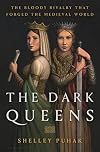
Pick this up, and you won't be able to put this down. You might even find yourself re-reading certain passages because it's just that good. Easily the best book I have read all year, and one of the best nonfiction books I have ever read period. I finished this a couple of weeks ago, and I still think about it on a regular basis. The people, the assassinations, the machinations, all of it puts Game of Thrones to shame. This made me want to read more, about this period and even fantasy, show more because it's just that inspiring to the imagination.
Shelley Puhak did a fantastic job breating life into Fredegund and Brunhild, and I hope she keeps writing more nonfiction like this. Originally a poet, her prose is both vivid yet approachable. She infuses a narrative quality into her subjects as she tries to imagine what they might have thought or felt. Some might think this is taking too much liberty because we have no record of how someone would have felt, but I really appreciate this approach. While I know that everything should be taken with a grain of salt, I find the infusion of humanity really helps me understand the subject. Compared to a book like Weir's Eleanor biography, which I found dull at times and distant, this book is so poignant.
One of the things that I really appreciate the most is the way Puhak turned a feminist eye on her subjects. For example, Fredegund is described as almost hysterical after the birth of her second son, Samson, freaking out about witches and the like who might be trying to kill her child. While Puhak offers some explanations that would make sense for the time period, she also offers the modern insight that Fredegund may have been suffering from postpartum disorder. This is entirely possible, and I find the erasure of women's pain in nonfiction to be so frustrating and even alienating. Yet, Puhak made Brunhild and Fredegund feel as real as they were cruel. It bridged the gap between myself and the two Early Medieval queens.
Really, the research that went into this is just astounding. There is very little information available today about Fredegund and Brunhild, but I feel like I know these women. I hope other writers follow in Puhak's footsteps to fill in the gaps. Dark Queens follows the women from the time they are teenagers and marrying their husbands (or killing their rivals, in Fredegund's case) to the time of their death in their sixties and seventies. Even though there isn't much about the women's lives, there is an abundance of information about their husbands, sons, and contemporaries by comparison. Despite this imbalance, Puhak managed to deftly weave together the stories of the men with the queens to give a fuller picture. I never felt like I was learning about the various kings and pretenders at the expense of the queens, like I did with Weir's Eleanor. I apologize for the unfavorable comparison. It is only fresh in mind since I read both books this year, but I came away from Weir's novel feeling like I barely learned anything about Eleanor while I came away from Dark Queens feeling like I just had a crash course in the Merovingian dynasty.
If you like medieval history, women's history, or royalty, you simply must read this book. show less
Shelley Puhak did a fantastic job breating life into Fredegund and Brunhild, and I hope she keeps writing more nonfiction like this. Originally a poet, her prose is both vivid yet approachable. She infuses a narrative quality into her subjects as she tries to imagine what they might have thought or felt. Some might think this is taking too much liberty because we have no record of how someone would have felt, but I really appreciate this approach. While I know that everything should be taken with a grain of salt, I find the infusion of humanity really helps me understand the subject. Compared to a book like Weir's Eleanor biography, which I found dull at times and distant, this book is so poignant.
One of the things that I really appreciate the most is the way Puhak turned a feminist eye on her subjects. For example, Fredegund is described as almost hysterical after the birth of her second son, Samson, freaking out about witches and the like who might be trying to kill her child. While Puhak offers some explanations that would make sense for the time period, she also offers the modern insight that Fredegund may have been suffering from postpartum disorder. This is entirely possible, and I find the erasure of women's pain in nonfiction to be so frustrating and even alienating. Yet, Puhak made Brunhild and Fredegund feel as real as they were cruel. It bridged the gap between myself and the two Early Medieval queens.
Really, the research that went into this is just astounding. There is very little information available today about Fredegund and Brunhild, but I feel like I know these women. I hope other writers follow in Puhak's footsteps to fill in the gaps. Dark Queens follows the women from the time they are teenagers and marrying their husbands (or killing their rivals, in Fredegund's case) to the time of their death in their sixties and seventies. Even though there isn't much about the women's lives, there is an abundance of information about their husbands, sons, and contemporaries by comparison. Despite this imbalance, Puhak managed to deftly weave together the stories of the men with the queens to give a fuller picture. I never felt like I was learning about the various kings and pretenders at the expense of the queens, like I did with Weir's Eleanor. I apologize for the unfavorable comparison. It is only fresh in mind since I read both books this year, but I came away from Weir's novel feeling like I barely learned anything about Eleanor while I came away from Dark Queens feeling like I just had a crash course in the Merovingian dynasty.
If you like medieval history, women's history, or royalty, you simply must read this book. show less
Merovingian France may not have been on everyone's radar but it had been on mine for quite a number of years - and I had written about both on a old webpage I created back in the late 1990s (now archived for posterity). And in particular, the incredible and oft times deadly rivalry between two women who managed to wield more power than their contemporaries.
Firstly we have Brunhilde/a, Queen and wife of Sigebert, King of Austrasia. A women of pedigree who - like her sister before her - was show more destined for a marriage of political consequence. And then secondly we have Fredegund/a, a slave-girl at the court of Neustria, who in this capacity came to the attention of Chilperic I, and who clawed her way to becoming his third wife - a position she had no intention of relinquishing.
The rivalry between not only these two women but also by the sons of Clothar I King of the Franks, upon the disintegration of his kingdom, would resonate through the generations to come, resulting in the death knell for the dynasty which came barely two centuries later.
Both women suffered the same fate in the end - to either be written out of the history books or the have their reputations so besmirched as to become the epitome of the fallen Eve or Jezebel reincarnate. And the fate of Brunhilde would not rear its ugly head under the Tudor Dynasty, when Henry VIII dispatched the aged Duchess of Salisbury in 1541.
Puhak brings all of her research together to provide the reader with an accessible account of the Merovingian period under these two women. Ample notes and sources will be much appreciated by those seeking to further enrich their own knowledge of the dynasty. show less
Firstly we have Brunhilde/a, Queen and wife of Sigebert, King of Austrasia. A women of pedigree who - like her sister before her - was show more destined for a marriage of political consequence. And then secondly we have Fredegund/a, a slave-girl at the court of Neustria, who in this capacity came to the attention of Chilperic I, and who clawed her way to becoming his third wife - a position she had no intention of relinquishing.
The rivalry between not only these two women but also by the sons of Clothar I King of the Franks, upon the disintegration of his kingdom, would resonate through the generations to come, resulting in the death knell for the dynasty which came barely two centuries later.
Both women suffered the same fate in the end - to either be written out of the history books or the have their reputations so besmirched as to become the epitome of the fallen Eve or Jezebel reincarnate. And the fate of Brunhilde would not rear its ugly head under the Tudor Dynasty, when Henry VIII dispatched the aged Duchess of Salisbury in 1541.
Puhak brings all of her research together to provide the reader with an accessible account of the Merovingian period under these two women. Ample notes and sources will be much appreciated by those seeking to further enrich their own knowledge of the dynasty. show less
I read this as an ARC through the publisher. I have a degree in history including how to properly research using primary and secondary sources. I have taught world history on the high school level.
This is the story of rival Morovingian Queens Brunhild and Fredegund, married to brothers Sigimund and Chilperic during the 550s. With political maneuvering and assassination that makes Game of Thrones look mild, it reads like a novel. Problematically so.
This is written incredibly entertainingly, show more with Puhak doing her best to try to bring these people to life in a real world that contains sights, sounds and textures that would have been present in their era. And while these visceral touches do a lot to transport you to the time and place and are accurate to what we know of the life during the period, much of what she relates in far too many sections is pure speculation. We know a thing happened but we also know that all but the barest records of the event have been expunged as later monarchs tried to erase these women from history. Therefore, we have no idea what someone’s wedding processional would have been like and descriptions of such as spring from the author’s admittedly informed imagination are not history. This is extremely troubling in a book attempting to give these women their due.
You are writing about people who men tried to erase. And you are doing so in a way that will cause modern historians to ignore this because it is not properly sourced. This isn’t helping except maybe to get more people interested in these women and maybe more documents will eventually be found. So it works as publicity, but not as history so much.
It's not that this book doesn’t contain actual history, it absolutely does, but it also has so much hyperbole and speculation mixed in with the things we can actually know. I would have preferred more translated passages of first-person accounts and less of the author speculating. Often times she speculates someone had access to a source that is now missing and while that’s possible, it’s not documented evidence.
Stating she didn’t know and can’t know because the sources don’t exist wouldn’t have taken away with the dynamic writing or the worthy attempt to give these pre-medieval women their due, but it would have made this text feel authentic. I have read it, and I don’t think I can trust half of what is in it. That’s not good.
The sections of authorial speculation don’t end with telling us what a king’s wedding procession might have been, however. It extends to creating whole plots of nuns smuggling messages out of their convents to put political events into motion that a) have no sources or evidence b) could easily be explained by men wanting to use said nuns as political pawns and c) involve elaborate conspiracies with many actors and are quite implausible because have you ever worked as a project manager? Nobody can keep secrets like that. You get more than a couple of people involved and someone is going to talk and it will all go haywire.
Can I buy Fredegund paying off two peasants to kill somebody with poisoned scramasaxes, you bet! That’s three people in a conspiracy. That works. Can I buy endless secret messages passed to half a hundred co-conspirators and none survived? A bit of a stretch. More likely people saw which way the political wind was blowing and ran with who they thought would be the victor as things were put in motion. A lot of the speculation giving complete credit to these Queens, who clearly DID have great influence, for every little thing and cutting out the agency of nobles vying for power is a massive stretch.
And honestly, she often says, “the records go silent,” but here’s what happened. You have no idea what happened. You are literally making it up at that point. Please no.
Again, if you want to read a good medieval fiction mixed with actual history, this is a terrific book. But it cannot be relied on with the author presenting pure speculation on equal footing with fact.
I hope this book sparks someone to do better primary research on these women because they are extremely interesting. This book is well-written and fun to read. Puhak is an adept writer.
And, at the end she, herself states "This book is not an academic history: it is a work of narrative nonfiction based on primary sources." THERE she is correct.
She goes on to state, however, "These primary sources are, admittedly, fragmentary but enough survive to make it possible to assemble a narrative and to piece together the emotional lives and daily realities of these two queens." And there she lost me. No, there are not enough. At least not enough cited in this work. It is incredibly dependent on a single source - Gregory of Tours - and it's not enough to know them as people. Again, I pray there are actually more documents surviving in obscure archives that could add to the scholarship here. Puhak is not wrong that these women deserve their due. show less
This is the story of rival Morovingian Queens Brunhild and Fredegund, married to brothers Sigimund and Chilperic during the 550s. With political maneuvering and assassination that makes Game of Thrones look mild, it reads like a novel. Problematically so.
This is written incredibly entertainingly, show more with Puhak doing her best to try to bring these people to life in a real world that contains sights, sounds and textures that would have been present in their era. And while these visceral touches do a lot to transport you to the time and place and are accurate to what we know of the life during the period, much of what she relates in far too many sections is pure speculation. We know a thing happened but we also know that all but the barest records of the event have been expunged as later monarchs tried to erase these women from history. Therefore, we have no idea what someone’s wedding processional would have been like and descriptions of such as spring from the author’s admittedly informed imagination are not history. This is extremely troubling in a book attempting to give these women their due.
You are writing about people who men tried to erase. And you are doing so in a way that will cause modern historians to ignore this because it is not properly sourced. This isn’t helping except maybe to get more people interested in these women and maybe more documents will eventually be found. So it works as publicity, but not as history so much.
It's not that this book doesn’t contain actual history, it absolutely does, but it also has so much hyperbole and speculation mixed in with the things we can actually know. I would have preferred more translated passages of first-person accounts and less of the author speculating. Often times she speculates someone had access to a source that is now missing and while that’s possible, it’s not documented evidence.
Stating she didn’t know and can’t know because the sources don’t exist wouldn’t have taken away with the dynamic writing or the worthy attempt to give these pre-medieval women their due, but it would have made this text feel authentic. I have read it, and I don’t think I can trust half of what is in it. That’s not good.
The sections of authorial speculation don’t end with telling us what a king’s wedding procession might have been, however. It extends to creating whole plots of nuns smuggling messages out of their convents to put political events into motion that a) have no sources or evidence b) could easily be explained by men wanting to use said nuns as political pawns and c) involve elaborate conspiracies with many actors and are quite implausible because have you ever worked as a project manager? Nobody can keep secrets like that. You get more than a couple of people involved and someone is going to talk and it will all go haywire.
Can I buy Fredegund paying off two peasants to kill somebody with poisoned scramasaxes, you bet! That’s three people in a conspiracy. That works. Can I buy endless secret messages passed to half a hundred co-conspirators and none survived? A bit of a stretch. More likely people saw which way the political wind was blowing and ran with who they thought would be the victor as things were put in motion. A lot of the speculation giving complete credit to these Queens, who clearly DID have great influence, for every little thing and cutting out the agency of nobles vying for power is a massive stretch.
And honestly, she often says, “the records go silent,” but here’s what happened. You have no idea what happened. You are literally making it up at that point. Please no.
Again, if you want to read a good medieval fiction mixed with actual history, this is a terrific book. But it cannot be relied on with the author presenting pure speculation on equal footing with fact.
I hope this book sparks someone to do better primary research on these women because they are extremely interesting. This book is well-written and fun to read. Puhak is an adept writer.
And, at the end she, herself states "This book is not an academic history: it is a work of narrative nonfiction based on primary sources." THERE she is correct.
She goes on to state, however, "These primary sources are, admittedly, fragmentary but enough survive to make it possible to assemble a narrative and to piece together the emotional lives and daily realities of these two queens." And there she lost me. No, there are not enough. At least not enough cited in this work. It is incredibly dependent on a single source - Gregory of Tours - and it's not enough to know them as people. Again, I pray there are actually more documents surviving in obscure archives that could add to the scholarship here. Puhak is not wrong that these women deserve their due. show less
Lists
Awards

You May Also Like


Associated Authors
Statistics
- Works
- 6
- Members
- 553
- Popularity
- #45,137
- Rating
- 3.9
- Reviews
- 14
- ISBNs
- 18
- Languages
- 1