
Nathalia Holt
Author of Rise of the Rocket Girls: The Women Who Propelled Us, from Missiles to the Moon to Mars
About the Author
Nathalia Holt is the author of Cured: The People Who Defeated HIV and a former Fellow at the Ragon Institute of Massachusetts General Hospital, MIT, and Harvard University. Her writing has appeared in the New York Times, the Los Angeles limes, The Atlantic, Slate. Popular Science, and Time. She show more lives in Boston. show less
Works by Nathalia Holt
Rise of the Rocket Girls: The Women Who Propelled Us, from Missiles to the Moon to Mars (2016) 963 copies, 32 reviews
The Queens of Animation: The Untold Story of the Women Who Transformed the World of Disney and Made Cinematic History (2019) 318 copies, 13 reviews
Wise Gals: The Spies Who Built the CIA and Changed the Future of Espionage (2022) 219 copies, 8 reviews
The Beast in the Clouds: The Roosevelt Brothers' Deadly Quest to Find the Mythical Giant Panda (2025) 99 copies, 4 reviews
Cured: How the Berlin Patients Defeated HIV and Forever Changed Medical Science (2014) 42 copies, 1 review
Tagged
Common Knowledge
- Birthdate
- 1980-12-13
- Gender
- female
- Education
- University of Southern California
Tulane University
Humboldt State University. - Occupations
- HIV researcher
science writer - Nationality
- USA
- Places of residence
- Boston, Massachusetts, USA
- Associated Place (for map)
- Massachusetts, USA
Members
Reviews
The Queens of Animation: The Untold Story of the Women Who Transformed the World of Disney and Made Cinematic History by Nathalia Holt
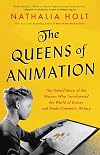
I RECEIVED THIS LOVELY HARDCOVER AS A GIFT FROM A LADY OF MY ACQUAINTANCE. THANKS, NORA!
My Review: I didn't start this book as a Walt Disney cultist. In fact, quite the opposite...I know about his obnoxious labor practices and frankly was unsurprised at his appalling gender politics, both generationally as well as personally...but WOW. The details of what happened to Bianca Majolie are, in a word, repugnant. (And it's really played to the hilt for nastiness in the book...there's no certainty show more that it happened as written because it's not from the horse's mouth, as it were.)
And yet he hired Mary Blair, an extraordinarily gifted artist; he hired Majolie (though apparently fired her so fast she figures in the bulk of the narrative not at all), and Grace Huntington, Retta Scott, Sylvia Holland...all of them who were guilty of Working While Woman in the Disney snakepit of the 1930s and 1940s, at least were working. Most wouldn't have been considered in other animation studios, and all needed the paychecks. Quite a lot of deadbeat dads through the generations. Single moms will work for less because "this is beneath me and you're not paying me enough" means nothing to a hungry kid.
One area where Author Holt did her subjects proud was the mind-bendingly complicated process of animating a feature-length film. She stints not in the telling and retelling, through memories of the women she's interviewed, the pre-computer days and the zillions of tiny steps required for the simplest movements to come to life; the brain-meltingly detail-oriented task of creating and assuring continuity of backgrounds; compositing, editing, oh my Muse of Painting, and Dance, and Epic Poetry, the lists and lists and it really is all necessary for you to know! It is! And not paying attention isn't gonna work because you will be so lost without it, this detailed information....
What the women who worked on Fantasia and Pinocchio and Bambi all did is quite incredible. These classics are what they are, and have the impact they all have, because all or most of the women Author Holt tells us of were doing the work of many men. The men who, when tasked with creating fairies or flowery bowers, whined that this was girls' work so give it to the girls. The upside to their childish idiocy is that the scenes are stunningly beautiful and now, at long last, we know who really did the hard, tedious, and ultimately gorgeous work of bringing sensitivity and glorious beauty to the screen.
There are moments when this "at last we know" technique gets used against one of the women. Mary Blair, a white lady, comes in for some finger-wagging because she failed to stop The Song of the South from being the appallingly racist and stereotype-churning horror that it is. Um...Author Holt...one lone woman, already fighting at home and at work to survive and get to the next paycheck, is kinda sorta gettin' a pass for not adding Civil Rights Campaigner to her resume. At least from me she is.
And what was the reward for this work, absent the credit they merited? A fat paycheck? Oh hell no, Disney was a cheap bastard (which is one big reason his labor force wanted to unionize and even forced a studio shutdown!) with everyone except himself. And the women were underpaid accordingly. Yeah, they had jobs; no, they had no respect or credit; and then, on payday, they got less than the men around them did. It's enough to make you into a wold-eyed revolutionary with a taste for capitalist-bastard blood!
It did me, anyway.
Author Holt has a Ph. D. You've read one of her other best-selling books, most likely: Cured: The People who Defeated HIV and Rise of the Rocket Girls: The Women Who Propelled Us from Missiles to the Moon to Mars. She's written for every major outlet for science news and popularizations of complicated non-fictional topics: The New York Times, The Atlantic, Time, Slate, Popular Science. This is one helluva resume to bring to the topic of women's lives and work. You'd be excused for expecting the organization of the material in this book to be faultless. But it isn't.
Bianca Majolie, mentioned above, gets one (possibly sensationalized) passage; some passing mentions for her music selections and their, um, responses; and a closing anecdote about how she found out she was fired. None of those things were close to each other, none were made much of, and now I'm left wondering who the lady was. I know the most about Mary Blair, because she had serious horsepower and a steely inner something that made it impossible for her to go unheard forever. She is, however, the character...the others are a collection of one-off stories and the occasional halftone photo. (There is a modest glossy photo insert. Given what these women did, surely there had to be some not-copyrighted-by-Disney something to show other than personal photos and an ID card issued by Disney! I think there were three artistic-ish photos. This is, however, pretty minor hence the parenthesis.)
I alluded above to the details Author Holt included about animation and its labor-intensive nature; the role of technology in creating animated films is astounding as a story of development. The 1930s labor movement wasn't wrong, in this case, to holler about machines taking people's jobs. And Author Holt, science popularizer that she is, does not downplay the personal consequences of automation in animation. Nor does she neglect the beauty that the animation freed artists to create, or the benefits to production schedules and thus to our childhoods' aesthetic development. You might not think of it, unless prompted, but a large part of what seems beautiful to you is probably down to one or more Disney films seen in childhood.
Honestly, I find that chilling...but Mary Blair and her fellow animators, while not paragons of socialist virtue, were at least fine artists and possessed of enough soul to make the worst of Disney's early excesses less awful than they could have been. Author Holt is a fair and reasonable guide to the ins and outs, the ups and downs, and the sheer astounding virtuosity and verve that Disney, at its height, gifted the world with. That the people involved in creating it were flawed is undeniable, despite decades of denial.
One of the most tendentious passages in the book is also one with which I am in complete agreement:
It's a bitter, nasty sentence. It's uttered with the unattributed authority of A Truism. And it is, by all that's unholy, inarguable on any evidence I am aware of. show less
My Review: I didn't start this book as a Walt Disney cultist. In fact, quite the opposite...I know about his obnoxious labor practices and frankly was unsurprised at his appalling gender politics, both generationally as well as personally...but WOW. The details of what happened to Bianca Majolie are, in a word, repugnant. (And it's really played to the hilt for nastiness in the book...there's no certainty show more that it happened as written because it's not from the horse's mouth, as it were.)
And yet he hired Mary Blair, an extraordinarily gifted artist; he hired Majolie (though apparently fired her so fast she figures in the bulk of the narrative not at all), and Grace Huntington, Retta Scott, Sylvia Holland...all of them who were guilty of Working While Woman in the Disney snakepit of the 1930s and 1940s, at least were working. Most wouldn't have been considered in other animation studios, and all needed the paychecks. Quite a lot of deadbeat dads through the generations. Single moms will work for less because "this is beneath me and you're not paying me enough" means nothing to a hungry kid.
One area where Author Holt did her subjects proud was the mind-bendingly complicated process of animating a feature-length film. She stints not in the telling and retelling, through memories of the women she's interviewed, the pre-computer days and the zillions of tiny steps required for the simplest movements to come to life; the brain-meltingly detail-oriented task of creating and assuring continuity of backgrounds; compositing, editing, oh my Muse of Painting, and Dance, and Epic Poetry, the lists and lists and it really is all necessary for you to know! It is! And not paying attention isn't gonna work because you will be so lost without it, this detailed information....
What the women who worked on Fantasia and Pinocchio and Bambi all did is quite incredible. These classics are what they are, and have the impact they all have, because all or most of the women Author Holt tells us of were doing the work of many men. The men who, when tasked with creating fairies or flowery bowers, whined that this was girls' work so give it to the girls. The upside to their childish idiocy is that the scenes are stunningly beautiful and now, at long last, we know who really did the hard, tedious, and ultimately gorgeous work of bringing sensitivity and glorious beauty to the screen.
There are moments when this "at last we know" technique gets used against one of the women. Mary Blair, a white lady, comes in for some finger-wagging because she failed to stop The Song of the South from being the appallingly racist and stereotype-churning horror that it is. Um...Author Holt...one lone woman, already fighting at home and at work to survive and get to the next paycheck, is kinda sorta gettin' a pass for not adding Civil Rights Campaigner to her resume. At least from me she is.
And what was the reward for this work, absent the credit they merited? A fat paycheck? Oh hell no, Disney was a cheap bastard (which is one big reason his labor force wanted to unionize and even forced a studio shutdown!) with everyone except himself. And the women were underpaid accordingly. Yeah, they had jobs; no, they had no respect or credit; and then, on payday, they got less than the men around them did. It's enough to make you into a wold-eyed revolutionary with a taste for capitalist-bastard blood!
It did me, anyway.
Author Holt has a Ph. D. You've read one of her other best-selling books, most likely: Cured: The People who Defeated HIV and Rise of the Rocket Girls: The Women Who Propelled Us from Missiles to the Moon to Mars. She's written for every major outlet for science news and popularizations of complicated non-fictional topics: The New York Times, The Atlantic, Time, Slate, Popular Science. This is one helluva resume to bring to the topic of women's lives and work. You'd be excused for expecting the organization of the material in this book to be faultless. But it isn't.
Bianca Majolie, mentioned above, gets one (possibly sensationalized) passage; some passing mentions for her music selections and their, um, responses; and a closing anecdote about how she found out she was fired. None of those things were close to each other, none were made much of, and now I'm left wondering who the lady was. I know the most about Mary Blair, because she had serious horsepower and a steely inner something that made it impossible for her to go unheard forever. She is, however, the character...the others are a collection of one-off stories and the occasional halftone photo. (There is a modest glossy photo insert. Given what these women did, surely there had to be some not-copyrighted-by-Disney something to show other than personal photos and an ID card issued by Disney! I think there were three artistic-ish photos. This is, however, pretty minor hence the parenthesis.)
I alluded above to the details Author Holt included about animation and its labor-intensive nature; the role of technology in creating animated films is astounding as a story of development. The 1930s labor movement wasn't wrong, in this case, to holler about machines taking people's jobs. And Author Holt, science popularizer that she is, does not downplay the personal consequences of automation in animation. Nor does she neglect the beauty that the animation freed artists to create, or the benefits to production schedules and thus to our childhoods' aesthetic development. You might not think of it, unless prompted, but a large part of what seems beautiful to you is probably down to one or more Disney films seen in childhood.
Honestly, I find that chilling...but Mary Blair and her fellow animators, while not paragons of socialist virtue, were at least fine artists and possessed of enough soul to make the worst of Disney's early excesses less awful than they could have been. Author Holt is a fair and reasonable guide to the ins and outs, the ups and downs, and the sheer astounding virtuosity and verve that Disney, at its height, gifted the world with. That the people involved in creating it were flawed is undeniable, despite decades of denial.
One of the most tendentious passages in the book is also one with which I am in complete agreement:
The rise of women in the workplace, no matter what side of the world it occurred on, was frightening to some men, and they approached the perceived threat much as toddlers would a monster under the bed—by crying about it.
It's a bitter, nasty sentence. It's uttered with the unattributed authority of A Truism. And it is, by all that's unholy, inarguable on any evidence I am aware of. show less
The Queens of Animation: The Untold Story of the Women Who Transformed the World of Disney and Made Cinematic History by Nathalia Holt
A compelling exploration of the lives and experiences of the women who worked in Disney's animation studios from the mid-1930s through to the release of Frozen. Nathalia Holt does a brilliant job of describing the lives of these women as well as the working conditions and the technical and artistic contributions they made to Disney's animated films as well as to the animation industry at large. She doesn't shy away from some of awful sexism and racism that was endemic in the industry, show more particularly in the 30s through 50s although the gender gap in animation continues to be significant even in recent years. Fascinating reading for both Disney nerds as well as those interested in women's history. show less
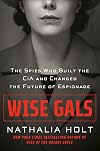
Wise Gals: The Spies Who Built the CIA and Changed the Future of Espionage contains a wealth of information, presented in such a way that is fascinating and often surprising. To say that for many, many years the achievements of these women were overlooked, their ideas uncredited and their potential untapped would be an understatement. Although attractive, none of the women in the book are notorious sexy femme fatales, so their names don’t even rate a second thought. Until you read this show more book. Just a highlight of what they did was amazing: developed new cryptosystems that advanced how spies communicate with each other, built overseas partnerships and allegiances that would last decades, gathered intelligence on deadly Soviet weaponry, participated in scientific and technical operations worldwide, exposed global terrorism threats. Although they did attain powerful, influential positions and were able to effect change, it wasn’t easy. They made sacrifices and paid a price for their unconventional choices. One of the original Wise Gals, Jane Burrell, paid with her life.
Strides have definitely been made through the years but women today still face barriers when trying to earn respect and influence in traditionally male fields. Imagine trying to make your mark or convince all the skeptical men that your idea has merit, that you can do the job as well or even better, in the post-WWII era. Women made huge contributions during the war, but when the war was over the women were for the most part expected to go back where they came from – as nurses, teachers, housewives – and give the important jobs back to the men so things could get back to normal. It is a testament to their tenacity, dedication, yes, stubbornness and their amazing intelligence and brilliance that they persevered and had the successes they did. And it’s only through the meticulous research and efforts of authors like Nathalia Holt that we are now able to learn about these monumental achievements and the women behind them.
Wise Gals is excellent reading, so well laid out that it takes the reader smoothly from woman to woman and historical event to historical event making you understand what motivates and frustrates these women, makes clear all the obstacles they faced, and leaves you feeling you know them quite well.
Thanks to NetGalley and G.P. Putnam's Sons for providing a copy of Wise Gals: The Spies Who Built the CIA and Changed the Future of Espionage in exchange for my honest review. I spent my time going back and forth between amazement and awe with what these women accomplished and irritation with what they had to put up with to achieve it, but at no time did I want to stop reading. It’s a fascinating history of the CIA and of those who helped create it. I highly recommend it. All opinions are my own. show less
Strides have definitely been made through the years but women today still face barriers when trying to earn respect and influence in traditionally male fields. Imagine trying to make your mark or convince all the skeptical men that your idea has merit, that you can do the job as well or even better, in the post-WWII era. Women made huge contributions during the war, but when the war was over the women were for the most part expected to go back where they came from – as nurses, teachers, housewives – and give the important jobs back to the men so things could get back to normal. It is a testament to their tenacity, dedication, yes, stubbornness and their amazing intelligence and brilliance that they persevered and had the successes they did. And it’s only through the meticulous research and efforts of authors like Nathalia Holt that we are now able to learn about these monumental achievements and the women behind them.
Wise Gals is excellent reading, so well laid out that it takes the reader smoothly from woman to woman and historical event to historical event making you understand what motivates and frustrates these women, makes clear all the obstacles they faced, and leaves you feeling you know them quite well.
Thanks to NetGalley and G.P. Putnam's Sons for providing a copy of Wise Gals: The Spies Who Built the CIA and Changed the Future of Espionage in exchange for my honest review. I spent my time going back and forth between amazement and awe with what these women accomplished and irritation with what they had to put up with to achieve it, but at no time did I want to stop reading. It’s a fascinating history of the CIA and of those who helped create it. I highly recommend it. All opinions are my own. show less
Rise of the Rocket Girls: The Women Who Propelled Us, from Missiles to the Moon to Mars by Nathalia Holt
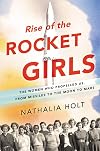
For the younger generations who have grown up with personal computers and tiny calculators that perform complex mathematical calculations this book will come as an eye-opener. Even for myself (I can remember programming a main frame computer by punch card), it was inspiring to think that before electronic calculators there was only paper and pencil and slide rules to do the math that calculated trajectories for rockets. This year's movie "Hidden Figures" told the story of one group of show more females involved in the space race but on the other side of the US there were more women "computers" doing their bit. This is their story.
The Jet Propulsion Laboratory (JPL) was a small and crazy workshop in the 1940s that wanted to develop rockets to propel airplanes and they needed someone good with numbers to do all the calculations. They hired one woman and then another and then more. These women had to work in an unheated building in the hills above Pasadena right beside the testing grounds. They became a tight-knit group who could be relied upon to take the raw data and produce the calculations for thrust and velocity for all manner of rockets. Unlike the women in Hidden Figures they didn't work on the manned missions but their work led the way for the Apollo missions. They also worked on the missions that sent spacecraft to the other planets of the solar system and further. They put in long hours when required and also had homes and children and churches and husbands that required their attention. They were eventually given the job title of engineer but male engineers made more intially. Just a few years ago NASA decided that engineers had to have an advanced degree and they demoted a woman who had been an employee for 50 years to an hourly wage because she didn't have a degree. They had to reverse the decision when they learned that because of the hours she worked she was making even more money than before.
The writing of this book was not at all dry because the human stories were mixed in with the technological explanations. There are also lots of great pictures that show the women and the equipment. I would recommend this to anyone interested in women's history or the space race or changing technology or fans of Hidden Figures. show less
The Jet Propulsion Laboratory (JPL) was a small and crazy workshop in the 1940s that wanted to develop rockets to propel airplanes and they needed someone good with numbers to do all the calculations. They hired one woman and then another and then more. These women had to work in an unheated building in the hills above Pasadena right beside the testing grounds. They became a tight-knit group who could be relied upon to take the raw data and produce the calculations for thrust and velocity for all manner of rockets. Unlike the women in Hidden Figures they didn't work on the manned missions but their work led the way for the Apollo missions. They also worked on the missions that sent spacecraft to the other planets of the solar system and further. They put in long hours when required and also had homes and children and churches and husbands that required their attention. They were eventually given the job title of engineer but male engineers made more intially. Just a few years ago NASA decided that engineers had to have an advanced degree and they demoted a woman who had been an employee for 50 years to an hourly wage because she didn't have a degree. They had to reverse the decision when they learned that because of the hours she worked she was making even more money than before.
The writing of this book was not at all dry because the human stories were mixed in with the technological explanations. There are also lots of great pictures that show the women and the equipment. I would recommend this to anyone interested in women's history or the space race or changing technology or fans of Hidden Figures. show less
Lists
Awards


You May Also Like


Associated Authors
Statistics
- Works
- 5
- Members
- 1,641
- Popularity
- #15,655
- Rating
- 3.9
- Reviews
- 58
- ISBNs
- 43
- Languages
- 1