
Dmitry Sergeyevich Merezhkovsky (1866–1941)
Author of The Romance of Leonardo da Vinci: The Forerunner
About the Author
Image credit: Dimitri Sergeyevich Merezhkovsky (1866-1941)
Series
Works by Dmitry Sergeyevich Merezhkovsky
Tolstoy As Man and Artist with an Essay on Dostoyevsky (Mint Editions (In Their Own Words: Biographical and Autobiographical Narratives)) (1970) 17 copies, 1 review
Вечные спутники : портреты из всемирной литературы (Eternal Companions: Portraits from World Literature) (2007) 6 copies
The Resurrection of the Gods, Part 2 — Author — 5 copies
Dante 3 copies
Peter and Alexis, Part 1 — Author — 2 copies
Vele vagy ellene 1 copy
Vechnye Sputniki 1 copy
Első Sándor I-II 1 copy
Téli Szivárvány 1 copy
Az istenek születése 1 copy
Tolsztoj és Dosztojevszkij 1 copy
Religija i revolucija 1 copy
Tajna Zapada 1 copy
Tajna ruske revolucije 1 copy
Lutero 1 copy
Peter and Alexis, Part 2 1 copy
Fictionalized Biographies Of Three Of The World's Greatest Painters - Actually Illustrated By Themselves: Lust for Life by Irving Stone; the Romance of Leonardo Da Vinci by Dmitri… (1939) — Contributor — 1 copy
Pietro il grande: romanzo 1 copy
La resurrezione degli dei, 3 1 copy
El fin de Alejandro I 1 copy
Novelas completas 1 copy
The Jewish Question as a Russian Question (RUSSIAN HISTORY, JEWISH HISTORY, POLITICAL ANALYSIS) 1 copy
Gogol y el Diablo 1 copy
Associated Works
The Dedalus Book of Russian Decadence: Perversity, Despair and Collapse (2007) — Contributor — 112 copies, 1 review
The Masterpiece Library of Short Stories Vol. XIII: Russian Etc. — Contributor — 9 copies
Tagged
Common Knowledge
- Legal name
- Merežkovskij, Dmitrij Sergeevič
Merezhkovsky, Dmitry Sergeyevich - Other names
- Merezhkovsky, Dmitry
Merejkowski, Dmitri - Birthdate
- 1866-08-02
- Date of death
- 1941-12-09
- Gender
- male
- Education
- St. Petersburg State University
- Occupations
- poet
novelist
literary critic - Organizations
- Bogoiskateli
The Religious-Philosophical Society
Socialist-Revolutionary Party - Nationality
- Russia (birth)
- Birthplace
- St. Petersburg, Russia
- Places of residence
- Russia
Poland - Place of death
- Paris, France
- Burial location
- Sainte-Genevieve-des-Bois Russian Cemetery
- Associated Place (for map)
- St. Petersburg, Russia
Members
Reviews

From the standpoint of "history", Merejkowski's The Death of the Gods is riveting, introducing facts and scenes from the Roman Empire entirely new to me, utterly convincing in their depiction, and leaving me eager to read other books on Imperial Roman philosophy, social life, and architecture. From the standpoint of "fiction", the impression was less dramatic though still engaging. I think primarily this has to do with the changing nature of the novel since Merejkowski wrote: his characters show more do not captivate me, his plot is not what I would call sweeping, and overall I am not "lost in a good book". But: The book is well plotted, and the characters are fully realised. Deliberate or not, the writing allows a space even as I read it, encouraging concurrent reflection. The novel benefits from this reflective space.
Part I unfolds not so much through plot or even activity as through a panorama. Characters are introduced, then left again. Encounters and conversations relayed, but not immediately clear in their significance. In this way, the themes are gathered and the character of Julian built up. It becomes clear that Julian has a destiny that will shape the Roman empire, outcast though he is, and that his fixation with spirit and beauty and truth will play a role. Part II is a more connected narrative, both in terms of Julian's path through empire and history, and in the recurring actions of side characters both minor and major. The end result is a complex yet efficiently told story.
Overall, quite impressive. I'm left wondering how accurate is Merejkowski's take on Roman customs, Attic Greek architecture and society, the role of Christianity in the empire pre-, intra-, and post-Julian, and the various military campaigns. If either of the remaining two volumes in the trilogy approach this standard, they'll be well worth the time to read. show less
Part I unfolds not so much through plot or even activity as through a panorama. Characters are introduced, then left again. Encounters and conversations relayed, but not immediately clear in their significance. In this way, the themes are gathered and the character of Julian built up. It becomes clear that Julian has a destiny that will shape the Roman empire, outcast though he is, and that his fixation with spirit and beauty and truth will play a role. Part II is a more connected narrative, both in terms of Julian's path through empire and history, and in the recurring actions of side characters both minor and major. The end result is a complex yet efficiently told story.
Overall, quite impressive. I'm left wondering how accurate is Merejkowski's take on Roman customs, Attic Greek architecture and society, the role of Christianity in the empire pre-, intra-, and post-Julian, and the various military campaigns. If either of the remaining two volumes in the trilogy approach this standard, they'll be well worth the time to read. show less
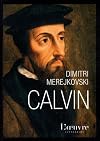
La foudre de Calvin frappa l'Église romaine et soudain de son sein se mit à couler la source d'une vie nouvelle, d'une nouvelle sainteté, écrit Dimitri Merejkovski dans ce livre dense qui embrasse la vie et l'œuvre de Calvin d'une étreinte si puissante et si moderne qu'on en sort le souffle court. Faisant fi des polémiques partisanes entre catholiques et protestants, il élève le propos, l'extrait de l'histoire pour le rendre plus intelligible à l'homme d'aujourd'hui. La vie de Jean show more Calvin s'écoule au fil des pages, romanesque, pleine de bruit et de fureur, de foi et de sang, de folie aussi. Le lointain XVe siècle a soudain des résonances familières. On est happé par l'action, sans jamais perdre de vue la croix de cet homme de Dieu qui agit aussi en politique et en législateur. C'est le temps des bûchers, Calvin y prend une large part. Travailleur acharné, il dirige, décide, écrit inlassablement. Son oeuvre théologique est immense. En romancier hors pair, en érudit, en croyant enfin, Dimitri Merejkovski brosse ici le portrait d'un être qui ne sait à quel point il imprime sa marque sur les siècles à venir. Lire ce texte à notre époque de renaissance du religieux, c'est plonger au cœur même de ce qui en fait l'essence : la passion de la vérité et la quête du salut, mais aussi la tentation de l'orgueil. Jamais sans doute évocation plus forte n'a été consacrée au grand homme que fut Jean Calvin. show less
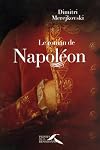
Lorsque Dimitri Merejkovski se penche sur le personnage de Napoléon - qu'il suit de la naissance à la mort -, il voit un homme profondément humain face au vent de l'Histoire. Orgueilleux, insatisfait, fils et fossoyeur de la Révolution, Napoléon se bat au nom d'idéaux de liberté, met l'Europe à feu et à sang, élève la France malgré elle avant de la plonger dans la misère et l'anéantissement. Si Léonard incarne le génie dans Le roman de Léonard de Vinci, Napoléon est ici show more l'ambition humaine, vécue jusqu'à l'extrême. Dévoré par la démesure de son talent, il connaît in fine la rédemption salvatrice. La vie hors norme de l'Empereur est, pour le grand écrivain russe, une terre glaise dont on sculpte les titans. Ce n'est pas seulement la force, c'est aussi la fragilité de l'élu du destin qui frappe dans cet ouvrage. L'homme Napoléon devient alors l'Homme seul, seul face à Dieu, seul dans la déchirante nudité de sa grandeur. Et l'on sort de cette lecture ébloui par le talent d'un auteur capable de rendre émouvant, vivant, humain, un destin aussi statufié que celui de Napoléon. show less

I remember so very often walking through the Vatican museums and stopping at the lonely little picture Leonardo Da Vinci made of St Jerome. It was always strange to stop and look at it. It is in the whole of the museum the only work that is incomplete to such a degree. One would wonder why it is there. Surely, this person who we all know as a renaissance master most have better works that we could display.
Or maybe not. I guess I never bothered to look into the life Of Da Vinci, but if we show more Take Merezkovsky word on it, he was not a prolific person at all. His mastery does show in the little ChiaroScuro work I mentioned, but the book brought me to an understanding that being a master of something might not mean the prolific output showed by various other Italian artists of history.
The book illustrates rather well not only the person in question, but the rather interesting and turbulent times he lived in.
A book that can contextualize a painting is certainly rather good. show less
Or maybe not. I guess I never bothered to look into the life Of Da Vinci, but if we show more Take Merezkovsky word on it, he was not a prolific person at all. His mastery does show in the little ChiaroScuro work I mentioned, but the book brought me to an understanding that being a master of something might not mean the prolific output showed by various other Italian artists of history.
The book illustrates rather well not only the person in question, but the rather interesting and turbulent times he lived in.
A book that can contextualize a painting is certainly rather good. show less
Lists
Awards


You May Also Like


Associated Authors
Statistics
- Works
- 74
- Also by
- 7
- Members
- 1,003
- Popularity
- #25,716
- Rating
- 4.0
- Reviews
- 15
- ISBNs
- 108
- Languages
- 10
- Favorited
- 6

