
Adam Nevill
Author of The Ritual
About the Author
Works by Adam Nevill
Cunning Folk: A Folk Horror Thriller from the Author of No One Gets Out Alive and The Ritual (2021) 211 copies, 8 reviews
Cries from the Crypt 7 copies
Where Angels Come In 2 copies
The Age of Entitlement (Short story) 2 copies
The Ritual 1 copy
Hippocampus 1 copy
Daire 16 1 copy
Mothers Milk 1 copy
Associated Works
The Year's Best Fantasy & Horror 2006: 19th Annual Collection (2006) — Contributor — 244 copies, 4 reviews
The Best of the Best Horror of the Year: 10 Years of Essential Short Horror Fiction (2018) — Contributor — 112 copies, 2 reviews
The Future of Horror: The Collected Solaris Horror Anthologies, featuring House of Fear, Magic and End of the Road (2015) — Contributor — 8 copies
No One Gets Out Alive — Author — 2 copies
Tagged
Common Knowledge
- Birthdate
- 1969
- Gender
- male
- Nationality
- UK
- Birthplace
- Birmingham, Warwickshire, England, UK
- Map Location
- England, UK
Members
Reviews
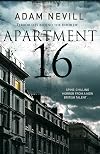
This was Nevill's second book and one he took a great deal of care over with (allegedly) seventeen drafts over four and a half years. This painstaking approach shows both in its technical 'perfection' but perhaps also in (slightly more negatively) its solid unwavering pace.
However, notwithstanding this, it is an excellent horror tale that takes what is usually a trope of demonically possessed New York apartments, translates it to upper class London, gives it local colour and creates a worthy show more entry on the very edge of becoming canonical.
With only very brief late intrusions from other voices, Nevill tells his tale through the experiences of two characters - a not enormously bright ordinary American woman who 'must know' when it might be better not to know and a disturbed failed young artist in a dead end job as porter.
What we have is not only the American tradition (perhaps with an eye to a film although Nevill ruins his chances of that by delivering unfilmable smells and visions whose absence or prosthetics would have resulted in a weak pot-boiler on screen) but indirect homage to British occulture.
The picture (an appropriate word) of the strange interwar artistic figure of Hessen with his fascistic leanings, links to the futurist avant-garde and to Crowley (who finds him too much), sado-masochistic cruelty and narcissism is a satire that you can take seriously as evil.
There is a wonderfully cruel account of an obscure society (the Friends of Felix Hessen) that will raise a dark smile from anyone who has inhabited for any length of time the worlds of British occulture and London's specialist literary and artistic 'fan' clubs.
Nevill captures the closed world of London enthusiasms brilliantly as he does the dark side of London in an exercise in demonic psycho-geography. This London is not a place of old world high culture but a nihilistic sink pit of misery and selfishness.
The vicious ghost-hoodlum who acts as Hessen's agent ((and whose back story is revealed only very late in the tale) is the fearful nightmare of every 'nice' middle class Londoner as it is of falling back into the lumpenproletarian world of working class deprivation despite one's 'education'.
The class fear is visceral. The upper classes are vile though made vile by their entrapment in evil. The world of benefits and welfare is cruel. The nice and educated are either seduced into or nearly destroyed by evil. It is so very urban liberal middle class, fascist ressentiment pretending it is not.
Hessen can also be seen as a logical development of Lovecraft's Pickman while we can perhaps detect the influence of Ligotti's 'Teatro Grottesco', a world of trapped puppets whose destiny is traced in the malignity of an evil that underlays the apparent world and that Hessen uncovers through art.
Indeed, the book's nihilistic philosophy does not bear too much thinking about since the core of it is unresolved - that the dead are doomed to hellish suffering and lurk amongst us, unseen, and that, one day, we shall join them in that suffering. Now that is true horror.
The book is less visceral and more intellectual than some of Nevill's later works. It depends very much on characterisation and atmosphere more than it does on plot. The horror may appear to be cosmic but what really matters is the entrapment and fate of human beings out of their depth and 'doomed'.
An ambitious book by an ambitious writer, 'Apartment 16' does its job of taking tropes from the horror genre and weaving them into a tale that holds the attention even if its very perfection of execution ironically works against it being a genre masterpiece. show less
However, notwithstanding this, it is an excellent horror tale that takes what is usually a trope of demonically possessed New York apartments, translates it to upper class London, gives it local colour and creates a worthy show more entry on the very edge of becoming canonical.
With only very brief late intrusions from other voices, Nevill tells his tale through the experiences of two characters - a not enormously bright ordinary American woman who 'must know' when it might be better not to know and a disturbed failed young artist in a dead end job as porter.
What we have is not only the American tradition (perhaps with an eye to a film although Nevill ruins his chances of that by delivering unfilmable smells and visions whose absence or prosthetics would have resulted in a weak pot-boiler on screen) but indirect homage to British occulture.
The picture (an appropriate word) of the strange interwar artistic figure of Hessen with his fascistic leanings, links to the futurist avant-garde and to Crowley (who finds him too much), sado-masochistic cruelty and narcissism is a satire that you can take seriously as evil.
There is a wonderfully cruel account of an obscure society (the Friends of Felix Hessen) that will raise a dark smile from anyone who has inhabited for any length of time the worlds of British occulture and London's specialist literary and artistic 'fan' clubs.
Nevill captures the closed world of London enthusiasms brilliantly as he does the dark side of London in an exercise in demonic psycho-geography. This London is not a place of old world high culture but a nihilistic sink pit of misery and selfishness.
The vicious ghost-hoodlum who acts as Hessen's agent ((and whose back story is revealed only very late in the tale) is the fearful nightmare of every 'nice' middle class Londoner as it is of falling back into the lumpenproletarian world of working class deprivation despite one's 'education'.
The class fear is visceral. The upper classes are vile though made vile by their entrapment in evil. The world of benefits and welfare is cruel. The nice and educated are either seduced into or nearly destroyed by evil. It is so very urban liberal middle class, fascist ressentiment pretending it is not.
Hessen can also be seen as a logical development of Lovecraft's Pickman while we can perhaps detect the influence of Ligotti's 'Teatro Grottesco', a world of trapped puppets whose destiny is traced in the malignity of an evil that underlays the apparent world and that Hessen uncovers through art.
Indeed, the book's nihilistic philosophy does not bear too much thinking about since the core of it is unresolved - that the dead are doomed to hellish suffering and lurk amongst us, unseen, and that, one day, we shall join them in that suffering. Now that is true horror.
The book is less visceral and more intellectual than some of Nevill's later works. It depends very much on characterisation and atmosphere more than it does on plot. The horror may appear to be cosmic but what really matters is the entrapment and fate of human beings out of their depth and 'doomed'.
An ambitious book by an ambitious writer, 'Apartment 16' does its job of taking tropes from the horror genre and weaving them into a tale that holds the attention even if its very perfection of execution ironically works against it being a genre masterpiece. show less
Well, holy sh*t.
A night, and a day, and a night gone, lost in a book so atmospherically terrifying that I could NOT wrench my brain away from this slobbery, sickeningly crunchy feast of a tale.
Mr. Nevill, you are a twisted man. I'm so glad I don't live inside your skull, and I feel kinda sorry that you do.
A night, and a day, and a night gone, lost in a book so atmospherically terrifying that I could NOT wrench my brain away from this slobbery, sickeningly crunchy feast of a tale.
Mr. Nevill, you are a twisted man. I'm so glad I don't live inside your skull, and I feel kinda sorry that you do.
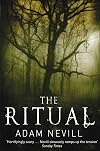
I suspect that one of the reasons why I do not read much horror fiction is that it just does not get at me. I can (and quite often do) tear up over a good Romance novel, but horror fiction, while I can appreciate and enjoy it intellectually, for the most part leaves me cold emotionally. Which The Ritual, Adam Nevill’s third novel (and actually his second one I have read), also did – but in the sense that it was giving me the chills. And on a hot day in July, too. This really is one scary show more novel, and if it even impressed me who am usually indifferent to that particular aspect of the genre, I assume that it will frighten the beejesus out of afficionados (unless they already are too jaded and barely twitch an eyebrow at even the scariest of tales).
The Ritual is really two novels in one – there is the novel in which four feckless friends from Britain try to re-awaken the magic of their university days by undertaking a hiking trip through the forests of Northern Sweden, and instead encounter quite a different kind of magic, namely a nameless, faceless supernatural horror that pursues them relentlessly and mercilessly kills them off one by one. And then there is a novel where a single guy has to fight against a group of teenage Death Metal cultists as well as the ancient, forgotten god they worship. The shift is very noticeable and occurs about two thirds into The Ritual; it will likely throw off most readers at first until they have managed to regain their bearings and adjusted to the different pacing. I imagine there might even be a few readers who find themselves catapulted out of the novel entirely, but for me at least it works, and it makes perfect sense within the framework of the plot.
Adam Nevill is an excellent writer, and equally adept at evoking the atmospheric horror of the first part - the uneasy, paradox sensation of being out in open nature and but at the same time being closed in, the dread of having stumbled into the province of something Ancient that does not play by our modern, enlightened rules, and the sheer fright of being prey to an unseen, preternaturally strong predator – as well as at describing the more tangible fright (and, let’s not forget that, occasional humour) of the second part – the frustration at being held captive by what is obviously a bunch of lunatics, the despair at being heavily wounded and close to dying, helplessly subject to one’s captors’ whims. He is also a sure hand at nuanced character description – none of the four British friends is exactly heroic, they all come credibly across as your average blokes from next door, and the band members who make their appearance in the second part, while obviously not quite sane, still are human beings, as opposed to being mere plot devices. Nevill took the time to form protagonists as well as antagonists as distinct indivuals, with their own stories, their strengths and weaknesses, quirks and foibles, and this effort pays off for the reader – the characters’ very humanity offsets the supernatural dread that is constantly looming in the background (only to erupt with sudden and brutal viciousness) and makes it all the more visceral. Maybe I should read some more horror fiction in the future, but I will definitely be reading more of Adam Nevill’s work. show less
The Ritual is really two novels in one – there is the novel in which four feckless friends from Britain try to re-awaken the magic of their university days by undertaking a hiking trip through the forests of Northern Sweden, and instead encounter quite a different kind of magic, namely a nameless, faceless supernatural horror that pursues them relentlessly and mercilessly kills them off one by one. And then there is a novel where a single guy has to fight against a group of teenage Death Metal cultists as well as the ancient, forgotten god they worship. The shift is very noticeable and occurs about two thirds into The Ritual; it will likely throw off most readers at first until they have managed to regain their bearings and adjusted to the different pacing. I imagine there might even be a few readers who find themselves catapulted out of the novel entirely, but for me at least it works, and it makes perfect sense within the framework of the plot.
Adam Nevill is an excellent writer, and equally adept at evoking the atmospheric horror of the first part - the uneasy, paradox sensation of being out in open nature and but at the same time being closed in, the dread of having stumbled into the province of something Ancient that does not play by our modern, enlightened rules, and the sheer fright of being prey to an unseen, preternaturally strong predator – as well as at describing the more tangible fright (and, let’s not forget that, occasional humour) of the second part – the frustration at being held captive by what is obviously a bunch of lunatics, the despair at being heavily wounded and close to dying, helplessly subject to one’s captors’ whims. He is also a sure hand at nuanced character description – none of the four British friends is exactly heroic, they all come credibly across as your average blokes from next door, and the band members who make their appearance in the second part, while obviously not quite sane, still are human beings, as opposed to being mere plot devices. Nevill took the time to form protagonists as well as antagonists as distinct indivuals, with their own stories, their strengths and weaknesses, quirks and foibles, and this effort pays off for the reader – the characters’ very humanity offsets the supernatural dread that is constantly looming in the background (only to erupt with sudden and brutal viciousness) and makes it all the more visceral. Maybe I should read some more horror fiction in the future, but I will definitely be reading more of Adam Nevill’s work. show less
Oh, what a wonderfully creepy book. I finished it over a week ago and it's still with me. I keep thinking of the creatures appearing in their bony half-life, trying to cross into this world. Oddly, while I was reading this, my husband had a dream about me turning into a demon because of a picture painted over our door. I never even told him what the book was about. Care to explain that, Mr. Nevill?
Briefly, the book is about a filmmaker hired to do a documentary about the history of a cult show more that ended in murder. We learn about the filmmaker's earlier movies, which this book actually made me want to see. The cult started off with the hippy kind of thing in London but quickly turned darker because of the evil but charismatic leader (as so many cults do). Eventually we learn why. And I have to say the reasons why were so well told, I was checking out history books/websites because I thought the medieval cult was real. Seriously. I studied medieval history in college and there were a LOT of weird cults back then. This one didn't sound any weirder than any of those. Again, kudos, Mr. Nevill. You got me again.
The descriptions of the creatures, though, while creepy, reminded me of an even darker version of fairies for much of the book. I'm expecting some of you to laugh at this, but those of you who know folklore know that fairies were originally very far from the winged cherubic things we're familiar with today. They were amoral, sometimes even evil creatures who had motives mere humans could never hope to understand. I know that the amount of reading I've done on this topic colored how I viewed the creatures, so I was extremely curious to find out exactly what they were. And I was fascinated by what they indeed were. I was fascinated by the whole book.
If you like creepy, read it.
And thank you, Early Reviewers! I now have to go out and get the author's earlier books. You've introduced me to yet another author I will count among favorites. show less
Briefly, the book is about a filmmaker hired to do a documentary about the history of a cult show more that ended in murder. We learn about the filmmaker's earlier movies, which this book actually made me want to see. The cult started off with the hippy kind of thing in London but quickly turned darker because of the evil but charismatic leader (as so many cults do). Eventually we learn why. And I have to say the reasons why were so well told, I was checking out history books/websites because I thought the medieval cult was real. Seriously. I studied medieval history in college and there were a LOT of weird cults back then. This one didn't sound any weirder than any of those. Again, kudos, Mr. Nevill. You got me again.
The descriptions of the creatures, though, while creepy, reminded me of an even darker version of fairies for much of the book. I'm expecting some of you to laugh at this, but those of you who know folklore know that fairies were originally very far from the winged cherubic things we're familiar with today. They were amoral, sometimes even evil creatures who had motives mere humans could never hope to understand. I know that the amount of reading I've done on this topic colored how I viewed the creatures, so I was extremely curious to find out exactly what they were. And I was fascinated by what they indeed were. I was fascinated by the whole book.
If you like creepy, read it.
And thank you, Early Reviewers! I now have to go out and get the author's earlier books. You've introduced me to yet another author I will count among favorites. show less
 This review was written for LibraryThing Early Reviewers.
Lists
At the Library (2)
Library TBR (1)
Awards


You May Also Like


Associated Authors
Statistics
- Works
- 32
- Also by
- 39
- Members
- 4,655
- Popularity
- #5,418
- Rating
- 3.6
- Reviews
- 215
- ISBNs
- 123
- Languages
- 4
- Favorited
- 9
