
George Burr Leonard (1923–2010)
Author of Mastery: The Keys to Success and Long-Term Fulfillment
About the Author
Works by George Burr Leonard
Shoulder the sky 1 copy
The End of Sex 1 copy
Associated Works
The Zen Way to Martial Arts: A Japanese Master Reveals the Secrets of the Samurai (Compass) (1983) — Introduction, some editions — 265 copies, 5 reviews
Tagged
Common Knowledge
- Birthdate
- 1923
- Date of death
- 2010-01-06
- Gender
- male
- Organizations
- Esalen Institute
- Nationality
- USA
- Birthplace
- Atlanta, Georgia, USA
- Place of death
- Mill Valley, California, USA
- Associated Place (for map)
- USA
Members
Reviews
Before enlightenment, chop wood and carry water. After enlightenment, chop wood and carry water.
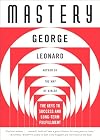
Okay, so Mastery is an explanation of Zen principles by a white dude for other white people. It is still a fairly interesting book, drawing on Leonard's long work in the 60s human potential movement, and specifically becoming a Aikido black belt, as well as an early life as a bomber pilot instructor in World War 2.
Most of us are okay at many things, few of us are genuine masters. Moderately show more skilled non-masters fall into one of three archetypes. Dabblers rush to try new things, enjoying the rush of new gear and new jargon and communities, but at the slightest friction retreat. Obsessives double down, always demanding results and increased performance while ignoring the toll of injuries until burnout. And hackers develop One Good Trip and stay in their comfortable spot without ever getting to the core of the activity. (I'm a hacker, for what it's worth).
Mastery is instead the focus on process over product, on finding the simple pleasure in focus and doing it right until you can do it perfectly. It is about the slow path and enjoying the plateau.
There are five keys to mastery (which I've stolen from another review. Hacker, remember :p)
Okay, so Mastery is an explanation of Zen principles by a white dude for other white people. It is still a fairly interesting book, drawing on Leonard's long work in the 60s human potential movement, and specifically becoming a Aikido black belt, as well as an early life as a bomber pilot instructor in World War 2.
Most of us are okay at many things, few of us are genuine masters. Moderately show more skilled non-masters fall into one of three archetypes. Dabblers rush to try new things, enjoying the rush of new gear and new jargon and communities, but at the slightest friction retreat. Obsessives double down, always demanding results and increased performance while ignoring the toll of injuries until burnout. And hackers develop One Good Trip and stay in their comfortable spot without ever getting to the core of the activity. (I'm a hacker, for what it's worth).
Mastery is instead the focus on process over product, on finding the simple pleasure in focus and doing it right until you can do it perfectly. It is about the slow path and enjoying the plateau.
There are five keys to mastery (which I've stolen from another review. Hacker, remember :p)
- Instruction-Get first rate instruction. The best instructor balances praise and correction, never scolds, and splits attention between beginners, experts, the gifted, and clods. Check their lineage and especially their students
- Practice-This is the path. For how long? As long as you are alive. Every single day, with discipline and focus and joy.
- Surrender-Learning involves certain indignities, you will not look good from the get-go. Surrendering means there are no experts, only learners. Expect to be clumsy and foolish
- Intentionality-To avoid falling into a spineless fluffy practice, you need a clear vision of where you want to get to. Visualize your mastery, then enact it.
- The Edge-This is where the master distances himself from the rest. There is tinge of craziness, the pursuit of the impossible, that distinguishes the master from the mere expert
What is also interesting is the forces that work against mastery. Consumerism, and the quick fix via distraction and the numbing pleasures of drugs and media are the obvious one, but their are more subtle foes of mastery as well. The demand for profits, for wins, for quick success erodes true mastery. A measure becomes both a goal and limit--why exceed what is required? And your life is part of a balanced, homeostatic system, and there will be resistance to changes in its patterns that manifests in innumerable ways as you pursue mastery.
This book is often inspiring, sometimes digressive, and definitely worth reading.

You know how white ladies were about yoga in the 2000's? That's how this guy is about Aikido.
I was looking forward to reading about the joy of exercise, and maybe even a dive into spirituality. But not this "energy-field-vibration" pseudoscience BS.
I was looking forward to reading about the joy of exercise, and maybe even a dive into spirituality. But not this "energy-field-vibration" pseudoscience BS.
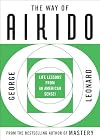
The Way of Aikido is a study of philosophy combined with a memoir. The author, George Leonard, discusses how he has utilized the tenets of aikido in his everyday life. These methods have done a great deal to make him more understanding and a better human being in general.
The book is relatively short. The idea of aikido is to go with the flow, so to speak. Rather than countering an attempted strike or blocking a hit, the idea of aikido is to absorb the hit or use its own energy against it. It show more discusses the ideas of Ki energy and other stuff, which does make it somewhat interesting. It is more about balance and finding your center than anything else.
I am not a martial artist, I will say that directly. The closest I came to it is taking a Taekwondo class when I was eight. I could not afford any more lessons and I did not have a good mindset for martial arts. I will also be honest with another aspect of the book, Ki energy sounds hokey to me. Whenever the author mentioned it, my eyes glazed over a bit. That does not mean that this book is bad by any means, it just means that I need to be more open-minded I suppose.
All in all, the book was entertaining and informative. Once again, Morihei Ueshiba sounds like a man I would have liked to meet. Unfortunately, barring time travel that is not possible. show less
The book is relatively short. The idea of aikido is to go with the flow, so to speak. Rather than countering an attempted strike or blocking a hit, the idea of aikido is to absorb the hit or use its own energy against it. It show more discusses the ideas of Ki energy and other stuff, which does make it somewhat interesting. It is more about balance and finding your center than anything else.
I am not a martial artist, I will say that directly. The closest I came to it is taking a Taekwondo class when I was eight. I could not afford any more lessons and I did not have a good mindset for martial arts. I will also be honest with another aspect of the book, Ki energy sounds hokey to me. Whenever the author mentioned it, my eyes glazed over a bit. That does not mean that this book is bad by any means, it just means that I need to be more open-minded I suppose.
All in all, the book was entertaining and informative. Once again, Morihei Ueshiba sounds like a man I would have liked to meet. Unfortunately, barring time travel that is not possible. show less
Read this on a whim based on a Metafilter comment. It's basically a book about how to learn stuff good. Pretty interesting - to me, the two biggest points are that plateaus in learning are fine and that preconceptions can be very harmful. I think much of this book is common sense but it is nice to see it all in one place. It also kind of makes me want to learn Aikido. It was a quick read, and enjoyable enough. Overall I'm glad I read it, and the concepts he has distilled will probably stick show more with me into the future. show less
Lists
You May Also Like


Associated Authors
Statistics
- Works
- 22
- Also by
- 4
- Members
- 1,612
- Popularity
- #15,986
- Rating
- 3.8
- Reviews
- 16
- ISBNs
- 43
- Languages
- 1
- Favorited
- 1