
Laura Freeman
Author of The Reading Cure: How Books Restored My Appetite
Works by Laura Freeman
Associated Works
Hidden figures : the true story of four black women and the space race (2018) — Illustrator — 1,792 copies, 69 reviews
Pies from Nowhere: How Georgia Gilmore Sustained the Montgomery Bus Boycott (2018) — Illustrator, some editions — 168 copies, 7 reviews
Nikki and Deja: Election Madness (Nikki & Deja) (Nikki and Deja, 4) (2011) — Illustrator — 119 copies, 1 review
Nikki and Deja: The Newsy News Newsletter: Nikki and Deja, Book Three (Nikki and Deja, 3) (2010) — Illustrator — 101 copies, 1 review
Fancy Party Gowns: The Story of Fashion Designer Ann Cole Lowe (2017) — Illustrator — 77 copies, 7 reviews
The Faith of Elijah Cummings: The North Star of Equal Justice (2021) — Illustrator — 51 copies, 1 review
Tagged
Common Knowledge
- Gender
- female
- Education
- School of Visual Arts (BFA)
- Occupations
- artist
illustrator - Short biography
- Laura Freeman is a children's book illustrator. She received her BFA from the School of Visual Arts in New York City. She has illustrated many books, and done work for Highlights for Children. In a review of the picture book version of Hidden Figures, writing for School Library Journal, Megan Kilgallen said "Freeman's full-color illustrations are stunning and chock-full of details, incorporating diagrams, mathematical formulas, and space motifs throughout... enhancing the whole book." She shared the 2019 NAACP Image Award for Outstanding Literary Work: Children with writer Margot Lee Shetterly for Hidden Figures.
- Nationality
- USA
- Birthplace
- New York, New York, USA
- Associated Place (for map)
- New York, USA
Members
Reviews
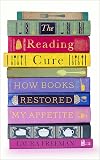
At the young age of fourteen, Laura Freeman was diagnosed with anorexia. Where everyone saw a really thin girl with almost transparent skin, she saw something utterly different in the reflection in the mirror. It was the culmination of months of avoiding certain foods, before almost stopping eating completely until she reached the point where she was starving to death. While she let very little pass her lips in the form of nourishment, she still devoured books, and it was literature that was show more to hold the key to her recovery.
The road to recovery for an anorexic is long and fraught and it was no different for Laura, but where others just had the mental battle, she had the extra support from the books she was reading. In between the covers of Dickens, Sassoon, Woolf, Lee and Leigh Fermor, she would discover how they were able to consume vast plates full of roast beef, bowls of soup and exotic sounding breads without a care in the world. She reads of soldiers who treasure the moment of a scalding hot cup of tea after an intense battle in World War One. In fact, what she discovered was that these authors loved food; they reveled in the taste of what they were eating and sharing the moment with others. These passages in the books, slowly gave her the confidence to rediscover food for the pleasure of eating it rather than purely as a fuel.
Even though her mind had driven her to the point of abhorring food, one thing that she never lost was her love of reading. Most people do not realise just how debilitating anorexia is and there is some painful moments in here as she recalls the lowest points of her illness. But there are the moments too, where she is sustained by her mother's love, an invitation from a friend that arrived at just the right moment. I have read a fair number of the books that Laura talks about in here and whilst the eating and celebration of life between friends and strangers is a key part of them, it is not something that particularly stood out for me, until now. Just reading the descriptions quoted in the book made me very hungry! However, it did for Laura and this list of childhood favourites and other classics has played a crucial role in her accepting that food is not something to avoid and can be enjoyed. show less
The road to recovery for an anorexic is long and fraught and it was no different for Laura, but where others just had the mental battle, she had the extra support from the books she was reading. In between the covers of Dickens, Sassoon, Woolf, Lee and Leigh Fermor, she would discover how they were able to consume vast plates full of roast beef, bowls of soup and exotic sounding breads without a care in the world. She reads of soldiers who treasure the moment of a scalding hot cup of tea after an intense battle in World War One. In fact, what she discovered was that these authors loved food; they reveled in the taste of what they were eating and sharing the moment with others. These passages in the books, slowly gave her the confidence to rediscover food for the pleasure of eating it rather than purely as a fuel.
Even though her mind had driven her to the point of abhorring food, one thing that she never lost was her love of reading. Most people do not realise just how debilitating anorexia is and there is some painful moments in here as she recalls the lowest points of her illness. But there are the moments too, where she is sustained by her mother's love, an invitation from a friend that arrived at just the right moment. I have read a fair number of the books that Laura talks about in here and whilst the eating and celebration of life between friends and strangers is a key part of them, it is not something that particularly stood out for me, until now. Just reading the descriptions quoted in the book made me very hungry! However, it did for Laura and this list of childhood favourites and other classics has played a crucial role in her accepting that food is not something to avoid and can be enjoyed. show less
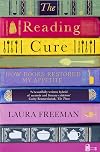
A wonderful book about surviving anorexia, finding solace in literature and a fragile, quiet but indisputable new yearning to be nourished, by food, books, and life.
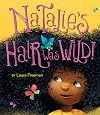
Natalie's Hair Was Wild is a Fiction picture book for students ages 4-7.
Freeman follows the young girl as repeatedly saying that she does not care how her hair is despite animals coming to live in her hair. In the end, she has help from the Fire Department and Zoo to clear the animals out of her hair and tame her hair leading her to the conclusion that she should take care of her hair.
I believe this book can be well utilized in a classroom, no matter the population, as it deals humorously show more with the consequences of not keeping up with daily hair maintenance.The main character being black allows for more students to relate to literature while all students can relate to the tedious chore of brushing and washing hair. As a white and Jewish female I can relate to the difficulty of taming thick, curly hair and immediately imagined the numerous fights between my parents and me about brushing my hair which ended with me either taming my hair or not caring and putting it up in a ponytail or bun. This book could also be utilized by parents or occupational therapists when emphasizing the importance of hygiene and dramatizing the effects of ignoring hygiene. From a teacher's point of view, the book's readability remains relatively simple. The line "Natalie didn't care" repeats throughout the majority of the book allowing all students to follow along and begin progression of knowing sight words. The vocabulary throughout also remains consistently readable besides a few difficult animals, such as ostrich. I would definitely add this book to my class library as it is enjoyable, relates to more of the class population, and can be beneficial to all students. show less
Freeman follows the young girl as repeatedly saying that she does not care how her hair is despite animals coming to live in her hair. In the end, she has help from the Fire Department and Zoo to clear the animals out of her hair and tame her hair leading her to the conclusion that she should take care of her hair.
I believe this book can be well utilized in a classroom, no matter the population, as it deals humorously show more with the consequences of not keeping up with daily hair maintenance.The main character being black allows for more students to relate to literature while all students can relate to the tedious chore of brushing and washing hair. As a white and Jewish female I can relate to the difficulty of taming thick, curly hair and immediately imagined the numerous fights between my parents and me about brushing my hair which ended with me either taming my hair or not caring and putting it up in a ponytail or bun. This book could also be utilized by parents or occupational therapists when emphasizing the importance of hygiene and dramatizing the effects of ignoring hygiene. From a teacher's point of view, the book's readability remains relatively simple. The line "Natalie didn't care" repeats throughout the majority of the book allowing all students to follow along and begin progression of knowing sight words. The vocabulary throughout also remains consistently readable besides a few difficult animals, such as ostrich. I would definitely add this book to my class library as it is enjoyable, relates to more of the class population, and can be beneficial to all students. show less
Natalie's Hair Was Wild! Is a fictional picture book for 4-7-year-olds. I enjoyed this book and would keep this book in my classroom library. The story is about a young black girl with very curly hair. Her hair is so hard to manage that animals start to live in it. Her hair becomes so bad she has to call the zoo and fire department to help get the animals out. The community helps Natalie manage her hair so she can keep it nice. I liked that this book showed diversity, the character was a show more black girl with curly hair and not the typical white, straight-haired style. Different students in your classroom will be able to relate to this book based on appearance and race. I wish I would have had more books like this as a student. show less
Awards


You May Also Like


Associated Authors
Statistics
- Works
- 7
- Also by
- 25
- Members
- 136
- Popularity
- #149,925
- Rating
- 4.3
- Reviews
- 8
- ISBNs
- 18
- Favorited
- 1