
Judy Sierra
Author of Wild About Books
About the Author
Works by Judy Sierra
Schoolyard Rhymes: Kids' Own Rhymes for Rope-Skipping, Hand Clapping, Ball Bouncing, and Just Plain Fun (2005) 98 copies, 4 reviews
Celtic Baby Names: Traditional Names from Ireland, Scotland, Wales, Brittany, Cornwall & the Isle of Man (1997) 33 copies
Mother Goose's Playhouse: Toddler Tales and Nursery Rhymes, With Patterns for Puppets and Feltboards (1994) 9 copies, 1 review
Henny Penny 1 copy
Associated Works
Chicka, Chicka, Boom, Boom...and Lots More Learning Fun [1999 film] (2002) — Author — 37 copies, 2 reviews
Tagged
Common Knowledge
- Canonical name
- Sierra, Judy
- Birthdate
- 20th Century
- Gender
- female
- Education
- University of Lausanne
American University
University of California, Los Angeles - Occupations
- children's librarian
entertainer - Nationality
- USA
- Birthplace
- Washington, D.C., USA
- Places of residence
- Falls Church, Virginia, USA
Switzerland
New Mexico, USA
California, USA
Eugene, Oregon, USA - Associated Place (for map)
- USA
Members
Reviews

Author/illustrator team Judy Sierra and Marc Brown, who previously collaborated on Wild About Books, join forces again in the entertaining counting adventure. The rhyming text tells the story of how Takoda the tiger cub found an abandoned mall and, together with his animal pals, turned it into a luxurious zoo for them all. Only the bugs are left out, told that their contribution doesn't count. But when the rhinos begin to bully the other animals, once the zoo is built, it turns out that the show more bugs have a role to play after all...
As with their previous title, I found Sierra and Brown's Everyone Counts to be quite a hoot to read! The rhyming text flows quite well, incorporating the numbers one to ten into the story, while the colorful artwork, done in gouache and pencil, accentuates the humor and fun of the tale. The decorative end-papers were also entertaining, presenting number-related jokes at the front, and bug-relates jokes at the rear. Recommended to anyone looking for fun new counting books, or for entertaining read-aloud selections for story-hour! show less
As with their previous title, I found Sierra and Brown's Everyone Counts to be quite a hoot to read! The rhyming text flows quite well, incorporating the numbers one to ten into the story, while the colorful artwork, done in gouache and pencil, accentuates the humor and fun of the tale. The decorative end-papers were also entertaining, presenting number-related jokes at the front, and bug-relates jokes at the rear. Recommended to anyone looking for fun new counting books, or for entertaining read-aloud selections for story-hour! show less

A kindhearted young girl named Damura is manipulated into asking her widowed father to remarry in this Cinderella variant from Indonesia's Spice Islands (AKA the Maluku Islands). Mistreated by her new stepmother and stepsister, she is forced to take on the role of servant, and given only a ragged sarong to wear. When she loses this at the river one day, while doing the washing, she calls upon the wild animals for aid, and finds herself confronted by Grandmother Crocodile. This fearsome fairy show more godmother brings her a beautiful sarong of silver, while Damura cares for her offspring, but metes out a very different reward when Damura's stepsister attempts the same task. When the local prince holds a gathering in order to find the most graceful dancer, and Damura cannot attend because she does not have the required finery - her silver dress having been taken from her - Grandmother Crocodile steps in to help once again. But although Damura's dancing wins her the heart of the prince, who uses her golden slipper to locate her, the story does not end there, for the wicked stepmother and stepsister have another plan...
Adapted from a version of this story found in G.J. Ellen's 1916 Woordenlijst van het Pagoe op Noord-Halmahera ("Glossary of the Pagu of North Halmahera"), The Gift of the Crocodile: A Cinderella Story comes from the island of Halmahera, and contains many elements common to this tale type, the world over. The wicked stepmother and stepsister, the heroine being made to take the role of servant, the magical helper (or fairy godmother), the dainty slipper the heroine leaves behind for her prince - these are all present. I thought it was interesting that the magical helper here was a crocodile, as the fearsome reputation of this animal works to emphasize the heroine's kindness and good manners in the story, and to make her reward all the more extraordinary. By calling the crocodile 'Grandmother,' Damura emphasizes their connection, protecting herself from the animal's appetite, something Grandmother Crocodile herself confirms, when she says "it was wise of you to call me Grandmother...for if you had not, I might have eaten you." I also thought that the last episode of the story, in which Damura's wicked stepmother and stepsister feed her to a crocodile, only for Grandmother Crocodile to rescue and revive her, was fascinating, and added an unusual element to the tale. The accompanying artwork from Reynold Ruffins, done in acrylic, is beautiful, with bold colors and immensely appealing stylized figures. I have encountered Ruffins' work once before, in Verna Aardema's Misoso: Once Upon a Time Tales from Africa, and am glad to have run into another of his titles. This is one I would recommend to all young folklore enthusiasts, and to any reader interested in Cinderella type stories from around the world.
NOTE: like so many other authors who have retold Cinderella variants from around the world, Judy Sierra incorrectly states in her afterword that the Chinese version was the first version, worldwide, to be written down. This is an error I frequently see, and its ubiquity always confuses me. In point of fact, the first written version of a Cinderella-style story is that of Rhodopis, the Greek girl who was kidnapped by pirates and sold into slavery in Egypt. This 'Egyptian Cinderella' can be found in the first-century BC writings of the Greek author Strabo, predating the ninth-century AD Chinese version by many centuries. show less
Adapted from a version of this story found in G.J. Ellen's 1916 Woordenlijst van het Pagoe op Noord-Halmahera ("Glossary of the Pagu of North Halmahera"), The Gift of the Crocodile: A Cinderella Story comes from the island of Halmahera, and contains many elements common to this tale type, the world over. The wicked stepmother and stepsister, the heroine being made to take the role of servant, the magical helper (or fairy godmother), the dainty slipper the heroine leaves behind for her prince - these are all present. I thought it was interesting that the magical helper here was a crocodile, as the fearsome reputation of this animal works to emphasize the heroine's kindness and good manners in the story, and to make her reward all the more extraordinary. By calling the crocodile 'Grandmother,' Damura emphasizes their connection, protecting herself from the animal's appetite, something Grandmother Crocodile herself confirms, when she says "it was wise of you to call me Grandmother...for if you had not, I might have eaten you." I also thought that the last episode of the story, in which Damura's wicked stepmother and stepsister feed her to a crocodile, only for Grandmother Crocodile to rescue and revive her, was fascinating, and added an unusual element to the tale. The accompanying artwork from Reynold Ruffins, done in acrylic, is beautiful, with bold colors and immensely appealing stylized figures. I have encountered Ruffins' work once before, in Verna Aardema's Misoso: Once Upon a Time Tales from Africa, and am glad to have run into another of his titles. This is one I would recommend to all young folklore enthusiasts, and to any reader interested in Cinderella type stories from around the world.
NOTE: like so many other authors who have retold Cinderella variants from around the world, Judy Sierra incorrectly states in her afterword that the Chinese version was the first version, worldwide, to be written down. This is an error I frequently see, and its ubiquity always confuses me. In point of fact, the first written version of a Cinderella-style story is that of Rhodopis, the Greek girl who was kidnapped by pirates and sold into slavery in Egypt. This 'Egyptian Cinderella' can be found in the first-century BC writings of the Greek author Strabo, predating the ninth-century AD Chinese version by many centuries. show less

When the words in the dictionary get bored one day, they escape from their proper places and hold a word parade. With the Onomatopoeia Marching Band leading the way, and that self-centered one-letter word (I) as marshal, the parade contains many fun categories of word, from antonyms to palindromes. Eventually Noah Webster manages to shepherd these unruly creatures back into the dictionary, only for Roget to notice other words escaping from his thesaurus...
An amusing and educational look at show more the various kinds of words, from parts of speech - contractions, conjunctions, interjections - to categories like anagrams and homophones, The Great Dictionary Caper pairs a fun, frenetic text from author Judy Sierra with entertaining artwork from illustrator Eric Comstock. There's even a glossary included at the rear, to explain various terms and archaic words used in the story. I'm not sure this would make a good story-time selection for a large audience, as there are so many words to be read on the page, in addition to the main narrative, but in a small group, I think it would be a hit. Recommended to anyone looking for a fun way to explain parts of speech and/or other word categories to young children. show less
An amusing and educational look at show more the various kinds of words, from parts of speech - contractions, conjunctions, interjections - to categories like anagrams and homophones, The Great Dictionary Caper pairs a fun, frenetic text from author Judy Sierra with entertaining artwork from illustrator Eric Comstock. There's even a glossary included at the rear, to explain various terms and archaic words used in the story. I'm not sure this would make a good story-time selection for a large audience, as there are so many words to be read on the page, in addition to the main narrative, but in a small group, I think it would be a hit. Recommended to anyone looking for a fun way to explain parts of speech and/or other word categories to young children. show less
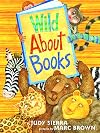
This book was an educational way to introduce reading as a fun hobby to children, and I really enjoyed it. It starts with a librarian who mistakenly drove her public library “bookmobile” out near a zoo, and from there described how excited all of the animals were to pick out books on topics that they found interesting. I also liked how the book referenced Dr. Suees and Nancy Drew, and how all of the animals came running towards her to hear her read during the book. The author writes: show more “Forsaking their niches, their nests, and their nooks, they went wild, simply wild, about wonderful books,” which subtly shows what kinds of habitats animals live in/could be a good discussion to have after the book is read to a class.
The idea of wild animals (or a child’s favorite animal) being excited for reading will make them more inclined to enjoy reading as well. In addition, the illustrations are colorful and exciting and “wild,” and show all different kinds of animals on each page reading books that children might find familiar like Peter Pan and Dumbo. Throughout the book, I was connecting with familiar authors and titles, so I got to thinking about how fun it would be for kids to relate to a book that a hippopotamus was reading in this book.
I also liked how the book was written in sing-songy rhymes, like “the pandas demanded more books in Chinese. Molly filled their requests, always eager to please.” This shows that librarians are very helpful and there are tons of books to choose from at the library, whatever you’re interested in you should explore. This specific example also informed readers that pandas live in China.
As the book progresses, the animals decide to write their own books. I think this was a clever way to relate reading and writing, and maybe even spark creativity in children to do the same. She used relatable school struggles like “And although the gazelle couldn’t spell very well, like everyone else, she had stories to tell” that could help give children more confidence in learning from their mistakes and continuing to write. The last part of the book that I thought was very cute was when the animals changed the name in the zoo to “Zoobrary.” show less
The idea of wild animals (or a child’s favorite animal) being excited for reading will make them more inclined to enjoy reading as well. In addition, the illustrations are colorful and exciting and “wild,” and show all different kinds of animals on each page reading books that children might find familiar like Peter Pan and Dumbo. Throughout the book, I was connecting with familiar authors and titles, so I got to thinking about how fun it would be for kids to relate to a book that a hippopotamus was reading in this book.
I also liked how the book was written in sing-songy rhymes, like “the pandas demanded more books in Chinese. Molly filled their requests, always eager to please.” This shows that librarians are very helpful and there are tons of books to choose from at the library, whatever you’re interested in you should explore. This specific example also informed readers that pandas live in China.
As the book progresses, the animals decide to write their own books. I think this was a clever way to relate reading and writing, and maybe even spark creativity in children to do the same. She used relatable school struggles like “And although the gazelle couldn’t spell very well, like everyone else, she had stories to tell” that could help give children more confidence in learning from their mistakes and continuing to write. The last part of the book that I thought was very cute was when the animals changed the name in the zoo to “Zoobrary.” show less
Lists
Youth: Poetry (1)
Awards


The Secret Science Project That Almost Ate the School (Selection – Young Readers (Grades 3–4, Ages 8–10) – 2007)
EIEIO: How Old MacDonald Got His Farm with a Little Help From a Hen (Selection – Beginning Readers (Grades K–2, Ages 5–8) – 2015)


You May Also Like


Associated Authors
Statistics
- Works
- 59
- Also by
- 1
- Members
- 11,021
- Popularity
- #2,142
- Rating
- 4.0
- Reviews
- 513
- ISBNs
- 237
- Languages
- 5
- Favorited
- 3