
About the Author
Works by Anders Rydell
Tagged
Common Knowledge
- Legal name
- Rydell, Anders Thomas
- Birthdate
- 1982-01-20
- Gender
- male
- Nationality
- Sweden
- Places of residence
- Stockholm, Sweden
- Associated Place (for map)
- Stockholm, Sweden
Members
Reviews
The Book Thieves: The Nazi Looting of Europe's Libraries and the Race to Return a Literary Inheritance by Anders Rydell
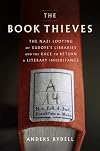
The Book Thieves by Anders Rydell discusses, as its subtitle suggest, the looting of Europe's libraries during World War II. We know more, I think, about the art works, especially as more and more are being recognized as looted and at least some are being returned. Books are similar: while many were burned, often those from Jewish libraries and synagogues, many others were kept for research and collecting. They ended up in collections after the war, often buried away and only discovered long show more after the war. Rydell moves from library to library telling the story as well as his own story of returning a particular book to a family member. As he points out, the book was not worth much but it was a family tie that seemed to have been completely broken by the Holocaust.
I enjoyed the book and learned a bit about this area of WWII history. I did find myself skimming some passages that provided more details than I needed: just too many numbers sometimes. show less
I enjoyed the book and learned a bit about this area of WWII history. I did find myself skimming some passages that provided more details than I needed: just too many numbers sometimes. show less
The Book Thieves: The Nazi Looting of Europe's Libraries and the Race to Return a Literary Inheritance by Anders Rydell

A new angle on an oft-reported story. There are other books that look at the masses of artworks stolen by the Nazi regime and its allies, but this book focuses on the millions upon millions of books stolen by the Nazi regime. The rationales (such as they were) behind these thefts, the process by which the thefts were carried out, attempts by the victims to evade the fate, and the occasionally tragic results of missing and destroyed books are all discussed. The only reason I don't give this show more book full marks is because, in spots, information is repeated unnecessarily, indicating a slight bit of sloppiness in either translation or editing. In some respects, a depressing book (especially if you are a book lover), but one that should be read. show less
The Book Thieves: The Nazi Looting of Europe's Libraries and the Race to Return a Literary Inheritance by Anders Rydell
Rydell describes in engaging detail the massive displacement of Europe's book collections by the Nazis--the who, the why, and the where. Unlike the attention given to dramatic repatriation of stolen art treasures, the fate of books, many of which are worth less than the postage to return them to identified heirs, receives less notice. Still, it is vitally important to remind ourselves why these books matter.
Though many were destroyed, "a greater, immeasurable destruction took place a show more consequence of dispersal. Even if some scattered books still exist on the shelves of other libraries here and there, they have lost their context. They were a part of libraries that had a value in their own right--collections in which the parts became a greater whole.... The books also said something about the people who owned and treasured them: what they read and what they thought and what they dreamed.... Each collection in its own right took form in a unique culture, a depiction of its creator's world, which was lost when the library was broken up. The books are fragments of a library, of a world that once existed."
The books themselves were often not unique, and had little economic value. But it was their participation in a collection that transformed them into a reflection of its users, who in turn left their mark on the library. The destruction of the libraries, even if the books still exist, signals the dissolution of that record of the lives that formed the collection. The loss is catastrophic. This book performs a great service to remind us of this fact. show less
Though many were destroyed, "a greater, immeasurable destruction took place a show more consequence of dispersal. Even if some scattered books still exist on the shelves of other libraries here and there, they have lost their context. They were a part of libraries that had a value in their own right--collections in which the parts became a greater whole.... The books also said something about the people who owned and treasured them: what they read and what they thought and what they dreamed.... Each collection in its own right took form in a unique culture, a depiction of its creator's world, which was lost when the library was broken up. The books are fragments of a library, of a world that once existed."
The books themselves were often not unique, and had little economic value. But it was their participation in a collection that transformed them into a reflection of its users, who in turn left their mark on the library. The destruction of the libraries, even if the books still exist, signals the dissolution of that record of the lives that formed the collection. The loss is catastrophic. This book performs a great service to remind us of this fact. show less
The Book Thieves: The Nazi Looting of Europe's Libraries and the Race to Return a Literary Inheritance by Anders Rydell
The Book Thieves: The Nazi Looting of Europe's Libraries and the Race to Return a Literary Inheritance by Anders Rydell, Henning Koch (Translator) is a very highly recommended well researched account of the Nazis' systematic pillaging of Europe's libraries and the librarians that are now working to return the books to their rightful owners or heirs. This is a well-written, fascinating look at crimes of the past and how some people are working to rectify them. Rydell visited many of the show more libraries that are still in the process of sorting through the stolen books.
The Book Thieves is a story of the looting and dispersal, as well as the burning and destruction, of of thousands of libraries and millions of individual books during WWII. As the description of The Book Thieves says: "In this secret war, the libraries of Jews, Communists, Liberal politicians, LGBT activists, Catholics, Freemasons, and many other opposition groups were appropriated for Nazi research, and used as an intellectual weapon against their owners. But when the war was over, most of the books were never returned. Instead many found their way into the public library system, where they remain to this day."
Libraries that were built up over generations helped form "the cultural, linguistic, and identity-defining heart of communities, families, and individuals. Libraries that were irreplaceable in their own right - a reflection of the people and societies that once created and nurtured them." When these collections were stolen, and dispersed or burned, it was stealing the cultural identity of families and groups. "Robbing people of words and narrative is a way of imprisoning them. Books are rarely unique in the same way as works of art, but they have a value that so many more people can understand. In our time, the book has retained a symbolic value that is almost spiritual. Discarding books is still considered sacrilegious. The burning of books is one of the strongest symbolic actions there is, correlating with cultural destruction. While mainly identified with the Nazi book pyres of 1933, the symbolic destruction of literature is as old as the book itself."
The Nazis understood that to control people and their beliefs, they needed to control the literature. Mind control, the quest for a hive-mind mentality, and punishing those who don't comply is nothing new. In contrast, there were people who risked their lives to try and save parts of their literary inheritance. They understood that "the theft of their literary culture was a way of robbing them of their history, their humanity, and, in the final analysis, any possibility of remembrance." These people hid old manuscripts, important religious works, and even diaries.
While this is about the history of the Nazis' looting, burning, and control of millions of books, it is also a hopeful account about the people who are currently trying to catalogue the vast number of these stolen books and find a way to return those they can (because of identifying marks, plates, notes, names, etc.) to their original owners. It is a daunting task, especially since over the years it is clear that librarians have cut out identifying pages or deface marks identifying original owners. It was heartening to see that Google is helping this effort - when people are searching for ancestors, they can come across information about their family's confiscated books. Even though many of the books have little monetary value, the personal value can be priceless.
Disclosure: My review copy was courtesy of Penguin Random House/Viking.
https://www.goodreads.com/review/show/1899692930
http://www.shetreadssoftly.com/on2/3/17 show less
The Book Thieves is a story of the looting and dispersal, as well as the burning and destruction, of of thousands of libraries and millions of individual books during WWII. As the description of The Book Thieves says: "In this secret war, the libraries of Jews, Communists, Liberal politicians, LGBT activists, Catholics, Freemasons, and many other opposition groups were appropriated for Nazi research, and used as an intellectual weapon against their owners. But when the war was over, most of the books were never returned. Instead many found their way into the public library system, where they remain to this day."
Libraries that were built up over generations helped form "the cultural, linguistic, and identity-defining heart of communities, families, and individuals. Libraries that were irreplaceable in their own right - a reflection of the people and societies that once created and nurtured them." When these collections were stolen, and dispersed or burned, it was stealing the cultural identity of families and groups. "Robbing people of words and narrative is a way of imprisoning them. Books are rarely unique in the same way as works of art, but they have a value that so many more people can understand. In our time, the book has retained a symbolic value that is almost spiritual. Discarding books is still considered sacrilegious. The burning of books is one of the strongest symbolic actions there is, correlating with cultural destruction. While mainly identified with the Nazi book pyres of 1933, the symbolic destruction of literature is as old as the book itself."
The Nazis understood that to control people and their beliefs, they needed to control the literature. Mind control, the quest for a hive-mind mentality, and punishing those who don't comply is nothing new. In contrast, there were people who risked their lives to try and save parts of their literary inheritance. They understood that "the theft of their literary culture was a way of robbing them of their history, their humanity, and, in the final analysis, any possibility of remembrance." These people hid old manuscripts, important religious works, and even diaries.
While this is about the history of the Nazis' looting, burning, and control of millions of books, it is also a hopeful account about the people who are currently trying to catalogue the vast number of these stolen books and find a way to return those they can (because of identifying marks, plates, notes, names, etc.) to their original owners. It is a daunting task, especially since over the years it is clear that librarians have cut out identifying pages or deface marks identifying original owners. It was heartening to see that Google is helping this effort - when people are searching for ancestors, they can come across information about their family's confiscated books. Even though many of the books have little monetary value, the personal value can be priceless.
Disclosure: My review copy was courtesy of Penguin Random House/Viking.
https://www.goodreads.com/review/show/1899692930
http://www.shetreadssoftly.com/on2/3/17 show less
Lists
Awards


You May Also Like


Associated Authors
Statistics
- Works
- 7
- Members
- 683
- Popularity
- #37,040
- Rating
- 3.9
- Reviews
- 26
- ISBNs
- 41
- Languages
- 10