

Timothy W. Ryback
Author of Hitler's Private Library: The Books That Shaped His Life
About the Author
Timothy W. Ryback is the cofounder and codirector of the Institute for Historical Justice and Reconciliation.
Works by Timothy W. Ryback
Rock Around the Bloc: A History of Rock Music in Eastern Europe and the Soviet Union, 1954-1988 (1990) 17 copies
53 Days 4 copies
Evidence of Evil 2 copies
Tagged
Common Knowledge
- Birthdate
- 1954
- Gender
- male
- Education
- Harvard University (PhD|1988)
- Occupations
- writer
- Organizations
- Institute for Historical Justice and Reconciliation [co-founder]
Salzburg Seminar
Académie Diplomatique Internationale - Nationality
- USA
- Places of residence
- Paris, France
Berlin, Germany
Members
Reviews
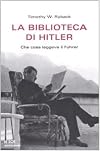
Walter Benjamin sosteneva che si può raccontare molto, di un uomo, osservando i libri che ha letto. E cosa possono svelare, i libri, della vita di chi li ha posseduti, della personalità e delle idee di chi li ha compulsati e annotati se questo appassionato lettore è Adolf Hitler? Timothy Ryback è il primo studioso a occuparsi della biblioteca privata del Führer, rinvenuta in parte nelle città di Monaco e Berlino, in parte nelle stanze del quartier generale del partito show more nazionalsocialista, nonché tra le ceneri del Berghof, la residenza estiva fatta costruire sulle montagne della Baviera. Furono le forze sovietiche e poi quelle americane, all'indomani della vittoria nella seconda guerra mondiale, a scavare nelle rovine e a trovare le prime tracce delle letture hitleriane: dalle numerose prime edizioni del Mein Kampf, ai libri di arte, architettura, fotografia, ai molti volumi di politica e di propaganda. Collezionista eclettico e asistematico, Hitler amava Shakespeare, era solito citare frasi tratte da Amleto o Giulio Cesare e dimostrò sempre uno spiccato interesse per le Sacre Scritture.
“Originale o plagiario, l’uomo è il romanziere di se stesso”, scrisse Ortega y Gasset. La frase l'ho scelta da tempo per caratterizzare i miei interessi nella lettura. La trovate anche in testa a questo blog. Mai come in questo caso, questa frase si adatta per chi questo libro è stato scritto. Superfluo e scontato dire che la vita stessa del Fuehrer e´ un romanzo, un giallo, un noir e quant´altro si possa dire sul personaggio. Ma qui sono in ballo le sue letture, i libri che lo hanno formato, modellato, fatto pensare e fare cio´ che ha fatto e ancora oggi si cerca di capire come e perche´ l´ha potuto fare.
Scorrendo i titoli che l´autore di questo libro gli attribuisce mi sono davvero spaventato. Non tanto per il numero dei titoli quanto per i nomi degli autori. Molti sono nella mia biblioteca, molti amici e conoscenti li avranno anche loro. Siamo persone normali, peró , almeno speriamo. Ma allora resta lecita la domanda: leggere e´ pericoloso? O almeno leggere questi libri che Hitler ha letto ci puo´ fare diventare tanti piccoli o grandi Hitler? Mamma mia che impressione mi fa! Giuro che mi vien voglia di non leggere piu`… show less
“Originale o plagiario, l’uomo è il romanziere di se stesso”, scrisse Ortega y Gasset. La frase l'ho scelta da tempo per caratterizzare i miei interessi nella lettura. La trovate anche in testa a questo blog. Mai come in questo caso, questa frase si adatta per chi questo libro è stato scritto. Superfluo e scontato dire che la vita stessa del Fuehrer e´ un romanzo, un giallo, un noir e quant´altro si possa dire sul personaggio. Ma qui sono in ballo le sue letture, i libri che lo hanno formato, modellato, fatto pensare e fare cio´ che ha fatto e ancora oggi si cerca di capire come e perche´ l´ha potuto fare.
Scorrendo i titoli che l´autore di questo libro gli attribuisce mi sono davvero spaventato. Non tanto per il numero dei titoli quanto per i nomi degli autori. Molti sono nella mia biblioteca, molti amici e conoscenti li avranno anche loro. Siamo persone normali, peró , almeno speriamo. Ma allora resta lecita la domanda: leggere e´ pericoloso? O almeno leggere questi libri che Hitler ha letto ci puo´ fare diventare tanti piccoli o grandi Hitler? Mamma mia che impressione mi fa! Giuro che mi vien voglia di non leggere piu`… show less
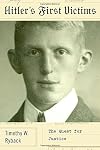
There are many what-ifs in history, but few are quite so compelling as those that surround Hitler’s rise to power and slow strangulation of democracy in Germany in the 1930s. There were indeed several opportunities to have stopped Hitler or at least thwarted his plans more thoroughly than occurred. Timothy Ryback looks to shine the spotlight on one of the heroes who did stand up to fight against the increasing stranglehold the Nazis held on German political and police systems. Hitler’s show more First Victims shows that while he may not have been successful in 1933, his efforts had a profound effect on the post-war trials.
However, this is not a Holocaust story; the 1930s were only the beginnings of the Nazi regime, and what would be known as the Holocaust was still only Hitler’s dream. At that point in time, there were still states’ rights, state police systems, local judicial systems, and a president who had greater authority than Hitler. The Communist party was a major threat to Germany’s fledgling democracy, and political upheaval abounded. Hitler’s First Victims shows how Germany dealt with such upheaval, invoking the idea of protective custody to incarcerate hundreds of political detainees without due process or even any formal charges.
Hitler’s First Victims is as much the evolution of Dachau from an abandoned manufacturing site to the concentration camp it became during the war as it is about the lone prosecutor who tried to stymie the Nazi rule. Named after the nearest train station, Dachau started out its life under the rule of the state police. However, there was a constant push by the Nazis to control all police proceedings, including detention and punishment. As the first of its kind, Dachau and its inhabitants became the victims of a much greater power struggle and one that would have horrendous consequences for millions.
The story Mr. Ryback has to tell in Hitler’s First Victims is fascinating and horrifying. He withholds nothing, and the Nazi atrocities he details are as repulsive and barbaric as one would imagine. What occurred in Dachau six years before the beginning of the war and eight years before the Final Solution went into operation will boggle a reader’s mind and cause one to question the general goodness of humans. That there were people who were willing to risk everything to right the wrongs they saw provides a much-needed sense of relief that all humanity was not lost.
Hitler’s First Victims is meticulously researched and highly respectful of the victims described and the man behind the argument of collective guilt. Each person mentioned gets equal treatment in the form of a detailed background and the path that led him to Dachau. It is at times an intense read, as there is an abundance of information crammed into a fairly short narrative. Mr. Ryback not only details each of the men, he explains the political structure in Germany, the legal system, and history as it pertained to and influenced German citizens before, during, and after 1933. With detailed notes and appendices, one can easily verify Mr. Ryback’s research and use his sources for his or her own research. Herr Hartinger’s story is an important one to tell, and his diligent quest for the truth is a vital reminder to all that while it takes courage to do the right thing, we as humans have a duty to do so. If more people had done so in 1933, the world would be a very different place indeed. show less
However, this is not a Holocaust story; the 1930s were only the beginnings of the Nazi regime, and what would be known as the Holocaust was still only Hitler’s dream. At that point in time, there were still states’ rights, state police systems, local judicial systems, and a president who had greater authority than Hitler. The Communist party was a major threat to Germany’s fledgling democracy, and political upheaval abounded. Hitler’s First Victims shows how Germany dealt with such upheaval, invoking the idea of protective custody to incarcerate hundreds of political detainees without due process or even any formal charges.
Hitler’s First Victims is as much the evolution of Dachau from an abandoned manufacturing site to the concentration camp it became during the war as it is about the lone prosecutor who tried to stymie the Nazi rule. Named after the nearest train station, Dachau started out its life under the rule of the state police. However, there was a constant push by the Nazis to control all police proceedings, including detention and punishment. As the first of its kind, Dachau and its inhabitants became the victims of a much greater power struggle and one that would have horrendous consequences for millions.
The story Mr. Ryback has to tell in Hitler’s First Victims is fascinating and horrifying. He withholds nothing, and the Nazi atrocities he details are as repulsive and barbaric as one would imagine. What occurred in Dachau six years before the beginning of the war and eight years before the Final Solution went into operation will boggle a reader’s mind and cause one to question the general goodness of humans. That there were people who were willing to risk everything to right the wrongs they saw provides a much-needed sense of relief that all humanity was not lost.
Hitler’s First Victims is meticulously researched and highly respectful of the victims described and the man behind the argument of collective guilt. Each person mentioned gets equal treatment in the form of a detailed background and the path that led him to Dachau. It is at times an intense read, as there is an abundance of information crammed into a fairly short narrative. Mr. Ryback not only details each of the men, he explains the political structure in Germany, the legal system, and history as it pertained to and influenced German citizens before, during, and after 1933. With detailed notes and appendices, one can easily verify Mr. Ryback’s research and use his sources for his or her own research. Herr Hartinger’s story is an important one to tell, and his diligent quest for the truth is a vital reminder to all that while it takes courage to do the right thing, we as humans have a duty to do so. If more people had done so in 1933, the world would be a very different place indeed. show less
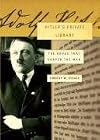
What can a person's library tell you about him or her?
After reading this book, I still don't know; but this is an interesting examination of one of history's most infamous bibliophiles. (And sometimes downright creepy -- at one point, the author was examining a book from Hitler's library and discovered "tucked in the crease...a wiry inch-long black hair that appears to be from a moustache.")
Although only a small portion of Hitler's library survives, the relatively few remaining texts do show more allow for a snapshot, no matter however underdeveloped, of his interests. Predictably, books on pseudo-science, specifically focusing on race, shaped Hitler's early life. He had every German translation of Henry Ford's books on anti-Semitism, and was quoted as saying, "I regard Ford as my inspiration." Later, he superficially read Kant, Nietzsche and Schopenhauer (often taking them out of context, gleaning from their writings what he found “useful”) and mixed their works with contemporary crackpot mysticism in an effort to fashion National Socialism into a sort of quasi-state religion to counter materialism (the philosophical foundation of Communism). Think of the psychology behind those night rallies with big torches and all the pomp, the Führer elevated and framed by the Parteiadler for effect.
Just prior to, and during, WWII, Hitler -- already predisposed to weave the most disparate views into a perverse mosaic -- was surrounded by handlers who filtered the texts he would read to fit his already paranoid and rationalized worldview. Hence, books from sycophants and hangers-on of every stripe informed his "thinking." As the Soviets surrounded Berlin, Hitler apparently felt a kinship with Bismarck (whose biography he had read and re-read) and would draw parallels between their lives to the point that he would seize upon the most strained minutiae as proof of his theory (for instance, seeing the death of FDR as a harbinger of a long-sought fracture in the American-English-Soviet alliance akin to the death of tsarina Elizabeth and the resulting fissure of the alliance between Austria, France and Russia against Germany in 1861).
Then Hitler killed himself and his corpse was burned beyond recognition.
Page 68 has a typo, printing "the" twice in sequence.
Memorable Hitler quotes from the book:
"A leader can make mistakes, no question about that. But following a bad decision will achieve the final goal better than personal freedom."
"The victor will not be asked afterwards whether he told the truth or not."
"We are fighting in the far reaches to protect our homeland so that we can keep the war far away in order to spare us the fate we would suffer if it were closer." show less
After reading this book, I still don't know; but this is an interesting examination of one of history's most infamous bibliophiles. (And sometimes downright creepy -- at one point, the author was examining a book from Hitler's library and discovered "tucked in the crease...a wiry inch-long black hair that appears to be from a moustache.")
Although only a small portion of Hitler's library survives, the relatively few remaining texts do show more allow for a snapshot, no matter however underdeveloped, of his interests. Predictably, books on pseudo-science, specifically focusing on race, shaped Hitler's early life. He had every German translation of Henry Ford's books on anti-Semitism, and was quoted as saying, "I regard Ford as my inspiration." Later, he superficially read Kant, Nietzsche and Schopenhauer (often taking them out of context, gleaning from their writings what he found “useful”) and mixed their works with contemporary crackpot mysticism in an effort to fashion National Socialism into a sort of quasi-state religion to counter materialism (the philosophical foundation of Communism). Think of the psychology behind those night rallies with big torches and all the pomp, the Führer elevated and framed by the Parteiadler for effect.
Just prior to, and during, WWII, Hitler -- already predisposed to weave the most disparate views into a perverse mosaic -- was surrounded by handlers who filtered the texts he would read to fit his already paranoid and rationalized worldview. Hence, books from sycophants and hangers-on of every stripe informed his "thinking." As the Soviets surrounded Berlin, Hitler apparently felt a kinship with Bismarck (whose biography he had read and re-read) and would draw parallels between their lives to the point that he would seize upon the most strained minutiae as proof of his theory (for instance, seeing the death of FDR as a harbinger of a long-sought fracture in the American-English-Soviet alliance akin to the death of tsarina Elizabeth and the resulting fissure of the alliance between Austria, France and Russia against Germany in 1861).
Then Hitler killed himself and his corpse was burned beyond recognition.
Page 68 has a typo, printing "the" twice in sequence.
Memorable Hitler quotes from the book:
"A leader can make mistakes, no question about that. But following a bad decision will achieve the final goal better than personal freedom."
"The victor will not be asked afterwards whether he told the truth or not."
"We are fighting in the far reaches to protect our homeland so that we can keep the war far away in order to spare us the fate we would suffer if it were closer." show less
The book follows a rough chronological order from Hitler's first days as a corporal in WWI to his ascension within the party, to becoming the Führer, all the way to the last days before his suicide. It's only partly about the books themselves, which becomes a bit of a problem as far as the title promise is concerned, and just as much about letters, later personal encounters retold, or even the personal testimony of Junge and Riefenstahl about encounters, reading habits and specific books.
A show more recurring problem is that there's no definitive way for Ryback to determine what Hitler read, when and why. He makes much of whatever notation he can find in the books, and if they seem well read or not, but as anyone who reads a lot knows that's hardly definitive. There's also an incongruent throughline that's most apparent in the appendices, where reports about the state of Hitler's libraries want to make it clear he didn't read most of the books, and that they were a "dilettante"'s collection; contrasted heavily by all the personal accounts from his staff and friends insisting he read constantly, even in the last days in the bunker. We're told he was said to have read Schopenhauer and Nietzsche, only to be informed that they aren't in his personal library and therefore it is unlikely that he read them seriously, to later having anecdotes about how he cited from them in speeches or personal comments.
Which is it? It's one thing to say we just can't know, but this is a deeper conflict between portraying him as clueless and uneducated in one moment and then citing a range of people being stunned by his ability to remember encyclopedic amounts of trivia concerning geography and military topics.
Despite this contradiction, Ryback has a lot of interesting things to say about Hitler's early days and the power struggle for the party, as well as serval illuminating meetings along the way (one encounter with Burckhardt trying to talk about the value of peace, being shot down by Hitler getting ready to invade Poland, another concerning the party conflict with the church and how Hitler tries to make peace while selling out the side of his party that mean to upend church influence), details left out of other biographies.
In all a worthwhile read, though you only get partial insight into the topic of the title. show less
A show more recurring problem is that there's no definitive way for Ryback to determine what Hitler read, when and why. He makes much of whatever notation he can find in the books, and if they seem well read or not, but as anyone who reads a lot knows that's hardly definitive. There's also an incongruent throughline that's most apparent in the appendices, where reports about the state of Hitler's libraries want to make it clear he didn't read most of the books, and that they were a "dilettante"'s collection; contrasted heavily by all the personal accounts from his staff and friends insisting he read constantly, even in the last days in the bunker. We're told he was said to have read Schopenhauer and Nietzsche, only to be informed that they aren't in his personal library and therefore it is unlikely that he read them seriously, to later having anecdotes about how he cited from them in speeches or personal comments.
Which is it? It's one thing to say we just can't know, but this is a deeper conflict between portraying him as clueless and uneducated in one moment and then citing a range of people being stunned by his ability to remember encyclopedic amounts of trivia concerning geography and military topics.
Despite this contradiction, Ryback has a lot of interesting things to say about Hitler's early days and the power struggle for the party, as well as serval illuminating meetings along the way (one encounter with Burckhardt trying to talk about the value of peace, being shot down by Hitler getting ready to invade Poland, another concerning the party conflict with the church and how Hitler tries to make peace while selling out the side of his party that mean to upend church influence), details left out of other biographies.
In all a worthwhile read, though you only get partial insight into the topic of the title. show less
Lists
Awards


You May Also Like


Associated Authors
Statistics
- Works
- 15
- Members
- 895
- Popularity
- #28,622
- Rating
- 3.7
- Reviews
- 22
- ISBNs
- 58
- Languages
- 12