

Roberto Ampuero
Author of The Neruda Case
About the Author
Series
Works by Roberto Ampuero
Ραντεβού στο βαθύ γαλάζιο 1 copy
Associated Works
Tagged
Common Knowledge
Members
Reviews
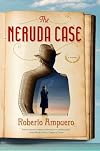
In a small café in Valparaíso Chile, Cayetano Brulé sips his coffee and thinks back more than three decades to his first case as a private investigator. It was June 1973 and he was hired under the most unlikely of circumstances by the celebrated poet and native son Pablo Neruda for the ostensible purpose of finding Bracamonte, a doctor Neruda knew many years before and who might now be able to save his life. With no more training than he gets from the detective novels of Georges Simenon, show more Brulé sets off on a journey that takes him to Mexico, Cuba, East Germany, and Bolivia, where he learns that the real reason for his mission actually involves the doctor’s wife Beatriz. Returning to Chile a few months later, Cayetano reluctantly becomes entangled in the military coup that removed Salvador Allende from power while he desperately tries to complete his assignment by delivering some vital information before the poet dies.
This novel has much to recommend, but I must admit that I was caught off-guard as to what I liked the best—and the least—about it. Unfortunately, as a mystery, The Neruda Case is largely a failure. The search for Bracamonte/Beatriz is surprisingly unengaging and the “secret” that drives so much of the action in the story is just not that interesting. Part of the problem is that I was never able to believe that Brulé, a Cuban emigrant who has just been abandoned in the port city by his wife, could actually do the things he is asked to do during the investigation. Further, despite a fleeting reference near the end of the book to having hired other detectives, it is not clear why Neruda would trust such an important mission—which, given the state of the poet’s health, is very likely his last attempt—to an unemployed foreigner with absolutely no experience in the profession.
However, those narrative shortcomings were more than redeemed for me by the remarkable sense of time and place that the author is able to create, as well as the loving, yet unsentimental, portrait he paints of Pablo Neruda. People in both the United States and Chile share an interesting connection with the date September 11, but I suspect that most North Americans know far more about the events of 9/11/01 than they do about 9/11/73. As a frequent traveler to the country, I have learned how deeply the Pinochet regime has affected several generations of Chileans and Ampuero, himself an ex-pat from Valparaíso, does an amazing job of transporting the reader to the moment when it all began. Equally impressive is the way the author blends fact and fiction in telling Neruda’s personal history; although an undeniably talented artist, the poet was also a selfish, inveterate womanizer and not always a likeable man, which the story makes abundantly clear.
So, on balance, I liked The Neruda Case but it is not without its flaws. Readers expecting a gripping, international mystery story—which may well be how the book is marketed—will very likely be quite disappointed. However, those wanting to read a fictionalized account of a fascinating man who lived at an extraordinary time in our shared history will be amply rewarded. show less
This novel has much to recommend, but I must admit that I was caught off-guard as to what I liked the best—and the least—about it. Unfortunately, as a mystery, The Neruda Case is largely a failure. The search for Bracamonte/Beatriz is surprisingly unengaging and the “secret” that drives so much of the action in the story is just not that interesting. Part of the problem is that I was never able to believe that Brulé, a Cuban emigrant who has just been abandoned in the port city by his wife, could actually do the things he is asked to do during the investigation. Further, despite a fleeting reference near the end of the book to having hired other detectives, it is not clear why Neruda would trust such an important mission—which, given the state of the poet’s health, is very likely his last attempt—to an unemployed foreigner with absolutely no experience in the profession.
However, those narrative shortcomings were more than redeemed for me by the remarkable sense of time and place that the author is able to create, as well as the loving, yet unsentimental, portrait he paints of Pablo Neruda. People in both the United States and Chile share an interesting connection with the date September 11, but I suspect that most North Americans know far more about the events of 9/11/01 than they do about 9/11/73. As a frequent traveler to the country, I have learned how deeply the Pinochet regime has affected several generations of Chileans and Ampuero, himself an ex-pat from Valparaíso, does an amazing job of transporting the reader to the moment when it all began. Equally impressive is the way the author blends fact and fiction in telling Neruda’s personal history; although an undeniably talented artist, the poet was also a selfish, inveterate womanizer and not always a likeable man, which the story makes abundantly clear.
So, on balance, I liked The Neruda Case but it is not without its flaws. Readers expecting a gripping, international mystery story—which may well be how the book is marketed—will very likely be quite disappointed. However, those wanting to read a fictionalized account of a fascinating man who lived at an extraordinary time in our shared history will be amply rewarded. show less
 This review was written for LibraryThing Early Reviewers.
The Neruda Case by Roberto Ampuero
This mystery novel is a little delight. A mysterious tale about a self invented detective, one Cayetano Brule, a Cuban exiled transposed to Chile in the late 60’s:
“…those were the days of Salvador Allende and Unidad Popular, as well as of an unbridled social turmoil that would lead not to what the people dreamed of but rather to the dictatorship of Augusto Pinochet”.
Married to a bourgeois revolutionary, Cayetano finds himself beckoned to one of the show more many homes Neruda possesses, this one in the city of Valparaiso, a once great port city that lost its glory at the turn of the twentieth century; with the opening of the Panama Canal shipping companies no longer needed to take the long journey past Cape Horn. Much like an Alan Furst mystery, here I think most recently about Spies of the Balkans, the city becomes a defining characteristic setting a tone and venue; for Furst it was Salonika, for Ampuero it is Valparaiso. The hills, harbor, taverns, cafes, plazas and factories paint a picture of complexity and diversity. It is within this context that the tale unfolds.
But alas, this is not a spy filled espionage tale (like Furst) but more so a slow moving curio about the great poet Pablo Neruda , his failed character and the trail of slights and abuses he left behind in his past. Now, ill with cancer and facing death he asks Cayetano to help resurrect his past in an attempt to assuage old guilts and remorse. The reader may also be reminded of the great Italian writer Antonio Tabucchi.
The Neruda revealed in these pages is a distasteful portrayal. He gives up children and discards lovers because he fears they will inhibit his creative spirit. A narcissist focused only on his own pleasures and gratification. An artist’s dilemma plumbed by other great writers, like Philip Roth (EXIT GHOST) and J.M. Coetzee (SUMMERTIME), can the great artist be a common and even distasteful human being. Can a bore, an ugly man write great novels and eternal poems? In this playful mystery, Ampuero answers with a resounding yes.
Cayetano is an interesting soul, fully familiar with the literary giants of South America: Borges, Cortazar, Onetti and Sabato and with the politics of Castro, Daniel Cohen-Bendit and other contemporary leftist revolutionaries.
Looking for work, he is intrigued when Neruda asks him to search out a Cuban, Dr. Angel Bracamonte, a doctor he knew when Neruda was an Ambassador from Chile in Mexico City from 1940 to 1943. Neruda tells Cayetano not to say a word to anyone while handing him a fistful of Georges Simenon Inspector Maigret mysteries with a suggestion to learn how a Detective goes about his business.
Off to Mexico City, Cayetano, using Maigrit as his model, searches out details from old archives, following one lead after another. He soon discovers that the Doctor is dead but his widow, the beautiful Beatriz Lederer and her daughter Tina, left Mexico for Cuba. Reporting to Neruda, Cayetano is dispatched to Havana, where he was born but had left as a small child.
Here again a city is well portrayed , searching through Castro’s nationalized system of bureaus, the National Union of Writers and Artist of Cuba (UNEAC) the cafes and salons of this old city by the sea with its beautiful Malecon, he seeks out what happened to the beautiful widow known as Beatriz. His one good lead, the UNEAC’s director, Comrade Remigio, bribed with tickets to a good table at the Tropicana to see a performance by the great Cuban musician Paquito D’Rivera.
Yet Beatriz remains the elusive femme fatale. Her trail grows cold in Havana and appears to lead her back to her native land, Germany, the eastern sector behind the Iron Curtain. Fortified by the mission to help the great poet resolve his life’s regrets Cayetano takes off for the divided city of Berlin.
There he meets an instructor from the Jugendhochschule Wilhelm Pieck (JHSWP), a school of the Freie Deutsche Jugend, East Germany’s youth association where students from around the world came to study, some to be enlisted by the Stasi to become active spies around the world. It was there that Beatriz , now known as Schall was employed as an instructor.
In Cayetano’s voice he describes the school:
“…He saw the JHSWP full of youths anxious to learn the secrets they needed to topple the bourgeoise and create socialist societies in Third World nations. He saw them studying revolutionary texts by morning, singing battle hymns and organizing forums in the afternoons, and forging secret alliances over long nights of beer and dialogue, during which they fell in love with German girls and fornicated with them in the forest. He saw many of them dying in combat, or being tortured or killed by the police back in their own countries. And as for him, Cayetano, to what was he devoted? What utopias drove him? His wife (whom had left him to become a revolutionary in Cuba) was right to criticize his skepticism, his refusal to embrace any cause, his tendency to watch things from a distance.”
Another instructor he meets, one Margaretchen, fast becomes his lover as she assists him in identifying Beatriz and her daughter, now Tina Feuerbach aged 30, member of a theater group, the Berliner Ensemble, that is well known for its Bertolt Brecht productions. Off they go to see a performance of Life of Galileo, a piece written by Brecht during the Nazi era. Cayetano remarks on Brecht:
“He was just like Galileo. He knew how to live alongside the powers that be, how to shut up when it was in his own interests, and how to reap the advantages offered to him by the regime. That’s why he wrote that play. Galileo was his hero. Brecht lost his courage, just like Galileo, as soon as they showed him the instruments of torture” and Margaretchen answers him, “…who’s got the makings of a martyr? Cursed is the nation in need of heroes. That’s what Brecht said. And he was right. The powers that be reserve the title of hero for their cannon fodder.”
Here Ampuero places his characters within the context of his own country, Chile. The book takes place as the Allende presidency comes to an end replaced by the torture and regime of Pinochet. How will all the characters, Cayetano, Neruda, and others be impacted? In the above passage Ampuero compares Neruda and Brecht as writers who know how to survive sometimes needing to compromise their own principles in doing so.
Cayetano and Margaretchen watch the play and Cayetano,
“…discovered, to his discomfort, that as the narrative progressed, another character in the play seemed to reflect his own self: Andrea, Galileo’s bold young disciple. The play seemed a mirror before his eyes. He couldn’t deny it. The Italian orphan had devoted himself to science, and to emulating his teacher, with the same passion that he, Cayetano, the detective created by Neruda, now poured into his work, and he had to admit that this filled him with pride and unexpected energy. Galileo, Brecht, and Neruda had more in common than their flights from threatened pain: all three of them were capable of transforming people around them see the world in a new way, of transmitting their teachings so naturally that they almost failed to realize they were doing so. He himself was not the same after meeting the poet.”
The tale further enfolds as Beatriz’s trail is again found in Bolivia and then Santiago, Chile. A photograph reveals the truth that Neruda most likely did father a daughter. As the coup d’état toppling Allende unfolds Chile is thrown in upheaval. Neruda becomes more ill and dies before Cayetano can tell him what he had discovered. show less
This mystery novel is a little delight. A mysterious tale about a self invented detective, one Cayetano Brule, a Cuban exiled transposed to Chile in the late 60’s:
“…those were the days of Salvador Allende and Unidad Popular, as well as of an unbridled social turmoil that would lead not to what the people dreamed of but rather to the dictatorship of Augusto Pinochet”.
Married to a bourgeois revolutionary, Cayetano finds himself beckoned to one of the show more many homes Neruda possesses, this one in the city of Valparaiso, a once great port city that lost its glory at the turn of the twentieth century; with the opening of the Panama Canal shipping companies no longer needed to take the long journey past Cape Horn. Much like an Alan Furst mystery, here I think most recently about Spies of the Balkans, the city becomes a defining characteristic setting a tone and venue; for Furst it was Salonika, for Ampuero it is Valparaiso. The hills, harbor, taverns, cafes, plazas and factories paint a picture of complexity and diversity. It is within this context that the tale unfolds.
But alas, this is not a spy filled espionage tale (like Furst) but more so a slow moving curio about the great poet Pablo Neruda , his failed character and the trail of slights and abuses he left behind in his past. Now, ill with cancer and facing death he asks Cayetano to help resurrect his past in an attempt to assuage old guilts and remorse. The reader may also be reminded of the great Italian writer Antonio Tabucchi.
The Neruda revealed in these pages is a distasteful portrayal. He gives up children and discards lovers because he fears they will inhibit his creative spirit. A narcissist focused only on his own pleasures and gratification. An artist’s dilemma plumbed by other great writers, like Philip Roth (EXIT GHOST) and J.M. Coetzee (SUMMERTIME), can the great artist be a common and even distasteful human being. Can a bore, an ugly man write great novels and eternal poems? In this playful mystery, Ampuero answers with a resounding yes.
Cayetano is an interesting soul, fully familiar with the literary giants of South America: Borges, Cortazar, Onetti and Sabato and with the politics of Castro, Daniel Cohen-Bendit and other contemporary leftist revolutionaries.
Looking for work, he is intrigued when Neruda asks him to search out a Cuban, Dr. Angel Bracamonte, a doctor he knew when Neruda was an Ambassador from Chile in Mexico City from 1940 to 1943. Neruda tells Cayetano not to say a word to anyone while handing him a fistful of Georges Simenon Inspector Maigret mysteries with a suggestion to learn how a Detective goes about his business.
Off to Mexico City, Cayetano, using Maigrit as his model, searches out details from old archives, following one lead after another. He soon discovers that the Doctor is dead but his widow, the beautiful Beatriz Lederer and her daughter Tina, left Mexico for Cuba. Reporting to Neruda, Cayetano is dispatched to Havana, where he was born but had left as a small child.
Here again a city is well portrayed , searching through Castro’s nationalized system of bureaus, the National Union of Writers and Artist of Cuba (UNEAC) the cafes and salons of this old city by the sea with its beautiful Malecon, he seeks out what happened to the beautiful widow known as Beatriz. His one good lead, the UNEAC’s director, Comrade Remigio, bribed with tickets to a good table at the Tropicana to see a performance by the great Cuban musician Paquito D’Rivera.
Yet Beatriz remains the elusive femme fatale. Her trail grows cold in Havana and appears to lead her back to her native land, Germany, the eastern sector behind the Iron Curtain. Fortified by the mission to help the great poet resolve his life’s regrets Cayetano takes off for the divided city of Berlin.
There he meets an instructor from the Jugendhochschule Wilhelm Pieck (JHSWP), a school of the Freie Deutsche Jugend, East Germany’s youth association where students from around the world came to study, some to be enlisted by the Stasi to become active spies around the world. It was there that Beatriz , now known as Schall was employed as an instructor.
In Cayetano’s voice he describes the school:
“…He saw the JHSWP full of youths anxious to learn the secrets they needed to topple the bourgeoise and create socialist societies in Third World nations. He saw them studying revolutionary texts by morning, singing battle hymns and organizing forums in the afternoons, and forging secret alliances over long nights of beer and dialogue, during which they fell in love with German girls and fornicated with them in the forest. He saw many of them dying in combat, or being tortured or killed by the police back in their own countries. And as for him, Cayetano, to what was he devoted? What utopias drove him? His wife (whom had left him to become a revolutionary in Cuba) was right to criticize his skepticism, his refusal to embrace any cause, his tendency to watch things from a distance.”
Another instructor he meets, one Margaretchen, fast becomes his lover as she assists him in identifying Beatriz and her daughter, now Tina Feuerbach aged 30, member of a theater group, the Berliner Ensemble, that is well known for its Bertolt Brecht productions. Off they go to see a performance of Life of Galileo, a piece written by Brecht during the Nazi era. Cayetano remarks on Brecht:
“He was just like Galileo. He knew how to live alongside the powers that be, how to shut up when it was in his own interests, and how to reap the advantages offered to him by the regime. That’s why he wrote that play. Galileo was his hero. Brecht lost his courage, just like Galileo, as soon as they showed him the instruments of torture” and Margaretchen answers him, “…who’s got the makings of a martyr? Cursed is the nation in need of heroes. That’s what Brecht said. And he was right. The powers that be reserve the title of hero for their cannon fodder.”
Here Ampuero places his characters within the context of his own country, Chile. The book takes place as the Allende presidency comes to an end replaced by the torture and regime of Pinochet. How will all the characters, Cayetano, Neruda, and others be impacted? In the above passage Ampuero compares Neruda and Brecht as writers who know how to survive sometimes needing to compromise their own principles in doing so.
Cayetano and Margaretchen watch the play and Cayetano,
“…discovered, to his discomfort, that as the narrative progressed, another character in the play seemed to reflect his own self: Andrea, Galileo’s bold young disciple. The play seemed a mirror before his eyes. He couldn’t deny it. The Italian orphan had devoted himself to science, and to emulating his teacher, with the same passion that he, Cayetano, the detective created by Neruda, now poured into his work, and he had to admit that this filled him with pride and unexpected energy. Galileo, Brecht, and Neruda had more in common than their flights from threatened pain: all three of them were capable of transforming people around them see the world in a new way, of transmitting their teachings so naturally that they almost failed to realize they were doing so. He himself was not the same after meeting the poet.”
The tale further enfolds as Beatriz’s trail is again found in Bolivia and then Santiago, Chile. A photograph reveals the truth that Neruda most likely did father a daughter. As the coup d’état toppling Allende unfolds Chile is thrown in upheaval. Neruda becomes more ill and dies before Cayetano can tell him what he had discovered. show less
This review was written for LibraryThing Early Reviewers.Had I done my homework as I usually do when I come across a new author, I would have learned that Roberto Ampuero is the author of an entire series featuring detective Cayetano Brulé. Beginning in 1993 with ¿Quién mató a Cristián Kustermann? (Who Killed Christian Kustermann?) Brulé has been involved in several cases; The Neruda Case is the latest to be written but it seems to be a prequel that explains how Brulé got his start in the detective biz. To be brutally honest, as I sat down show more to read this book, I was concerned that having Pablo Neruda as a character in a detective novel might be a cheap ploy. Although the main character spends a lot of time and energy traveling around and pursuing answers on Neruda[s behalf, the book turns out to be an homage of sorts to the Nobel-winning poet rather than your standard detective novel. It's also a commentary on the betrayal and death of ideals.
The author notes that as a boy he lived near Neruda's home La Sebastiana in Valparaíso, where
"on three separate occasions, I went to La Sebastiana, in my school uniform and carrying my briefcase full of notebooks, and stood at the door to the poet's garden..." All I wanted to do was to talk to the poet. But all three times I was petrified...not daring to knock and ask to enter the realm where Neruda dwelt with his secrets."
Now, Ampuero’s Cayetano Brulé has the honor of entering that house, where the author’s “boyhood shyness” kept him from doing the same.
Sitting in the Cafe del Poeta in Valparaiso one day in 1990, Cayetano Brulé sees a photo of Pablo Neruda on the back of his menu and flashes back to his very first case back in the 70s, “the most closely guarded secret of his life,” that began at party his wife Ángela had made him attend at the home of the city’s mayor. Not feeling like mingling with the bigwigs, Brulé hides out in the library. His peace is shattered when another man walks into the room and they begin talking. It is only when Ángela comes in to tell the stranger that he’s wanted at the party that Cayetano realizes he’s been spending time with Pablo Neruda, who invites him to his home at La Sebastiana. It isn’t long until Brulé is welcomed into Neruda’s home that the poet gets to the point of the invitation: he is dying of cancer, he’s seeking an oncologist, Dr. Ángel Bracamonte, and he wants Cayetano to do some detective work to locate him. After a trip to Mexico city that produces more questions than answers, Neruda explains the real reason behind his search: it seems that Bracamonte’s wife, Beatriz, was once one of the poet’s many lovers; he needs to know if the daughter she gave birth to is his. Time is running out -- and Neruda, plagued by his memories of all the women he's betrayed in the name of poetry, wants to know for sure before the end comes. Cayetano’s search will take him from Mexico to Cuba, to East Germany and Bolivia where he realizes that the utopian ideals promised by revolution have all but collapsed and have become something else entirely. It will also place him in the company of some well-known figures of the times, including Neruda’s friend Salvador Allende, whose tenure as president of Chile is on its last legs.
If you want to look at this book simply as the series prequel that explains how Cayetano Brulé first got into the private eye business, there are a couple of entertaining moments: Neruda’s advice to Brulé about using the novels of Georges Simenon as a guide to becoming a detective, his “Maigret del Caribe,” Brulé’s narrow escape from East Germany, and a few other scenes featuring the hapless newbie detective. But of greater interest to me was the political backdrop against which this book is set, during the last gasps of the Allende government prior to the US-backed coup that placed Pinochet in power. And aside from the sillier moments where Brulé is initiated into the detective trade, there is a much more serious exploration of different idealistic visions that got lost somewhere along the way.
Very much recommended, especially if you are interested in Latin American history or revolutionary history in general. I hope this book does well; perhaps it will create some interest in translating Ampuero's other novels into English. show less
The author notes that as a boy he lived near Neruda's home La Sebastiana in Valparaíso, where
"on three separate occasions, I went to La Sebastiana, in my school uniform and carrying my briefcase full of notebooks, and stood at the door to the poet's garden..." All I wanted to do was to talk to the poet. But all three times I was petrified...not daring to knock and ask to enter the realm where Neruda dwelt with his secrets."
Now, Ampuero’s Cayetano Brulé has the honor of entering that house, where the author’s “boyhood shyness” kept him from doing the same.
Sitting in the Cafe del Poeta in Valparaiso one day in 1990, Cayetano Brulé sees a photo of Pablo Neruda on the back of his menu and flashes back to his very first case back in the 70s, “the most closely guarded secret of his life,” that began at party his wife Ángela had made him attend at the home of the city’s mayor. Not feeling like mingling with the bigwigs, Brulé hides out in the library. His peace is shattered when another man walks into the room and they begin talking. It is only when Ángela comes in to tell the stranger that he’s wanted at the party that Cayetano realizes he’s been spending time with Pablo Neruda, who invites him to his home at La Sebastiana. It isn’t long until Brulé is welcomed into Neruda’s home that the poet gets to the point of the invitation: he is dying of cancer, he’s seeking an oncologist, Dr. Ángel Bracamonte, and he wants Cayetano to do some detective work to locate him. After a trip to Mexico city that produces more questions than answers, Neruda explains the real reason behind his search: it seems that Bracamonte’s wife, Beatriz, was once one of the poet’s many lovers; he needs to know if the daughter she gave birth to is his. Time is running out -- and Neruda, plagued by his memories of all the women he's betrayed in the name of poetry, wants to know for sure before the end comes. Cayetano’s search will take him from Mexico to Cuba, to East Germany and Bolivia where he realizes that the utopian ideals promised by revolution have all but collapsed and have become something else entirely. It will also place him in the company of some well-known figures of the times, including Neruda’s friend Salvador Allende, whose tenure as president of Chile is on its last legs.
If you want to look at this book simply as the series prequel that explains how Cayetano Brulé first got into the private eye business, there are a couple of entertaining moments: Neruda’s advice to Brulé about using the novels of Georges Simenon as a guide to becoming a detective, his “Maigret del Caribe,” Brulé’s narrow escape from East Germany, and a few other scenes featuring the hapless newbie detective. But of greater interest to me was the political backdrop against which this book is set, during the last gasps of the Allende government prior to the US-backed coup that placed Pinochet in power. And aside from the sillier moments where Brulé is initiated into the detective trade, there is a much more serious exploration of different idealistic visions that got lost somewhere along the way.
Very much recommended, especially if you are interested in Latin American history or revolutionary history in general. I hope this book does well; perhaps it will create some interest in translating Ampuero's other novels into English. show less
This review was written for LibraryThing Early Reviewers.I read it. I went back and read parts of it again. And then I flipped pages at random and read paragraphs in no particular order. This book is dense with a sense of place and events in a part of the world and a time largely strange to me: Chile in 1973. I asked for this book from LibraryThing Early Reviewers because I am a fan of Neruda’s poetry, and I expected to find a typical who-done-it detective story with little bits of information about Neruda scattered here and there. To my show more tremendous pleasure, it turned out to be about Neruda at the end of his life as seen though the eyes of Cayetano Brulé, a man out of place both geographically and spiritually, whose life is changed when Neruda lures him into service as a detective. Suspenseful. Colorful. Why, oh, why didn’t I study Spanish in high school so I would not have to wait for books like this to be translated into English! show less
This review was written for LibraryThing Early Reviewers.Awards


You May Also Like


Associated Authors
Statistics
- Works
- 23
- Also by
- 2
- Members
- 595
- Popularity
- #42,222
- Rating
- 3.6
- Reviews
- 36
- ISBNs
- 129
- Languages
- 8
