

Leonardo Padura
Author of The Man Who Loved Dogs
About the Author
Image credit: Peter Groth
Series
Works by Leonardo Padura
Un camino de medio siglo : Alejo Carpentier y la narrativa de lo real maravilloso (2002) 8 copies, 1 review
Das Havanna-Quartett: Ein perfektes Leben, Handel der Gefühle, Labyrinth der Masken, Das Meer der Illusionen (2008) 5 copies
Handel der Gefühle. Das Havanna-Quartett: Frühling von Leonardo Padura (28. Februar 2006) Taschenbuch 5 copies, 1 review
Quarteto de Havana - Volume II Morte em Havana / Paisagem de Outono (Portuguese Edition) (2021) 4 copies
MORRER NA PRAIA 1 copy
El balcon en invierno 2014 1 copy
Paisaje de otoño 1 copy
Handel der Gefühle. 4 CDs + 1 Musik-DVD: Bonus-CD: Ritmo de Cuba, Original kubanische Musiker (2006) 1 copy
Der Mann 1 copy
Associated Works
Our Caribbean: A Gathering of Lesbian and Gay Writing from the Antilles (2008) — Contributor — 57 copies, 1 review
La isla contada: El cuento contemporáneo en Cuba (Literatura) (Spanish Edition) (1996) — Author — 6 copies
Tagged
Common Knowledge
- Canonical name
- Padura, Leonardo
- Legal name
- Padura Fuentes, Leonardo
- Birthdate
- 1955
- Gender
- male
- Education
- University of Havana (Latin American Literature)
- Occupations
- journalist
- Nationality
- Cuba
- Birthplace
- Havana, Cuba
- Places of residence
- Havana, Cuba (birth)
- Associated Place (for map)
- Havana, Cuba
Members
Reviews
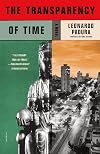
Mario Conde, approaching sixty and a quarter of a century removed from his job as a police detective is asked to interrupt his not very lucrative career as a buyer of used books to investigate the robbery of an old friend, whose boyfriend stole everything from his house while he was in Miami, including a priceless statue of a black virgin that was brought to Cuba from Spain centuries earlier and dates to the time of the Templars.
As he moves about Havana tracking the thief Conde mourns the show more city of the past. “The money and prosperity that had once existed in this singular and unparalleled city!” Constantly broke and often hungry, Conde is going through his own existential crisis. He and his friends are “the ones who did not have the strength, option, or desire to leave, not while so much was failing around them.”
In a country of little luxury for most people, Conde savors every meal, drink, cigarette and cup of coffee (especially imported) he can wrap his taste buds around. “Is everything really on the internet?” Conde asks a friend at one point. A friend who is probably going to leave the island like so many others.
Leonardo Padura tells the truth about Cuba, and by extension, the world. He documents the effects of increased consumerism and growing capitalist tendencies. He highlights the divide between those with access to increased wealth and those with no hope of affluence. And he’s instrumental in finding the precious virgin, although its ultimate fate is unsure. The statue may have to return to Spain. show less
As he moves about Havana tracking the thief Conde mourns the show more city of the past. “The money and prosperity that had once existed in this singular and unparalleled city!” Constantly broke and often hungry, Conde is going through his own existential crisis. He and his friends are “the ones who did not have the strength, option, or desire to leave, not while so much was failing around them.”
In a country of little luxury for most people, Conde savors every meal, drink, cigarette and cup of coffee (especially imported) he can wrap his taste buds around. “Is everything really on the internet?” Conde asks a friend at one point. A friend who is probably going to leave the island like so many others.
Leonardo Padura tells the truth about Cuba, and by extension, the world. He documents the effects of increased consumerism and growing capitalist tendencies. He highlights the divide between those with access to increased wealth and those with no hope of affluence. And he’s instrumental in finding the precious virgin, although its ultimate fate is unsure. The statue may have to return to Spain. show less
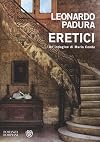
Un romanzo che sono tre. Lungo, complicato, coinvolgente. Nella prima parte, Il libro di Daniele, il figlio di fuoriusciti cubani di origine ebrea ingaggia l'ex poliziotto Conde per indagare sulle vicende del Rembrandt che da trecento anni apparteneva alla sua famiglia. Del quadro, una testa di Cristo che avrebbe potuto essere anche un ritratto di un uomo ebreo, arrivato a Cuba a bordo della famigerata nave St. Luis, si sono perse le tracce nel momento in cui, dopo un criminale tira e molla, show more la nave e il suo carico vennero rimandati al porto di partenza e incontro alla morte nei campi di concentramento.
La seconda parte catapulta il lettore nella Amsterdam dei tempi di Rembrandt, e traccia un raffinato ritratto del famoso pittore e dell'ambiente che lo circondava, compresi i suoi rapporti con gli ebrei che, sfuggiti alle persecuzioni in varie parti del mondo, si erano ritrovati in quella città come in una specie di paradiso di libertà. La terza parte, forse la più debole, ci riporta a Cuba in tempi moderni. Alla ricerca di una giovane scomparsa, Conde scopre come i ragazzi cubani di oggi reagiscono alla perdita di tutte le illusioni e alla ipocrisia dei loro genitori, corrotti e incapaci esattamente come i loro nonni. A riprova di tutto ciò, è proprio in questa terza parte che si ritrovano le tracce del quadro di Rembrandt. Questo lunghissimo romanzo è una lectio magistralis mascherata da thriller storico, in cui Padura, muovendosi con estrema disinvoltura tra passato e presente, compie un'impietosa disamina della storia di Cuba, dove la rivoluzione castrista non è riuscita a cambiare davvero l'anima delle persone. Qualche inciampo nella traduzione. show less
La seconda parte catapulta il lettore nella Amsterdam dei tempi di Rembrandt, e traccia un raffinato ritratto del famoso pittore e dell'ambiente che lo circondava, compresi i suoi rapporti con gli ebrei che, sfuggiti alle persecuzioni in varie parti del mondo, si erano ritrovati in quella città come in una specie di paradiso di libertà. La terza parte, forse la più debole, ci riporta a Cuba in tempi moderni. Alla ricerca di una giovane scomparsa, Conde scopre come i ragazzi cubani di oggi reagiscono alla perdita di tutte le illusioni e alla ipocrisia dei loro genitori, corrotti e incapaci esattamente come i loro nonni. A riprova di tutto ciò, è proprio in questa terza parte che si ritrovano le tracce del quadro di Rembrandt. Questo lunghissimo romanzo è una lectio magistralis mascherata da thriller storico, in cui Padura, muovendosi con estrema disinvoltura tra passato e presente, compie un'impietosa disamina della storia di Cuba, dove la rivoluzione castrista non è riuscita a cambiare davvero l'anima delle persone. Qualche inciampo nella traduzione. show less
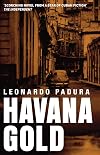
Mario Conde is a police Lieutenant in Havana, where, in his experience, people live lives “that rarely managed to be normal.” In this fourth book in the series, Conde is investigating the murder of a popular female teacher at his former school, with a drug connection involved. Conde is more depressed than usual – despite, or because of, a new romance. He’s drinking more, fighting with a fellow cop, generally in the midst of an existential crisis – “a man alone.”
Poetic writer show more that Leonardo Padura is, he is very good at making you see things a little differently. A suspect wears “a black leather jacket that was an insult to the climate.” Life in Havana is tough – tougher still on Conde. Padura shows it on every page. show less
Poetic writer show more that Leonardo Padura is, he is very good at making you see things a little differently. A suspect wears “a black leather jacket that was an insult to the climate.” Life in Havana is tough – tougher still on Conde. Padura shows it on every page. show less
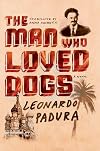
First thing: When I read the synopsis of this book. my eyes read “Trotsky,” but my mind interpreted it as “Tolstoy,” and I remember thinking, “I never knew Tolstoy was assassinated!” But no, of course, this book’s about the convoluted machinations leading up to the murder of Leon Trotsky, a historical figure about whom I knew a name. And other than that, almost nothing. Well, that was about to change, wasn’t it?
Narrated by a troubled, down on his luck Cuban medical writer, show more Iván Cardenas Maturell, who just buried his wife Ana, and who was now working in a veterinary clinic in a curiously English-sounding Havana neighbourhood called Lawton, this story recounts the downfall, exile and ultimate murder of Lev Davidovitch, more famously known as Leon Trotsky.
Only twenty pages into this book, and having just uncovered the telling of Trotsky’s banishment to the cold steppes of Kyrgyzstan’s Alma-Ata and the subsequent exile orders that saw him travel under the unbearable cold, snow and ice of a Russian winter, I was already able to attest to this book’s brilliant writing and its wonderful visualizations. So yeah, twenty pages in and I was hooked.
There are three running narratives in this book. Two are historical biographies; one of Trotsky and the other of his murderer, Ramón Mercader. They both read a little like textbooks and some might describe certain passages as being dry but, even if that description were apt, those pages are still eminently readable and full of insightful detail. The third story is the narrator’s point of view. It recounts Iván’s backstory—his hard and difficult personal and professional life in Cuba; including his having to deal with his wife, Ana’s, death. Spinning in and around Iván’s personal woes, one finds a vivid description of Iván’s accidental but intriguing encounter, on a beach near Havana, with a Spaniard named Jaime López. The man, López, owns two Russian Borzoi wolfhounds, a rare and special breed, especially in Cuba. The man’s something of an enigma too, and, as Iván becomes increasingly curious about him, he has begun to dub López, The Man Who Loves Dogs. López, who has a chauffeur/bodyguard (which obviously means he’s got some sort of political clout) slowly reveals a few things about his life—he lived in Moscow (which is where he got the dogs), he works as a government advisor and he’s suffering from some unknown ailment which he’s convinced is killing him. These three narratives are the priniciple subsets in this expansive novel and they’re each interwoven throughout the book as the stories jump forward and backward through time.
What I also loved about the book is the eventual mystery revolving around the man who loved dogs. Who is he really? Is it the mysterious López that Iván meets just outside Havana? That enigmatic figure letting his two Borzoi wolfhounds off leash on that quiet and lonely beach? Or, is the man who loved dogs none other than Leon Trotsky himself? He, the reviled and troubled exile who, years later, still mourns the death of his own Borzoi named Maya? Perhaps the man who loved dogs is the assassin Ramón Mercader, who himself kept dogs in his younger years when he had a more stable life and when he wasn’t a fugitive travelling from country to country? Finally, might it be the narrator himself—the narrator Iván—who met his second wife, Ana, when she took her sick dog to the veterinary office where Iván worked? Which of these is the man who loved dogs? Maybe it’s all of them. Maybe a love of dogs is the curious instrument the narrator uses to demonstrate how a shared affinity somehow unites divergent individuals with violently contrasting philosophies. And maybe it’s also the instrument that sees these protagonists meld and converge (in at least one example, in a very curious fashion) to only, finally, find themselves unable to bridge all of the raw emotions. Emotions that began with different world-views and culminated in overpowering hatred and intolerance and, ultimately, murder.
This is an emotional novel. In it we also learn of the emotions that caused a revolution in Russia, that overthrew a feudal society, that supplanted it with a supposed fairer way of life, that because of other emotions (fear and paranoia) ended up creating a dystopian society where no one was above suspicion. Where no one was immune to a jail cell, or worse, a firing squad. Not the participants who helped launch the revolution, not the spy-and-dagger women and men who lived in the shadows, who assumed aliases and personas, all in the hopes of wiping out all the proletariat’s enemies, of whom even Trotsky found himself. And that is how the narrator describes Trotsky. Trotsky, one of the revolution’s key architects, now exiled, now eager to regain power, but still always afraid for his life. No one, no one in this book escapes undamaged. No one, no one is left unmarked by the deadly and unimaginable horrors that were sparked by an idea, a notion of equality and fairness. And, ultimately, a dark, dreadful and horrific reality that was so, so far removed for that utopian notion. No, nothing could save the troubled characters in this novel, and certainly not a shared love of dogs. show less
Narrated by a troubled, down on his luck Cuban medical writer, show more Iván Cardenas Maturell, who just buried his wife Ana, and who was now working in a veterinary clinic in a curiously English-sounding Havana neighbourhood called Lawton, this story recounts the downfall, exile and ultimate murder of Lev Davidovitch, more famously known as Leon Trotsky.
Only twenty pages into this book, and having just uncovered the telling of Trotsky’s banishment to the cold steppes of Kyrgyzstan’s Alma-Ata and the subsequent exile orders that saw him travel under the unbearable cold, snow and ice of a Russian winter, I was already able to attest to this book’s brilliant writing and its wonderful visualizations. So yeah, twenty pages in and I was hooked.
There are three running narratives in this book. Two are historical biographies; one of Trotsky and the other of his murderer, Ramón Mercader. They both read a little like textbooks and some might describe certain passages as being dry but, even if that description were apt, those pages are still eminently readable and full of insightful detail. The third story is the narrator’s point of view. It recounts Iván’s backstory—his hard and difficult personal and professional life in Cuba; including his having to deal with his wife, Ana’s, death. Spinning in and around Iván’s personal woes, one finds a vivid description of Iván’s accidental but intriguing encounter, on a beach near Havana, with a Spaniard named Jaime López. The man, López, owns two Russian Borzoi wolfhounds, a rare and special breed, especially in Cuba. The man’s something of an enigma too, and, as Iván becomes increasingly curious about him, he has begun to dub López, The Man Who Loves Dogs. López, who has a chauffeur/bodyguard (which obviously means he’s got some sort of political clout) slowly reveals a few things about his life—he lived in Moscow (which is where he got the dogs), he works as a government advisor and he’s suffering from some unknown ailment which he’s convinced is killing him. These three narratives are the priniciple subsets in this expansive novel and they’re each interwoven throughout the book as the stories jump forward and backward through time.
What I also loved about the book is the eventual mystery revolving around the man who loved dogs. Who is he really? Is it the mysterious López that Iván meets just outside Havana? That enigmatic figure letting his two Borzoi wolfhounds off leash on that quiet and lonely beach? Or, is the man who loved dogs none other than Leon Trotsky himself? He, the reviled and troubled exile who, years later, still mourns the death of his own Borzoi named Maya? Perhaps the man who loved dogs is the assassin Ramón Mercader, who himself kept dogs in his younger years when he had a more stable life and when he wasn’t a fugitive travelling from country to country? Finally, might it be the narrator himself—the narrator Iván—who met his second wife, Ana, when she took her sick dog to the veterinary office where Iván worked? Which of these is the man who loved dogs? Maybe it’s all of them. Maybe a love of dogs is the curious instrument the narrator uses to demonstrate how a shared affinity somehow unites divergent individuals with violently contrasting philosophies. And maybe it’s also the instrument that sees these protagonists meld and converge (in at least one example, in a very curious fashion) to only, finally, find themselves unable to bridge all of the raw emotions. Emotions that began with different world-views and culminated in overpowering hatred and intolerance and, ultimately, murder.
This is an emotional novel. In it we also learn of the emotions that caused a revolution in Russia, that overthrew a feudal society, that supplanted it with a supposed fairer way of life, that because of other emotions (fear and paranoia) ended up creating a dystopian society where no one was above suspicion. Where no one was immune to a jail cell, or worse, a firing squad. Not the participants who helped launch the revolution, not the spy-and-dagger women and men who lived in the shadows, who assumed aliases and personas, all in the hopes of wiping out all the proletariat’s enemies, of whom even Trotsky found himself. And that is how the narrator describes Trotsky. Trotsky, one of the revolution’s key architects, now exiled, now eager to regain power, but still always afraid for his life. No one, no one in this book escapes undamaged. No one, no one is left unmarked by the deadly and unimaginable horrors that were sparked by an idea, a notion of equality and fairness. And, ultimately, a dark, dreadful and horrific reality that was so, so far removed for that utopian notion. No, nothing could save the troubled characters in this novel, and certainly not a shared love of dogs. show less
Lists
Awards


You May Also Like


Associated Authors
Statistics
- Works
- 54
- Also by
- 5
- Members
- 3,633
- Popularity
- #6,965
- Rating
- 3.9
- Reviews
- 160
- ISBNs
- 401
- Languages
- 17
- Favorited
- 2