

Jules Howard
Author of Encyclopedia of Animals: Contains 300 species!
About the Author
Jules Howard is a UK-based wildlife expert, author, science-writer and presenter. He writes about zoology and wildlife conservation and is a regular contributor to BBC Wildlife magazine, BBC Science Focus magazine and the Guardian. Jules also runs a social enterprise that has brought almost 100,000 show more young people closer to the natural world, partly by tapping into the wonder of ponds. show less
Works by Jules Howard
Encyclopedia of Insects: an illustrated guide to nature's most weird and wonderful bugs - Contains over 300 insects! (2020) 40 copies, 2 reviews
Infinite Life: The Revolutionary Story of Eggs, Evolution, and Life on Earth (2024) 31 copies, 1 review
The Who, What, Why of Zoology: The Incredible Science of the Animal Kingdom (2023) 22 copies, 2 reviews
The Animal World: The Amazing Connections and Diversity Found in the Animal Family Tree (2018) 19 copies
The Wildlife Pond Book: Create Your Own Pond Paradise for Wildlife (The Wildlife Trusts) (2019) 15 copies
Tagged
Common Knowledge
- Birthdate
- 20th century
- Gender
- male
- Nationality
- UK
- Places of residence
- Leicestershire, England, UK
- Map Location
- United Kingdom
Members
Reviews
Encyclopedia of Insects: an illustrated guide to nature's most weird and wonderful bugs - Contains over 300 insects! by Jules Howard
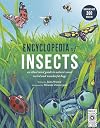
I LOVE learning, so seeing this encyclopedia perked me right up! Sure, insects can be creepy and crawly, but I was down for learning some new stuff about everyone's "favourite" creatures! And I wasn't disappointed!
Do keep in mind that this is not an exhaustive collection of bugs, but it is an excellent start for eager minds!!
The pictures in this book are absolute awesome! I really enjoyed the damselfly picture that stared into my soul (hoenstly, it was creepy to stare at my but the art is show more AMAZE-BALLS).
Here are select things I learned:
1. There's complete and incomplete metamorphosis? Wait... what? Why did my biology classes skip that information? THAT IS SO COOL.
2. Dragonflies are actually predators, and Damselflies are a thing. Who knew?
3. The Walking Flower Mantis looks super cool and pretty. I even googled them because I didn't believe they were actually pink. They are gorgeous!! They look like flowers!
4. Toe Biters, Hummingbird Hawkmoth & Slave-Making Ants. That is all.
Things I would like to avoid:
1. Swams of locusts. Kthanxbai.
2. EARWIGS HAVE WINGS. REPEAT: EARWIGS HAVE WINGS. They are way grosser now. Yuck. They can chase me when I run away!
Overall, this book is totally, super amazing! I would absolutely recommend this to young and old readers alike! You'll learn a whole bunch. I could totally see this book being used for school projects or for nerdy little kids like me (back in the day, of course) who just wanted to soak up knowledge like a sponge. I will definitely be using some of these facts for my useless trivia I spout out at people on a regular basis.
Five out of five stars!
Thank you to NetGalley and Quarto Publishing for giving me an opportunity to read this book! show less
Do keep in mind that this is not an exhaustive collection of bugs, but it is an excellent start for eager minds!!
The pictures in this book are absolute awesome! I really enjoyed the damselfly picture that stared into my soul (hoenstly, it was creepy to stare at my but the art is show more AMAZE-BALLS).
Here are select things I learned:
1. There's complete and incomplete metamorphosis? Wait... what? Why did my biology classes skip that information? THAT IS SO COOL.
2. Dragonflies are actually predators, and Damselflies are a thing. Who knew?
3. The Walking Flower Mantis looks super cool and pretty. I even googled them because I didn't believe they were actually pink. They are gorgeous!! They look like flowers!
4. Toe Biters, Hummingbird Hawkmoth & Slave-Making Ants. That is all.
Things I would like to avoid:
1. Swams of locusts. Kthanxbai.
2. EARWIGS HAVE WINGS. REPEAT: EARWIGS HAVE WINGS. They are way grosser now. Yuck. They can chase me when I run away!
Overall, this book is totally, super amazing! I would absolutely recommend this to young and old readers alike! You'll learn a whole bunch. I could totally see this book being used for school projects or for nerdy little kids like me (back in the day, of course) who just wanted to soak up knowledge like a sponge. I will definitely be using some of these facts for my useless trivia I spout out at people on a regular basis.
Five out of five stars!
Thank you to NetGalley and Quarto Publishing for giving me an opportunity to read this book! show less
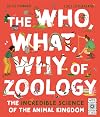
In a Nutshell: An enlightening read for youngsters who are interested in animals and zoology.
Most children love animals. However, a few want to take their passion beyond pets, and have a career connected to animals in the wild. How should they begin? What does a zoologist actually do? Where does a zoologist work? You will find answers to all this and more in this educative and entertaining book.
The books begins with an introduction of zoology. It then covers various types of biomes such as show more temperate & tropical forests, the tundra, the grasslands, and even underwater reefs and the deep ocean. For each region, the book explores the kind of region, a few of the animals who dwell therein, some interesting facts related to the animals, and the work zoologists do in that region, and how they go about it.
While there are many books that provide amazing facts about wild animals, this book is different because it explores many aspects from a zoological perspective and provides us an insight into the role played by zoologists in today’s world. Rather than restricting the content to animals alone, the text also covers many complex terms such as invasive species, fossil fields, ethics, and the role of zoos in animal research.
At the end, there are a few pointers about what children can do at their age to further their interest in zoology. There is also some nice (and entertaining) advice on zoology from some contemporary zoologists. A helpful glossary provides the meanings of all the difficult terms.
While the book is planned for readers aged 6-9, the complexity of the content makes this a suitable work for the older ones in that age group. It will even work wonderfully for tweens and younger teens. Pre-teens might enjoy the animal facts and some part of the zoologists’ work, but the rest might be a tad too difficult for them to grasp as intended. They will love the art though.
The artwork is exactly as needed for the topic: colourful, accurate, fun. I didn’t like the sketches in the zoologists’ section at the end, but the rest of the illustrations were nice. They are quite intricate, and some pages even include some fun elements within the drawings.
All in all, this would be a great addition to every animal lover’s library and even to classroom libraries.
4 stars.
My thanks to Quarto Publishing Group and Edelweiss for the DRC of “The Who, What, Why of Zoology”. This review is voluntary and contains my honest opinion about the book.
———————————————
Connect with me through:
My Blog | The StoryGraph | Instagram | Facebook | Twitter show less
Most children love animals. However, a few want to take their passion beyond pets, and have a career connected to animals in the wild. How should they begin? What does a zoologist actually do? Where does a zoologist work? You will find answers to all this and more in this educative and entertaining book.
The books begins with an introduction of zoology. It then covers various types of biomes such as show more temperate & tropical forests, the tundra, the grasslands, and even underwater reefs and the deep ocean. For each region, the book explores the kind of region, a few of the animals who dwell therein, some interesting facts related to the animals, and the work zoologists do in that region, and how they go about it.
While there are many books that provide amazing facts about wild animals, this book is different because it explores many aspects from a zoological perspective and provides us an insight into the role played by zoologists in today’s world. Rather than restricting the content to animals alone, the text also covers many complex terms such as invasive species, fossil fields, ethics, and the role of zoos in animal research.
At the end, there are a few pointers about what children can do at their age to further their interest in zoology. There is also some nice (and entertaining) advice on zoology from some contemporary zoologists. A helpful glossary provides the meanings of all the difficult terms.
While the book is planned for readers aged 6-9, the complexity of the content makes this a suitable work for the older ones in that age group. It will even work wonderfully for tweens and younger teens. Pre-teens might enjoy the animal facts and some part of the zoologists’ work, but the rest might be a tad too difficult for them to grasp as intended. They will love the art though.
The artwork is exactly as needed for the topic: colourful, accurate, fun. I didn’t like the sketches in the zoologists’ section at the end, but the rest of the illustrations were nice. They are quite intricate, and some pages even include some fun elements within the drawings.
All in all, this would be a great addition to every animal lover’s library and even to classroom libraries.
4 stars.
My thanks to Quarto Publishing Group and Edelweiss for the DRC of “The Who, What, Why of Zoology”. This review is voluntary and contains my honest opinion about the book.
———————————————
Connect with me through:
My Blog | The StoryGraph | Instagram | Facebook | Twitter show less
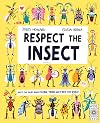
In a Nutshell: An informative and entertaining book offering you a multitude of reasons why you should “respect the insect.” Love the structure, the illustrations and the content. A couple of minor points could have been tackled better, but on the whole, definitely recommended to entomophiles as well as entomophobes.
~~~~~~~~~~~~~~~~~~~~~~~~~~~~
Bugs always get a bad rap. To a great extent, I can understand why. They seem creepy, they crawl in nooks and crannies and spring out show more unexpectedly, they bite, they sting, they fly too fast to be caught,… But bugs are also amazing!
Disagree?
Here’s a book that aims to get you to respect insects. I love that word choice: “respect”. The plan isn’t to make you love insects but to make you appreciate them. And hopefully, not swat or squash them anymore. (Except cockroaches and female mosquitoes! I permit you to go wild and attack them with gusto! show less
~~~~~~~~~~~~~~~~~~~~~~~~~~~~
Bugs always get a bad rap. To a great extent, I can understand why. They seem creepy, they crawl in nooks and crannies and spring out show more unexpectedly, they bite, they sting, they fly too fast to be caught,… But bugs are also amazing!
Disagree?
Here’s a book that aims to get you to respect insects. I love that word choice: “respect”. The plan isn’t to make you love insects but to make you appreciate them. And hopefully, not swat or squash them anymore. (Except cockroaches and female mosquitoes! I permit you to go wild and attack them with gusto! show less
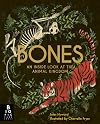
This beautifully illustrated, oversized book takes readers into the wonderful world of skeletons. It starts with an introduction, using a human skeleton, and explaining basic terms like cartilage and what bones are made of. It also discusses how fossils are used to discover the past. The rest of the book, examining the skeletons of various animals, is divided into types of movement. The jaws and biting power of a sperm whale, tiger, and rattlesnake are explained and compared, illustrating show more how different skeletal structures perform different functions. Further chapters explore digging (European mole, pink fairy armadillos, and the greater bilby), grasping and claws, holding weight, jumping, gliding and flight, running, and swimming. Back matter consists of a glossary.
The pictures have a classic feeling, which reminds me of the animal fact encyclopedias of my childhood of the 80s. The skeletons are carefully articulated, placed over silhouette illustrations of the animals, and showing the way different parts work together. The text is fairly dense and often placed against dark backgrounds, which can make it difficult to read.
Verdict: This is really a browsing book, something to purchase as a gift or an additional purchase. With the lack of sources and illustrations instead of photographs, it's not something to use for a research report, but will please strong readers who enjoy learning different facts about animals and are interested in biology. It is a little difficult to source, being originally published in the UK and the US edition must be purchased direct.
ISBN: 9781536210415; This edition published April 2020 by Big Picture Press; Purchased via Amazon by me and donated to the library show less
The pictures have a classic feeling, which reminds me of the animal fact encyclopedias of my childhood of the 80s. The skeletons are carefully articulated, placed over silhouette illustrations of the animals, and showing the way different parts work together. The text is fairly dense and often placed against dark backgrounds, which can make it difficult to read.
Verdict: This is really a browsing book, something to purchase as a gift or an additional purchase. With the lack of sources and illustrations instead of photographs, it's not something to use for a research report, but will please strong readers who enjoy learning different facts about animals and are interested in biology. It is a little difficult to source, being originally published in the UK and the US edition must be purchased direct.
ISBN: 9781536210415; This edition published April 2020 by Big Picture Press; Purchased via Amazon by me and donated to the library show less
Lists
Awards


You May Also Like


Associated Authors
Statistics
- Works
- 25
- Members
- 386
- Popularity
- #62,659
- Rating
- 3.8
- Reviews
- 16
- ISBNs
- 74
- Languages
- 3