
Jenny Broom
Author of Animalium: Welcome to the Museum
Works by Jenny Broom
The Wonder Garden: Wander through 5 habitats to discover 80 amazing animals (2015) 112 copies, 3 reviews
Creepy-crawlies 1 copy
Scary stingers 1 copy
Tagged
Common Knowledge
- Relationships
- Williams, Rachel [1] (business partner)
Members
Reviews
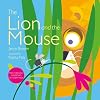
the Lion and the Mouse is a fable that teaches people to be kind, humble and thankful. The lion is a prideful animal who helps a little mouse to reach some berries. The mouse is thankful and tells the lion that if he ever needed help that she would be glad to help him. The prideful lion doubts that he would ever need help from a tiny little mouse. However, one day the lion gets trapped in a net and cannot escape, and the tiny little mouse came to save him by chewing him out of the net. The show more lion realizes that he was wrong to think a mouse could not help him and the lion and the mouse becomes best friends.
Jenny Broom, like many others, readapted this story from the Aesop's fables. I enjoyed reading the story and especially liked the peek-through windows on every page and the cool illustrations.
I also read peoples thoughts on this fable and generally people call attention to the Lion's pride and the mouse's humbleness. But for some reason, I associated this story with gender roles as well. The lion is prideful, but also the king of the jungle (man of the house, provider etc.) and the mouse is just a tiny, small part of the wild (the woman, the help). The lions attitude towards the mouse offering help was much like the attitudes of men in 40's who believed women were incapable of providing or working or anything! And until the humble little mouse freed the lion, the lion would have remained full of pride. show less
Jenny Broom, like many others, readapted this story from the Aesop's fables. I enjoyed reading the story and especially liked the peek-through windows on every page and the cool illustrations.
I also read peoples thoughts on this fable and generally people call attention to the Lion's pride and the mouse's humbleness. But for some reason, I associated this story with gender roles as well. The lion is prideful, but also the king of the jungle (man of the house, provider etc.) and the mouse is just a tiny, small part of the wild (the woman, the help). The lions attitude towards the mouse offering help was much like the attitudes of men in 40's who believed women were incapable of providing or working or anything! And until the humble little mouse freed the lion, the lion would have remained full of pride. show less
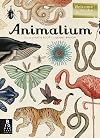
On the front of this gorgeous oversized book, a sticker reads “Welcome to the Museum,” and indeed, as you turn the pages, you will feel as if you have stepped into the magical world of a natural history museum that has somehow come right into your house.
As Dr. Sandra Knapp of London’s Natural History Museum observes in the forward, we share our planet with about two million other species of living things, and these show incredible diversity. But of course we don’t always get to see show more many of the marvelous creatures of this planet in our daily lives. The “Animalium” attempts to remedy that omission, bringing a virtual museum to you that is “open twenty-four hours a day, seven days a week.” It is also, as the author contends, “the only museum to house animals ancient and modern, enormous and tiny, vicious and vulnerable, between two covers.” And it is amazing.
This portfolio-like book is divided into six “galleries”: invertebrates, fish, amphibians, reptiles, birds, and mammals. Each section is then further divided by branches of these life forms. You receive some background generally on the division, and then details on specific features of sub-groups. [For example, in the invertebrate section, there are separate “exhibits” on porifera (sponges), cephalopods (such as squid and octopi), cnidaria (examples: anemones and corals), and flying insects.] In addition, each division showcases an ecosystem common to these life forms (for invertebrates, the habitat featured is coastal waters).
At the end of the book there is an excellent index which includes both common names and scientific names (also provided for in each “exhibit”). There are also some links to online guides for further information. To name a few: although the book does not get into scientific classification, it does reference the BBC site which explains all about taxonomic ranking, and even provides a printable tree life poster. The Monterey Bay Aquarium site has many fun resources, including printable guides to sea creatures and habitats divided by grades. ARKive is a not-for-profit initiative to create “an awe-inspiring record of life on Earth” and has a fantastic database of articles on conservation and climate change. These would also make great resources for kids doing reports for school.
The information in this book is excellent, but what will entrance you the most will probably be the illustrations by Katie Scott. Her drawings were initially made with pen and ink and then colored digitally.
Evaluation: This unusual book is marketed for kids 8-12, but I would identify it instead as a coffee table book for all ages. show less
As Dr. Sandra Knapp of London’s Natural History Museum observes in the forward, we share our planet with about two million other species of living things, and these show incredible diversity. But of course we don’t always get to see show more many of the marvelous creatures of this planet in our daily lives. The “Animalium” attempts to remedy that omission, bringing a virtual museum to you that is “open twenty-four hours a day, seven days a week.” It is also, as the author contends, “the only museum to house animals ancient and modern, enormous and tiny, vicious and vulnerable, between two covers.” And it is amazing.
This portfolio-like book is divided into six “galleries”: invertebrates, fish, amphibians, reptiles, birds, and mammals. Each section is then further divided by branches of these life forms. You receive some background generally on the division, and then details on specific features of sub-groups. [For example, in the invertebrate section, there are separate “exhibits” on porifera (sponges), cephalopods (such as squid and octopi), cnidaria (examples: anemones and corals), and flying insects.] In addition, each division showcases an ecosystem common to these life forms (for invertebrates, the habitat featured is coastal waters).
At the end of the book there is an excellent index which includes both common names and scientific names (also provided for in each “exhibit”). There are also some links to online guides for further information. To name a few: although the book does not get into scientific classification, it does reference the BBC site which explains all about taxonomic ranking, and even provides a printable tree life poster. The Monterey Bay Aquarium site has many fun resources, including printable guides to sea creatures and habitats divided by grades. ARKive is a not-for-profit initiative to create “an awe-inspiring record of life on Earth” and has a fantastic database of articles on conservation and climate change. These would also make great resources for kids doing reports for school.
The information in this book is excellent, but what will entrance you the most will probably be the illustrations by Katie Scott. Her drawings were initially made with pen and ink and then colored digitally.
Evaluation: This unusual book is marketed for kids 8-12, but I would identify it instead as a coffee table book for all ages. show less
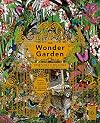
I’m not sure this book is really intended for children: it is so filled with majestic illustrations it will appeal to all ages. Children, especially younger ones, are likely to be over-whelmed by sensory overload. This oversized book is brim-full of magnificent drawings that you do, indeed, have to see to believe. The text is informative and works well with the illustrations. The book is correctly named – it is a wonder.
Oh, did this book bring back memories. When I was a kid, we loved perusing animal encyclopedias. All that knowledge! The pictures!
This is that same experience, updated for the modern child. The book is supposed to be like visiting a museum - but it's waaay more interesting (sorry all my museum friends).
The preface gives a brief explanation of biodiversity and then after the table of contents (or "galleries") you are welcomed to the animalium and invited to browse this museum in a book. An show more elaborate family tree shows all the animals and more that are covered in the book and is followed by a brief explanation of evolution.
Then, it's time to enter the galleries. Each gallery focuses on a different type of animal; invertebrates, fish, amphibians, reptiles, birds, and mammals. The opening spread features a sepia-toned illustration of various creatures on the left and the title page with a list of the gallery contents on the right. The gallery itself introduces the animal family, then features various creatures with detailed, vividly illustrated plates. It ends by introducing a habitat.
The book ends with an extensive index and a list of generic online sources to learn more about the creatures introduced. Physically, be aware that this is a large book. It's 15 inches high and almost a foot wide. The binding appears sturdy, but if you don't have a good shelving solution for oversized titles that might not last long.
The illustrations look exactly like the encyclopedic plates I remember from my childhood with an old-fashioned, static feel and yet they are vividly life-like and exquisitely detailed. However, the real contemporary feel comes from the text. In a bold, readable font and cut into friendly, bite-sized chunks, it informs and guides without overwhelming the reader.
Verdict: This is an intriguing start to what promises to be a beautiful and fascinating series. This will capture the attention of children old enough to read and absorb the text and young enough to enjoy the pictures. Recommended.
ISBN: 9780763675080; Published 2014 by Big Picture Press/Candlewick; Borrowed from another library in my consortium; Added to the nonfiction backlist to order show less
This is that same experience, updated for the modern child. The book is supposed to be like visiting a museum - but it's waaay more interesting (sorry all my museum friends).
The preface gives a brief explanation of biodiversity and then after the table of contents (or "galleries") you are welcomed to the animalium and invited to browse this museum in a book. An show more elaborate family tree shows all the animals and more that are covered in the book and is followed by a brief explanation of evolution.
Then, it's time to enter the galleries. Each gallery focuses on a different type of animal; invertebrates, fish, amphibians, reptiles, birds, and mammals. The opening spread features a sepia-toned illustration of various creatures on the left and the title page with a list of the gallery contents on the right. The gallery itself introduces the animal family, then features various creatures with detailed, vividly illustrated plates. It ends by introducing a habitat.
The book ends with an extensive index and a list of generic online sources to learn more about the creatures introduced. Physically, be aware that this is a large book. It's 15 inches high and almost a foot wide. The binding appears sturdy, but if you don't have a good shelving solution for oversized titles that might not last long.
The illustrations look exactly like the encyclopedic plates I remember from my childhood with an old-fashioned, static feel and yet they are vividly life-like and exquisitely detailed. However, the real contemporary feel comes from the text. In a bold, readable font and cut into friendly, bite-sized chunks, it informs and guides without overwhelming the reader.
Verdict: This is an intriguing start to what promises to be a beautiful and fascinating series. This will capture the attention of children old enough to read and absorb the text and young enough to enjoy the pictures. Recommended.
ISBN: 9780763675080; Published 2014 by Big Picture Press/Candlewick; Borrowed from another library in my consortium; Added to the nonfiction backlist to order show less
Lists
Awards


You May Also Like


Associated Authors
Statistics
- Works
- 25
- Members
- 971
- Popularity
- #26,520
- Rating
- 4.4
- Reviews
- 32
- ISBNs
- 73
- Languages
- 13