
John Farndon
Author of The Kingfisher First Animal Encyclopedia (Kingfisher First Reference)
About the Author
John Farndon, author of the bestselling Do You Think You're Clever?, has set out to find the answer.
Series
Works by John Farndon
The Universe: More than 100 Questions and Answers to Things You Want to Know (1998) 137 copies, 2 reviews
World History: Early Civilizations - Gods & Religion - Battles & Wars - the Age of Empire (2010) 49 copies
1000 Facts on Buildings & Transportation (Cars, Trains, Planes, Ships and Boats, Buildings, Great Monuments) (2000) 38 copies
Rockets And Other Spacecraft: Learn the Science then Do the Project (How Science Works) (2000) 31 copies
Collecting Rocks and Crystals: Hold the Treasures of the Earth in the Palm of Your Hand (1999) 23 copies
Plague!: Epidemics and Scourges Through the Ages (The Sickening History of Medicine) (2017) 23 copies, 2 reviews
Civilizations, Exploration & Conquest: Illustrated History Encyclopedia (2000) — Contributor — 19 copies
What Do We Know About Stars and Galaxies? (Raintree Freestyle: Earth, Space, and Beyond) (2011) 15 copies
Stickmen's Guide to Trains and Automobiles (Stickmen's Guides to How Everything Works) (2016) 12 copies
Stickmen’s Guide to How Things Work: Discover how planes, trains, automobiles and other great machines work (Stickmen's Guides, 1) (2019) 10 copies, 1 review
From Laughing Gas to Face Transplants: Discovering Transplant Surgery (Chain Reactions) (2006) 9 copies
Strange Medicine: A History of Medical Remedies (The Sickening History of Medicine) (2017) 7 copies, 1 review
Quacks & Con Artists: The Dubious History of Doctors (The Sickening History of Medicine) (2017) 6 copies
Planet Earth: Informative Tips and Practical Projects Unravel the Mysteries of Our World (Investigations) (2000) 6 copies
Halten Sie sich für schlau?: Die berüchtigten Testfragen der englischen Elite-Universitäten (2012) 5 copies
Stickmen's Guide to Your Gurgling Guts (Stickmen's Guides to Your Awesome Body) (2017) 4 copies, 1 review
Stickmen's Guide to Your Mighty Muscles and Bones (Stickmen's Guides to Your Awesome Body) (2017) 4 copies
Awesome Space, Space Exploration 2 copies
Potions, Poisons and Pills - Weird and Wonderful Medicines: Grisly History of Medicine (2017) 2 copies
Machines & voertuigen van auto tot ruimteraket : de werking en techniek eenvoudig uitgelegd (2017) 2 copies
Cohetes y otras naves espaciales (Spanish Edition) (Como Funciona La Ciencia/ How Science Works) (2008) 2 copies
Gesteenten & mineralen hoe u de mooiste exemplaren kunt vinden, identificeren en verzamelen (2014) 2 copies, 1 review
O tempo 1 copy
ANWB jeugdatlas 1 copy
The Great Book of Everything 1 copy
Associated Works
The Politics Book: Big Ideas Simply Explained (2013) — Contributor, some editions — 693 copies, 5 reviews
The Planets: The Definitive Visual Guide to Our Solar System (2014) — Author — 262 copies, 4 reviews
Engineers From the Great Pyramids to the Pioneers of Space Travel (2012) — some editions — 109 copies, 1 review
Religion, Science, Medicine & Warfare: Illustrated History Encyclopedia (2000) — Contributor, some editions — 14 copies, 1 review
Tagged
Common Knowledge
- Birthdate
- 1960
- Gender
- male
- Education
- University of Cambridge (MA | Geography & Earth Science)
- Occupations
- science writer
- Nationality
- UK
- Associated Place (for map)
- UK
Members
Reviews
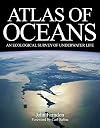
I have a soft spot for illustrated encyclopedia-type books and this one was no exception. It follows the lineage of including focused stories that everyone from the non-science lay reader to the college graduate with a biology degree (as opposed to many modern popular science encyclopedias, which are virtually all photos with some generic text that shadows the might of a dozen Zoobooks).
The journey travels all the major oceans and seas, ecosystems within those waters, species profiles, major show more human-environment issues, and more.
What was special for me, a land lubber, was how well the author described the subsurface world. It has grass meadows, mangrove forests, corals, trenches, life between ice, Sargasso. Essentially I got to see the ocean a second world with every bit as much habitat diversity as land. It wasn't the blob of water that had stuff in it. I easily marked a plethora of pages to come back to so I can use those specific topics to spur research projects that I can write for my blog. I haven't had a book like that in a while.
It can be slow to read at the beginning. This isn't Douglas Adam's Last Chance to See--the reader has to be entertained by learning the content and not the author's effort to charm. That said, the sheer volume of niche topics and renewed perspective will definitely keep the true nature nerd occupied from start to finish.
Taste of trivia? Oil spills may be bad, but they are sporadic and seem disproportionately bad because of media sensationalism. What's every bit as bad, constant, and under the radar? Every ship out there not spilling enough to catch headlines. All ships leak, just like cars. Together they poison the waters moderately more than famous spills. show less
The journey travels all the major oceans and seas, ecosystems within those waters, species profiles, major show more human-environment issues, and more.
What was special for me, a land lubber, was how well the author described the subsurface world. It has grass meadows, mangrove forests, corals, trenches, life between ice, Sargasso. Essentially I got to see the ocean a second world with every bit as much habitat diversity as land. It wasn't the blob of water that had stuff in it. I easily marked a plethora of pages to come back to so I can use those specific topics to spur research projects that I can write for my blog. I haven't had a book like that in a while.
It can be slow to read at the beginning. This isn't Douglas Adam's Last Chance to See--the reader has to be entertained by learning the content and not the author's effort to charm. That said, the sheer volume of niche topics and renewed perspective will definitely keep the true nature nerd occupied from start to finish.
Taste of trivia? Oil spills may be bad, but they are sporadic and seem disproportionately bad because of media sensationalism. What's every bit as bad, constant, and under the radar? Every ship out there not spilling enough to catch headlines. All ships leak, just like cars. Together they poison the waters moderately more than famous spills. show less

I enjoyed this well enough. I think it'd perhaps be better for a classroom or to take out of the library than purchasing for a personal collection. I found the lack of real connection between the stops/pages a bit jarring for me as an adult. I'm not sure a child would care, however. I then got confused about why we went from Russia to Wales to Scandinavia then back to Ireland then back to France but what do I know about European geography, maybe it does make sense.
I received a free eARC of show more this book via Netgalley in exchange for an honest review. show less
I received a free eARC of show more this book via Netgalley in exchange for an honest review. show less
Plague!: Epidemics and Scourges Through the Ages (The Sickening History of Medicine) by John Farndon
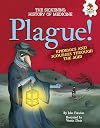
3.5 stars
This is a very short picture book aimed at kids. It discusses various major fatal diseases and epidemics throughout history, including the “Black Death”, various plagues, cholera, yellow fever, Spanish flu, smallpox, typhus, and more.
The colour illustrations are done very well and the information is provided (it’s meant for a young audience) is short tidbits. It’s a very fast read. One interesting thing I learned why doctors used those scary looking bird masks when dealing show more with the plague. I mean, I “get” why a mask, but why with long beaks…? Now I know. show less
This is a very short picture book aimed at kids. It discusses various major fatal diseases and epidemics throughout history, including the “Black Death”, various plagues, cholera, yellow fever, Spanish flu, smallpox, typhus, and more.
The colour illustrations are done very well and the information is provided (it’s meant for a young audience) is short tidbits. It’s a very fast read. One interesting thing I learned why doctors used those scary looking bird masks when dealing show more with the plague. I mean, I “get” why a mask, but why with long beaks…? Now I know. show less
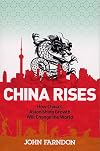
I read this book because I felt that my knowledge of China was rather unsystematic. 'China Rises' is very much an introductory textbook about China, which made the tone strange to me. Patronising as it sounds, I'd mostly forgotten how bitty and intermittently informal textbooks sometimes are. There were also a number of little errors that got on my nerves, because I am an utter pedant. (For example, 2 metres does not equal 3.5 feet.) That said, quickly reading this book was enlightening. For show more example, it explained the history of Taiwan and Hong Kong very usefully, as well as the basic administrative structures of China's government.
It is important to note, however, that this book was published in 2007. The world has changed considerably since then, in China as much as anywhere. The pollution problems noted in 'China Rises' have become more and more prominent, especially in relation to horrific smogs afflicting Beijing. Economic growth has slowed somewhat, in part due to the financial crisis in the US and Europe. Everything in the book is still relevant, though. It strikes me as a handy basic reference for China's history, economy, and social trends. Although it's probably weakest on the latter.
I seem to recall that 'China Shakes the World' by James Kynge is more in depth, although I read it ages ago. My favourite book about China, though, is the first that I read about the country and which had a huge emotional impact on me. That was 'Wild Swans' by Jung Chang, which I cannot recommend highly enough. show less
It is important to note, however, that this book was published in 2007. The world has changed considerably since then, in China as much as anywhere. The pollution problems noted in 'China Rises' have become more and more prominent, especially in relation to horrific smogs afflicting Beijing. Economic growth has slowed somewhat, in part due to the financial crisis in the US and Europe. Everything in the book is still relevant, though. It strikes me as a handy basic reference for China's history, economy, and social trends. Although it's probably weakest on the latter.
I seem to recall that 'China Shakes the World' by James Kynge is more in depth, although I read it ages ago. My favourite book about China, though, is the first that I read about the country and which had a huge emotional impact on me. That was 'Wild Swans' by Jung Chang, which I cannot recommend highly enough. show less
Awards


You May Also Like


Associated Authors
Statistics
- Works
- 333
- Also by
- 12
- Members
- 7,897
- Popularity
- #3,073
- Rating
- 3.9
- Reviews
- 68
- ISBNs
- 1,014
- Languages
- 22
