

Ashley Kahn
Author of Kind of Blue: The Making of the Miles Davis Masterpiece
About the Author
Ashley Kahn is journalist and editor. He lives in Fort Lee, New Jersey.
Disambiguation Notice:
I have deleted the year of birth 1960 because I can find absolutely no support for it; if someone has documentation for it, please mention it in the "Short bio" or here if you restore it.
Works by Ashley Kahn
Associated Works
Tagged
Common Knowledge
- Gender
- male
- Occupations
- music historian, journalist
producer - Organizations
- New York University
- Nationality
- USA
- Places of residence
- Fort Lee, New Jersey, USA
- Disambiguation notice
- I have deleted the year of birth 1960 because I can find absolutely no support for it; if someone has documentation for it, please mention it in the "Short bio" or here if you restore it.
- Associated Place (for map)
- New Jersey, USA
Members
Reviews

90-92% of this book is incredible. The last 20 pages or so (10% of the book) read like hype sheets that PR people send out about how good the album is. Like no shit it’s good it’s one of, if not the best jazz album ever. A few testimonials I get, but backloading it with superfluous nonsense is silly. Other than that the book is fantastic and a wonderful insight into a remarkable album.

As insightful into music and business trends from the 1950s to the mid-1990s as it is into the Impulse! label's history itself, depicting the influence of jazz until eclipsed by popular musical trends like pop & rock. Impulse was predominantly avant garde and free jazz, certainly at the onset, so Kahn's narrative also serves as a primer into major albums and artists: Coltrane, of course, but also Shepp, Mingus, many others. Runs the table from swing to be-bop and hard-bop to free jazz show more styles, with occasional nods to R&B as well as popular tastes and those influenced by jazz.
Impulse! is a case in point for the idea of managing a label as a catalogue, rather than with the intent of making hit records and then moving on to the next big thing. Naturally this business model varies by genre (Kahn relates via an interview somewhere that Verve has about 85% of its annual sales from back catalogue, and I'm sure rock labels likely get that much from just a few new titles each year) as well as the type of artist.
Interesting that Impulse! showcases how a big label (ABC, in this case) can support a small imprint and provide it all the trappings of a big label (distribution, marketing, recording budgets) yet get out of its way and let the label define itself. At least, that's how it started.
Nice insight, too, and not at all technical, into the role that recording plays, and how the values shape re-issues (whether lost tracks can be found in usable condition, depending upon quality of studio, existence of B or "simultaneous" tapes used as back-up by large studios).
Implicitly advises that should an orange-and-black gatefold LP ever show up in a garage sale or used record shop: snap it up. It'll be worth having. show less
Impulse! is a case in point for the idea of managing a label as a catalogue, rather than with the intent of making hit records and then moving on to the next big thing. Naturally this business model varies by genre (Kahn relates via an interview somewhere that Verve has about 85% of its annual sales from back catalogue, and I'm sure rock labels likely get that much from just a few new titles each year) as well as the type of artist.
Interesting that Impulse! showcases how a big label (ABC, in this case) can support a small imprint and provide it all the trappings of a big label (distribution, marketing, recording budgets) yet get out of its way and let the label define itself. At least, that's how it started.
Nice insight, too, and not at all technical, into the role that recording plays, and how the values shape re-issues (whether lost tracks can be found in usable condition, depending upon quality of studio, existence of B or "simultaneous" tapes used as back-up by large studios).
Implicitly advises that should an orange-and-black gatefold LP ever show up in a garage sale or used record shop: snap it up. It'll be worth having. show less
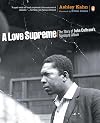
A love letter to the seminal jazz recording of the 1960s, which I first picked up in college. The author describes the characters of all the important contributors to the December 9, 1964 session in Englewood Cliffs, NJ, along with quotes describing its influence, speculations about Coltrane's thinking before, during, and after the period, insider views of the recording industry, and a breakdown of what happens in each of the four movements of the piece. Besides the music, he delves also show more into the spiritual aspects stemming from Coltrane's recovery from addiction and return to a place familiar to him from his early childhood. Though the music is among the great accomplishments of the century, I think this book does not add to it anything really essential except maybe for a non-fan who wants to know what the fuss about the album was about. show less
Insightful look into the making of Kind of Blue, which is probably the first jazz album many of us ever really listened to. Kahn does a good job helping us to understand the circumstances leading up to the making of the album and why it was such a milestone. He also delves into the controversy over the real authorship of some of the music, specifically the significant contributions of pianist Bill Evans. Some of the details went over my head - not being a musician, I still can't tell you show more exactly what modal jazz really is - but it is always interesting to read about the creation of a masterpiece. show less
Lists
Awards

You May Also Like


Associated Authors
Statistics
- Works
- 9
- Also by
- 2
- Members
- 859
- Popularity
- #29,779
- Rating
- 4.0
- Reviews
- 17
- ISBNs
- 43
- Languages
- 7