

Ben Ratliff
Author of Coltrane: The Story of a Sound
About the Author
Image credit: via Macmillan
Works by Ben Ratliff
The New York Times Essential Library: Jazz: A Critic's Guide to the 100 Most Important Recordings (2002) 99 copies, 1 review
The jazz ear 1 copy
Associated Works
Unseen: Unpublished Black History from the New York Times Photo Archives (2017) — Contributor — 149 copies, 1 review
Tagged
Common Knowledge
Members
Reviews
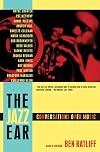
This is a fabulous collection of interviews with a variety of jazz musicians, including Wayne Shorter, Branford Marsalis, Guillermo Klein, Dianne Reeves and Ornette Coleman. But this is not a series of transcripts. Ben Ratliff captures subtle inflections of character in these conversations centered around a shared listening experience. Ratliff sits down with each musician to listen to music of others, and in so doing, reveals how these artists react to and dialogue with their musical show more influences. Sometimes the "set list" from one of these visits creates an intriguing link between the interviewees (such as Joshua Redman's experience with listening to Sonny Rollins, who is interviewed in the third chapter). In addition to the observations made by the musicians, Ratliff's ability to unobtrusively insert himself as both commentator and investigator makes this a superior reading experience to most "meet-the-artist" type books.
What I appreciated most was the variety included in these listening sessions. Sacred Harp, Kyrgyz music, Frank Sinatra, Rachmaninoff, Wagner...all of it is fair game for these musicians, who unapologetically cross the lines of categorization to search for organicism and authenticity as both performers and listeners. The questions of how perfomers/composers listen is one that is underexplored, and I would hope to see more of this type of study incorporated into a discussion of compositional and improvisational aesthetics. show less
What I appreciated most was the variety included in these listening sessions. Sacred Harp, Kyrgyz music, Frank Sinatra, Rachmaninoff, Wagner...all of it is fair game for these musicians, who unapologetically cross the lines of categorization to search for organicism and authenticity as both performers and listeners. The questions of how perfomers/composers listen is one that is underexplored, and I would hope to see more of this type of study incorporated into a discussion of compositional and improvisational aesthetics. show less
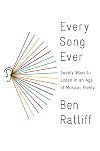
What an exasperating annoying book! Don't get me wrong. Ratliff knows pretty much everything there is to know about music. And apparently he spends all day and night listening to it because there is nothing--and I mean that literally-that he seems to have not listened to. A typical paragraph might mention Beethoven, death metal, and gangster rap. And it is that kind of know-it-all attitude, a smugness, that shines through almost every paragraph of this collection of essays about various show more aspects of music, such as virtuosity or loudness. In each case, Ratliff rambles through a mind-boggling series of examples of what he is talking about and tries to make some sort of a point. What type of point is difficult to say in some cases, because his style of writing is so overdone, so full of obscure words and even vaguer ideas (maybe not to him) that it makes you want to throw the book up against the wall. Nevertheless, you will probably persist, because amidst all the BS, there is the opportunity to discover some gems, such as Faure's Piano Quintets, or Mark E. Smith and the Fall, or the incredible guitarist Paco de Lucia. You will probably choose, however, not to listen to the interminable Dopesmoker by Sleep. Perhaps we should be grateful to Ratliff for doing it for us?
This book's biggest failing is to live up to its title. There is an incredible cornucopia of great stuff on streaming services, YouTube, and other places. Ratliff doesn't provide any reasonable help to an intelligent listener in knowing where to start or how to prioritize. Instead, he does a lifetime, frequently incomprehensible brain dump. Someone should have taken an editor's pen--or maybe an ax to this one. show less
This book's biggest failing is to live up to its title. There is an incredible cornucopia of great stuff on streaming services, YouTube, and other places. Ratliff doesn't provide any reasonable help to an intelligent listener in knowing where to start or how to prioritize. Instead, he does a lifetime, frequently incomprehensible brain dump. Someone should have taken an editor's pen--or maybe an ax to this one. show less
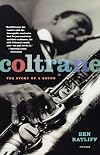
I found this to be an interesting dive into how Coltrane's sound developed over the course of his playing career. It was enjoyable to listen through much of his catalogue, including works such as Soultrane and Africa/Brass that I hadn't realized were so significant, as I read along. I also heard his earlier playing much differently after reading this book - where I had previously applied the assumption that anything Coltrane played was on an unquestionable level of greatness, I now hear his show more progression with more nuance. Overall, it was a well done look into how Coltrane's life and playing evolved, particularly over his last ten years, and has helped me appreciate his music in a new way. show less
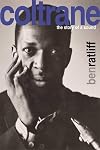
I can't improve on blues librarian's summary, so I won't bother. I will say I enjoyed this book as a long-time (non-musician) fan of Coltrane. Ratliff is a clear and lively writer, who traces Coltrane's stylistic development in a lively and easily understood prose. Of course the reading is greatly enhanced if you have access to the work he discusses, so prepare for lots of good listening. There is enough discussion of critical reception and excerpts of interviews with Coltrane's colleagues show more to flesh out the musical story of a man not given to talking about himself much. As noted below, it is not a straight biography, rather more of a popular work of critical assessment. show less
Lists
Awards


You May Also Like


Associated Authors
Statistics
- Works
- 7
- Also by
- 2
- Members
- 673
- Popularity
- #37,520
- Rating
- 3.8
- Reviews
- 14
- ISBNs
- 22
- Languages
- 3