
About the Author
David H. Stern, born in Los Angeles in 1935, is the great-grandson of two of the city's first twenty Jews. He earned a Ph.D. in economics at Princeton University and was a professor at UCLA. In 1972 he came to faith in Yeshua the Messiah. He then received a Master of Divinity degree at Fuller show more Theological Seminary, did graduate work at the University of Judaism, and was active in the Messianic Jewish movement. Dr. Stern authored Messianic Judaism from which Restoring the Jewishness of the Gospel is excerpted. His highly acclaimed English translation the Jewish New Testament, restores the New Testament's Jewishness. His Jewish New Testament Commentary discusses the many Jewish issues found in the New Testament. His fresh translation, the Complete Jewish Bible expresses the unity of the Tanahk (Old Testament) and the B'rit Hadashah (New Testament). This outstanding scholarly work offers Bible readers a thorough, biblically Jewish version of God's word. show less
Works by David H. Stern
Complete Jewish Bible : an English version of the Tanakh (Old Testament) and B'rit Hadashah (New Testament) (1998) 617 copies, 9 reviews
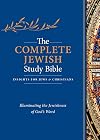
The Complete Jewish Study Bible (Hardcover): Illuminating the Jewishness of God's Word (2016) — Translator — 202 copies, 2 reviews
Associated Works
How Jewish Is Christianity?: 2 Views on the Messianic Movement (Counterpoints: Bible and Theology) (2003) — Contributor — 106 copies, 1 review
Tagged
Common Knowledge
- Birthdate
- 1935-10-31
- Gender
- male
- Education
- Fuller Theological Seminary (MDiv)
- Occupations
- Messianic Jewish Theologian
- Nationality
- USA
- Birthplace
- Los Angeles, California, USA
- Places of residence
- Los Angeles, California, USA
Jerusalem, Israel - Associated Place (for map)
- USA
Members
Reviews
Disclaimer: I am writing this review from the perspective of a non-Jewish believer.
I picked up this version as part of what began as a year-long journey (I have since decided to extend it because I have been enjoying the process so much) of reading through several different versions of the Bible which I had not yet completely read. I was excited to read through it, especially the New Testament, and to learn more about the Jewish perspective of the Word through the translation, study notes, show more and included commentary. It was such a rich experience! Seeing the Scripture through the eyes of the Jewish people and learning more about the cultural relevance of different elements of the stories and truths within was eye-opening and inspiring. It really rounded out my perspective on several things and the imagery conveyed in the language used is so vivid and vibrant and lovely.
The Old Testament books are in a different order than you will be accustomed to if you normally read Christian translations. I found this interesting and refreshing - there was always something new and unexpected around the corner if I didn't look ahead to see what was coming next!
If this version had concluded at the end of the book of Acts, I would have rated it 5 stars. Up until that point, it had been my favorite version that I had read to date.
To back up a little, there is a note in the introduction to the translation about how the translator chose to translate the word "law" or the phrase "the law" as a longer phrase that basically implies that legalism is what is being referred to in the text rather than the law itself. I was skeptical but open-minded about such a decision before I began reading the actual text. I actually forgot all about it until later in the New Testament, where this interpretation first appears. (In the Old Testament, the word Torah is used instead of law/the law, which I have no issue with.)
Beginning around Romans, the translator starts to stray from translating and selectively move into interpretation rather than translation, seemingly only where it suits his chosen narrative. The translation had been strong before that, so suddenly finding passages where interpretations were used instead of translation really weakened the translation as a whole. The translator's decision to go this route, in my opinion, undermined the complete work and in some ways, discredited it. This is unfortunate, because the translation would have been strong and beautifully done without going this route but instead sticking to the method used in the previous pages. There were several places in the New Testament (post-Acts) where I would look up the original texts and find that the translator had inserted words and phrases that were not there in the original text - almost always to make the text fit within a particular narrative that represents his (and others') beliefs but not what the text itself says - and that sometimes changed the meaning of the original text entirely. Prior to this straying, the translation was solid, thought-provoking, insightful, and quite beautifully done. There was no need to veer off into interpretation under the guise of translation; the translation was speaking for itself before that. This was, at times, a significant issue, particularly in the epistles.
There is also a commentary note in 2 Thessalonians which would be considered blasphemous if what the author of it is saying is incorrect and what Christians believe about the passage is true. (It ascribes what Christians believe is the Holy Spirit to Satan.)
Whilst I would give Genesis through Acts 5 stars, I would give Romans through the end only 1 star based on the insertion of words and phrases that did not exist in the original texts and that changed the meaning of the original texts into something that suited a particular narrative (which I was open to accepting, but the decision to do this really discredited the idea, at least for me). It is for this reason that my review has a final rating of 3 stars.
I would definitely recommend that Christians read this translation, at least through the end of Acts. It deepened my understanding of many things, opened my eyes to some things I had missed or not known before, and was thoroughly beautiful and enjoyable to read up through the point where the inaccuracies started surfacing in the New Testament.
The cover is a bit rougher than other Bibles with a genuine leather cover. I suspect that it could be boiled leather, which can have this texture sometimes. The signatures are sewn and the layout is fantastic. The quality of the materials is very good. show less
I picked up this version as part of what began as a year-long journey (I have since decided to extend it because I have been enjoying the process so much) of reading through several different versions of the Bible which I had not yet completely read. I was excited to read through it, especially the New Testament, and to learn more about the Jewish perspective of the Word through the translation, study notes, show more and included commentary. It was such a rich experience! Seeing the Scripture through the eyes of the Jewish people and learning more about the cultural relevance of different elements of the stories and truths within was eye-opening and inspiring. It really rounded out my perspective on several things and the imagery conveyed in the language used is so vivid and vibrant and lovely.
The Old Testament books are in a different order than you will be accustomed to if you normally read Christian translations. I found this interesting and refreshing - there was always something new and unexpected around the corner if I didn't look ahead to see what was coming next!
If this version had concluded at the end of the book of Acts, I would have rated it 5 stars. Up until that point, it had been my favorite version that I had read to date.
To back up a little, there is a note in the introduction to the translation about how the translator chose to translate the word "law" or the phrase "the law" as a longer phrase that basically implies that legalism is what is being referred to in the text rather than the law itself. I was skeptical but open-minded about such a decision before I began reading the actual text. I actually forgot all about it until later in the New Testament, where this interpretation first appears. (In the Old Testament, the word Torah is used instead of law/the law, which I have no issue with.)
Beginning around Romans, the translator starts to stray from translating and selectively move into interpretation rather than translation, seemingly only where it suits his chosen narrative. The translation had been strong before that, so suddenly finding passages where interpretations were used instead of translation really weakened the translation as a whole. The translator's decision to go this route, in my opinion, undermined the complete work and in some ways, discredited it. This is unfortunate, because the translation would have been strong and beautifully done without going this route but instead sticking to the method used in the previous pages. There were several places in the New Testament (post-Acts) where I would look up the original texts and find that the translator had inserted words and phrases that were not there in the original text - almost always to make the text fit within a particular narrative that represents his (and others') beliefs but not what the text itself says - and that sometimes changed the meaning of the original text entirely. Prior to this straying, the translation was solid, thought-provoking, insightful, and quite beautifully done. There was no need to veer off into interpretation under the guise of translation; the translation was speaking for itself before that. This was, at times, a significant issue, particularly in the epistles.
There is also a commentary note in 2 Thessalonians which would be considered blasphemous if what the author of it is saying is incorrect and what Christians believe about the passage is true. (It ascribes what Christians believe is the Holy Spirit to Satan.)
Whilst I would give Genesis through Acts 5 stars, I would give Romans through the end only 1 star based on the insertion of words and phrases that did not exist in the original texts and that changed the meaning of the original texts into something that suited a particular narrative (which I was open to accepting, but the decision to do this really discredited the idea, at least for me). It is for this reason that my review has a final rating of 3 stars.
I would definitely recommend that Christians read this translation, at least through the end of Acts. It deepened my understanding of many things, opened my eyes to some things I had missed or not known before, and was thoroughly beautiful and enjoyable to read up through the point where the inaccuracies started surfacing in the New Testament.
The cover is a bit rougher than other Bibles with a genuine leather cover. I suspect that it could be boiled leather, which can have this texture sometimes. The signatures are sewn and the layout is fantastic. The quality of the materials is very good. show less
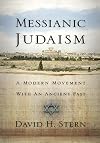
Very interesting book, with a somewhat weak theology.
It is well laid-out, easy on the eyes, and written in a very fluid language, can be read fast.
It was badly revised: quite some typos, specially in the latter half or so, such as hyphens separating words in the middle of lines, or missing letters. Also the footnotes are quite confusing, leading one to chains of references that at least once I gave up on following.
Theologically it assumes a Neoarminian, Neoevangelical approach without quite show more making it explicit. One can only wonder about how would be a similar book by a Reformed Baptist Hebrew Christian (or Messianic Jew).
A bit weak too on the historical side, but it points to some interesting resources. This is not necessarily a failure, because as a successor to the Messianic Judaism Manifesto by the same author one of its proposals are to point out which resources Hebrew Christians still do lack, and this is one of the gaps it points out.
Perhaps the biggest theological fault is a somewhat glib approach on interpreting the ‘Israel of God’, and too easily identifying occupation of the Land of Israel as a requisite for modern Jews. In this aspect, it is quite the mirror image of Palmer’s _The Israel of God_. I suspect I have exegetically to agree more with Palmer, even if I like better Stern’s general attitude. It seems to me Palmer dismisses the current State of Israel too lightly with one or two consequential non sequiturs, and even if Stern’s sympathy towards it may be theologically unfounded, at least it recognises better the essential justice of Jewish colonisation of Palestine. show less
It is well laid-out, easy on the eyes, and written in a very fluid language, can be read fast.
It was badly revised: quite some typos, specially in the latter half or so, such as hyphens separating words in the middle of lines, or missing letters. Also the footnotes are quite confusing, leading one to chains of references that at least once I gave up on following.
Theologically it assumes a Neoarminian, Neoevangelical approach without quite show more making it explicit. One can only wonder about how would be a similar book by a Reformed Baptist Hebrew Christian (or Messianic Jew).
A bit weak too on the historical side, but it points to some interesting resources. This is not necessarily a failure, because as a successor to the Messianic Judaism Manifesto by the same author one of its proposals are to point out which resources Hebrew Christians still do lack, and this is one of the gaps it points out.
Perhaps the biggest theological fault is a somewhat glib approach on interpreting the ‘Israel of God’, and too easily identifying occupation of the Land of Israel as a requisite for modern Jews. In this aspect, it is quite the mirror image of Palmer’s _The Israel of God_. I suspect I have exegetically to agree more with Palmer, even if I like better Stern’s general attitude. It seems to me Palmer dismisses the current State of Israel too lightly with one or two consequential non sequiturs, and even if Stern’s sympathy towards it may be theologically unfounded, at least it recognises better the essential justice of Jewish colonisation of Palestine. show less

An okay translation. There are some significant turns of phrase or word-choice here that makes Stern's translation interesting and illuminating, but there are other times when he takes a few liberties. We don't know, for instance, when the Greek word kurios in the New Testament represents the Tetragrammaton, yet Stern decides to make several of these "ADONAI," which represents the Tetragrammaton. Eh. Using Hebrew names for biblical characters is, sometimes, annoying, but sometimes show more illuminating. I will say, for intense biblical study, especially if you're looking at the Hebrew roots of the New Testament, put this on your shelf. show less
Complete Jewish Bible : an English version of the Tanakh (Old Testament) and B'rit Hadashah (New Testament) by David H. Stern
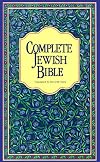
I received this translation years ago from a friend who was a convert to Messianic Judaism. I have been willing to open it as a supplement to see how it renders a word; but I wouldn't use it as my main translation of the Old or New Testaments. I have encountered too many unexpected and peculiar translations of Hebrew (that is, disagreeing with every other translation I know).
Lists
You May Also Like


Associated Authors
Statistics
- Works
- 14
- Also by
- 1
- Members
- 1,950
- Popularity
- #13,197
- Rating
- 4.2
- Reviews
- 17
- ISBNs
- 52
- Languages
- 6