
Marvin R. Wilson
Author of Our Father Abraham: Jewish Roots of the Christian Faith
About the Author
Marvin R. Wilson, a leading scholar on Christian-Jewish relations, is the Harold J. Ockenga Professor Emeritus of Biblical and Theological Studies at Gordon College, Wenham, Massachusetts, where he taught for over fifty years. He also wrote Exploring Our Hebraic Heritage-a sequel to Our Father show more Abraham-and served as primary scholar of the award-winning national television documentary Jews Christians: A Journey of Faith, based on Our Father Abraham. show less
Works by Marvin R. Wilson
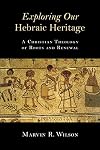
Exploring Our Hebraic Heritage: A Christian Theology of Roots and Renewal (2014) 67 copies, 1 review
Associated Works
Tagged
Common Knowledge
- Birthdate
- 1935-07-17
- Gender
- male
- Education
- Wheaton College (AB)
Gordon-Conwell Theological Seminary (MDiv)
Brandeis University (MA)
Brandeis University (PhD) - Occupations
- Professor of Biblical and Theological Studies
- Organizations
- Gordon College, Wenham, Massachusetts, USA
Barrington College - Nationality
- USA
- Associated Place (for map)
- USA
Members
Reviews
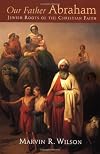
I loved this book SO MUCH. So naturally, I'm going to torment all of you by writing this review like a freaking recipe blog lol.
My Connections Pastor, a very bubbly, very sweet, southern woman from Kentucky, was cleaning out her bookshelves. During this process, she got rid of a good portion of her non-fiction and textbooks from Seminary.
A few months before this, she heard I love the Old Testament, and have a passion for discovering the Middle Eastern/Hebraic roots of the Bible. After that show more conversation, my Christian non-fiction collection grew immensely. I went from having half a shelf of general non-fiction to having a complete shelf of exclusively Christian-based non-fiction. Since then, I now have multiple bookshelves worth of Christian non-fiction and theology texts.
[b:Our Father Abraham|108745|Our Father Abraham Jewish Roots of the Christian Faith|Marvin R. Wilson|https://i.gr-assets.com/images/S/compressed.photo.goodreads.com/books/1348132142l/108745._SY75_.jpg|104796] was the first book she gave me. Thus, it is the first of her gifts I've decided to pick up.
Fast-forward three years, and I've finally finished it. This was my Everest, the tome of knowledge that I've been conquering for 1,091 days. After reaching the top of this mountain, I can say this was SO. INCREDIBLY. WORTH-IT. M.R. Wilson does such a wonderful job explaining the Jewish roots of the Christian faith, and providing practical application for believers so they can live out their roots in sensitive, spiritually-rich, and enduring ways. Every time I picked up this book, I wanted so desperately to soak all of the knowledge into my brain for all of eternity. But I guess I'll have to settle for LOGOS highlights and notes to suffice. Such a shame.
So excited to move on to another Everest (at some point). But for now, I will stick with the shorter non-fiction on my shelves. This book, daunting as it was, was truly wonderful. I will use it as a reference in so many essays during my M.Div.
This topic—the Hebrew roots of the Christian faith—is the theological concept that I am most passionate about. To read a book like this is so encouraging. Highly recommend to anyone who desires to learn more about the Hebrew roots of Scripture.
currently-reading updates
19% (thoughts on chapter 4) | I find it incredibly hilarious and ironic that one of the main reasons Hebrew Christians were so persecuted in the 1st century AD is that they weren't political. In fact, they were so anti-political that the Jews saw them as a greater threat because of it. Who woulda thunk?
Love this^^
I mean, yes and no. Jesus did not come to abolish the Law, but to fulfill it (Matthew 5:17). What He did come to abolish was the non-Biblical perversion and legalistic religiosity regarding the Law that was so prevalent in that day (and is, dare I say, just as prevalent today), and to remind His people that in addition to the much-emphasized justice, He was also abounding in love and mercy and healing and forgiveness. Not because these truths weren't revealed in the Old Testament, but because they had been largely forgotten by that time.
I find this one incredibly interesting to think about. I've never considered it quite that way before. And while I think Mr. Wilson is using this in a context I would disagree with, I don't disagree with it completely when on its own... if that makes sense.
15% (thoughts on chapter 3) | Mr. Wilson and I finally came to an agreement, and one I am very pleased with: Yes. Christians do not have to follow Hebrew Law to a T to be saved... they do not have to eat kosher, or take Shabbat on the 7th Hebrew day (Friday just before sunset through Saturday just after nightfall), or participate in Hebrew festivals to make it into Heaven. To believe otherwise would be Judaizing.
However, we still disagree on something here: Mr. Wilson holds fast to the belief that "Gentile-Believers" should not adhere to these Hebrew traditions. This is not only illogical, but it goes against the analogical patterns found in the Old Testament. Just like regularly attending church, praying before a meal, or even worshipping daily, these ceremonies and traditions should be observed. Not to get us into Heaven, but because they will foster and enrich one's faith. God tells us to do them many times throughout the Bible. To obey in these respects is an act of love to Him.
I understand this is an uncommon belief amongst the modern, Westernized Church. But I am thrilled that I at least understand his position better, and can respect it. We still disagree, but not in such a polarizing fashion as I first thought.
12% (thoughts on chapters 1 & 2) | Agreed with nearly everything he said in chapter one. Then, just like my sins, the honeymoon phase was forgotten and Mr. Wilson and I had QUITE the disagreement in chapter two.
I can tell from his hints of what's to come that Sir and I are going to encounter many more agreements and disagreements on my path to finishing this book.
That's OK.
I'm looking forward to alternately praising and screaming at this man in the margins. :)
tbr update
Huge thanks to Melissa Fryrear for blessing me with this gift. I don't deserve you. show less
My Connections Pastor, a very bubbly, very sweet, southern woman from Kentucky, was cleaning out her bookshelves. During this process, she got rid of a good portion of her non-fiction and textbooks from Seminary.
A few months before this, she heard I love the Old Testament, and have a passion for discovering the Middle Eastern/Hebraic roots of the Bible. After that show more conversation, my Christian non-fiction collection grew immensely. I went from having half a shelf of general non-fiction to having a complete shelf of exclusively Christian-based non-fiction. Since then, I now have multiple bookshelves worth of Christian non-fiction and theology texts.
[b:Our Father Abraham|108745|Our Father Abraham Jewish Roots of the Christian Faith|Marvin R. Wilson|https://i.gr-assets.com/images/S/compressed.photo.goodreads.com/books/1348132142l/108745._SY75_.jpg|104796] was the first book she gave me. Thus, it is the first of her gifts I've decided to pick up.
Fast-forward three years, and I've finally finished it. This was my Everest, the tome of knowledge that I've been conquering for 1,091 days. After reaching the top of this mountain, I can say this was SO. INCREDIBLY. WORTH-IT. M.R. Wilson does such a wonderful job explaining the Jewish roots of the Christian faith, and providing practical application for believers so they can live out their roots in sensitive, spiritually-rich, and enduring ways. Every time I picked up this book, I wanted so desperately to soak all of the knowledge into my brain for all of eternity. But I guess I'll have to settle for LOGOS highlights and notes to suffice. Such a shame.
So excited to move on to another Everest (at some point). But for now, I will stick with the shorter non-fiction on my shelves. This book, daunting as it was, was truly wonderful. I will use it as a reference in so many essays during my M.Div.
This topic—the Hebrew roots of the Christian faith—is the theological concept that I am most passionate about. To read a book like this is so encouraging. Highly recommend to anyone who desires to learn more about the Hebrew roots of Scripture.
currently-reading updates
19% (thoughts on chapter 4) | I find it incredibly hilarious and ironic that one of the main reasons Hebrew Christians were so persecuted in the 1st century AD is that they weren't political. In fact, they were so anti-political that the Jews saw them as a greater threat because of it. Who woulda thunk?
"Jesus Himself became a new and living Torah, the very center of the thoughts and life of the early church."
Love this^^
"[Jesus rejected] the belief in God's punitive justice and [emphasized] instead God's mercy, His will to heal, to forgive, to overcome enmity with love...and calling them [others] to follow him and his ministry of love to the lost, the poor and the enemy."
I mean, yes and no. Jesus did not come to abolish the Law, but to fulfill it (Matthew 5:17). What He did come to abolish was the non-Biblical perversion and legalistic religiosity regarding the Law that was so prevalent in that day (and is, dare I say, just as prevalent today), and to remind His people that in addition to the much-emphasized justice, He was also abounding in love and mercy and healing and forgiveness. Not because these truths weren't revealed in the Old Testament, but because they had been largely forgotten by that time.
"Jesus became the Temple (John 2:19-21) and the atoning sacrifice ("the Lamb of God, who takes away the sin of the world"--John 1:29). At Passover the matzah, "unleavened bread," represented His body (Mark 14:22); likewise, the lamb sacrificed at Passover symbolized Jesus' sacrificial death (1 Cor. 5:7). In addition, Jesus declared Himself Lord of the Sabbath (Mark 2:27-28). He also distinguished the ritually clean from the unclean (Mark 7:1-23). In sum, in early Jewish Christianity the 'Sabbath, Temple, Law, sacrifices are Christologically reinterpreted by the One who is greater than them all.'"
I find this one incredibly interesting to think about. I've never considered it quite that way before. And while I think Mr. Wilson is using this in a context I would disagree with, I don't disagree with it completely when on its own... if that makes sense.
15% (thoughts on chapter 3) | Mr. Wilson and I finally came to an agreement, and one I am very pleased with: Yes. Christians do not have to follow Hebrew Law to a T to be saved... they do not have to eat kosher, or take Shabbat on the 7th Hebrew day (Friday just before sunset through Saturday just after nightfall), or participate in Hebrew festivals to make it into Heaven. To believe otherwise would be Judaizing.
However, we still disagree on something here: Mr. Wilson holds fast to the belief that "Gentile-Believers" should not adhere to these Hebrew traditions. This is not only illogical, but it goes against the analogical patterns found in the Old Testament. Just like regularly attending church, praying before a meal, or even worshipping daily, these ceremonies and traditions should be observed. Not to get us into Heaven, but because they will foster and enrich one's faith. God tells us to do them many times throughout the Bible. To obey in these respects is an act of love to Him.
I understand this is an uncommon belief amongst the modern, Westernized Church. But I am thrilled that I at least understand his position better, and can respect it. We still disagree, but not in such a polarizing fashion as I first thought.
12% (thoughts on chapters 1 & 2) | Agreed with nearly everything he said in chapter one. Then, just like my sins, the honeymoon phase was forgotten and Mr. Wilson and I had QUITE the disagreement in chapter two.
I can tell from his hints of what's to come that Sir and I are going to encounter many more agreements and disagreements on my path to finishing this book.
That's OK.
I'm looking forward to alternately praising and screaming at this man in the margins. :)
tbr update
Huge thanks to Melissa Fryrear for blessing me with this gift. I don't deserve you. show less
Wilson takes a look at Christianity's roots in Judaism. Several chapters are devoted to the importance of Abraham and the Abrahamic covenant. He also examines motifs such as shepherds and the shophar. He explores themes of idolatry and worship and relates them both to Old Testament Judaism and to Christianity. Some parts seem a little more academic than others, but it's still a somewhat readable book.
An informative and well-researched description of how the emerging original Christian religion founded by Christ and the Apostles based on Scripture was supplanted by anti-semitism, philosophy, and mystery religion.
This is a classic, textbook-style book on the Hebrew roots of the Christian religion. There is just a lot of information in here, and it is very thourough. Because it was written to also be used as a textbook, it's not the easiest read. I had a hard time getting into this book, I think because I had already read a lot on Hebrew Roots. None-the-less, it is a great piece of work.
Lists
You May Also Like


Associated Authors
Statistics
- Works
- 11
- Also by
- 2
- Members
- 831
- Popularity
- #30,723
- Rating
- 4.4
- Reviews
- 11
- ISBNs
- 12
- Favorited
- 1