
Ronald Rolheiser
Author of The Holy Longing: The Search for a Christian Spirituality
About the Author
Ronald Rolheiser, OMI, is a specialist in the fields of spirituality and systematic theology, and a New York Times bestselling author. He writes a regular column that is featured in more than seventy newspapers worldwide. He is the author of many hooks, including bestsellers The Holy Longing and show more Sacred Fire, as well as The Restless Heart, Forgotten Amongst the Lilies, Bruised and Wounded, and Domestic Monastery. show less
Image credit: Oblate School of Theology
Works by Ronald Rolheiser
Wrestling with God: Finding Hope and Meaning in Our Daily Struggles to Be Human (2018) 62 copies, 1 review
Associated Works
Embracing Rhythms of Work and Rest: From Sabbath to Sabbatical and Back Again (2022) — Foreword — 111 copies, 17 reviews
The Gospel Mysticism of Ruth Burrows: Going to God with Empty Hands (2018) — Foreword, some editions — 22 copies
Tagged
Common Knowledge
- Birthdate
- 1947
- Gender
- male
- Occupations
- Catholic priest
- Organizations
- Oblate School of Theology
Roman Catholic Church
Missionary Oblates of Mary Immaculate - Birthplace
- Cactus Lake, Saskatchewan
- Places of residence
- San Antonio, Texas, USA
- Associated Place (for map)
- San Antonio, Texas, USA
Members
Reviews

Summary: A collection of short meditations on human, and particularly sexual desire, contending these come from God and are meant to draw us to God.
With adolescence, we awaken to desire. Much of that is sexual desire and longing for intimacy. About the last thing most of us think of is any connection between our longings and our sexuality and God. Most of us just don’t think of God and sex going together.
Ronald Rohlheiser, speaks candidly of these longings, including his own experience of show more these as a young man in the novitiate. During a spiritual conference, a speaker spoke of how they must be “jumping out of their skins” and that this was how they should be feeling and it was healthy. As he studied more deeply, he discovered that far from these desires being distant from God, they came from God. He writes in the preface of this work:
“Sexuality is inside us to help lure us back to God, bring us into a community of life with each other, and let us take part in God’s generativity. If that is true, and it is, then given its origin and meaning, its earthiness notwithstanding, sex does not set us against what is holy and pure. It is a Godly energy” (p. xi).
Rohlheiser offers a series of twenty-two reflections expanding on this idea, each about four pages in length. The reflections are divided into two parts. The first focuses on desire and our complex humanity; the second on how we deal humanly and spiritually with desire.
He begins with how longing is at the center of our experience, that this space is a space for God. Instead of using guilt and shame to deal with raw desire, he proposes we help youth see this as God’s creative energy incarnate in our bodies. Our energies are not sinful or evil; only the misuse of them. He compares virgin youth to Jephthah, mourning her virginity. Too often, we demand satisfaction rather than learning to live in the ache of mourning. We are complex in our desires and need to honor and hallow this, learn through it, and live under God’s patience and understanding. Rohlheiser warns of the danger of grandiosity, a type of self-absorption in which desire is turned in on self in pride instead of drawing us to God. Given our complexity and longings never fully to be realized in this life, married or single, we may understand our lives as “unfinished symphonies.’
One of our challenges in dealing with our desires is how easily distracted we are. God’s invitation is to greater mindfulness and attentiveness. Sex is sacramental, filled with spiritual significance. So is everyday life, and we need to have our world re-enchanted. Other essays deal with barrenness, anger, and waiting. Perhaps one of the most illumining are his reflections on re-imagining chastity. He extends this beyond sexuality. The basic idea of chastity is to not force things but to honor their character and rhythms. He uses the example of metamorphosis, which, if rushed, results in a malformed moth or butterfly. Purity is not a matter, first of all of sexual self-control, but of intention, acting in ways that do not manipulate or use others, but align our actions with our commitments. Ultimately, the invitation is into a greatness of soul that can rejoice in the prodigal who returns rather than exacting payback, aware of the mercies we all have received.
It is a good thing these reflections are short because they are filled with insight. These are worth reading one at a time. More important is that they build on a doctrine of our creation as man and woman in the image of God. Our gender and sexuality and desires were created before the fall. Evil doesn’t create anything. It only distorts. Rohlheiser helps us move beyond shame and guilt about our desires to thanksgiving and celebration. From that, it is only a short step from realizing our desires are from God and for God, to wondering how they might be rightly expressed. Chastity and purity are matters of honor and intent rather than restrictive rules or patriarchal control.
One of the challenges facing the church is the articulation of a redemptive vision of sexuality. There is a beautiful story that has been lost in all the rules, the purity culture, the shaming, and the abuses and scandals. Rohlheiser recovers that beauty with both candor and insight. I wish I’d had this book when I was a much younger man, but his insights into our desires and our complexity, and the mystery and wonder of God’s purposes in it all continue to rejoice this heart.
____________________________
Disclosure of Material Connection: I received a complimentary review copy of this book from the publisher in exchange for an honest review. The opinions I have expressed are my own. show less
With adolescence, we awaken to desire. Much of that is sexual desire and longing for intimacy. About the last thing most of us think of is any connection between our longings and our sexuality and God. Most of us just don’t think of God and sex going together.
Ronald Rohlheiser, speaks candidly of these longings, including his own experience of show more these as a young man in the novitiate. During a spiritual conference, a speaker spoke of how they must be “jumping out of their skins” and that this was how they should be feeling and it was healthy. As he studied more deeply, he discovered that far from these desires being distant from God, they came from God. He writes in the preface of this work:
“Sexuality is inside us to help lure us back to God, bring us into a community of life with each other, and let us take part in God’s generativity. If that is true, and it is, then given its origin and meaning, its earthiness notwithstanding, sex does not set us against what is holy and pure. It is a Godly energy” (p. xi).
Rohlheiser offers a series of twenty-two reflections expanding on this idea, each about four pages in length. The reflections are divided into two parts. The first focuses on desire and our complex humanity; the second on how we deal humanly and spiritually with desire.
He begins with how longing is at the center of our experience, that this space is a space for God. Instead of using guilt and shame to deal with raw desire, he proposes we help youth see this as God’s creative energy incarnate in our bodies. Our energies are not sinful or evil; only the misuse of them. He compares virgin youth to Jephthah, mourning her virginity. Too often, we demand satisfaction rather than learning to live in the ache of mourning. We are complex in our desires and need to honor and hallow this, learn through it, and live under God’s patience and understanding. Rohlheiser warns of the danger of grandiosity, a type of self-absorption in which desire is turned in on self in pride instead of drawing us to God. Given our complexity and longings never fully to be realized in this life, married or single, we may understand our lives as “unfinished symphonies.’
One of our challenges in dealing with our desires is how easily distracted we are. God’s invitation is to greater mindfulness and attentiveness. Sex is sacramental, filled with spiritual significance. So is everyday life, and we need to have our world re-enchanted. Other essays deal with barrenness, anger, and waiting. Perhaps one of the most illumining are his reflections on re-imagining chastity. He extends this beyond sexuality. The basic idea of chastity is to not force things but to honor their character and rhythms. He uses the example of metamorphosis, which, if rushed, results in a malformed moth or butterfly. Purity is not a matter, first of all of sexual self-control, but of intention, acting in ways that do not manipulate or use others, but align our actions with our commitments. Ultimately, the invitation is into a greatness of soul that can rejoice in the prodigal who returns rather than exacting payback, aware of the mercies we all have received.
It is a good thing these reflections are short because they are filled with insight. These are worth reading one at a time. More important is that they build on a doctrine of our creation as man and woman in the image of God. Our gender and sexuality and desires were created before the fall. Evil doesn’t create anything. It only distorts. Rohlheiser helps us move beyond shame and guilt about our desires to thanksgiving and celebration. From that, it is only a short step from realizing our desires are from God and for God, to wondering how they might be rightly expressed. Chastity and purity are matters of honor and intent rather than restrictive rules or patriarchal control.
One of the challenges facing the church is the articulation of a redemptive vision of sexuality. There is a beautiful story that has been lost in all the rules, the purity culture, the shaming, and the abuses and scandals. Rohlheiser recovers that beauty with both candor and insight. I wish I’d had this book when I was a much younger man, but his insights into our desires and our complexity, and the mystery and wonder of God’s purposes in it all continue to rejoice this heart.
____________________________
Disclosure of Material Connection: I received a complimentary review copy of this book from the publisher in exchange for an honest review. The opinions I have expressed are my own. show less

Summary: The spiritual journey of our final years, learning not only how to relinquish one’s life but to give away one’s death.
On Saturday, I learned of the passing of an actor whose movies I watched as a young adult. She was eight years older than I am. This is not an uncommon experience when I read of the deaths of famous people, or the obituary page from my high school on Facebook. It reminds me that part of the business of this stage of my life is to live with intention and attention show more toward my death. How does God want to continue to form me in the way of Christ as my bodily and mental powers wane? And how may I live so that my life, and even my death, may be a gift to those I love?
There are not many guides for this journey. Many of the books about spirituality address our productive years and the transitions of midlife. But what about the years of autumn and winter? In recent years, I’ve come to appreciate the writing of Ronald Rolheiser in his books The Holy Longing and Sacred Fire. I discovered that this new book, Insane for the Light completes this trilogy. In the first, Rolheiser writes about our search for meaning. Then in the second, he speaks to how we give our lives away. Now, in an interesting turn of phrase, he writes about how we give our deaths away. Rolheiser observes:
“Giving our deaths away as a gift to our loved ones means that at some point in our lives, we need to stop focusing on our agenda and begin to focus on our obituary, on what kind of spirit we will leave behind.”
But what does that look like?
Rolheiser begins with anthropologies from aging, considering voices as diverse as Hindu mythology’s sannyasin to Germain Greer’s crone, Richard Rohr’s angry or holy old fools, and David Brooks’ call to scale the second mountain of meaning and love. Then he considers the challenge of transformation in aging. Instead of becoming the same person, only more so, he addresses seven transformations, all summarized in Jesus call to metanoia, the change of mind into creatures more like God. More like Christ. In the end, the image of Christ defenseless on the cross, submitting to death and giving his life, is our model. In our death, how we deal with helplessness, the loss of control are crucial. It is the experience of passivity. We may embrace or bitterly fight this, but if embraced, following Jesus in death is lifegiving to others.
But this journey is sometimes a journey through dark nights. Rolheiser draws upon the wisdom of St. john of the Cross’s Dark Night of the Soul. He offers wise counsel for how we live through such nights (pp. 80-82) that is worth the price of the book. He proposes that the purpose of the “dark night” is so that “God can flow into our lives and into this world purely, uncontaminated by human projection and self interest, because in our frustrating darkness we are helpless to control the experience.”
Then Rolheiser turns to the image of the “beggars hut.” In fact, that hut is the aging process. a kind of monastic existence with its own order of tasks. Carrying tension for the young. Offering prophecy to the world. Radiating God’s compassion. Rescuing God from narrowness. Blessing the young. Giving up on fear. Preparing for our move to a place beyond the illusion of self sufficiency. Making peace with those in our circle through the words “Please forgive me,” “I forgive you,” “Thank you,” and “I love you.” Rolheiser synthesizes Henri Nouwen’s ideas of how we give our deaths away into twelve invitations.
In his final chapters Rolheiser addresses his thoughts about the afterlife, including our communion with those who have died. Finally, he outlines St. John of the Cross’s paradigm of spiritual transformation. He includes examples of transformation through prayer and through service. His parting word comes from St. John’s advice:
“We all have made vows: to one another, to God, and to ourselves. John of the Cross simply advises that we stay within these vows and accept the times of disillusionment–and then love, others, maturity, and God will find us,”
It seems to me that the book’s central idea is that our aging is an invitation to die with Christ. What I find most attractive in this is that it suggests that old people can grow! We can be transformed by God through the aging process. We can mellow, become grateful, forgiving, hopeful, and childlike. Then we generously give away the remainder of our lives–and our deaths. And in our dying, we become “insane for the light” of God’s glory. I recall reading of my childhood pastor’s final words: “The glory, the glory!” To read these words was a gift, as is remembering them. He gave his death away to others.
_______________________
Disclosure of Material Connection: I received a complimentary copy of this book from the publisher for review. show less
On Saturday, I learned of the passing of an actor whose movies I watched as a young adult. She was eight years older than I am. This is not an uncommon experience when I read of the deaths of famous people, or the obituary page from my high school on Facebook. It reminds me that part of the business of this stage of my life is to live with intention and attention show more toward my death. How does God want to continue to form me in the way of Christ as my bodily and mental powers wane? And how may I live so that my life, and even my death, may be a gift to those I love?
There are not many guides for this journey. Many of the books about spirituality address our productive years and the transitions of midlife. But what about the years of autumn and winter? In recent years, I’ve come to appreciate the writing of Ronald Rolheiser in his books The Holy Longing and Sacred Fire. I discovered that this new book, Insane for the Light completes this trilogy. In the first, Rolheiser writes about our search for meaning. Then in the second, he speaks to how we give our lives away. Now, in an interesting turn of phrase, he writes about how we give our deaths away. Rolheiser observes:
“Giving our deaths away as a gift to our loved ones means that at some point in our lives, we need to stop focusing on our agenda and begin to focus on our obituary, on what kind of spirit we will leave behind.”
But what does that look like?
Rolheiser begins with anthropologies from aging, considering voices as diverse as Hindu mythology’s sannyasin to Germain Greer’s crone, Richard Rohr’s angry or holy old fools, and David Brooks’ call to scale the second mountain of meaning and love. Then he considers the challenge of transformation in aging. Instead of becoming the same person, only more so, he addresses seven transformations, all summarized in Jesus call to metanoia, the change of mind into creatures more like God. More like Christ. In the end, the image of Christ defenseless on the cross, submitting to death and giving his life, is our model. In our death, how we deal with helplessness, the loss of control are crucial. It is the experience of passivity. We may embrace or bitterly fight this, but if embraced, following Jesus in death is lifegiving to others.
But this journey is sometimes a journey through dark nights. Rolheiser draws upon the wisdom of St. john of the Cross’s Dark Night of the Soul. He offers wise counsel for how we live through such nights (pp. 80-82) that is worth the price of the book. He proposes that the purpose of the “dark night” is so that “God can flow into our lives and into this world purely, uncontaminated by human projection and self interest, because in our frustrating darkness we are helpless to control the experience.”
Then Rolheiser turns to the image of the “beggars hut.” In fact, that hut is the aging process. a kind of monastic existence with its own order of tasks. Carrying tension for the young. Offering prophecy to the world. Radiating God’s compassion. Rescuing God from narrowness. Blessing the young. Giving up on fear. Preparing for our move to a place beyond the illusion of self sufficiency. Making peace with those in our circle through the words “Please forgive me,” “I forgive you,” “Thank you,” and “I love you.” Rolheiser synthesizes Henri Nouwen’s ideas of how we give our deaths away into twelve invitations.
In his final chapters Rolheiser addresses his thoughts about the afterlife, including our communion with those who have died. Finally, he outlines St. John of the Cross’s paradigm of spiritual transformation. He includes examples of transformation through prayer and through service. His parting word comes from St. John’s advice:
“We all have made vows: to one another, to God, and to ourselves. John of the Cross simply advises that we stay within these vows and accept the times of disillusionment–and then love, others, maturity, and God will find us,”
It seems to me that the book’s central idea is that our aging is an invitation to die with Christ. What I find most attractive in this is that it suggests that old people can grow! We can be transformed by God through the aging process. We can mellow, become grateful, forgiving, hopeful, and childlike. Then we generously give away the remainder of our lives–and our deaths. And in our dying, we become “insane for the light” of God’s glory. I recall reading of my childhood pastor’s final words: “The glory, the glory!” To read these words was a gift, as is remembering them. He gave his death away to others.
_______________________
Disclosure of Material Connection: I received a complimentary copy of this book from the publisher for review. show less

Summary: An exploration of the meaning of chastity which has to do with far more than sex.
“Can purity be a word that is ever used without a cringe?”
Father Ronald Rolheiser quotes Lisbeth During asking this question in her book, The Chastity Plot. Rolheiser, in this book that explores the meaning of chastity in Christian teaching, would most emphatically and joyfully answer “yes!” And that despite all the negative connotations, critiques of “purity culture,” and the connotations show more of prudishness and repressed sexuality with which the culture greets this word.
First of all, Rolheiser defines chastity, and it is clear from his definition that he is talking about far more than sex:
“In essence, chastity is proper reverence, respect, and patience. And in a culture that is often characterized by irreverence, disrespect, and impatience, it is much needed. To be chaste is to experience people, things, places, entertainment, the phases of life, life’s opportunities, and sex, in a way that does not violate them or us. In brief, I am chaste when I relate to others in a way that does not violate their moral, psychological, emotional, sexual, or aesthetic contours. I am chaste when I do not let irreverence or impatience denigrate what is a gift, and when I let life, others, and sex, unfold according to their proper dictates” (p. 4)
But why chastity? It comes down to our understanding of what we and other people are. Rolheiser, using the language of Moses’ burning bush encounter with God says that both we and every person we encounter is holy ground. Any approach that is irreverent, impatient, or that fails to respect the holy character of every human in the image of God is unchaste. I can see how this relates not only to sex but with how we engage with people in any shared endeavor. To disregard the gift of another, to force our way without accounting for another, is unchaste.
Chastity and sex need each other and are not at war with each other. Chastity protects us from misusing the power of our sexuality so that both people may fully be themselves with each other. Chastity, properly understood, doesn’t shut off sexual longing for the other that springs from the God-given reality that it is not good for us to be alone.
Rolheiser challenges those who would separate sex and the soul or even deny the soul. He sees this as the underlying basis for the explosion of “hookup sex” and the explosion of pornography. Yet we all have a sense that deep down, there is a place precious to us, that carries our deepest longings, our sense of self. and in sexual intimacy, we give another access to that place. It’s a place where we want to be protected, honored, and listened to. “Chastity protects the soul.”
Rolheiser goes on to explore the effects of pornography, addresses how we live in tension with our “inconsummation” and how we may learn from Mary and the virgin daughter of Jephthah. He is honest with us that celibacy has been the hardest part of his vows, “but, at the same time, it has helped create a special kind of entry into the world and into other’s lives that is a precious grace….”
He concludes the book with speaking of our need to recover a sense of wonder about our ordinary lives, which in Chesterton’s words involves learning “to look at things familiar until they look unfamiliar again.” It is chastity that protects the wonder of the holy ground that is another human being, the wonder of the holy ground that is us, and the wonder when two who have prepared in the patience of chastity and in the integrity of their vows for the divine fire of sexual intimacy.
This is a book that takes the “cringe” out of chastity. It’s not the mawkishness of chastity rings, of rules especially imposed on women in purity culture. Chastity is not about the evilness or dirtiness of sex but about its powerful goodness and about the holiness of every person in God’s image and ensuring that the powerful goodness never violates the holiness of us or others. This is good instruction not only for those awakening to their sexuality but for us at all ages, and not only for our sexuality but for all the ways we engage with people who are “holy ground.”
____________________
Disclosure of Material Connection: I received a complimentary copy of this book from the publisher for review. show less
“Can purity be a word that is ever used without a cringe?”
Father Ronald Rolheiser quotes Lisbeth During asking this question in her book, The Chastity Plot. Rolheiser, in this book that explores the meaning of chastity in Christian teaching, would most emphatically and joyfully answer “yes!” And that despite all the negative connotations, critiques of “purity culture,” and the connotations show more of prudishness and repressed sexuality with which the culture greets this word.
First of all, Rolheiser defines chastity, and it is clear from his definition that he is talking about far more than sex:
“In essence, chastity is proper reverence, respect, and patience. And in a culture that is often characterized by irreverence, disrespect, and impatience, it is much needed. To be chaste is to experience people, things, places, entertainment, the phases of life, life’s opportunities, and sex, in a way that does not violate them or us. In brief, I am chaste when I relate to others in a way that does not violate their moral, psychological, emotional, sexual, or aesthetic contours. I am chaste when I do not let irreverence or impatience denigrate what is a gift, and when I let life, others, and sex, unfold according to their proper dictates” (p. 4)
But why chastity? It comes down to our understanding of what we and other people are. Rolheiser, using the language of Moses’ burning bush encounter with God says that both we and every person we encounter is holy ground. Any approach that is irreverent, impatient, or that fails to respect the holy character of every human in the image of God is unchaste. I can see how this relates not only to sex but with how we engage with people in any shared endeavor. To disregard the gift of another, to force our way without accounting for another, is unchaste.
Chastity and sex need each other and are not at war with each other. Chastity protects us from misusing the power of our sexuality so that both people may fully be themselves with each other. Chastity, properly understood, doesn’t shut off sexual longing for the other that springs from the God-given reality that it is not good for us to be alone.
Rolheiser challenges those who would separate sex and the soul or even deny the soul. He sees this as the underlying basis for the explosion of “hookup sex” and the explosion of pornography. Yet we all have a sense that deep down, there is a place precious to us, that carries our deepest longings, our sense of self. and in sexual intimacy, we give another access to that place. It’s a place where we want to be protected, honored, and listened to. “Chastity protects the soul.”
Rolheiser goes on to explore the effects of pornography, addresses how we live in tension with our “inconsummation” and how we may learn from Mary and the virgin daughter of Jephthah. He is honest with us that celibacy has been the hardest part of his vows, “but, at the same time, it has helped create a special kind of entry into the world and into other’s lives that is a precious grace….”
He concludes the book with speaking of our need to recover a sense of wonder about our ordinary lives, which in Chesterton’s words involves learning “to look at things familiar until they look unfamiliar again.” It is chastity that protects the wonder of the holy ground that is another human being, the wonder of the holy ground that is us, and the wonder when two who have prepared in the patience of chastity and in the integrity of their vows for the divine fire of sexual intimacy.
This is a book that takes the “cringe” out of chastity. It’s not the mawkishness of chastity rings, of rules especially imposed on women in purity culture. Chastity is not about the evilness or dirtiness of sex but about its powerful goodness and about the holiness of every person in God’s image and ensuring that the powerful goodness never violates the holiness of us or others. This is good instruction not only for those awakening to their sexuality but for us at all ages, and not only for our sexuality but for all the ways we engage with people who are “holy ground.”
____________________
Disclosure of Material Connection: I received a complimentary copy of this book from the publisher for review. show less
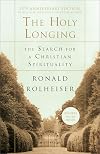
Summary: A discussion of Christian spirituality rooted in an understanding of desire and the incarnation.
I owe the discovery of this book to my sister, who first asked me if I was familiar with the work of Ronald Rolheiser. I’m so glad she asked because it led to the discovery of this work on the nature of Christian spirituality. In it, I discovered a writer able to express profound ideas in clear terms. It reveals to me someone who has lived through to the simplicity on the other side of show more complexity.
Far from the denial or suppression of desire, Rolheiser recognizes that desire, or eros is a fire within us and central to our spirituality. He expresses it in this way:
“Spirituality is about what we do with the fire inside us, about how we channel our eros. And how we do channel it, the disciplines and habits we choose to live by, will either lead to a greater integration or disintegration within our bodies, minds, and souls, and to a greater integration or disintegration in the way we are related to God, others, and the cosmic world.” show less
I owe the discovery of this book to my sister, who first asked me if I was familiar with the work of Ronald Rolheiser. I’m so glad she asked because it led to the discovery of this work on the nature of Christian spirituality. In it, I discovered a writer able to express profound ideas in clear terms. It reveals to me someone who has lived through to the simplicity on the other side of show more complexity.
Far from the denial or suppression of desire, Rolheiser recognizes that desire, or eros is a fire within us and central to our spirituality. He expresses it in this way:
“Spirituality is about what we do with the fire inside us, about how we channel our eros. And how we do channel it, the disciplines and habits we choose to live by, will either lead to a greater integration or disintegration within our bodies, minds, and souls, and to a greater integration or disintegration in the way we are related to God, others, and the cosmic world.” show less
Lists
books read 2018 (2)
Books read 2017 (1)
You May Also Like


Associated Authors
Statistics
- Works
- 57
- Also by
- 3
- Members
- 3,382
- Popularity
- #7,533
- Rating
- 4.2
- Reviews
- 29
- ISBNs
- 98
- Languages
- 3