
Hazard Adams
Author of Critical Theory Since Plato
About the Author
Professor emeritus at the University of Washington's department of comparative literature, Hazard Adams lives in Lake Forest Park, Washington. He is internationally known as a scholar of Blake, W. B. Yeats, Joyce Gary, and the history of criticism.
Works by Hazard Adams
Associated Works
Jerusalem, selected poems, and prose (Rinehart editions, 140) (1970) — Editor, some editions — 32 copies
Tagged
Common Knowledge
- Canonical name
- Adams, Hazard
- Legal name
- Adams, Hazard Simeon
- Birthdate
- 1926-02-15
- Gender
- male
- Education
- University of Washington (Ph.D., 1953)
- Short biography
- UW professor Hazard Adams is one of the foremost scholars of today in the fields of English romanticism and literary theory and criticism. He is also a UW alumnus with strong ties to the Northwest community.
Adams received his Ph.D. from the UW in 1953. His father was headmaster at the Lakeside School in Seattle from 1934 to 1950. His mother, Mary Thurness Adams, served as assistant to the dean of Health Sciences at the UW and later worked as a UW research associate in biomedical history.
After leaving the UW, Adams held a series of appointments at other universities, most notably at the University of California at Irvine from 1964 until 1977, when he joined the UW faculty. Adams currently is the Byron W. and Alice L. Lockwood Professor of Humanities in the comparative literature department at the UW.
At Irvine, Adams was the founding chair of the English department, and later served as dean of the school of humanities and Vice Chancellor of Academic Affairs. Adams is one of the founding members of an international conference on humanistic discourse, originally funded by the Humboldt Foundation.
Among Adams's numerous publications, his Critical Theory Since Plato is perhaps one of the most widely used and influential graduate texts in criticism and theory, notes Leroy Searle, director of the UW Center for the Humanities. "He is one of the top scholars in the world on William Butler Yeats, William Blake, and James Joyce, and he's just about the only academic I can think of whose twenty some odd books include scholarly studies, theoretical works, novels, and poems."
Other publications include the books Blake and Yeats: The Contrary Vision; The Contexts of Poetry; The Horses of Instruction; The Interests of Criticism; and The Academic Tribes. - Nationality
- USA
- Birthplace
- Cleveland, Ohio, USA
- Places of residence
- Lake Forest Park, Washington, USA
- Associated Place (for map)
- USA
Members
Reviews

An amusing take on the hazards of mythical beasts trying to live in a modern California. Amusing enough
The author submits a literary theory. Attempt to develop the Kant and Cassirer worlds of language in literary space and time, adding dream worlds and imagination. Significance of patterns in paradox, and the artist as Creator,
Refers to Dante's image of Satan, incased in a block of ice with head hanging into the lonely abyss of the endless starry night -- Hazard adds [which is not Dantean] "of materialist science". Coleridge says that the Lord's display of Leviathan and Behemoth to Job show more suggests the necessity of accepting the contraries in experience, the nadir as well as the zenith of the cosmos. [193] Coleridge proclaimed the artist to be the creator of a verbal universe, a world of words with its own laws. This is our "reality". This theory draws heavily from Lovejoy's analysis of Milton' epics. show less
Refers to Dante's image of Satan, incased in a block of ice with head hanging into the lonely abyss of the endless starry night -- Hazard adds [which is not Dantean] "of materialist science". Coleridge says that the Lord's display of Leviathan and Behemoth to Job show more suggests the necessity of accepting the contraries in experience, the nadir as well as the zenith of the cosmos. [193] Coleridge proclaimed the artist to be the creator of a verbal universe, a world of words with its own laws. This is our "reality". This theory draws heavily from Lovejoy's analysis of Milton' epics. show less
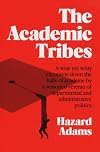
A timeless must-read for anyone who works, or has worked, in academia.
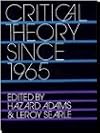
Have not read the whole thing, but a great primer for postmodern literary theory...
Lists
You May Also Like


Associated Authors
Statistics
- Works
- 26
- Also by
- 3
- Members
- 838
- Popularity
- #30,495
- Rating
- 3.8
- Reviews
- 8
- ISBNs
- 48