
James Islington
Author of The Will of the Many
Series
Works by James Islington
Tagged
Common Knowledge
- Birthdate
- 1981-04-19
- Gender
- male
- Occupations
- novelist
- Nationality
- Australia
- Birthplace
- Victoria, Australia
- Places of residence
- Victoria, Australia
- Associated Place (for map)
- Victoria, Australia
Members
Reviews
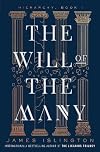
On the one hand, an epic fantasy set in an ancient Roman-themed world is something that I've always dreamed about writing. On the other hand, I have cooled on the magic school setting after Harry Potter especially, feeling like it makes for less well-rounded and mature themes and characters. So I was a bit conflicted with starting The Will of the Many, given these were two of its main tentpoles.
However, it quite quickly became clear that my misgivings were going to be put to bed. James show more Islington has definitely levelled up from his Licanius trilogy, and has done a masterful job in taking a number of fantasy tropes (which all could be considered well-worn in isolation) and bringing them together in a way that feels both familiar and fresh at the same time. I was immediately engaged from the opening chapters, and thoroughly enjoyed the way that the main character's backstory, his strengths, his flaws, his motivations and his values unfurled and was integrated seamlessly with how the world in which he inhabited was revealed. The writing reflects a 'show not tell' approach, which really contributed to how organically the world-building was achieved, and how easy it was to become immersed.
I was particularly captivated by the development of Vis as a protagonist. While he superficially embodies many main character stereotypes (lost royalty, orphan, tragic backstory etc.), these end up playing out through the story in meaningful ways, and as a reader I could really see how these aspects fundamentally contributed to his personality and world view, which are then gradually altered and impacted by the people he meets, the relationships he builds, and the experiences he undergoes. While there are a few moments where he seems to be conveniently proficient at things, it generally feels like he earns his wins, and has to face the consequences of his actions. Despite the focal characters being late-teen/young adult, the book doesn't shy away from confronting scenes or heavy themes, with horror and brutality being clearly exposed without being gratuitous, and at the same time delving into philosophical considerations of whether complacency and abiding by the rules of the system is equivalent to buying into and supporting that system.
This is therefore a tremendous start to a new series, and I have no qualms with giving it 5 stars. James Islington clearly knows his audience, but uses that knowledge to create a story that is well-rounded, well-grounded and well worth a read. With so much more of the world to uncover, and the ending raising far more questions than answers about what is coming next for Vis, I'm definitely looking forward to the next instalment. show less
However, it quite quickly became clear that my misgivings were going to be put to bed. James show more Islington has definitely levelled up from his Licanius trilogy, and has done a masterful job in taking a number of fantasy tropes (which all could be considered well-worn in isolation) and bringing them together in a way that feels both familiar and fresh at the same time. I was immediately engaged from the opening chapters, and thoroughly enjoyed the way that the main character's backstory, his strengths, his flaws, his motivations and his values unfurled and was integrated seamlessly with how the world in which he inhabited was revealed. The writing reflects a 'show not tell' approach, which really contributed to how organically the world-building was achieved, and how easy it was to become immersed.
I was particularly captivated by the development of Vis as a protagonist. While he superficially embodies many main character stereotypes (lost royalty, orphan, tragic backstory etc.), these end up playing out through the story in meaningful ways, and as a reader I could really see how these aspects fundamentally contributed to his personality and world view, which are then gradually altered and impacted by the people he meets, the relationships he builds, and the experiences he undergoes. While there are a few moments where he seems to be conveniently proficient at things, it generally feels like he earns his wins, and has to face the consequences of his actions. Despite the focal characters being late-teen/young adult, the book doesn't shy away from confronting scenes or heavy themes, with horror and brutality being clearly exposed without being gratuitous, and at the same time delving into philosophical considerations of whether complacency and abiding by the rules of the system is equivalent to buying into and supporting that system.
This is therefore a tremendous start to a new series, and I have no qualms with giving it 5 stars. James Islington clearly knows his audience, but uses that knowledge to create a story that is well-rounded, well-grounded and well worth a read. With so much more of the world to uncover, and the ending raising far more questions than answers about what is coming next for Vis, I'm definitely looking forward to the next instalment. show less
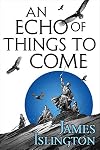
This author just made it to my total fanboy heart. I'm rarely this excited about new anything. I mean, I'm usually excited to some degree or another, but I usually reserve this kind of energy for authors I know and have trusted for years.
Welcome to my heart, Mr. Islington. :)
These characters are absolutely wonderful, from the great reveal at the end of the last book to the full-out disclosure and development of a certain beast character in this one. I love them all. It's true. Every single show more step of this story has been a real delight.
There's lots of magic, time-stopping fights, energy-draining epicness, an enormous amount of history and strife and memory-crunching reveals and even gods.
But more than that, the story is twisted. The magic is used almost like a hard SF tale, with complicated moving parts and some of the old uses are truly horrific. No spoilers, but once I started learning all about the barrier and the other land and so much of the high-magic-technology, I've been bouncing in my seat.
I wouldn't be surprised if these books didn't become as immortal as some of its main characters. :)
Joyfully, I have no issues with the directions taken in the middle plots. It was all fun and a delight to run in, even if it didn't propel the main story sequence in big parts. I was invested.
But most importantly, this is definitely going up there as some of my absolute favorite epic-fantasy series. You know, the ones with huge page counts, enough magic to choke nations, and a strife that spans millennia.
I'm a SUCKER for any book that goes BIG! Not just word count, but BIG IDEAS. :) show less
Welcome to my heart, Mr. Islington. :)
These characters are absolutely wonderful, from the great reveal at the end of the last book to the full-out disclosure and development of a certain beast character in this one. I love them all. It's true. Every single show more step of this story has been a real delight.
There's lots of magic, time-stopping fights, energy-draining epicness, an enormous amount of history and strife and memory-crunching reveals and even gods.
But more than that, the story is twisted. The magic is used almost like a hard SF tale, with complicated moving parts and some of the old uses are truly horrific. No spoilers, but once I started learning all about the barrier and the other land and so much of the high-magic-technology, I've been bouncing in my seat.
I wouldn't be surprised if these books didn't become as immortal as some of its main characters. :)
Joyfully, I have no issues with the directions taken in the middle plots. It was all fun and a delight to run in, even if it didn't propel the main story sequence in big parts. I was invested.
But most importantly, this is definitely going up there as some of my absolute favorite epic-fantasy series. You know, the ones with huge page counts, enough magic to choke nations, and a strife that spans millennia.
I'm a SUCKER for any book that goes BIG! Not just word count, but BIG IDEAS. :) show less
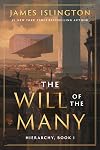
The Will of the Many is a dark academia fantasy novel that takes place in a world with similarities to the Roman Empire. Readers will pick up on bits of Latin, references to a pantheon of gods and goddesses, and gladiator-type contests, but I found the most interesting aspect to be that of an empire that's formed itself as a machine for endless conquering. This not only casts it immediately and irrevocably as a force of evil that killed the main character's family, forcibly subdued the show more people of his beloved homeland, and actively erases every language and culture it is able to subsume. It also presents a force of evil with a unique and fascinating flaw: when you've built your empire to depend upon the constant growth of conquering new nations, how can it go on when there is nothing left to conquer?
In this way and many others, the novel gives opportunities for contemplation, even as the action-packed plot keeps throwing the main character into dangerous and seemingly impossible situations. The stakes are so well constructed that even the smallest aspects of the main character's academic life take on profound importance. The air of secrecy and distrust lends itself perfectly to big reveals and plot twists that are perfectly believable to have been hidden for so long or to come so unexpectedly. And this, combined with the main character's need to keep his own identity and his own past a secret, denies him the opportunity to fully lean on any person other than himself. In every way, it's a very well-constructed framework that sets the stage for a stunning success.
In the afterword, the author mentions having been inspired by Brandon Sanderson and Patrick Rothfuss, and I was pleasantly surprised to find that the connections I was drawing between this book and The Name of the Wind were absolutely on point. I think if you enjoy the work of these other authors, you're very likely to enjoy this one as well. On the other hand, I know some people criticize The Name of the Wind for having an overpowered main character, and if that's the case for you, you'll likely have the same complaint about this one.
Even as a person who enjoys a plotline of an exceptionally talented main character learning and training and developing to the point at which they're almost unbelievably exceptional, I did find a few plot developments in The Will of the Many to be a bit of a stretch. The main character was just a bit too lucky, or another character acted in just the right way at just the right time in a way that didn't quite seem believable. In this sort of story structure, it's a serious mistake when readers can detect an author's hand weighing down one end of the scales. Luckily, this did only apply in a few instances for me, while the rest of the book worked perfectly.
As far as content warnings, this book doesn't have much beyond what you would expect from the description. There is a lot of violence and death. Characters from the empire display bigotry in regards to other cultures, though notably there is no evidence of the sort of racism that exists in our world. Women are less likely to have powerful roles in society because they are heavily encouraged to have children (in some cases as many as possible), but the female characters depicted are clearly just as capable as the male characters in terms of natural talent and abilities and there is no evidence of the sort of sexism that exists in our world.
Although this book felt particularly dark and hopeless in the beginning, I started to enjoy it more after the first few chapters, and by the middle I was hooked to the point of flying through the rest of it. I don't always continue a series after reading the first book, but in this case I definitely will be picking up the sequel as soon as it comes out in November. If it sounds like the type of book you might enjoy, now would be the perfect time to give it a read. You might find that by the time you're finished, you won't have to wait at all for the sequel you might be craving. show less
In this way and many others, the novel gives opportunities for contemplation, even as the action-packed plot keeps throwing the main character into dangerous and seemingly impossible situations. The stakes are so well constructed that even the smallest aspects of the main character's academic life take on profound importance. The air of secrecy and distrust lends itself perfectly to big reveals and plot twists that are perfectly believable to have been hidden for so long or to come so unexpectedly. And this, combined with the main character's need to keep his own identity and his own past a secret, denies him the opportunity to fully lean on any person other than himself. In every way, it's a very well-constructed framework that sets the stage for a stunning success.
In the afterword, the author mentions having been inspired by Brandon Sanderson and Patrick Rothfuss, and I was pleasantly surprised to find that the connections I was drawing between this book and The Name of the Wind were absolutely on point. I think if you enjoy the work of these other authors, you're very likely to enjoy this one as well. On the other hand, I know some people criticize The Name of the Wind for having an overpowered main character, and if that's the case for you, you'll likely have the same complaint about this one.
Even as a person who enjoys a plotline of an exceptionally talented main character learning and training and developing to the point at which they're almost unbelievably exceptional, I did find a few plot developments in The Will of the Many to be a bit of a stretch. The main character was just a bit too lucky, or another character acted in just the right way at just the right time in a way that didn't quite seem believable. In this sort of story structure, it's a serious mistake when readers can detect an author's hand weighing down one end of the scales. Luckily, this did only apply in a few instances for me, while the rest of the book worked perfectly.
As far as content warnings, this book doesn't have much beyond what you would expect from the description. There is a lot of violence and death. Characters from the empire display bigotry in regards to other cultures, though notably there is no evidence of the sort of racism that exists in our world. Women are less likely to have powerful roles in society because they are heavily encouraged to have children (in some cases as many as possible), but the female characters depicted are clearly just as capable as the male characters in terms of natural talent and abilities and there is no evidence of the sort of sexism that exists in our world.
Although this book felt particularly dark and hopeless in the beginning, I started to enjoy it more after the first few chapters, and by the middle I was hooked to the point of flying through the rest of it. I don't always continue a series after reading the first book, but in this case I definitely will be picking up the sequel as soon as it comes out in November. If it sounds like the type of book you might enjoy, now would be the perfect time to give it a read. You might find that by the time you're finished, you won't have to wait at all for the sequel you might be craving. show less
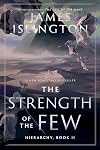
Unfortunately, this book is a complete mess.
Just like the first book, the ideas and premise for the story are fantastic and extremely interesting, but the difference in this one is that the execution is so frustratingly poor that it renders the series unrecommendable. This is in addition to the existing problems from book 1 that are only amplified here.
SPOILERS AHEAD
It’s only fair that I start with the good parts, so as to not bury them under a long list of gripes.
The Good:
The Luceum show more sections of the book were the most satisfying of the three, despite having some similar overarching problems to the others. One of my main criticisms of book one was the insistence on which Vis refused to do anything but lie to anyone, including those who were trustworthy. It was extremely refreshing to see him known, from the outset, by his real name, and willing to trust people with who he is as a person. Luceum had trustworthiness, a possible escape to a quiet life, a satisfying familial reunion, and fights I actually enjoyed (sorry Res chariot scene). It was a glimpse into what this book could’ve been if the ball hadn’t been dropped so heavily across the rest of it. And even this was undermined by those characters not having the space to develop on the page.
Despite the execution, Islington’s ideas are very interesting. Seeing a single protagonist diverge in character across three worlds as experiences, information, and characters vary functionally means that by the fourth book, there will be three separate protagonists with interfering goals and lives that will likely be on opposing sides of the conflict. A Vis that never had to compromise on his ideals or face the death of his friends, and will maybe even be the linchpin of the three. A Vis whose entire mission was likely a ploy and who now has to grapple with consequences that may doom anywhere from one to three worlds. A Vis that crossed every line he ever set and accepted the tools of the oppressor with relative ease, one who watched everything around him turn to blood and is set to negotiate with a now-complex enemy. This Vis, the main Vis, may even end up an antagonist. The Concurrence being a sort of latticework corpse hivemind that has only ever been able to be stopped through repeated near-extinction of humanity and the divergence of the three worlds in their response to it feels like a throughline that could definitely carry a series through. I want to see where these ideas go. I want to believe. And yet.
The Bad:
This book has some of the most egregious pacing I’ve ever read, which is a real shame given how solid the first book’s pacing was. My main worry with trying to cover three worlds’ worth of plot was that Islington would try to fit way too much into one book and all depth would become as thin as a sheet of paper. This was even worse than I expected. We’re constantly jumping ahead past events that should matter and learning about them as Vis looks back on things. So much happens off the page that it feels like whiplash when the book tries to catch the reader up. So many times I wondered if I’d somehow missed a chapter with how much had happened. We skip weeks at a time, even when Everything is happening during that skipped period. We jump from the assassination of the conspiring military leadership to Caten in complete chaotic shambles in the center of a four(?)-way civil war that’s been going on for weeks. Having no contact with Ulciscor for weeks since the start of the civil war should not be an afterthought and it should not take accidentally and randomly reading his name on a list of prisoners for anyone to muster a damn about his fate. We skip over most of the bonding and development of the warband and they functionally go from strangers to a found family offpage. Vis saves Ahmose and the next time we see them they’re reluctant friends throwing dry wit back and forth and talking about their many travails over the last weeks. How am I supposed to care about any of this? Nothing is shown, everything is just reminisced upon after it’s over. Every secondary character, including ones from book one, are shunted to the side and never gain even a second dimension. They never stand on their own. The author dangles the future development of Aequa in front of us before using her death as a prop for Vis’ growing emotional turmoil and grief. She shows up when he needs her help and ends up with her head caved in by Secondary Antagonist #5.
The plot at times moves on its own. Most notable in this regard is at the end when Vis activates the cascade of iunctii. Vis went into this relationship with Ka intending to negotiate with someone who he otherwise saw as a great antagonist while intending to kill him later once the conflict in Caten was settled. But he gives Ka what he wants immediately. Ka spends the whole time justifying his repeated mass genocides for the sake of preventing the Concurrence, a corpse hivemind, from enslaving everyone and then says to Vis, “hey do you mind activating this hivemind of 80,000 corpses under the Necropolis for me” and he does it almost without a second thought. For all Vis knows, this might incite the already-overdue Cataclysm. Or it’s a ploy by the Concurrence (who some people already thought Ka might be a part of). He has no clue what might happen here and he immediately listens to Ka.
The Obiteum sections are painfully boring and are a good reminder that interesting lore doesn’t make an interesting world. Obiteum felt like a slog through a world that never gave the reader a reason to care about it. There were approximately three, maybe four characters other than Vis in the entire section that weren’t in the background and all development for one of them happened off-page, as mentioned before. Luceum had characters that felt like characters even if they were underdeveloped and dynamic stakes that changed as the world and character did. Res had the benefit of a pre-existing book of development, so readers are automatically invested enough in it to be interested even if it’s messy. Obiteum had none of that. For a section whose main focus was to straight-up kill Ka, it felt like almost nothing happened.
Most of the problems from book 1 remain.
Vis is an unlikeable protagonist. At this point I’m convinced this is a problem that will remain until the end of the series.
The prose is still uninteresting and stilted (I partially blame the combination of first person and present tense), and Islington’s reliance on short, curt sentences is now compounded by an overcorrection into long run-on sentences strung together in an unnatural daisy chain. There were multiple occurrences where at least five separate sentences were made into one with semicolons, em dashes, and conjunctions. Islington really abuses the semicolon in this book, and I never felt like he used it correctly. Every chapter is frontloaded with extensive imagery of the setting, which should help to break up the curtness and stiltedness, but when each chapter opens in the exact same fashion and that same descriptive bulk isn’t exhibited elsewhere, it goes right back to feeling stilted.
We’ve added two new extremely derivative fantasy versions of real-world cultures into the mix in Fantasy Ireland and Fantasy Egypt. I still find it unforgivable that three worlds’ worth of constant Cataclysms and millennia of divergent history from each other cannot muster more unique locales and civilizations than Earth cultures with the thinnest possible veneer of fantasy coating.
This book, like the first, could be half the length if the characters ever told each other anything at all. I am so extremely sick of the constant distrust and suspicion that makes any plot development functionally impossible. Veridius shouldn’t keep holding information back from Vis at this point. Vis should tell Eidhin and hell, even Aequa, who he is. Everyone should communicate with each other the way humans do. Enough!!
Politically, this book is no better than the first. The same message of “violence is never the answer” is pushed again and again, and any exhibition of violence towards oppressors by the characters is viewed as either a tragedy or a bad choice that makes things worse for everyone else. Early on even, the book tries to set up a conflict where Vis has trouble morally justifying killing Ka as if he isn’t responsible for 3000 years of mass genocide across three different worlds. This is not a difficult choice and at this point the book hasn’t made Ka enough of a character for the reader to care (arguably not by the end of it either). Assassinating the conspiring Military leadership that’s also ceding to The Cataclysm Guy is seen as bad because it sparks a civil war in the imperial core. A civil war that is truly just the imperial boomerang in full effect. Should I feel anger at Ostius and the Anguis for inciting it? Or should the anger be directed at the world hegemon whose power is derived from sapping the literal will from its subjects? The book once again sets up anti-colonial resistance as a caricature and strawman to punch. The civil war is in full swing and Caten is burning. Relucia tries to justify it by saying “Look! The Octavii and Septimii are rising up against their oppressors! Class consciousness! It was a good thing!” and Vis more or less shakes his head in disapproval laced with as much moral grandstanding as can be mustered. The same guy that betrayed every ideal he cared about once he got a workable position of influence in the imperial power structure. In a reasonable book, that development of Vis’ would be a great foundation for viewing the dynamics of an empire, the imperial core, and its conquered subjects. Instead it’s merely used as a way to undermine every justifiable political position it could take. Islington envisions any such resistance as having one pearl-clutchingly vicious outcome and he cannot help but frame all of it that way. It’s a bad message.
This book is overstuffed, half-baked, frustrating, poorly written, and the exploration of some truly interesting ideas and concepts is drowned because of it. I said in my review of the first book that the series had a lot of potential and set off on a good path, but was still in a stage where it could sink or swim. It sinks here, I’m afraid. show less
Just like the first book, the ideas and premise for the story are fantastic and extremely interesting, but the difference in this one is that the execution is so frustratingly poor that it renders the series unrecommendable. This is in addition to the existing problems from book 1 that are only amplified here.
SPOILERS AHEAD
It’s only fair that I start with the good parts, so as to not bury them under a long list of gripes.
The Good:
The Luceum show more sections of the book were the most satisfying of the three, despite having some similar overarching problems to the others. One of my main criticisms of book one was the insistence on which Vis refused to do anything but lie to anyone, including those who were trustworthy. It was extremely refreshing to see him known, from the outset, by his real name, and willing to trust people with who he is as a person. Luceum had trustworthiness, a possible escape to a quiet life, a satisfying familial reunion, and fights I actually enjoyed (sorry Res chariot scene). It was a glimpse into what this book could’ve been if the ball hadn’t been dropped so heavily across the rest of it. And even this was undermined by those characters not having the space to develop on the page.
Despite the execution, Islington’s ideas are very interesting. Seeing a single protagonist diverge in character across three worlds as experiences, information, and characters vary functionally means that by the fourth book, there will be three separate protagonists with interfering goals and lives that will likely be on opposing sides of the conflict. A Vis that never had to compromise on his ideals or face the death of his friends, and will maybe even be the linchpin of the three. A Vis whose entire mission was likely a ploy and who now has to grapple with consequences that may doom anywhere from one to three worlds. A Vis that crossed every line he ever set and accepted the tools of the oppressor with relative ease, one who watched everything around him turn to blood and is set to negotiate with a now-complex enemy. This Vis, the main Vis, may even end up an antagonist. The Concurrence being a sort of latticework corpse hivemind that has only ever been able to be stopped through repeated near-extinction of humanity and the divergence of the three worlds in their response to it feels like a throughline that could definitely carry a series through. I want to see where these ideas go. I want to believe. And yet.
The Bad:
This book has some of the most egregious pacing I’ve ever read, which is a real shame given how solid the first book’s pacing was. My main worry with trying to cover three worlds’ worth of plot was that Islington would try to fit way too much into one book and all depth would become as thin as a sheet of paper. This was even worse than I expected. We’re constantly jumping ahead past events that should matter and learning about them as Vis looks back on things. So much happens off the page that it feels like whiplash when the book tries to catch the reader up. So many times I wondered if I’d somehow missed a chapter with how much had happened. We skip weeks at a time, even when Everything is happening during that skipped period. We jump from the assassination of the conspiring military leadership to Caten in complete chaotic shambles in the center of a four(?)-way civil war that’s been going on for weeks. Having no contact with Ulciscor for weeks since the start of the civil war should not be an afterthought and it should not take accidentally and randomly reading his name on a list of prisoners for anyone to muster a damn about his fate. We skip over most of the bonding and development of the warband and they functionally go from strangers to a found family offpage. Vis saves Ahmose and the next time we see them they’re reluctant friends throwing dry wit back and forth and talking about their many travails over the last weeks. How am I supposed to care about any of this? Nothing is shown, everything is just reminisced upon after it’s over. Every secondary character, including ones from book one, are shunted to the side and never gain even a second dimension. They never stand on their own. The author dangles the future development of Aequa in front of us before using her death as a prop for Vis’ growing emotional turmoil and grief. She shows up when he needs her help and ends up with her head caved in by Secondary Antagonist #5.
The plot at times moves on its own. Most notable in this regard is at the end when Vis activates the cascade of iunctii. Vis went into this relationship with Ka intending to negotiate with someone who he otherwise saw as a great antagonist while intending to kill him later once the conflict in Caten was settled. But he gives Ka what he wants immediately. Ka spends the whole time justifying his repeated mass genocides for the sake of preventing the Concurrence, a corpse hivemind, from enslaving everyone and then says to Vis, “hey do you mind activating this hivemind of 80,000 corpses under the Necropolis for me” and he does it almost without a second thought. For all Vis knows, this might incite the already-overdue Cataclysm. Or it’s a ploy by the Concurrence (who some people already thought Ka might be a part of). He has no clue what might happen here and he immediately listens to Ka.
The Obiteum sections are painfully boring and are a good reminder that interesting lore doesn’t make an interesting world. Obiteum felt like a slog through a world that never gave the reader a reason to care about it. There were approximately three, maybe four characters other than Vis in the entire section that weren’t in the background and all development for one of them happened off-page, as mentioned before. Luceum had characters that felt like characters even if they were underdeveloped and dynamic stakes that changed as the world and character did. Res had the benefit of a pre-existing book of development, so readers are automatically invested enough in it to be interested even if it’s messy. Obiteum had none of that. For a section whose main focus was to straight-up kill Ka, it felt like almost nothing happened.
Most of the problems from book 1 remain.
Vis is an unlikeable protagonist. At this point I’m convinced this is a problem that will remain until the end of the series.
The prose is still uninteresting and stilted (I partially blame the combination of first person and present tense), and Islington’s reliance on short, curt sentences is now compounded by an overcorrection into long run-on sentences strung together in an unnatural daisy chain. There were multiple occurrences where at least five separate sentences were made into one with semicolons, em dashes, and conjunctions. Islington really abuses the semicolon in this book, and I never felt like he used it correctly. Every chapter is frontloaded with extensive imagery of the setting, which should help to break up the curtness and stiltedness, but when each chapter opens in the exact same fashion and that same descriptive bulk isn’t exhibited elsewhere, it goes right back to feeling stilted.
We’ve added two new extremely derivative fantasy versions of real-world cultures into the mix in Fantasy Ireland and Fantasy Egypt. I still find it unforgivable that three worlds’ worth of constant Cataclysms and millennia of divergent history from each other cannot muster more unique locales and civilizations than Earth cultures with the thinnest possible veneer of fantasy coating.
This book, like the first, could be half the length if the characters ever told each other anything at all. I am so extremely sick of the constant distrust and suspicion that makes any plot development functionally impossible. Veridius shouldn’t keep holding information back from Vis at this point. Vis should tell Eidhin and hell, even Aequa, who he is. Everyone should communicate with each other the way humans do. Enough!!
Politically, this book is no better than the first. The same message of “violence is never the answer” is pushed again and again, and any exhibition of violence towards oppressors by the characters is viewed as either a tragedy or a bad choice that makes things worse for everyone else. Early on even, the book tries to set up a conflict where Vis has trouble morally justifying killing Ka as if he isn’t responsible for 3000 years of mass genocide across three different worlds. This is not a difficult choice and at this point the book hasn’t made Ka enough of a character for the reader to care (arguably not by the end of it either). Assassinating the conspiring Military leadership that’s also ceding to The Cataclysm Guy is seen as bad because it sparks a civil war in the imperial core. A civil war that is truly just the imperial boomerang in full effect. Should I feel anger at Ostius and the Anguis for inciting it? Or should the anger be directed at the world hegemon whose power is derived from sapping the literal will from its subjects? The book once again sets up anti-colonial resistance as a caricature and strawman to punch. The civil war is in full swing and Caten is burning. Relucia tries to justify it by saying “Look! The Octavii and Septimii are rising up against their oppressors! Class consciousness! It was a good thing!” and Vis more or less shakes his head in disapproval laced with as much moral grandstanding as can be mustered. The same guy that betrayed every ideal he cared about once he got a workable position of influence in the imperial power structure. In a reasonable book, that development of Vis’ would be a great foundation for viewing the dynamics of an empire, the imperial core, and its conquered subjects. Instead it’s merely used as a way to undermine every justifiable political position it could take. Islington envisions any such resistance as having one pearl-clutchingly vicious outcome and he cannot help but frame all of it that way. It’s a bad message.
This book is overstuffed, half-baked, frustrating, poorly written, and the exploration of some truly interesting ideas and concepts is drowned because of it. I said in my review of the first book that the series had a lot of potential and set off on a good path, but was still in a stage where it could sink or swim. It sinks here, I’m afraid. show less
Lists
Awards


You May Also Like


Associated Authors
Statistics
- Works
- 16
- Members
- 8,810
- Popularity
- #2,717
- Rating
- 4.1
- Reviews
- 148
- ISBNs
- 87
- Languages
- 6
- Favorited
- 7