

Leonid Andreyev (1871–1919)
Author of The Seven Who Were Hanged
About the Author
Leonid Andreyev became one of the most popular writers of the first decade of the twentieth century because of his ability to combine modernist and realist techniques and his willingness to break taboos of theme. His subjects included topics, such as venereal disease, and various abnormalities. His show more works caused a scandal but won their author a wide following. In the aftermath of 1905, Andreyev dealt with the defeated revolutionaries' moral and psychological dilemmas and with the intelligentsia as a whole, while in The Tale of the Seven Who Were Hanged (1909), he produced a stunning condemnation of the death penalty. Andreyev had a talent for depicting the dark, irrational forces in life within existential dilemmas. However, his pessimism and mysticism are sometimes undercut by a blatant tugging on the heartstrings and a lack of personal engagement and authenticity. Andreyev died in 1919. (Bowker Author Biography) show less
Image credit: wikimedia commons
Works by Leonid Andreyev
Leonid Andreyev : Photographs by a Russian Writer. An Undiscovered Portrait of Pre-Revolutionary Russia (1989) 28 copies, 1 review
Relatos del alma rusa 6 copies
Cuentos escogidos 5 copies
Rozhovor uprostred noci 3 copies
The Waltz of the Dogs 2 copies
Dybet og andre noveller 2 copies
El misterio y otros cuentos 2 copies
Cuentos 2 copies
Črne maske 2 copies
novelle e drammi 2 copies
Selected Short Fiction of Leonid Andreyev: The Seven Who Were Hanged, Red Laugh, The Dilemma, Lazarus, Life of Father Vassily, etc. (2020) 2 copies
Jutustused 2 copies
Un hombre original 2 copies
Samson in chains; posthumous tragedy 2 copies
The Greater Omnibus of Private Books — Contributor — 2 copies
Gaudeamus 1 copy
El Pope 1 copy
The Dear Departing 1 copy
Жили-были 1 copy
Прекрасные сабинянки 1 copy
Повести и рассказы 1 copy
Пьесы 1 copy
Иностранец (Russian Edition) 1 copy
El misterio 1 copy
Том 2: Рассказы и повести 1 copy
El capitan Kablukov 1 copy
Кусака 1 copy
Рассказы 1 copy
Том 5: Пьесы 1 copy
Том 3: Пьесы 1 copy
Том 1: Рассказы и повести 1 copy
Cuentos escogidos 1 copy
Сочиненiя 1 copy
Le Gouverneur 1 copy
The Man Who Found The Truth 1 copy
Dies Irae y otros cuentos 1 copy
Había una vez-- 1 copy
Izbrannoe 1 copy
Tsvetok pod nogoiu 1 copy
The Life of Man 1 copy
He: An Unknown's Story 1 copy
Jurnalul Satanei 1 copy
Kurban 1 copy
Professor Storit︠s︡yn 1 copy
Nouvelles 1 copy
Ben-Tobith [short story] 1 copy
La vida de un hombre 1 copy
I Taagen og andre Noveller 1 copy
Sergio Petrovich 1 copy
Cuentos extranjeros 1 copy
Love, Faith, And Hope 1 copy
Povídka o sedmi oběšených 1 copy
ANATEMA 1 copy
Dan gneva 1 copy
Balada o siedmich obesených 1 copy
De opstandige dorpspriester 1 copy
The Lie 1 copy
Le gouffre 1 copy
Novelle e drammi 1 copy
Śmierć Gulliwera : nowele 1 copy
Associated Works
The Dedalus Book of Russian Decadence: Perversity, Despair and Collapse (2007) — Contributor — 112 copies, 1 review
Alfred Hitchcock Presents: 13 More Stories They Wouldn't Let Me Do On TV (1959) — Contributor — 93 copies, 2 reviews
He Who Gets Slapped [1924 film] — Original play — 10 copies
The Masterpiece Library of Short Stories Vol. XIII: Russian Etc. — Contributor — 9 copies
Box Set - The Greatest Ghost and Horror Stories Ever Written: volumes 1 to 7 (100 authors & 200 stories) (2017) — Contributor — 6 copies
The Big Book of the Masters of Horror, Weird and Supernatural Short Stories: 120 authors and 1000 stories in one volume (2020) — Contributor — 6 copies
Vampire Tales: The Big Collection (80+ stories in one volume: The Viy, The Fate of Madame Cabanel, The Parasite, Good Lady Ducayne, Count Magnus, For the ... Fang, Blood Lust,… (2019) — Contributor — 4 copies
American Aphrodite: A Quarterly for the Fancy-Free (Volume 4, Number 13) (1954) — Contributor — 2 copies
A Caravan of Music Stories by the World's Great Authors — Contributor — 1 copy
Performing Arts Journal: 16 (Volume VI / Number 1) — Contributor — 1 copy
Tagged
Common Knowledge
- Canonical name
- Andreyev, Leonid
- Legal name
- Andreev, Leonid Nikolaevich
Андреев, Леонид Николаевич - Other names
- Andreïev, Leonid Nikolaïevitch
- Birthdate
- 1871-08-21
- Date of death
- 1919-09-12
- Gender
- male
- Education
- Moscow University, Faculty of Law
- Occupations
- lawyer
legal chronicler
police-court reporter
dramatist
publicist
short story writer (show all 7)
novelist - Relationships
- Andreev, Daniel (son)
Carlisle, Olga Andreyev (granddaughter) - Nationality
- Russian Empire
- Birthplace
- Oryol, Russian Empire
- Places of residence
- Oryol, Russian Empire
Moscow, Russian Empire
St. Petersburg, Russian Empire
Terijoki, Finland - Place of death
- Kuokkala, Finland
- Burial location
- Volkovskoye Memorial Cemetery, Saint Petersburg, Russian Federation
- Associated Place (for map)
- Russian Empire
Members
Reviews
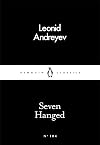
There has always been a childhod memory lurking in the back of my mind, of a painting or photograph in an old Russian history book: young revolutionaries being hanged together, among them a young woman. I’m not sure why it made such a strong impression, but it was the first thing I thought of when I discovered Leonid Andreyev’s Seven Hanged].
Andreyev was a lawyer, with a side job of court reporter, so he was thoroughly acquainted with the Russian legal system and those caught up in it on show more both sides. Five of the seven here were idealistic young revolutionaries, bent on assassinating a government minister, but betrayed by an unknown person. The other two, in a kind of crucifixion echo, were common criminals. The trials of those being hanged are told here only briefly, as almost peripheral events. Andreyev was concentrating on what it means to the individual to know life will end at a given date and time and in a terrible way.
Initially, he describes each of his defendants as they were in real life, life before their lives were interrupted, giving the reader an idea of what is being lost in this senseless state directed slaughter. Even before that, however, he spends time on the minister who has been told of the plot to assassinate him the next day. This man, knowing the plot has been subverted, can easily continue in his belief that he is immortal, for death doesn’t come to such as he.
The minister constrasts sharply with the intinerant Estonian peasant, barely able to comprehend Russian, completely alone in the world. Sentenced to death, he can only say “Not hang me”. Such a fate was beyond his imagination. Then there was Gypsy Mike, for whom there was no hope. In court, he asked for permission to whistle.
The desperate agony of a man being murdered, the savage thrill of a killer, a terrible pang of foreboding, a call for help, the darkness of foul weather in an autumn night, a sense of solitude - all of these things were there in that shrieking, wailing sound, which belonged to neither man nor beast... And with easy hearts, without pity or any feelings of remorse, the judges sentenced Gypsy Mike to death.
Writing of the five, Andreyev’s portrayal of the suddeness and finality of the trial, the sentence and the thirty-six hours left of life is almost visceral. Each approaches the inevitable in a different way. One is terrified, unable even to walk. One, nameless, is the classic revolutionary, “grown weary of living and struggling”. The young girl, Musya, is almost accepting.
By following these seven and their thoughts right to the steps of the scaffold, Andreyev’s plea against capital punishment is an existential masterpiece with the impossible hope of moving the Russian establishment.
This book was initially published in 1908, at a time when Andreyev was considered by many to be the greatest living Russian author, an assessment he would have agreed with, although most added the caveat ‘next to Tolstoy’. However he opposed the Bolsheviks and in 1917 moved to Finland, where he died in 1919. His works were suppressed in the Soviet Union and he has only been rehabilitated there since its collapse. As early as 1909, however, this book was translated into English by the Russian born American Herman Bernstein, with an introduction by Andreyev, explaining his opposition to capital punishment, which unfortunately is not included in this Penguin edition.
In an essay in BBC Arts, the translator Anthony Briggs suggests that ironically other anarchists, particularly those who murdered the Archduke Franz Ferdinand, were influenced in completely the opposite way than that intended by Andreyev. The ringleader of that plot, Danilo Ilic, had actually translated Andreyev’s book. In Briggs’s words, Instead of condemning the young activists for their naive and immoral conduct, he was won over by their idealism, selfless sincerity and courage. show less
Andreyev was a lawyer, with a side job of court reporter, so he was thoroughly acquainted with the Russian legal system and those caught up in it on show more both sides. Five of the seven here were idealistic young revolutionaries, bent on assassinating a government minister, but betrayed by an unknown person. The other two, in a kind of crucifixion echo, were common criminals. The trials of those being hanged are told here only briefly, as almost peripheral events. Andreyev was concentrating on what it means to the individual to know life will end at a given date and time and in a terrible way.
Initially, he describes each of his defendants as they were in real life, life before their lives were interrupted, giving the reader an idea of what is being lost in this senseless state directed slaughter. Even before that, however, he spends time on the minister who has been told of the plot to assassinate him the next day. This man, knowing the plot has been subverted, can easily continue in his belief that he is immortal, for death doesn’t come to such as he.
The minister constrasts sharply with the intinerant Estonian peasant, barely able to comprehend Russian, completely alone in the world. Sentenced to death, he can only say “Not hang me”. Such a fate was beyond his imagination. Then there was Gypsy Mike, for whom there was no hope. In court, he asked for permission to whistle.
The desperate agony of a man being murdered, the savage thrill of a killer, a terrible pang of foreboding, a call for help, the darkness of foul weather in an autumn night, a sense of solitude - all of these things were there in that shrieking, wailing sound, which belonged to neither man nor beast... And with easy hearts, without pity or any feelings of remorse, the judges sentenced Gypsy Mike to death.
Writing of the five, Andreyev’s portrayal of the suddeness and finality of the trial, the sentence and the thirty-six hours left of life is almost visceral. Each approaches the inevitable in a different way. One is terrified, unable even to walk. One, nameless, is the classic revolutionary, “grown weary of living and struggling”. The young girl, Musya, is almost accepting.
By following these seven and their thoughts right to the steps of the scaffold, Andreyev’s plea against capital punishment is an existential masterpiece with the impossible hope of moving the Russian establishment.
This book was initially published in 1908, at a time when Andreyev was considered by many to be the greatest living Russian author, an assessment he would have agreed with, although most added the caveat ‘next to Tolstoy’. However he opposed the Bolsheviks and in 1917 moved to Finland, where he died in 1919. His works were suppressed in the Soviet Union and he has only been rehabilitated there since its collapse. As early as 1909, however, this book was translated into English by the Russian born American Herman Bernstein, with an introduction by Andreyev, explaining his opposition to capital punishment, which unfortunately is not included in this Penguin edition.
In an essay in BBC Arts, the translator Anthony Briggs suggests that ironically other anarchists, particularly those who murdered the Archduke Franz Ferdinand, were influenced in completely the opposite way than that intended by Andreyev. The ringleader of that plot, Danilo Ilic, had actually translated Andreyev’s book. In Briggs’s words, Instead of condemning the young activists for their naive and immoral conduct, he was won over by their idealism, selfless sincerity and courage. show less

Lazarus, after three days “under the enigmatical sway of death”, inexplicably returns to the community of the living. He is received with great joy – and indiscretion. At a “welcome home” party thrown in his honor, a guest asks several times what being dead was like and receives no answer. But the other guests begin to fear their host without knowing why, and one by one they take their leave (As his own household does, in less than the fullness of time).
The narrator tells us that show more Lazarus “brought something back with him from the other side”. He who in (former) life was affable and fond of jokes is now taciturn, expressionless, indifferent to everything. Indeed his experience has literally transformed him. Visible are bluish, running to deep violet creases in his flesh between his fingers and around his eyes – which seem sunken, their pupils a flat, fathomless black. His body has acquired a sort of uncanny stoutness, perhaps bloated in arrested decomposition. As time passes, Lazarus sits in his house without heat, without light and, but for one occasion, without company. A bored sculptor of beautiful bodies hears of him and requests his hospitality. Sitting in the silence and the dark, the sculptor asks, with growing unease, if Lazarus might have at least somewhere a bottle of wine. Time passes and darkness spreads when Lazarus answers: "I was dead". The guest takes his leave of Lazarus and his happiness on the same morning. Upon his return to decadent Rome, he completes one last work which inspires horror in his admirers, who urge him to destroy it.
Lazarus, the staring abyss, the walking lazaretto, is shunned by men. The peasants speak of tying bells to him to give warning of his approach (this is rejected in that these bells heard approaching in the night might ring grim portent), even of killing him. But this, even Augustus dares not do.
Lazarus leaves his house during the day to wander into the desert and stare at the sun. One day he is summoned by Caesar to Rome. Caesar, game to every challenge, desires audience with this messiah of despair. The imperial lackeys were able to rouge over the terrific pallor, to paint on the lines of a faint smile, but they could not mask his annihilating gaze. And even Augustus the bold is lost to its venefice. In Lazarus's gaze he scries empires not yet founded in ruins, cerements woven from the swaddling prepared for infants already in the tomb... life crawling from the ocean depths toward the sun and into the black vastation of time (like Bede's bird). In Bede and Pascal, life was depicted as a bright interruption of an engulfing infinite dark. But Lazarus was dead. He stares at the improbable sun, which, like Atlas, holds the unbegotten from the obliterated, himself inhumed in and host to the maggot of decay.
Lazarus, escorted out of the eternal city, his eyes seared out of his skull by a horrified Emperor, again follows the sun into the desert and disappears - absorbed, or dead, never seeing, never seen again. show less
The narrator tells us that show more Lazarus “brought something back with him from the other side”. He who in (former) life was affable and fond of jokes is now taciturn, expressionless, indifferent to everything. Indeed his experience has literally transformed him. Visible are bluish, running to deep violet creases in his flesh between his fingers and around his eyes – which seem sunken, their pupils a flat, fathomless black. His body has acquired a sort of uncanny stoutness, perhaps bloated in arrested decomposition. As time passes, Lazarus sits in his house without heat, without light and, but for one occasion, without company. A bored sculptor of beautiful bodies hears of him and requests his hospitality. Sitting in the silence and the dark, the sculptor asks, with growing unease, if Lazarus might have at least somewhere a bottle of wine. Time passes and darkness spreads when Lazarus answers: "I was dead". The guest takes his leave of Lazarus and his happiness on the same morning. Upon his return to decadent Rome, he completes one last work which inspires horror in his admirers, who urge him to destroy it.
Lazarus, the staring abyss, the walking lazaretto, is shunned by men. The peasants speak of tying bells to him to give warning of his approach (this is rejected in that these bells heard approaching in the night might ring grim portent), even of killing him. But this, even Augustus dares not do.
Lazarus leaves his house during the day to wander into the desert and stare at the sun. One day he is summoned by Caesar to Rome. Caesar, game to every challenge, desires audience with this messiah of despair. The imperial lackeys were able to rouge over the terrific pallor, to paint on the lines of a faint smile, but they could not mask his annihilating gaze. And even Augustus the bold is lost to its venefice. In Lazarus's gaze he scries empires not yet founded in ruins, cerements woven from the swaddling prepared for infants already in the tomb... life crawling from the ocean depths toward the sun and into the black vastation of time (like Bede's bird). In Bede and Pascal, life was depicted as a bright interruption of an engulfing infinite dark. But Lazarus was dead. He stares at the improbable sun, which, like Atlas, holds the unbegotten from the obliterated, himself inhumed in and host to the maggot of decay.
Lazarus, escorted out of the eternal city, his eyes seared out of his skull by a horrified Emperor, again follows the sun into the desert and disappears - absorbed, or dead, never seeing, never seen again. show less

Wat zou er in je omgaan als je de doodstraf krijgt opgelegd? Wat zou je doen, wachtend in je kleine gevangeniscel op die laatste dag?
Dit boek volgt het verhaal over 5 terroristen en 2 misdadigers die de doodstraf krijgen, daarop moeten wachten, en vervolgens moeten ondergaan. Het lot van hen allen is hetzelfde, maar hoe zij hier mee omgaan is verschillend van persoon tot persoon. De een word gek, de andere focust op trainen en weer een ander ziet het leven op een nieuwe manier. Veel van het show more leed dat word ondergaan in de cellen word uiteindelijk veroorzaakt door hun eigen gedachtengangen en geest. De grootste boosdoener in die cellen is dus uiteindelijk henzelf.
Het taalgebruik in deze novelle is absoluut prachtig. Zoals bijvoorbeeld hier bij een beschrijving over een ervaring van een van de gevangenen:
Andreyev: "En het leven werd nieuw. Hij probeerde wat hij zag niet meer als vroeger in woorden uit te drukken, die woorden bestonden niet in de arme, karige mensentaal. De kleine laagheid die bij hem minachting voor de mens had gewekt, soms zelfs afkeer van een gezicht, was totaal weg: zoals een ballonvaarder gore steegjes beneden ziet verdwijnen en lelijkheid fraai ziet worden."
Het is voorzien van een nawoord dat is verzorgd door Bert Natter dat nog een beetje achtergrond geeft over de totstandkoming van dit vertaalde werk en over de auteur, en het boek zelf. Voor de 140 pagina's die het boek lang is, is het zeker je tijd meer dan dubbel en dwars waard. show less
Dit boek volgt het verhaal over 5 terroristen en 2 misdadigers die de doodstraf krijgen, daarop moeten wachten, en vervolgens moeten ondergaan. Het lot van hen allen is hetzelfde, maar hoe zij hier mee omgaan is verschillend van persoon tot persoon. De een word gek, de andere focust op trainen en weer een ander ziet het leven op een nieuwe manier. Veel van het show more leed dat word ondergaan in de cellen word uiteindelijk veroorzaakt door hun eigen gedachtengangen en geest. De grootste boosdoener in die cellen is dus uiteindelijk henzelf.
Het taalgebruik in deze novelle is absoluut prachtig. Zoals bijvoorbeeld hier bij een beschrijving over een ervaring van een van de gevangenen:
Andreyev: "En het leven werd nieuw. Hij probeerde wat hij zag niet meer als vroeger in woorden uit te drukken, die woorden bestonden niet in de arme, karige mensentaal. De kleine laagheid die bij hem minachting voor de mens had gewekt, soms zelfs afkeer van een gezicht, was totaal weg: zoals een ballonvaarder gore steegjes beneden ziet verdwijnen en lelijkheid fraai ziet worden."
Het is voorzien van een nawoord dat is verzorgd door Bert Natter dat nog een beetje achtergrond geeft over de totstandkoming van dit vertaalde werk en over de auteur, en het boek zelf. Voor de 140 pagina's die het boek lang is, is het zeker je tijd meer dan dubbel en dwars waard. show less
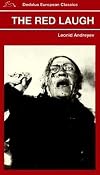
Something was ominously burning in a broad red glare, and in the smoke there swarmed monstrous, misshapen children, with heads of grown-up murderers. They were jumping lightly and nimbly, like young goats at play, and were breathing with difficulty, like sick people. Their mouths, resembling the jaws of toads or frogs, opening widely and convulsively; behind the transparent skin of their naked bodies the red blood was coursing angrily--and they were killing each other at play. They were theshow more
most terrible of all that I had seen, for they were little and could penetrate everywhere.Leonid Andreyev was a controversial and well-known writer, a contemporary of Chekhov and Gorky, but has become virtually unread in the past few decades. This novel shows why. His range is quite limited. There are no actual characters, no real human beings in this book because they are all indistinguishable... there isn't much of a storyline either. What matters more in this book is getting across a sensation, a single horrific vision.
[...]
"He can crawl in under the door," said I to myself with horror, and as if he had guessed my thoughts, he grew thin and long and waving the end of his tail rapidly, he crawled into the dark crack under the front door.
It's a grotesque vision of war, a bit like watching a contortionist's act, and darkly comical. Andreyev does not do subtlety. The scariest parts of his vision do not come with the physical toll of war, but the mental ones. This book is filled with madmen, every one of them, including the two narrators, as if the focus had long gone out of their eyes, they tumble forward in a sleepy haze, zombies ready to tear at the throat of any shadow that flickers.
"That is the red laugh. When the earth goes mad, it begins to laugh like that. You know, the earth the earth has gone mad. There are no more flowers or songs on it; it has become round, smooth and red like a scapled head. Do you see it?"show less
"Yes, I see it. It is laughing."
"Look what its brain is like. It is red, like bloody porridge, and is muddled."
"It is crying out."
"It is in pain. It has no flowers or songs. And now--let me lie down upon you."
"You are heavy and I am afraid."
"We, the dead, lie down on the living. Do you feel warm?"
"Yes."
"Are you comfortable?"
"I am dying."
"Awake and cry out. Awake and cry out. I am going away..."
Lists
Awards


You May Also Like


Associated Authors
Statistics
- Works
- 201
- Also by
- 45
- Members
- 1,492
- Popularity
- #17,223
- Rating
- 3.9
- Reviews
- 40
- ISBNs
- 327
- Languages
- 18
- Favorited
- 12