
Kate Cooper (1) (1960–)
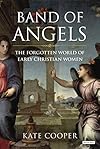
Author of Band of Angels: The Forgotten World of Early Christian Women
For other authors named Kate Cooper, see the disambiguation page.
About the Author
Image credit: Photo by Hester Leyser
Works by Kate Cooper
Religion, Dynasty, and Patronage in Early Christian Rome, 300-900 (2007) — Editor; Contributor — 18 copies
Making Early Medieval Societies: Conflict and Belonging in the Latin West, 300-1200 (2016) 15 copies
Discipline and Diversity: Papers Read at the 2005 Summer Meeting and the 2006 Winter Meeting of the Ecclesiastical Histo (2007) 2 copies
Associated Works
Household, Women, and Christianities: In Late Antiquity and the Middle Ages (2005) — Contributor — 7 copies
Tagged
Common Knowledge
- Canonical name
- Cooper, Kate
- Birthdate
- 1960
- Gender
- female
- Education
- Princton University (Ph.D|1992)
Harvard University (MTS|1986)
Wesleyan University (BA|1982) - Occupations
- historian
professor - Organizations
- University of Manchester
Royal Holloway College, University of London - Awards and honors
- Fellow, Royal Historical Society
- Agent
- InkWell Management
- Relationships
- Leyser, Conrad (spouse)
- Nationality
- USA (birth)
UK - Birthplace
- Washington, D.C., USA
- Places of residence
- Oxford, Oxfordshire, England, UK
Members
Reviews
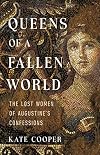
I've been reading a lot of mythological fiction lately -- it's definitely having a moment -- but it's been a while since I've revisited early Christianity. This was my area of focus in my undergrad work, and I have an abiding fondness for it. This book started promisingly -- it did, indeed, introduce the women in Augustine's life. Of course, the only source we have for much of this information is Augustine's works themselves, so there are a lot of assumptions about who those women were and show more what their relationships with Augustine were like. The narrative in this area is necessarily thin, since the entire knowledge base consists of only a few lines here and there. So, it feels like the text repeats itself a lot, and extends into general discussion of Augustine's theology, and Roman life and culture. All of that is interesting to me, but it wasn't really why I picked up this book. So, I'm left feeling a little dissatisfied, but I was happy to reunite myself with this subject matter. show less
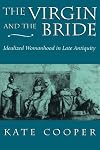
The Virgin and the Bride reassesses a series of literary sources, both pagan and Christian, to see how a change in dominant modes of authority (from civic to religious) and the rise of asceticism in late antiquity changed representations of femaleness, virginity, and marriage. Cooper argues that we should read texts about virgins, and especially virgin martyrs, in Late Antiquity less as arguments about virginity than as discussions of authority, with male writers appropriating the female show more body as a rhetorical tool. It's an interesting thesis, one which offers some interesting new ways of looking at the surviving sources, and I appreciated the reminder that the Christian texts which have come down to us are not necessarily representative of the mainstream of Late Antique Christian opinion. However, as a whole the book just clunked for me—Cooper's prose never rises above the serviceable—and she definitely seems more a literary scholar than a historian. I felt at times that she was constructing her argument within a sort of generic 'Rome' than within specific contexts—would this hold true in third century Rome? fourth century Carthage? sixth century Constantinople?—more a theoretical work than a historical one. show less
Lists
Spirituality (1)
Awards


You May Also Like


Associated Authors
Statistics
- Works
- 13
- Also by
- 9
- Members
- 267
- Popularity
- #86,453
- Rating
- 3.7
- Reviews
- 3
- ISBNs
- 45
