
Dorothy Bryant (1930–2017)
Author of The Kin of Ata Are Waiting for You
About the Author
Works by Dorothy Bryant
Year To Live: The Silver Answer 2 copies
Bryant, Dorothy Archive 1 copy
Associated Works
ParaSpheres: Extending Beyond the Spheres of Literary and Genre Fiction: Fabulist and New Wave Fabulist Stories (2006) — Contributor — 65 copies
Tagged
Common Knowledge
- Birthdate
- 1930-02-08
- Date of death
- 2017-12-21
- Gender
- female
- Education
- San Francisco State University (MA|English and Creative Writing)
- Occupations
- novelist
playwright
essayist
high school teacher
college teacher - Organizations
- Aurora Theatre Company
Contra Costa College
Lick-Wilmerding High School
The Freedom News - Awards and honors
- The Berkeley City Council (Dorothy and Bob Bryant Day, 2017-01-24, longstanding contributions to Berkeley)
The Northern California Book Reviewers (Fred Cody Lifetime Achievement Award, 2009) - Cause of death
- stomach cancer
- Nationality
- USA
- Birthplace
- San Francisco, California, USA
- Place of death
- Oakland, California, USA
- Associated Place (for map)
- California, USA
Members
Reviews
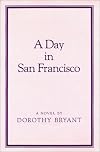
While this book obviously fits into the realm of protest literature, it's also composed of a powerful narrative with believable characters. The author's strategy of following a single character (for nearly the entire narrative) through a single turbulent day in San Francisco makes for an engaging journey and a flood of cultural context to place the reader into San Francisco in the late seventies/early eighties. Inclusion of various outside texts--a medical pamphlet and others--ground the show more text in the turmoil surrounding gay and civil rights at that point of the century, and prove a powerful window.
As one of the hallmark novels that began examining illness within gay communities, the text is surprisingly rooted in the psychological worries of the period (as opposed to the physical), but the quick pace Bryant sets up never lags. In the end, it's obvious why this book is remembered as not only protest literature, but an early look at AIDS and surrounding issues; however, this is a strong narrative and piece of literature even without those elements. The grounding in reality only enmeshes the reader in the world more, and proves though-provoking for even those readers who might see themselves as already fairly familiar with the territory explored. Clara's confrontation with her ill son and the culture around her is absolutely worth reading, though I will add that this work is certainly meant for mature readers.
If you're interested, don't doubt whether the book is worth getting your hands on--it's worth it. show less
As one of the hallmark novels that began examining illness within gay communities, the text is surprisingly rooted in the psychological worries of the period (as opposed to the physical), but the quick pace Bryant sets up never lags. In the end, it's obvious why this book is remembered as not only protest literature, but an early look at AIDS and surrounding issues; however, this is a strong narrative and piece of literature even without those elements. The grounding in reality only enmeshes the reader in the world more, and proves though-provoking for even those readers who might see themselves as already fairly familiar with the territory explored. Clara's confrontation with her ill son and the culture around her is absolutely worth reading, though I will add that this work is certainly meant for mature readers.
If you're interested, don't doubt whether the book is worth getting your hands on--it's worth it. show less
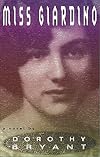
This book will stay with me for a long time: the main character/narrator, the structure of the novel itself, and its musings on education and teaching. Part mystery, part reflections on how public education changed from the 1930s to 1970s, part experiment in consciousness, I found it utterly intriguing: thoughtful, well written, contemplative, challenging. Now, to find the other books by this author and try them!
Quite a few years ago, the author of this book and I were both members of a sadly now defunct "international journalism community" called BlueEar -- it's the site that commissioned and published the first version of my satirical novel The Dragons of Manhattan. At some stage Bryant mentioned in passing that, a couple of decades back, she'd written a detective novel that had been much admired by the feminists of the day. Naturally, out of interest, I went online and bought myself a copy. show more Before I'd gotten around to reading it, though, there was yet another tsunamic influx of books into the house and Killing Wonder was submerged. The other day, though, I spotted it . . . and its moment had arrived.
While the central character, the victim and almost all the major support characters are female, I'm not absolutely sure why this should have been hailed as a feminist book; perhaps the cultural climate in the US in 1981 was different from that obtaining in the UK. Leave that aside, though. After a slightly creaky start, this becomes a joyously entertaining cozy mystery that also has quite a lot to say about the matter of being a writer -- not about writing, not about the book trade, but about how authors interact with each other and and are supported and/or preyed upon by the reading public.
Decades ago San Francisco author India Wonder wrote a roman a clef that has been a bestseller ever since, the inspiration of countless young female writers including our heroine Jessie Posey. But India has never written a book since then, although it's widely acknowledged that she's in the final stages of a new book, again a roman a clef, this time eviscerating her closest literary associates . . . all of whom have been invited to the party where India, mid-declaim, drops dead of cyanide poisoning. Everyone there but Jessie has a motive.
Promptly recruited as aide by handsome cop Jim, Jessie begins probing the mystery, interviewing varyingly eccentric members of the dead author's circle and herself being threatened by an anonymous phonecaller who plagues those involved. The book dances cheerfully along -- a very funny seance is a highlight -- until reaching its three denouements, the first two of which are plausible but incorrect solutions and the third of which is the correct (and most satisfying) one. show less
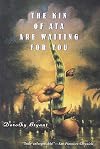
This is the book I’ve been longing to find: A gem of a story that’s been waiting for rediscovery as new age fiction. Dorothy Bryant’s 1971 novel, originally promoted as science fiction, is described as “part love story, part science fiction, and at once Jungian myth and utopian allegory.” But by today’s standards, it’s a straightforward exploration of connecting to the highest and best parts of ourselves and living according to that guidance.Story: The kin of Ata live only for show more the dream. Their work, their art, their love are designed in and by their dreams, and their only aim is to dream higher dreams. Into the world of Ata comes a desparate man, who is first subdued and then led on the spiritual journey that, sooner or later, all of us must make (back cover).Spiritual/metaphysical content: Very high. Berkley Monthly called the novel “a beautiful, symbolic journey of the soul,” but there’s very little about it that’s symbolic when read as new age fiction. Here’s my description of the story: When a famous writer hits bottom, he wakes up in what appears to be a simple commune from the Sixties that practices all the fundamental truths of most religious, spiritual, and self-help philosophies: Life in the moment. Connect with your higher self/guide/God for guidance. You cannot judge good or bad, right or wrong, true or false; truth is relative. You cannot heal the mind without also addressing the body and spirit, and much more. In addition, the book is compatible with Christian beliefs (at least the more modern interpretations of the Bible). As the man learns more about the kin of Ata, he realizes what a complex, spiritually advanced group they are despite–or perhaps because of–their seeming simplicity. The people of Ata live in a way that is free of sin, guilt, exclusion, worry, and pain, and yet is joyful, productive, and satisfying both in body and spirit.My take: This is a well-written, lyrical novel that exemplifies new age fiction at perhaps its finest. Although the book is quite short, the plot is strong and compelling, and we come to love the characters and yearn for their success. Although clearly utopian, the story proposes an integrated vision of a future that is both functional and inspirational.I loved this book. Part of its allure is its depth; it can be read at multiple levels: as an intriguing trifle of sci-fi/fantasy, an introduction to broader spiritual principles, or an insightful analysis of some of modern society’s ills and how new age/metaphysical thought can not only ease the many sufferings of our world but also provide a model of sustainable growth and development. Please don’t get me wrong–at heart, this is a relatively simple book, but it contains profound insights for spiritual growth. And best of all, it’s an easy, entertaining read. Entertain and educate–the perfect combination for new age fiction.The title confounds me a bit because it sheds very little light on what the book is actually about; the back cover description suffers from this shortcoming as well. I suspect that it was a marketing decision in 1971 to promote a book that so clearly had literary value but fell into no recognizable genre (again, a case for the genre for new age fiction). In today’s market, the title does the reader a disservice by not indicating the spiritual depth of the novel. As with Zen and the Art of Motorcycle Maintenance, that may have been the price for getting published nearly forty years ago. Interestingly, the book was originally published in 1971 under the title The Comforter, which again seems unrelated to what the book is actually about. I am researching Dorothy Bryant’s other novels for similar themes; Confessions of Madame Psyche looks interesting. Can anyone recommend her other works?For more reviews of new age novels, see Fiction For A New Age. show less
Lists
Awards


You May Also Like


Associated Authors
Statistics
- Works
- 15
- Also by
- 1
- Members
- 886
- Popularity
- #28,919
- Rating
- 3.8
- Reviews
- 28
- ISBNs
- 39
- Languages
- 1