
John S. Feinberg
Author of Ethics for a Brave New World
About the Author
John S. Feinberg is professor of biblical and systematic theology at Trinity Evangelical Divinity School. He has also been a pastor, a staff member for Chosen People Ministries, and has taught at Western Seminary and Liberty University. Feinberg's previous works include Continuity and show more Discontinuity. Ethics for a Brave New World, and The Many Faces of Evil. show less
Image credit: via Amazon.com
Works by John S. Feinberg
No One Like Him: The Doctrine of God (Foundations of Evangelical Theology) (2001) 615 copies, 1 review
Continuity and Discontinuity (Essays in Honor of S. Lewis Johnson, Jr.): Perspectives on the Relationship Between the Old and New Testaments (1988) 477 copies, 1 review
Light in a Dark Place: The Doctrine of Scripture (Foundations of Evangelical Theology) (2018) 111 copies
When the Trumpet Sounds: Today's Foremost Authorities Speak Out on End-Time Controversy (1995) — Contributor — 72 copies, 1 review
When There Are No Easy Answers: Thinking Differently About God, Suffering and Evil, and Evil (2016) 36 copies, 3 reviews
The Cross and Salvation 2 copies
Associated Works
Tagged
Common Knowledge
Members
Reviews
Continuity and Discontinuity: Perspectives on the Relationship Between the Old and New Testaments (Essays in Honor of S. Lewis Johnson, Jr.) by John S. Feinberg

When I first started down the rabbit trail of understanding how the authors of the New Testament use the Old Testament, I had no idea the significance of my questions. This gem of a book focusses on the relationship of the Old and New Testaments in a series of paired essays discussing key issues from the perspective of continuity (covenant theology) and discontinuity (dispensational-ish theology). Particularly helpful for me were the essays on the relationship between Israel and the Church, show more and the relationship between the Laws of Moses and Christ. For an introduction into the differences between systems, a comparison volume like this one is a better starting point than other standard texts. Even better when the essays are clear and cordial, inviting newcomers and experts together into the conversation. show less
When There Are No Easy Answers: Thinking Differently About God, Suffering and Evil, and Evil by John Feinberg
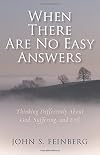
When something tragic happens in our life, that alters it forever, there is the tendency to ask “Why?” Sadly there is never an answer to this question, and if there were, none could bring relief and comfort.
Mr. Feinberg openly, transparently, and honestly walks the reader through grappling with the “whys” of personal tragedy. He shares his step by step is journey of pain from the diagnosis of his wife’s Huntington disease to acceptance, as one who has been there. I could relate to show more much of what he shared in relation to the death of my husband. He helps the reader understand that that God is a loving and caring even though He does not prevent bad things from happening to His children. The author shares his rawest emotions and thoughts as he wrestled with the unchangeable circumstances his family faced. He delves deep into scriptures to not to answer that age old question, but to find the help and strength that is needed to go on.
The book also does a wonderful job of instruction friends and family in how to be a support to one facing such challenges. This includes things NOT to do and some of these might surprise you as they are fairly common offerings when people try to minister to those that are hurting. Though it might sound like a depressing subject, this book is one of hope and healing. show less
Mr. Feinberg openly, transparently, and honestly walks the reader through grappling with the “whys” of personal tragedy. He shares his step by step is journey of pain from the diagnosis of his wife’s Huntington disease to acceptance, as one who has been there. I could relate to show more much of what he shared in relation to the death of my husband. He helps the reader understand that that God is a loving and caring even though He does not prevent bad things from happening to His children. The author shares his rawest emotions and thoughts as he wrestled with the unchangeable circumstances his family faced. He delves deep into scriptures to not to answer that age old question, but to find the help and strength that is needed to go on.
The book also does a wonderful job of instruction friends and family in how to be a support to one facing such challenges. This includes things NOT to do and some of these might surprise you as they are fairly common offerings when people try to minister to those that are hurting. Though it might sound like a depressing subject, this book is one of hope and healing. show less
When There Are No Easy Answers: Thinking Differently About God, Suffering and Evil, and Evil by John Feinberg
When There Are No Easy Answers by John Feinberg is personal and powerful work on suffering and the Christian. Feinberg draws on his own personal experience of walking with his life through her initial diagnosis of Huntington's disease and the subsequent course their life took giving practical advice in how to walk through suffering and how to minister to those who suffer.
Feinberg lays out his own personal wrestling with the problem of suffering, not just as a theoretical issue of philosophy show more but as a very real personal experience. He traces the feelings that those who experience might suffer pointing out the feelings of abandonment, anger, and betrayal that might arise. I think the third chapter of this book is one that could stand on its own. Often when we are dealing with others who are suffering we want to merely address the intellectual aspects and that too often with short glib answers. Feinberg effectively shows how these easy answers we try to address suffers with often hurt more than they help. Feinberg in the following chapters makes clear that in all of our suffering there is still evidence of God's goodness to us. Feinberg struggled with a feeling that somehow God had deceived him by not telling them what awaited them in the future, Feinberg shows this too is God's goodness as the present has enough to concern us.
As someone who is theologically and philosophically oriented this book was a helpful corrective for me. This book has helped me think through the personal and emotional aspects of suffering in addition to the intellectual questions that arise in light of suffering. I'd recommend this book to anyone. This isn't just a book for ministers, this a book for anyone as we will all experience some suffering and we will walk with others through suffering.
Disclosure: I received this book free from the publisher for providing this review. The opinions I have expressed are my own, and I was not required to write a positive review. I am disclosing this in accordance with the Federal Trade Commission’s 16 CFR, Part 255 http://www.access.gpo.gov/nara/cfr/wa... show less
Feinberg lays out his own personal wrestling with the problem of suffering, not just as a theoretical issue of philosophy show more but as a very real personal experience. He traces the feelings that those who experience might suffer pointing out the feelings of abandonment, anger, and betrayal that might arise. I think the third chapter of this book is one that could stand on its own. Often when we are dealing with others who are suffering we want to merely address the intellectual aspects and that too often with short glib answers. Feinberg effectively shows how these easy answers we try to address suffers with often hurt more than they help. Feinberg in the following chapters makes clear that in all of our suffering there is still evidence of God's goodness to us. Feinberg struggled with a feeling that somehow God had deceived him by not telling them what awaited them in the future, Feinberg shows this too is God's goodness as the present has enough to concern us.
As someone who is theologically and philosophically oriented this book was a helpful corrective for me. This book has helped me think through the personal and emotional aspects of suffering in addition to the intellectual questions that arise in light of suffering. I'd recommend this book to anyone. This isn't just a book for ministers, this a book for anyone as we will all experience some suffering and we will walk with others through suffering.
Disclosure: I received this book free from the publisher for providing this review. The opinions I have expressed are my own, and I was not required to write a positive review. I am disclosing this in accordance with the Federal Trade Commission’s 16 CFR, Part 255 http://www.access.gpo.gov/nara/cfr/wa... show less
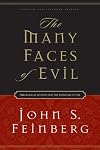
The Many Faces of Evil (Revised and Expanded Edition): Theological Systems and the Problems of Evil by John S. Feinberg
This review is written with a GPL 3.0 license and the rights contained therein shall supersede all TOS by any and all websites in regards to copying and sharing without proper authorization and permissions. Crossposted at Bookstooge.booklikes.blogspot. wordpress.leafmarks.com & Bookstooge's Reviews on the Road Facebook Group by Bookstooge's Exalted Permission.
Title: The Many Faces of Evil
Series: -----
Author: John Feinberg
Rating: 5 of 5 Stars
Genre: Non-Fiction Theology
Pages: 544
show more Format: Paperback
Synopsis: How to reconcile an Omnipotent, Benevolent God with all the various evils in the world is a question that has plagued Christianity since it's inception. Various answers have been put forth and various counters to those answers have also been set out. Feinberg sets out to examine various answers and counters based on various denominational outlooks. Basically, Feinberg sets out to show how there can be various answers that all work, no matter your underlying sectarian tenants. My Thoughts: I can not say that I loved this book. However, it fulfilled its purpose. First, it made me realize that when I [and many other people] ask "How can God allow..." they are actually asking "WHY would God allow...". The difference is immense. Feinberg is a totally logical person and shows the various ways that that "How" can work out. It was an enlightening but frustrating read. I have to admit, I felt pretty stupid in reading a lot of the stuff. There is an underlying assumption that the reader knows "X" or is at least familiar with it. Maybe in a couple more re-reads I'll be familiar enough that I won't have to re-read pages at a time. Thankfully Feinberg does address the "Why", which is the "Religious Problem of Evil" in the last chapter. He opens up about the experience he and his wife dealt with in learning about a condition she had. It devastated him and no amount of head knowledge made things easier for him. This book took me months to read. I'd read 5 or 10 pages, then have to digest and think about it for a day or two. It will be a book that I plan on re-reading just to refresh and encourage myself during the dark times. Highly recommended if you've ever thought about God and evil. " show less
Title: The Many Faces of Evil
Series: -----
Author: John Feinberg
Rating: 5 of 5 Stars
Genre: Non-Fiction Theology
Pages: 544
show more Format: Paperback
Synopsis: How to reconcile an Omnipotent, Benevolent God with all the various evils in the world is a question that has plagued Christianity since it's inception. Various answers have been put forth and various counters to those answers have also been set out. Feinberg sets out to examine various answers and counters based on various denominational outlooks. Basically, Feinberg sets out to show how there can be various answers that all work, no matter your underlying sectarian tenants. My Thoughts: I can not say that I loved this book. However, it fulfilled its purpose. First, it made me realize that when I [and many other people] ask "How can God allow..." they are actually asking "WHY would God allow...". The difference is immense. Feinberg is a totally logical person and shows the various ways that that "How" can work out. It was an enlightening but frustrating read. I have to admit, I felt pretty stupid in reading a lot of the stuff. There is an underlying assumption that the reader knows "X" or is at least familiar with it. Maybe in a couple more re-reads I'll be familiar enough that I won't have to re-read pages at a time. Thankfully Feinberg does address the "Why", which is the "Religious Problem of Evil" in the last chapter. He opens up about the experience he and his wife dealt with in learning about a condition she had. It devastated him and no amount of head knowledge made things easier for him. This book took me months to read. I'd read 5 or 10 pages, then have to digest and think about it for a day or two. It will be a book that I plan on re-reading just to refresh and encourage myself during the dark times. Highly recommended if you've ever thought about God and evil. " show less
Lists
Awards

You May Also Like


Associated Authors
Statistics
- Works
- 18
- Also by
- 1
- Members
- 2,601
- Popularity
- #9,871
- Rating
- 4.1
- Reviews
- 9
- ISBNs
- 38
- Languages
- 2