
Alec MacGillis
Author of Fulfillment: Winning and Losing in One-Click America
About the Author
Image credit: Alec MacGillis, on 24-01-2020
Works by Alec MacGillis
Tagged
Common Knowledge
- Legal name
- MacGillis, Alec
- Birthdate
- 197x-11-12
- Gender
- male
- Education
- Pittsfield High School, Massachusetts (B.A. ∙ History and English, 1992)
- Occupations
- Journaliste (politique)
- Organizations
- @ProPublica, Fondation (Journaliste, 20 15 | )
The New Yorker, Journal (Journaliste, 20 14 ∙ 20 21)
The New Republic, Journal (Journaliste, 20 11 | 20 14)
The Washington Post, Journal (Journaliste, 20 07 | 20 14)
The Baltimore Sun (Journaliste, 20 00 | 20 05) - Awards and honors
- Robin Toner Prize for Excellence in Political Reporting (2016)
Polk Award for National Reporting (2017)
Elijah Parish Lovejoy Award (2017) - Nationality
- USA
- Birthplace
- Pittsfield, Massachusetts, USA
- Places of residence
- Baltimore, Maryland, USA
- Associated Place (for map)
- USA
Members
Reviews

How Amazon shaped local, regional, and national policy; it’s a book of contrasts. Amazon’s direct employees in Seattle have access to specially constructed orbs full of carefully curated greenery to help them “find their inner biophiliac that really responds to nature.” Meanwhile, Amazon negotiates secretive deals to locate warehouses that provide huge tax incentives—making it more likely that the surrounding areas will deteriorate and making Amazon warehouse jobs look like better show more alternatives. Time and again, Amazon gets sweetheart deals and isn’t asked to provide anything in return, like bulk discounts for schools and public agencies (anyway, those would all have to come from Amazon’s already-squeezed suppliers). Virginia built a new power system for Amazon with a monthly fee on all ratepayers, not just Amazon, which sought a special discounted rate for power at its data ceSnters. Meanwhile, its dominance in data storage let it subsidize low prices for retail, undercutting retail competitors. “Amazon employees scattered around the country often carried misleading business cards, so that the company couldn’t be accused of operating in a given state and thus forced to pay taxes there.” But they also had a goal of “securing $ 1 billion per year in local tax subsidies.”
One excellent chapter examines how Amazon contributes both to homelessness in Seattle and to the backlash to it in an ostensibly liberal city. “Seattle had become proof that extreme regional inequality was unhealthy not only for places that were losing out in the winner-take-all economy, but also for those who were the runaway victors. Hyper-prosperity was not only creating the side effects of unaffordability, congestion, and homelessness, but injecting a political poison into the winner cities.”
This has toxic effects on mobility as well—moving to a big city without a college degree means a job that doesn’t pay much more than a job in the rest of America, but lots more housing costs; this chokes off sustainable growth even in the big cities. The book makes the case for having a lot of small capitalist “greedy fucks” rather than a few giant corporations with no interest in investing in areas outside the really big cities. show less
One excellent chapter examines how Amazon contributes both to homelessness in Seattle and to the backlash to it in an ostensibly liberal city. “Seattle had become proof that extreme regional inequality was unhealthy not only for places that were losing out in the winner-take-all economy, but also for those who were the runaway victors. Hyper-prosperity was not only creating the side effects of unaffordability, congestion, and homelessness, but injecting a political poison into the winner cities.”
This has toxic effects on mobility as well—moving to a big city without a college degree means a job that doesn’t pay much more than a job in the rest of America, but lots more housing costs; this chokes off sustainable growth even in the big cities. The book makes the case for having a lot of small capitalist “greedy fucks” rather than a few giant corporations with no interest in investing in areas outside the really big cities. show less
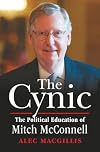
I have been wanting to read The Cynic ever since I saw a picture of Mitch McConnell, student activist, organizing a civil rights march to Frankfort and learned he witnessed the signing of the Voting Rights Act. How did someone who has done so much to degrade voting rights start in such a different place? He began his career as a pro-life, pro-civil rights, moderate Republican and ended up as a nihilist Senate Majority Leader who has done more lasting damage to democracy than Donald Trump. show more What happened to him?
Mitch McConnell
McConnell with other civil rights activists organizing a march to Frankfort.
Well, it turns out nothing happened to him, at least not in the way most people would understand how people come to change their entire worldview and all the values they once held. He was already on the road to nihilism, for example, after graduating college he was eligible for the draft, so he joined the reserves as “an honorable alternative that wouldn’t ruin my career or taint my advancement.” Even before he ran for office the first time, he was already making his choices based on his ambitions.
He also hired Roger Ailes to run his campaign with the kind of ruthless mendacity that made sure McConnell won and McConnell loved it. He has since always campaigned with a ferocity for personal destruction that would shame most people, but McConnell seems incapable of shame.
MacGillis takes us through issue after issue where McConnell flipped on a dime, not just due to heavy-duty donations, but also where he saw partisan advantage. He went from sponsoring campaign finance reform to opposing it. He went from loathing soft money to loving it when he realized Republicans got more money from it. Many people attest to McConnell’s extraordinary love of fundraising, a task most politicians endure as a necessity, but one McConnel enjoys.
One thing has stayed the same. When McConnell was a state politician he stifled anti-choice legislation by not letting it come to a vote. Now as Senate President, more than hundreds of bills wither on his desk. He has changed the Senate from “the greatest deliberative body” to the place where bills go to die. He has changed it from a collegial environment to partisan enmity. If democracy dies in America, his fingerprints will be on her throat.
I can’t really say I enjoyed The Cynic. No one who loves our country can really enjoy seeing a senator with no moral fiber, no principle, no guiding star other than power. It has been demoralizing to see a party that had ideas and policies turn into a rudderless power grab without any desire to accomplish anything more than winning the next election, but that is who Mitch McConnell is and what he has made the Republican party.
The Cynic is fascinating. I had no idea McConnell was using his wife’s position as Secretary of Labor to reach down into the civil bureaucracy to punish individual mine inspectors and investigators who run afoul of the criminally negligent and corrupt coal barons. The length of his pursuit of investigators reveals petty vindictiveness that seems completely Trumpian. It seems he and Trump are truly birds of a feather, corrupt to the bone and mean, vicious, and vindictive. The mild-mannered, bespectacled turtle is just a cover for a deeply malignant man. Considering his once high-minded goals, there is something tragic in the evil he has embraced.
The Cynic: The Political Education of Mitch McConnell at Simon & Schuster
Alec MacGillis at ProPublica
https://tonstantweaderreviews.wordpress.com/2020/01/17/9781501112034/ show less
Mitch McConnell
McConnell with other civil rights activists organizing a march to Frankfort.
Well, it turns out nothing happened to him, at least not in the way most people would understand how people come to change their entire worldview and all the values they once held. He was already on the road to nihilism, for example, after graduating college he was eligible for the draft, so he joined the reserves as “an honorable alternative that wouldn’t ruin my career or taint my advancement.” Even before he ran for office the first time, he was already making his choices based on his ambitions.
He also hired Roger Ailes to run his campaign with the kind of ruthless mendacity that made sure McConnell won and McConnell loved it. He has since always campaigned with a ferocity for personal destruction that would shame most people, but McConnell seems incapable of shame.
MacGillis takes us through issue after issue where McConnell flipped on a dime, not just due to heavy-duty donations, but also where he saw partisan advantage. He went from sponsoring campaign finance reform to opposing it. He went from loathing soft money to loving it when he realized Republicans got more money from it. Many people attest to McConnell’s extraordinary love of fundraising, a task most politicians endure as a necessity, but one McConnel enjoys.
One thing has stayed the same. When McConnell was a state politician he stifled anti-choice legislation by not letting it come to a vote. Now as Senate President, more than hundreds of bills wither on his desk. He has changed the Senate from “the greatest deliberative body” to the place where bills go to die. He has changed it from a collegial environment to partisan enmity. If democracy dies in America, his fingerprints will be on her throat.
I can’t really say I enjoyed The Cynic. No one who loves our country can really enjoy seeing a senator with no moral fiber, no principle, no guiding star other than power. It has been demoralizing to see a party that had ideas and policies turn into a rudderless power grab without any desire to accomplish anything more than winning the next election, but that is who Mitch McConnell is and what he has made the Republican party.
The Cynic is fascinating. I had no idea McConnell was using his wife’s position as Secretary of Labor to reach down into the civil bureaucracy to punish individual mine inspectors and investigators who run afoul of the criminally negligent and corrupt coal barons. The length of his pursuit of investigators reveals petty vindictiveness that seems completely Trumpian. It seems he and Trump are truly birds of a feather, corrupt to the bone and mean, vicious, and vindictive. The mild-mannered, bespectacled turtle is just a cover for a deeply malignant man. Considering his once high-minded goals, there is something tragic in the evil he has embraced.
The Cynic: The Political Education of Mitch McConnell at Simon & Schuster
Alec MacGillis at ProPublica
https://tonstantweaderreviews.wordpress.com/2020/01/17/9781501112034/ show less
Filed under my new "What's Wrong with America?" shelf. Disturbing and depressing look at how Amazon is contributing to the economic decline of towns and small cities while making large cities unaffordable to all but the wealthy. The larger Amazon gets, the more it can bully local, state, and federal governments into giving it huge tax breaks and looking the other way as Jeff Bezos and Co. ignore health and safety regulations, force small businesses to use their Marketplace platform, and show more squash any attempts at unionizing.
All of this was before COVID-19 came along and accelerated everything, as Amazon became the sole source of most items for people stuck at home, and the dominant employer for those who lost their jobs. And the income/wealth gap in our country continues to grow...
Numerous "victims" of Amazon's growth are profiled, but the saddest one to me was the Baby Boomer who had worked most of his life in Baltimore's steel industry, only to see the factories torn down and replaced by Amazon warehouses, where he now earns a fraction of his former salary and can't even take bathroom breaks without being written up for lack of productivity.
After reading the book, you may decide to boycott Amazon products, but you can't possibly avoid Amazon Web Services, whose cloud servers host many of the most commonly used websites. So what can you do to fight back? Unfortunately MacGillis doesn't provide any potential solutions, only a bleak vision of a monopoly/monopsony (look it up) run by the richest man on the planet. show less
All of this was before COVID-19 came along and accelerated everything, as Amazon became the sole source of most items for people stuck at home, and the dominant employer for those who lost their jobs. And the income/wealth gap in our country continues to grow...
Numerous "victims" of Amazon's growth are profiled, but the saddest one to me was the Baby Boomer who had worked most of his life in Baltimore's steel industry, only to see the factories torn down and replaced by Amazon warehouses, where he now earns a fraction of his former salary and can't even take bathroom breaks without being written up for lack of productivity.
After reading the book, you may decide to boycott Amazon products, but you can't possibly avoid Amazon Web Services, whose cloud servers host many of the most commonly used websites. So what can you do to fight back? Unfortunately MacGillis doesn't provide any potential solutions, only a bleak vision of a monopoly/monopsony (look it up) run by the richest man on the planet. show less

Important reading, wide-ranging, brimming with facts and figures - undermined by a diffuse, wandering structure and an obsession with real estate values. In his attempt to make this more than just another trash-Amazon book, MacGillis packs in every bit of historic minutiae he has dug out (did we really need pages and pages on the history of the lobbying industry? or brick-making in Baltimore?) to present a more general history of the American retail landscape and how Amazon has disrupted and show more corrupted it. He may have a bit of a rosy view of previous generations of family-owned businesses, who certainly could be every bit as rapacious and self-serving, and Bethlehem Steel was not exactly a workers' paradise (except they did have unions and an hourly wage twice what Amazon pays in the warehouse that replaced the steel plant). It's just that they didn't have the ability to achieve the same overwhelming scale and power to run roughshod over every conceivable barrier to its sociopathic quest to make all the money in the world its own. But it is good to see laid out, with myriad examples and data points, the Bezos behemoth's manipulation, coercion, elision, evasion, callousness, and deliberate and unrelenting disregard for any harm, ethics, responsibility (like, oh, say, paying any taxes of any kind to anyone on its profits), or basic stuff like letting paramedics use the nearest entrance to help an employee who is bleeding to death under a fallen forklift, and making them walk through the entire warehouse instead. Appalling and vile. show less
Awards


You May Also Like


Associated Authors
Statistics
- Works
- 3
- Members
- 235
- Popularity
- #96,240
- Rating
- 3.6
- Reviews
- 18
- ISBNs
- 14
- Languages
- 4

