
Andrew Michael Hurley
Author of The Loney
About the Author
Andrew Michael Hurley was born in 1975 in the UK. He is the author of two volumes of short stories Cages and Other Stories and The Unusual Death of Julie Christie and Other Stories. His debut novel is entitled The Lonely. It won a Costa Book Award 2015 in the first novel category. It was also named show more Book of the Year and Debut Fiction Book of the Year by the British Book Industry Awards 2016.He is also teacher of English literature and creative writing in Lancashire, England. (Bowker Author Biography) show less
Works by Andrew Michael Hurley
The Fool 1 copy
Associated Works
The Haunting Season: Ghostly Tales for Long Winter Nights (2021) — Contributor — 321 copies, 9 reviews
Eight Ghosts: The English Heritage Book of New Ghost Stories (2017) — Contributor — 129 copies, 5 reviews
Tagged
Common Knowledge
- Birthdate
- 1975
- Gender
- male
- Nationality
- UK
- Birthplace
- Preston, Lancashire, England, UK
- Places of residence
- Lancashire, England, UK
- Map Location
- England, UK
Members
Reviews
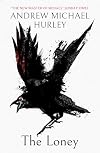
I had placed this contemporary Gothic novel on my mental to-read list when it was first issued as a limited edition hardback by the specialist Tartarus Press. The initial reviews were promising, and the Wicker-man-like plot premise seemed intriguing - a group of Catholic pilgrims on a retreat in a desolate part of the North-Western English coast where arcane pagan rituals (possibly) survive. The book collector in me is now busily kicking himself for not snapping the book up before it became show more a mainstream bestseller and a Costa prizewinner.
Now that I've got my hands on a copy (in paperback, alas) I can console myself that it was worth the wait. Yes, this is as good as it has been made out to be, although possibly not for the reasons you were told.
Some reviews have praised the novel's characterisation. I beg to differ. I thought most of the characters remained two-dimensional, despite having rich material worth developing. The dialogue, at times, struck me as too simplistic. The descriptions are altogether more successful. The bleak atmosphere of the Lancashire coast is evoked in prose of lyrical beauty which never ceases to delight. Then again, it must be admitted that to gain effect, Hurley resorts to all the tropes in the Gothic/horror manual, including decaying houses, a preponderance of inclement weather, secret rooms, threatening locals, hints of witchcraft, religious mania... the works.
Where the novel really scores is in its mastery of storytelling. This is the type of superbly paced book which grabs you by the throat from the very first pages, makes you skip meals, keeps you awake at night and then haunts your dreams when you finally switch off the bedside lamp - I read this over the course of a feverish weekend. The really scary parts are few and far between, but the novel is permeated with an uncanny sense of dread which sends shivers down the spine and is hard to dismiss. Days after you finish the book, when its spell starts to wear off, you will start to realise that there were aspects of the story which were not satisfactorily explained, that plot elements which seemed important led nowhere and that the ending was, to be honest, anti-climactic. Strangely, you don't feel this whilst you're immersed in the novel.
Finally, this being a novel about Catholic pilgrims, allow me some comments from the perspective of a Catholic reader. As a fan of classic Gothic literature, with their anti-Catholic sentiment, I was neither surprised nor particularly offended at the negative portrayal of some of the religious characters (primarily Father Wilfred and the narrator's mother or "Mummer", to use her rather sinister petname). What were harder to digest where the suggestions of blasphemous rituals. From the reviews I've read, the novel seemed to leave "secular" readers cold. This leads me to believe that people of a more "religious" bent will likely find certain scenes more shocking (or, if you wish, more effective) - impressionable readers, be prepared. On a more positive note, this novel raises some profound and interesting themes - for instance, should faith lead us to expect or arrogantly "demand" miracles, or should it conversely help us accept with serenity the negative aspects of life? This is a question which the novel explores but leaves unresolved, although it does suggest that convenient short-cuts might have adverse long-term consequences.
To sum up, then, "The Loney" has its share of flaws, but it is an impressively addictive, classy, Gothic page-turner. And even if we don't admit it, we all love page-turners, don't we? show less
Now that I've got my hands on a copy (in paperback, alas) I can console myself that it was worth the wait. Yes, this is as good as it has been made out to be, although possibly not for the reasons you were told.
Some reviews have praised the novel's characterisation. I beg to differ. I thought most of the characters remained two-dimensional, despite having rich material worth developing. The dialogue, at times, struck me as too simplistic. The descriptions are altogether more successful. The bleak atmosphere of the Lancashire coast is evoked in prose of lyrical beauty which never ceases to delight. Then again, it must be admitted that to gain effect, Hurley resorts to all the tropes in the Gothic/horror manual, including decaying houses, a preponderance of inclement weather, secret rooms, threatening locals, hints of witchcraft, religious mania... the works.
Where the novel really scores is in its mastery of storytelling. This is the type of superbly paced book which grabs you by the throat from the very first pages, makes you skip meals, keeps you awake at night and then haunts your dreams when you finally switch off the bedside lamp - I read this over the course of a feverish weekend. The really scary parts are few and far between, but the novel is permeated with an uncanny sense of dread which sends shivers down the spine and is hard to dismiss. Days after you finish the book, when its spell starts to wear off, you will start to realise that there were aspects of the story which were not satisfactorily explained, that plot elements which seemed important led nowhere and that the ending was, to be honest, anti-climactic. Strangely, you don't feel this whilst you're immersed in the novel.
Finally, this being a novel about Catholic pilgrims, allow me some comments from the perspective of a Catholic reader. As a fan of classic Gothic literature, with their anti-Catholic sentiment, I was neither surprised nor particularly offended at the negative portrayal of some of the religious characters (primarily Father Wilfred and the narrator's mother or "Mummer", to use her rather sinister petname). What were harder to digest where the suggestions of blasphemous rituals. From the reviews I've read, the novel seemed to leave "secular" readers cold. This leads me to believe that people of a more "religious" bent will likely find certain scenes more shocking (or, if you wish, more effective) - impressionable readers, be prepared. On a more positive note, this novel raises some profound and interesting themes - for instance, should faith lead us to expect or arrogantly "demand" miracles, or should it conversely help us accept with serenity the negative aspects of life? This is a question which the novel explores but leaves unresolved, although it does suggest that convenient short-cuts might have adverse long-term consequences.
To sum up, then, "The Loney" has its share of flaws, but it is an impressively addictive, classy, Gothic page-turner. And even if we don't admit it, we all love page-turners, don't we? show less
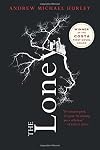
How to describe Andrew Michael Hurley's The Loney? Some of the adjectives which spring to mind are gothic, eerie, assured, suspenseful, and sinister. The bulk of the book is an extended flashback to a trip the narrator and his mute and intellectually disabled brother Hanny took with Mummer, Farther, their priest, and several fellow parishioners to a creepy house in Lancashire known as Moorings. This particular trip was the last in a series of annual pilgrimages to a shrine at which Mummer show more believes Hanny will miraculously become "normal." The flashback is prompted by the discovery of a baby's skeleton at Coldbarrow, a second creepy house located not far from Moorings.
This opening is much more jolting to the reader than it sounds, because when Hanny is introduced on the first page, he is a respected pastor, author, husband, and father. How he was "cured" is the central mystery of the novel. Was it a miracle from God, as Hanny's bestselling My Second Life with God suggests? Or was it the result of a darker bargain? It is this tension between Mummer's version of Christianity and the ominous atmosphere at Moorings which gives The Loney its power, although Hurley's description of both locations provides a clue:
"St. Jude's [the Catholic church attended by the narrator's family in London] was a monstrosity. . . . From the outside it was imposing and gloomy and the thick, hexagonal spire gave it the look of a mill or factory. Indeed, it seemed purpose-built in the same sort of way, with each architectural component carefully designed to churn out obedience, faith or hope in units per week according to demand.
. . .
I often thought there was too much time there [the Loney]. That the place was sick with it. Haunted by it. Time didn’t leak away as it should. There was nowhere for it to go and no modernity to hurry it along. It collected as the black water did on the marshes and remained and stagnated in the same way."
One thing that really struck me was Hurley's selection of names for his places and characters. Take "Mummer," for instance. I am used to the British referring to their mothers as "Mum," but I had never seen "Mummer" used as a name before. A mummer, according to the Merriam-Webster dictionary, is "[a]n actor in a traditional masked mime." Is Mummer's faith an act? What might she be hiding behind that mask? The insular village in which she grew up, with its own language and traditions, was "within spitting distance" of Moorings, Coldbarrow, and the Loney, so perhaps her expectations of the shrine's healing power are not those of the traditional Catholic pilgrim. Nuances like these elevate The Loney above the other horror and mystery novels with which it might be shelved.
I received a free copy of The Loney through Edelweiss in exchange for an honest review. show less
This opening is much more jolting to the reader than it sounds, because when Hanny is introduced on the first page, he is a respected pastor, author, husband, and father. How he was "cured" is the central mystery of the novel. Was it a miracle from God, as Hanny's bestselling My Second Life with God suggests? Or was it the result of a darker bargain? It is this tension between Mummer's version of Christianity and the ominous atmosphere at Moorings which gives The Loney its power, although Hurley's description of both locations provides a clue:
"St. Jude's [the Catholic church attended by the narrator's family in London] was a monstrosity. . . . From the outside it was imposing and gloomy and the thick, hexagonal spire gave it the look of a mill or factory. Indeed, it seemed purpose-built in the same sort of way, with each architectural component carefully designed to churn out obedience, faith or hope in units per week according to demand.
. . .
I often thought there was too much time there [the Loney]. That the place was sick with it. Haunted by it. Time didn’t leak away as it should. There was nowhere for it to go and no modernity to hurry it along. It collected as the black water did on the marshes and remained and stagnated in the same way."
One thing that really struck me was Hurley's selection of names for his places and characters. Take "Mummer," for instance. I am used to the British referring to their mothers as "Mum," but I had never seen "Mummer" used as a name before. A mummer, according to the Merriam-Webster dictionary, is "[a]n actor in a traditional masked mime." Is Mummer's faith an act? What might she be hiding behind that mask? The insular village in which she grew up, with its own language and traditions, was "within spitting distance" of Moorings, Coldbarrow, and the Loney, so perhaps her expectations of the shrine's healing power are not those of the traditional Catholic pilgrim. Nuances like these elevate The Loney above the other horror and mystery novels with which it might be shelved.
I received a free copy of The Loney through Edelweiss in exchange for an honest review. show less
This book was weird but compelling, and the writing is wonderful. The Christian symbolism can be heavy handed--eating an apple from a tree that has never been touched, a newborn lamb ripped apart by the villain's dog (on Easter Sunday no less!)--but in general the plotline is subtle, with unexpected humor.
My take, as an atheist, is that if you believe in "God," you must believe in "the Devil," too: one is a necessary corollary to the other. Indeed, in this story any sort of "miracle" is show more more likely to be devilish work. I love the skewering of blind faith and the ovine followers of Christ, but that might not appeal to all readers. Highly recommended. show less
My take, as an atheist, is that if you believe in "God," you must believe in "the Devil," too: one is a necessary corollary to the other. Indeed, in this story any sort of "miracle" is show more more likely to be devilish work. I love the skewering of blind faith and the ovine followers of Christ, but that might not appeal to all readers. Highly recommended. show less
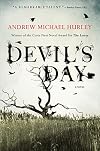
This is a folk-horror story with extremely light (possibly nonexistent) supernatural elements. John Pentecost, who grew up on a farm in the north of England, has returned for his grandfather's funeral, which happens to coincide with a local tradition known as Devil's Day, in which the three farming families perform rituals to confuse/sate the devil so he'll sleep through the winter and not bother them. John brings with him his newly pregnant wife Kat, who is from an upper middle class family show more from the south of England. Over the course of the book, variously eerie, disturbing, and criminal activities ensue, interspersed with flashes backward and forward over the course of about a century.
So I really loved the description and atmosphere. It is extremely slow-moving, but Hurley writes beautifully and hauntingly about the land, the plants and animals, the weather. He is clear-eyed about not idealizing farm work and does not shy away from the unpleasantnesses it can involve. It is kind of a cliche, but the setting really was like another character, the best-developed character in the whole thing, really.
Unfortunately, most of the human characters are not very well developed. Particularly within the farming families, the supplemental characters all blend into one another (except for a disturbed teen girl). This on its own would not be a huge problem, as I think it feeds into the theme that personal desires/will are unimportant or powerless in the face of larger forces, like "tradition" or an ancestral tie to the land. This notion is at the heart of the book, and I felt that Hurley was critiquing it fairly clearly throughout.
But the last 30-40 pages really muddied the water. (now some spoilers!! be warned) One of the main plot points deals with whether John's wife, Kat, will agree to give up her job and move to the farm. She repeatedly tells John that she has no intention of coming to live there. ("I don't give a shit about the farm.") Yet, lo and behold, there she is at the end, living on the farm, eating meat (she's a vegetarian), and incubating their second child. We jump ahead to this resolution, a driver of major conflict within the narrative, without any explanation or further discussion! What happened?
I feel like the author wants us to choose between 1) Kat changed her mind because she came to see that tradition was more important than personal desires [does not fit thematically with the rest of the book] or 2) Kat's rational nature was challenged by something unexplained she saw while lost on the moors that shifted the bedrock of her belief/sense of self [strongly implied but not warranted by prior character development]. A third sleeper option is that 3) Kat is possessed by the devil (that might explain her complete change in personality!). I think the author's desire for an ambiguous ending undermines his ability to build and develop a cohesive theme. Kat's reversal feels like a lazy deus ex machina, not a satisfying conundrum.
Also, I have a weird feeling that John murdered his son at the end of the book? It is not clear, but he encourages a 9-10 year old blind boy to jump into a freezing river, on the very spot where many years earlier John killed his childhood bully by drowning him. (If I've completely misunderstood what happened and a father and son just went skinny dipping together, I apologize. But a grim and horrible ending fits better with everything that went before than the apparently hopeful "resilience of the human spirit" type language of the last few paragraphs.)
I am very conflicted about this book. It frustrated me in some ways but showed incredible skill in others. I think I would probably try his other books in the future. show less
So I really loved the description and atmosphere. It is extremely slow-moving, but Hurley writes beautifully and hauntingly about the land, the plants and animals, the weather. He is clear-eyed about not idealizing farm work and does not shy away from the unpleasantnesses it can involve. It is kind of a cliche, but the setting really was like another character, the best-developed character in the whole thing, really.
Unfortunately, most of the human characters are not very well developed. Particularly within the farming families, the supplemental characters all blend into one another (except for a disturbed teen girl). This on its own would not be a huge problem, as I think it feeds into the theme that personal desires/will are unimportant or powerless in the face of larger forces, like "tradition" or an ancestral tie to the land. This notion is at the heart of the book, and I felt that Hurley was critiquing it fairly clearly throughout.
But the last 30-40 pages really muddied the water. (now some spoilers!! be warned) One of the main plot points deals with whether John's wife, Kat, will agree to give up her job and move to the farm. She repeatedly tells John that she has no intention of coming to live there. ("I don't give a shit about the farm.") Yet, lo and behold, there she is at the end, living on the farm, eating meat (she's a vegetarian), and incubating their second child. We jump ahead to this resolution, a driver of major conflict within the narrative, without any explanation or further discussion! What happened?
I feel like the author wants us to choose between 1) Kat changed her mind because she came to see that tradition was more important than personal desires [does not fit thematically with the rest of the book] or 2) Kat's rational nature was challenged by something unexplained she saw while lost on the moors that shifted the bedrock of her belief/sense of self [strongly implied but not warranted by prior character development]. A third sleeper option is that 3) Kat is possessed by the devil (that might explain her complete change in personality!). I think the author's desire for an ambiguous ending undermines his ability to build and develop a cohesive theme. Kat's reversal feels like a lazy deus ex machina, not a satisfying conundrum.
Also, I have a weird feeling that John murdered his son at the end of the book? It is not clear, but he encourages a 9-10 year old blind boy to jump into a freezing river, on the very spot where many years earlier John killed his childhood bully by drowning him. (If I've completely misunderstood what happened and a father and son just went skinny dipping together, I apologize. But a grim and horrible ending fits better with everything that went before than the apparently hopeful "resilience of the human spirit" type language of the last few paragraphs.)
I am very conflicted about this book. It frustrated me in some ways but showed incredible skill in others. I think I would probably try his other books in the future. show less
Lists
Awards


You May Also Like


Associated Authors
Statistics
- Works
- 9
- Also by
- 6
- Members
- 1,882
- Popularity
- #13,674
- Rating
- 3.6
- Reviews
- 97
- ISBNs
- 79
- Languages
- 12
- Favorited
- 1