
David G. Benner
Author of The Gift of Being Yourself: The Sacred Call to Self-Discovery
About the Author
David G. Benner (PhD, York University) is an internationally known depth psychologist, author and wisdom teacher whose life's work has been directed toward facilitating human unfolding through a journey of awakening and transformation. He is the founding director, teacher and mentor of Cascadia show more Living Wisdom. He has authored many books, including The Spiritual Journey trilogy: Surrender to Love, The Gift of Being Yourself and Desiring God's Will. show less
Image credit: Used by permission of Baker Publishing Group, copyright © 2008. All rights to this material are reserved. Materials are not to be distributed to other web locations for retrieval, published(see © info.)
Works by David G. Benner
Surrender to Love: Discovering the Heart of Christian Spirituality [Expanded Edition] (2015) 150 copies
Baker Encyclopedia of Psychology and Counseling, (Baker Reference Library) (1999) 139 copies, 3 reviews
Understanding and Facilitating Forgiveness (Strategic Pastoral Counseling Resources) (1996) 26 copies
Counseling and the Human Predicament: A Study of Sin, Guilt, and Forgiveness (PSYCHOLOGY AND CHRISTIANITY) (1989) — Editor — 14 copies
Spiritual Direction and the Care of Souls: A Guide to Christian Approaches and Practices — Author — 2 copies
GIFT OF BEING YOURSELF PB: The Sacred Call to Self-Discovery by BENNER DAVID (19-Nov-2004) Paperback 1 copy
At lære sig selv at kende 1 copy
Tagged
Common Knowledge
- Birthdate
- 1947-02-09
- Gender
- male
- Occupations
- professor (psychology, Wheaton College)
- Nationality
- Canada
- Associated Place (for map)
- Canada
Members
Reviews
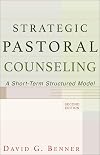
In recent years, seminaries have noticed increased demands from their graduates–young men in ministry–desperately seeking more education in one specific area: pastoral counseling.
Ours is a therapeutic age, so it is not at all surprising that folks in the pews are now willing to entertain psychiatric help for various situations and trials in their own lives. Still, modern psychology–and all its assumptions about personhood, spirituality, sexuality, and relationships–pushes many show more conservative Christians to seek help from a pastor before a therapist. What are pastors to do?
No doubt there is a kind of danger in the increased demand for pastoral counseling. On the one hand, pastoral counseling is taking up more and more time in the pastor’s week, leaving less time for preparing sermons and their duties as churchmen. Moreover, the seemingly endless church scandals suggest counseling dynamics within the church are ripe for abuse.
Still, there is a case, argues Benner, that pastors can meet the expectations and needs of their congregants without sacrificing the traditional role and functions of the pastoral office. One need only think of spiritual counseling as one, specific area of his pastoral obligations, bound and governed by particular rules. For Benner, these regulations include being short-term (ideally, no more than five sessions) and spiritually focused. In pastoral counseling, the pastor ‘stays in his lane,’ so to speak, addressing what he has been trained for and not trying to unravel messes he is not equipped to fix.
For example, a congregant may seek pastoral counseling for marital issues. A pastor may address the ways a failing marriage affects the parishioner’s thoughts about God, his character, and providence. He may point the parishioner to passages in Scripture that challenge distorted views of marriage and spousal relations and prepare us for what reconciliation and love may look like. Further issues, however, may best be resolved with a licensed and trained marriage counselor.
Benner is also right to address the specific setting of pastoral counseling, namely the church. Pastoral counseling can never be understood as something outside or separate from the regular patterns of the local body of Christ. It is a living, spiritual community where individuals receive the blessings of God together, in community, or not at all. Therefore, a pastor ought to consider whether God has prepared other members to assist a fellow believer’s concerns better than himself. Moreover, pastoral counseling must always fit within the confessed doctrines of the body of believers and can never contradict them. There is a danger of affirming the generalities while allowing exceptions in the counseling room. For example, we may find it easy to proclaim the Bible’s position on sexuality from the pulpit while trying to affirm the orientation of individuals in a counseling context. But truth is truth, wherever it is applied.
There is much that pastors will find helpful in Benner’s short manual, ensuring it will be a resource one turns to again and again. show less
Ours is a therapeutic age, so it is not at all surprising that folks in the pews are now willing to entertain psychiatric help for various situations and trials in their own lives. Still, modern psychology–and all its assumptions about personhood, spirituality, sexuality, and relationships–pushes many show more conservative Christians to seek help from a pastor before a therapist. What are pastors to do?
No doubt there is a kind of danger in the increased demand for pastoral counseling. On the one hand, pastoral counseling is taking up more and more time in the pastor’s week, leaving less time for preparing sermons and their duties as churchmen. Moreover, the seemingly endless church scandals suggest counseling dynamics within the church are ripe for abuse.
Still, there is a case, argues Benner, that pastors can meet the expectations and needs of their congregants without sacrificing the traditional role and functions of the pastoral office. One need only think of spiritual counseling as one, specific area of his pastoral obligations, bound and governed by particular rules. For Benner, these regulations include being short-term (ideally, no more than five sessions) and spiritually focused. In pastoral counseling, the pastor ‘stays in his lane,’ so to speak, addressing what he has been trained for and not trying to unravel messes he is not equipped to fix.
For example, a congregant may seek pastoral counseling for marital issues. A pastor may address the ways a failing marriage affects the parishioner’s thoughts about God, his character, and providence. He may point the parishioner to passages in Scripture that challenge distorted views of marriage and spousal relations and prepare us for what reconciliation and love may look like. Further issues, however, may best be resolved with a licensed and trained marriage counselor.
Benner is also right to address the specific setting of pastoral counseling, namely the church. Pastoral counseling can never be understood as something outside or separate from the regular patterns of the local body of Christ. It is a living, spiritual community where individuals receive the blessings of God together, in community, or not at all. Therefore, a pastor ought to consider whether God has prepared other members to assist a fellow believer’s concerns better than himself. Moreover, pastoral counseling must always fit within the confessed doctrines of the body of believers and can never contradict them. There is a danger of affirming the generalities while allowing exceptions in the counseling room. For example, we may find it easy to proclaim the Bible’s position on sexuality from the pulpit while trying to affirm the orientation of individuals in a counseling context. But truth is truth, wherever it is applied.
There is much that pastors will find helpful in Benner’s short manual, ensuring it will be a resource one turns to again and again. show less
The Gift of Being Yourself: The Sacred Call to Self-Discovery (Expanded) (The Spiritual Journey) by David G. Benner
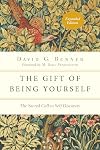
Benner begins with a quote from Thomas Merton:
There is only one problem on which all my existence, my peace, and my happiness depend: to discover myself in discovering God. If I find Him I will find myself and if I find my true self I will find Him.
We often hear the dictum to "know thyself" or "follow your heart," but how on earth do we turn inward and know ourselves, from a Christian perspective? This little book explains how, helping us to turn inward, evaluate our heart and emotions, and show more in the process find God by finding our true selves, without getting washed away by the common understanding of self.
It's divided into 6 chapters with a preface and epilogue:
Preface: Identity and Authenticity
1. Transformational Knowing of Self and God.
2. Knowing God
3. First Steps Toward Knowing Yourself
4. Knowing Yourself as You Really Are
5. Unmasking Your False Self
6. Becoming Your True Self
Epilogue: Identify and the Spiritual Journey
I recommend the expanded edition which includes an organized six-session discussion guide as well as a one-session discussion guide.
Chapter 1 establishes the importance of understanding ourselves within Christian spirituality. He writes, "Leaving the self out of Christian spirituality results in a spirituality that is not well grounded in experience. It is, therefore, not well grounded in reality."
Chapter 2 emphasizes the importance of experiencing God rather than having the right beliefs or right doctrine. It's about "wasting time" with God, learning to dwell and experience God's presence. "Transformational knowing of God comes from meeting God in our depths, not in the abstraction of dusty theological propositions." He emphasizes the spiritual disciplines of examen and gospel meditation, where you imagine being with Jesus in the gospel stories.
In chapter 3 he begins with the fundamentals of self-knowledge, namely that we are beloved. "Love is our identity and our calling, for we are children of Love. Created from love, of love and for love, our existence makes no sense apart from Divine love." Our identity is not our job or what we do. Second, we are many parts - "While we tend to think of ourselves as a single, unified self, what we call 'I' is really a family of many part-selves." We must learn to accept these parts, even the ones we are ashamed of. "Reality must be embraced before it can be changed."
Chapter 4 is about the ways we deceive ourselves. "We learn to fake it" and do what we believe others deem important. Self-deception is part of us. "Spiritual transformation involves the purification of sight.... We have to learn to see - and accept - what is really there. Stripping away our illusions is part of this process, as it reorients us toward reality." In short, we are sinners - "a deeply loved sinner." Here he briefly introduces the enneagram.
Chapter 5 is about the ways we try to create an image for others. "Initially the masks we adopt reflect how we want others to see us. Over time, however, they come to reflect how we want to see our self." He goes on later to explain: "The core of the false self is the belief that my value depends on what I have, what I can do and what others think of me."
In chapter 6 he writes, "We do not find our true self by seeking it. Rather we find it by seeking God.... The anthropological question (Who am I?) and the theological question (Who is God?) are fundamentally inseparable." He goes on to found identity in God and explore the idea of vocation and wrestling with God, self, and the devil (as Jesus did in the wilderness). It's a combination of both solitude and communal discernment at different times.
Overall, I felt Benner did a superb job of introducing the importance of self-discovery and connecting it solidly to Christian theology and practice. It seems that we in the West are going through a collective identify crisis, unable to distinguish our feelings from our identity, and he is able to ground identity in God and love, yet brokenness. For further resources, be sure to check out the footnotes section at the back.
That being said, this book is not for everyone. I used it for a high school book group, and it flopped. For them, it felt fluffy and unhelpful. "Jesus loves me... yay, pretty sure I've been singing that one for a few years now..." Richard Rohr has a helpful framework that we move from order to disorder to reorder. Young people generally are at the "ordered" stage where life and faith and God are secure and make sense. As you grow older, much of the youthful enthusiasm and convictions fade away, or are stripped from us. This feeling of disorder is often painful. To me, Benner's book is for those who've gone through the disorder and confusion and need to be put back together. Or to put it another way, if you like Thomas Merton, you'll appreciate The Gift of Being Yourself. Otherwise, you might be disappointed. :) show less
There is only one problem on which all my existence, my peace, and my happiness depend: to discover myself in discovering God. If I find Him I will find myself and if I find my true self I will find Him.
We often hear the dictum to "know thyself" or "follow your heart," but how on earth do we turn inward and know ourselves, from a Christian perspective? This little book explains how, helping us to turn inward, evaluate our heart and emotions, and show more in the process find God by finding our true selves, without getting washed away by the common understanding of self.
It's divided into 6 chapters with a preface and epilogue:
Preface: Identity and Authenticity
1. Transformational Knowing of Self and God.
2. Knowing God
3. First Steps Toward Knowing Yourself
4. Knowing Yourself as You Really Are
5. Unmasking Your False Self
6. Becoming Your True Self
Epilogue: Identify and the Spiritual Journey
I recommend the expanded edition which includes an organized six-session discussion guide as well as a one-session discussion guide.
Chapter 1 establishes the importance of understanding ourselves within Christian spirituality. He writes, "Leaving the self out of Christian spirituality results in a spirituality that is not well grounded in experience. It is, therefore, not well grounded in reality."
Chapter 2 emphasizes the importance of experiencing God rather than having the right beliefs or right doctrine. It's about "wasting time" with God, learning to dwell and experience God's presence. "Transformational knowing of God comes from meeting God in our depths, not in the abstraction of dusty theological propositions." He emphasizes the spiritual disciplines of examen and gospel meditation, where you imagine being with Jesus in the gospel stories.
In chapter 3 he begins with the fundamentals of self-knowledge, namely that we are beloved. "Love is our identity and our calling, for we are children of Love. Created from love, of love and for love, our existence makes no sense apart from Divine love." Our identity is not our job or what we do. Second, we are many parts - "While we tend to think of ourselves as a single, unified self, what we call 'I' is really a family of many part-selves." We must learn to accept these parts, even the ones we are ashamed of. "Reality must be embraced before it can be changed."
Chapter 4 is about the ways we deceive ourselves. "We learn to fake it" and do what we believe others deem important. Self-deception is part of us. "Spiritual transformation involves the purification of sight.... We have to learn to see - and accept - what is really there. Stripping away our illusions is part of this process, as it reorients us toward reality." In short, we are sinners - "a deeply loved sinner." Here he briefly introduces the enneagram.
Chapter 5 is about the ways we try to create an image for others. "Initially the masks we adopt reflect how we want others to see us. Over time, however, they come to reflect how we want to see our self." He goes on later to explain: "The core of the false self is the belief that my value depends on what I have, what I can do and what others think of me."
In chapter 6 he writes, "We do not find our true self by seeking it. Rather we find it by seeking God.... The anthropological question (Who am I?) and the theological question (Who is God?) are fundamentally inseparable." He goes on to found identity in God and explore the idea of vocation and wrestling with God, self, and the devil (as Jesus did in the wilderness). It's a combination of both solitude and communal discernment at different times.
Overall, I felt Benner did a superb job of introducing the importance of self-discovery and connecting it solidly to Christian theology and practice. It seems that we in the West are going through a collective identify crisis, unable to distinguish our feelings from our identity, and he is able to ground identity in God and love, yet brokenness. For further resources, be sure to check out the footnotes section at the back.
That being said, this book is not for everyone. I used it for a high school book group, and it flopped. For them, it felt fluffy and unhelpful. "Jesus loves me... yay, pretty sure I've been singing that one for a few years now..." Richard Rohr has a helpful framework that we move from order to disorder to reorder. Young people generally are at the "ordered" stage where life and faith and God are secure and make sense. As you grow older, much of the youthful enthusiasm and convictions fade away, or are stripped from us. This feeling of disorder is often painful. To me, Benner's book is for those who've gone through the disorder and confusion and need to be put back together. Or to put it another way, if you like Thomas Merton, you'll appreciate The Gift of Being Yourself. Otherwise, you might be disappointed. :) show less
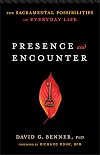
David Benner is one of my favorite authors on the spiritual life. This is a great book about presence (being present and experience presence from the other) and encounter (meeting by presence). There is so much insight here. Benner's writing is a blend psychological acuity with a mystic soulfulness, and accessibility. He will quote authors I find spurious (such as Eckhart Tolle), but weave their thought into a tapestry.
This book specifically is insightful for its description of what it show more means to be present, how presence of/to anything is a gateway to transcendence, how encounter means letting go of expectations and dialogue means mutual sharing. Buber's I-Thou is in the background here, as is an incarnational mysticism and sacramentality.
This great stuff. I had a electronic library copy so couldn't mark it all up, but when I get my own copy, you bet I will. show less
This book specifically is insightful for its description of what it show more means to be present, how presence of/to anything is a gateway to transcendence, how encounter means letting go of expectations and dialogue means mutual sharing. Buber's I-Thou is in the background here, as is an incarnational mysticism and sacramentality.
This great stuff. I had a electronic library copy so couldn't mark it all up, but when I get my own copy, you bet I will. show less

All in all, a book worth reading. Benner consistently uses the pronoun "he" in describing God, which is distracting, but easily overcome. Although I find it tends to narrow my notion of God to fit the human, I come across it so often I translate it without thinking.
Benner's use of the term "Christian God" alternately enrages me and confuses me. Are there other gods Benner is leaving out of the conversation? Is he trying to say that God is Christian to the exclusion of other religions? Is he show more perhaps referring to Christ? Hmmm. I always thought there was only one God. Maybe I was wrong. Shall we have a war to see whose God is stronger? Oh. Wait. We're doing that already.
However, a few pearls lurk in these pages, too: He quotes Richard Foster as having written (re: spiritual formation groups) "give encouragement as often as possible; advice, once in a while; reproof, only when absolutely necessary, and judgment, never" (172).
"Spiritual accompaniment is accompaniment in love. Love is the motive for attentive listening. Love is the motive for offering attentiveness to the Spirit instead of mere advice. Love is the motive for any reproof that must be given. And love is the motive for the over-all climate of encouragement and support" (173).
Benner has a bibliography by subject, and an annotated bibliography at the back. Almost worth the price right there!!
Comments written to members of my graduating class:
My latest book read has been Spiritual Companions by David Benner. My guess is that Stephanie, at least, has read it. I appreciated his annotated bibliography in the back. I disliked (but was able to ignore for the most part) Benner continually using a gendered pronoun (in this case, "he") for God. I screamed, ranted, and marked up my book when he would write about "the Christian God." Exactly what is that supposed to mean? That God is only Christian? That other religions have different gods? That he is referring to Christ? At any rate, luckily, he didn't do that too often and I was able to take away some good stuff. Particularly evocative to me (positively or negatively:
"'What makes it hard for you to engage in prayer as attentive listening to God as opposed to simply talking [to God]?' (106). This is THE prayer question for me right now: how to engage in prayer that is not simply talking to but also listening to the answer!
"'The only way to come to know Jesus is through the Gospels. There is no substitute for meditation on Scripture as a route to a deep, personal engagement with God. Attunement to the Christian God must always involve attending to Jesus." In the margin I wrote 'Attunement to GOD must involve attending to God's manifestations.' Reading this now makes me sad for the limitations humanity wants to place on God…and on each other and their access to God (113).
"'We could describe spiritual directors as persons who, in the language of the New American Standard Bible translation of Acts 17:27, grope after God. One who gropes after God seeks, but as a blind person, without certainty of where God is to be found. Certainty about how and where God is to be found leads to a presumption that interferes with the provision of spiritual direction. God turns up where we least expect to encounter [God] and often fails to be where we feel most sure [God] should be' (149). *could, but we won't! And he didn't mean it, either.
"'the majority of the spiritual companionship…. serving as a sacred companion forms an important part of her calling' (153). The notion of being someone's 'sacred companion' evokes a deeper element of trust and commitment than merely a 'spiritual companion' does. It makes me want to say, that truly, it is as sacred friends that we continue on our journey. Perhaps once a month is too often for us to check in, perhaps we need more flexibility to check in even when it isn't "our turn" (can anyone remember when our turns are??!). But it is a sacred thing to me that we are there for each other. Am I getting too, too?
"Benner even brings up my old nemesis, Richard Foster! "Foster makes a suggestion for spiritual formation groups that I think is at least as relevant for spiritual accompaniment groups: 'Give encouragement as often as possible; advice, once in a while; reproof, only when absolutely necessary, and judgment, never' (from Foster's forward to A Spiritual Formation Workbook by James Bryan Smith and Lynda Graybeal (San Francisco: HarperSanFranscisco, 1999), 9) (172).
Spiritual accompaniment is accompaniment in love. Love is the motive for attentive listening. Love is the motive for offering attentiveness to the Spirit instead of mere advice. Love is the motive for any reproof that must be given. And love is the motive for the overall climate of encouragement and support" (172-73). show less
Benner's use of the term "Christian God" alternately enrages me and confuses me. Are there other gods Benner is leaving out of the conversation? Is he trying to say that God is Christian to the exclusion of other religions? Is he show more perhaps referring to Christ? Hmmm. I always thought there was only one God. Maybe I was wrong. Shall we have a war to see whose God is stronger? Oh. Wait. We're doing that already.
However, a few pearls lurk in these pages, too: He quotes Richard Foster as having written (re: spiritual formation groups) "give encouragement as often as possible; advice, once in a while; reproof, only when absolutely necessary, and judgment, never" (172).
"Spiritual accompaniment is accompaniment in love. Love is the motive for attentive listening. Love is the motive for offering attentiveness to the Spirit instead of mere advice. Love is the motive for any reproof that must be given. And love is the motive for the over-all climate of encouragement and support" (173).
Benner has a bibliography by subject, and an annotated bibliography at the back. Almost worth the price right there!!
Comments written to members of my graduating class:
My latest book read has been Spiritual Companions by David Benner. My guess is that Stephanie, at least, has read it. I appreciated his annotated bibliography in the back. I disliked (but was able to ignore for the most part) Benner continually using a gendered pronoun (in this case, "he") for God. I screamed, ranted, and marked up my book when he would write about "the Christian God." Exactly what is that supposed to mean? That God is only Christian? That other religions have different gods? That he is referring to Christ? At any rate, luckily, he didn't do that too often and I was able to take away some good stuff. Particularly evocative to me (positively or negatively:
"'What makes it hard for you to engage in prayer as attentive listening to God as opposed to simply talking [to God]?' (106). This is THE prayer question for me right now: how to engage in prayer that is not simply talking to but also listening to the answer!
"'The only way to come to know Jesus is through the Gospels. There is no substitute for meditation on Scripture as a route to a deep, personal engagement with God. Attunement to the Christian God must always involve attending to Jesus." In the margin I wrote 'Attunement to GOD must involve attending to God's manifestations.' Reading this now makes me sad for the limitations humanity wants to place on God…and on each other and their access to God (113).
"'We could describe spiritual directors as persons who, in the language of the New American Standard Bible translation of Acts 17:27, grope after God. One who gropes after God seeks, but as a blind person, without certainty of where God is to be found. Certainty about how and where God is to be found leads to a presumption that interferes with the provision of spiritual direction. God turns up where we least expect to encounter [God] and often fails to be where we feel most sure [God] should be' (149). *could, but we won't! And he didn't mean it, either.
"'the majority of the spiritual companionship…. serving as a sacred companion forms an important part of her calling' (153). The notion of being someone's 'sacred companion' evokes a deeper element of trust and commitment than merely a 'spiritual companion' does. It makes me want to say, that truly, it is as sacred friends that we continue on our journey. Perhaps once a month is too often for us to check in, perhaps we need more flexibility to check in even when it isn't "our turn" (can anyone remember when our turns are??!). But it is a sacred thing to me that we are there for each other. Am I getting too, too?
"Benner even brings up my old nemesis, Richard Foster! "Foster makes a suggestion for spiritual formation groups that I think is at least as relevant for spiritual accompaniment groups: 'Give encouragement as often as possible; advice, once in a while; reproof, only when absolutely necessary, and judgment, never' (from Foster's forward to A Spiritual Formation Workbook by James Bryan Smith and Lynda Graybeal (San Francisco: HarperSanFranscisco, 1999), 9) (172).
Spiritual accompaniment is accompaniment in love. Love is the motive for attentive listening. Love is the motive for offering attentiveness to the Spirit instead of mere advice. Love is the motive for any reproof that must be given. And love is the motive for the overall climate of encouragement and support" (172-73). show less
You May Also Like


Associated Authors
Statistics
- Works
- 35
- Members
- 3,050
- Popularity
- #8,372
- Rating
- 3.9
- Reviews
- 22
- ISBNs
- 80
- Languages
- 6
- Favorited
- 2