
Ruth Haley Barton
Author of Sacred Rhythms: Arranging Our Lives for Spiritual Transformation (Transforming Resources)
About the Author
Ruth Haley Barton is founding president/CEO of the Transforming Center, a spiritual formation ministry to pastors and Christian leaders. A trained spiritual director, sought-after speaker, and retreat leader, she is the author of multiple books, including Invitation to Solitude and Silence, show more Pursuing God's Will Together, and Strengthening the Soul of Your Leadership. show less
Works by Ruth Haley Barton
Sacred Rhythms: Arranging Our Lives for Spiritual Transformation (Transforming Resources) (2006) 777 copies, 3 reviews
Strengthening the Soul of Your Leadership: Seeking God in the Crucible of Ministry (2008) 656 copies, 1 review
Invitation to Solitude and Silence: Experiencing God's Transforming Presence (2004) 542 copies, 3 reviews
Pursuing God's Will Together: A Discernment Practice for Leadership Groups (Transforming Resources) (2012) 267 copies, 2 reviews
Embracing Rhythms of Work and Rest: From Sabbath to Sabbatical and Back Again (2022) 111 copies, 17 reviews
Invitation to Retreat: The Gift and Necessity of Time Away with God (Transforming Resources) (2018) 110 copies, 2 reviews
Sacred Rhythms Participant's Guide: Spiritual Practices that Nourish Your Soul and Transform Your Life (2011) 70 copies
Women Like Us: Wisdom for Today's Issues (Fisherman Bible Studyguide Series) (2001) 40 copies, 1 review
DVD-Sacred Rhythms (Six Sessions) 2 copies
Tagged
Common Knowledge
- Birthdate
- 1960-07-18
- Gender
- female
- Education
- Wheaton College
Northern Baptist Theological Seminary - Organizations
- Willow Creek Community Church (South Barrington, Illinois, USA)
- Nationality
- USA
- Places of residence
- Wheaton, Illinois, USA
- Associated Place (for map)
- Illinois, USA
Members
Reviews
Invitation to Retreat: The Gift and Necessity of Time Away with God (Transforming Resources) by Ruth Haley Barton
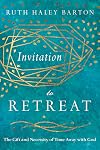
Summary: A guide to retreat as a spiritual practice exploring why retreat, preparing for retreat, helpful practices on retreat, and concluding our retreat and returning from (and to) retreat.
Jesus gives a startling invitation to his disciples in Mark 6:30-31. He said, "Come away to a deserted place...and rest a while." Wouldn't you love an invitation like that? Ruth Haley Barton proposes in this book that this is an invitation Jesus extends to each and every one of us. She encourages us to show more embrace retreat as a formational practice. She explains what she means as follows:
"Retreat in the context of the spiritual life is an extended time apart for the purpose of being with God and giving God our full and undivided attention; it is, as Emilie Griffin puts it, “a generous commitment to our friendship with God.” The emphasis is on the words extended and generous. Truth is, we are not always generous with ourselves where God is concerned. Many of us have done well to incorporate regular times of solitude and silence into the rhythm of our ordinary lives, which means we’ve gotten pretty good at giving God twenty minutes here and half an hour there. And there’s no question we are better for it!
But many of us are longing for more—and we have a sense that there is more if we could create more space for quiet to give attention to God at the center of our beings. We sense that a kind of fullness and satisfaction is discovered more in the silence than in the words, more in solitude than in socializing, more in spaciousness than in busyness. “Times come,” Emilie Griffin goes on to say, “when we yearn for more of God than our schedules will allow. We are tired, we are crushed, we are crowded by friends and acquaintances, commitments and obligations. The life of grace is abounding, but we are too busy for it. Even good obligations begin to hem us in."
Barton goes on in this book to offer extensive practical help in various aspects of taking retreats, from preparing to retreat and facing our exhaustion (including encouraging us to sleep until we naturally awaken on retreat if possible). She addresses the rhythms of retreat and even offers a suggested daily schedule. She gives help on prayer during the retreat including fixed hour prayers. She addresses the challenge of letting go, unplugging and the deeper issue of relinquishing our false-self patterns. For those familiar with the Enneagram, she suggests particular false-self patterns we may relinquish for each Enneagram type. She discusses the chance retreat gives us for discernment, for paying attention to our life situation and how God may be leading. There is practical help for re-entering our lives.
Throughout, Barton relates personal experiences in retreat, discussions with spiritual directors, insights as she reflects on scriptures, her own practices, including taking time to exercise during retreats (something I'm inclined to forget!), and some of her personal compulsions and how retreat has been an important factor in God's transformative work in her life. Each chapter concludes with a "Practicing Retreat" page with questions we may use in preparing for or engaging in our retreat. Three "interludes" break up the content with poetry for reflection and prayer. Appendices offer a form of fixed hour prayers and practical considerations such as choosing a retreat location, our intention, and even what to pack.
This is a slim book is full of wisdom and practical insights like the following:
"Many of us are wasting our life's energy fighting for things that aren't that important in the whole scheme of things. There are times when the quiet of retreat is the only way we will be able to discern well what battle we should be engaging and how."
As I husband energies that wane with age, I can't afford to waste them on unimportant battles. Mercifully, Jesus invites me to come away with Him. Barton's book reminded me of that pending invitation. It is one I will turn to as I prepare for retreat. And its convenient size makes it the perfect book to pack, to hold, to use in reflection, on retreat.
____________________________
Disclosure of Material Connection: I received a complimentary review copy of this book from the publisher in exchange for an honest review. The opinions I have expressed are my own. show less
Jesus gives a startling invitation to his disciples in Mark 6:30-31. He said, "Come away to a deserted place...and rest a while." Wouldn't you love an invitation like that? Ruth Haley Barton proposes in this book that this is an invitation Jesus extends to each and every one of us. She encourages us to show more embrace retreat as a formational practice. She explains what she means as follows:
"Retreat in the context of the spiritual life is an extended time apart for the purpose of being with God and giving God our full and undivided attention; it is, as Emilie Griffin puts it, “a generous commitment to our friendship with God.” The emphasis is on the words extended and generous. Truth is, we are not always generous with ourselves where God is concerned. Many of us have done well to incorporate regular times of solitude and silence into the rhythm of our ordinary lives, which means we’ve gotten pretty good at giving God twenty minutes here and half an hour there. And there’s no question we are better for it!
But many of us are longing for more—and we have a sense that there is more if we could create more space for quiet to give attention to God at the center of our beings. We sense that a kind of fullness and satisfaction is discovered more in the silence than in the words, more in solitude than in socializing, more in spaciousness than in busyness. “Times come,” Emilie Griffin goes on to say, “when we yearn for more of God than our schedules will allow. We are tired, we are crushed, we are crowded by friends and acquaintances, commitments and obligations. The life of grace is abounding, but we are too busy for it. Even good obligations begin to hem us in."
Barton goes on in this book to offer extensive practical help in various aspects of taking retreats, from preparing to retreat and facing our exhaustion (including encouraging us to sleep until we naturally awaken on retreat if possible). She addresses the rhythms of retreat and even offers a suggested daily schedule. She gives help on prayer during the retreat including fixed hour prayers. She addresses the challenge of letting go, unplugging and the deeper issue of relinquishing our false-self patterns. For those familiar with the Enneagram, she suggests particular false-self patterns we may relinquish for each Enneagram type. She discusses the chance retreat gives us for discernment, for paying attention to our life situation and how God may be leading. There is practical help for re-entering our lives.
Throughout, Barton relates personal experiences in retreat, discussions with spiritual directors, insights as she reflects on scriptures, her own practices, including taking time to exercise during retreats (something I'm inclined to forget!), and some of her personal compulsions and how retreat has been an important factor in God's transformative work in her life. Each chapter concludes with a "Practicing Retreat" page with questions we may use in preparing for or engaging in our retreat. Three "interludes" break up the content with poetry for reflection and prayer. Appendices offer a form of fixed hour prayers and practical considerations such as choosing a retreat location, our intention, and even what to pack.
This is a slim book is full of wisdom and practical insights like the following:
"Many of us are wasting our life's energy fighting for things that aren't that important in the whole scheme of things. There are times when the quiet of retreat is the only way we will be able to discern well what battle we should be engaging and how."
As I husband energies that wane with age, I can't afford to waste them on unimportant battles. Mercifully, Jesus invites me to come away with Him. Barton's book reminded me of that pending invitation. It is one I will turn to as I prepare for retreat. And its convenient size makes it the perfect book to pack, to hold, to use in reflection, on retreat.
____________________________
Disclosure of Material Connection: I received a complimentary review copy of this book from the publisher in exchange for an honest review. The opinions I have expressed are my own. show less
Embracing Rhythms of Work and Rest: From Sabbath to Sabbatical and Back Again (Transforming Resources) by Ruth Haley Barton
Ruth Haley Barton's latest work, Embracing Rhythms of Work and Rest, delves into the timeless tradition of the Sabbath and skillfully relates it to our contemporary world, emphasizing its connection to God. Through poignant anecdotes drawn from her personal experiences, Barton artfully conveys the profound delight that the Sabbath embodies in the pages of Scripture. Furthermore, she offers a pragmatic roadmap for reclaiming the invaluable gift of rest, not only on an individual level but show more also within our wider communities. With her insightful and accessible approach, Barton's book becomes a compelling guide for anyone seeking to rediscover the transformative power of Sabbath practices. show less
 This review was written for LibraryThing Early Reviewers.
Embracing Rhythms of Work and Rest: From Sabbath to Sabbatical and Back Again (Transforming Resources) by Ruth Haley Barton
Summary: Describes the journey to life-giving sabbath practices as well as planning for and taking sabbaticals.
Ruth Haley Barton is a gifted speaker, writer, and Christian leader. And like many such people she pushed herself hard in a high-performance church culture and later as leader of her own ministry organization. She enjoyed reading books about sabbath, but that was for other people. Until she was in a bike accident. And she realized that God had given her a harder nudge that it was show more time to begin a journey of sabbath practice.
This book describes that journey and a further one of taking sabbaticals–extended sabbaths allowing a longer period of rest and transformation. She discovered that sabbath began with God, who wove rest into the fabric of creation with his own rhythm of six days of work, and then rest. Sabbath is participating in the rest that is already there, that we work and rest in rhythm with God. Sabbath is also an act of resistance. It was for the Hebrew ex-slaves who always had to work for Pharaoh. It is as well in our 24/7 culture.
Sabbath was meant as a community practice, enjoyed and shared together. We often try to figure this out for ourselves, and one of the unique contributions of this book is that it casts vision for churches and other communities to share in sabbath practice. She gives practical help in leading that culture change process, beginning with oneself, other leaders, and the congregation. She speaks of “no emergencies with God” and allowing the process of communal sabbath-keeping to take the time it needs. The book includes an appendix with a discussion guide for church leaders to use.
She addresses unplugging from our technology, acknowledging the hold it has on us, and ways we may be more present to God and each other when we include “unplugging” in our sabbath practice. She shares with us her delight in sabbath, particularly in just having time to “putz” around. It’s a time to be free to be neighborly, to allow the accumulated emotions of the week to bubble to the service, and to bring them to God without self-numbing. She speaks of sabbath in different seasons of life, as a student, with families, caring for parents. Then she pulls this together in helping us shape our sabbath practice.
There are times when sabbath is not enough. But the good news is that sabbath prepares us for sabbatical, for extended periods of rest. She addresses the temptation to be “productive” during sabbaticals and encourages beginning to plan a sabbatical by listening to what one’s soul is trying to say to God and ourselves about our longings for this time. She shares her own sabbatical journey–during a pandemic–and offers practical helps on how to plan a sabbatical and an appendix on re-entry from one. One of the basic insights that everyone I know affirms is that you don’t know how tired you are until the first weeks of a sabbatical and the importance of making allowance for this.
It is obvious that Ruth Haley Barton has “put her own mask on first” before trying to help us. Her delight in sabbath and rich experience of sabbath invite the reader to consider these for oneself. Sabbath and sabbatical are shared as gifts rather than obligations and burdens, practices that keep us even more than we keep them. Perhaps more, the language of embrace suggests sabbath as a welcome friend, or even a reminder that as we rest and trust, that the Lover of our Soul will embrace and hold and refresh us.
____________________
Disclosure of Material Connection: I received a complimentary review copy of this book from the publisher. show less
Ruth Haley Barton is a gifted speaker, writer, and Christian leader. And like many such people she pushed herself hard in a high-performance church culture and later as leader of her own ministry organization. She enjoyed reading books about sabbath, but that was for other people. Until she was in a bike accident. And she realized that God had given her a harder nudge that it was show more time to begin a journey of sabbath practice.
This book describes that journey and a further one of taking sabbaticals–extended sabbaths allowing a longer period of rest and transformation. She discovered that sabbath began with God, who wove rest into the fabric of creation with his own rhythm of six days of work, and then rest. Sabbath is participating in the rest that is already there, that we work and rest in rhythm with God. Sabbath is also an act of resistance. It was for the Hebrew ex-slaves who always had to work for Pharaoh. It is as well in our 24/7 culture.
Sabbath was meant as a community practice, enjoyed and shared together. We often try to figure this out for ourselves, and one of the unique contributions of this book is that it casts vision for churches and other communities to share in sabbath practice. She gives practical help in leading that culture change process, beginning with oneself, other leaders, and the congregation. She speaks of “no emergencies with God” and allowing the process of communal sabbath-keeping to take the time it needs. The book includes an appendix with a discussion guide for church leaders to use.
She addresses unplugging from our technology, acknowledging the hold it has on us, and ways we may be more present to God and each other when we include “unplugging” in our sabbath practice. She shares with us her delight in sabbath, particularly in just having time to “putz” around. It’s a time to be free to be neighborly, to allow the accumulated emotions of the week to bubble to the service, and to bring them to God without self-numbing. She speaks of sabbath in different seasons of life, as a student, with families, caring for parents. Then she pulls this together in helping us shape our sabbath practice.
There are times when sabbath is not enough. But the good news is that sabbath prepares us for sabbatical, for extended periods of rest. She addresses the temptation to be “productive” during sabbaticals and encourages beginning to plan a sabbatical by listening to what one’s soul is trying to say to God and ourselves about our longings for this time. She shares her own sabbatical journey–during a pandemic–and offers practical helps on how to plan a sabbatical and an appendix on re-entry from one. One of the basic insights that everyone I know affirms is that you don’t know how tired you are until the first weeks of a sabbatical and the importance of making allowance for this.
It is obvious that Ruth Haley Barton has “put her own mask on first” before trying to help us. Her delight in sabbath and rich experience of sabbath invite the reader to consider these for oneself. Sabbath and sabbatical are shared as gifts rather than obligations and burdens, practices that keep us even more than we keep them. Perhaps more, the language of embrace suggests sabbath as a welcome friend, or even a reminder that as we rest and trust, that the Lover of our Soul will embrace and hold and refresh us.
____________________
Disclosure of Material Connection: I received a complimentary review copy of this book from the publisher. show less
Embracing Rhythms of Work and Rest: From Sabbath to Sabbatical and Back Again (Transforming Resources) by Ruth Haley Barton
When I received this book as part of the Library Thing early reviewers, I was immediately drawn to its themes, from Sabbath to Sabbatical and Back Again. The book's exploration of the original concept of Sabbath, the promises and conditions associated with the rest by God, and the personal commitment required to embrace it resonated deeply with me. It reminded me of my grandmother's weekly Sabbath preparations, a commitment I observed and respected as she stewarded this gift. This personal show more connection made the book's message even more profound.
I received this book many years ago. As I started to review it, life happened. More distractions seemed to happen each time I tried to return to it. I realized I had to live the book to profoundly grasp the Sabbath's meaning and urgency to establish my commitment. This book contains sage advice, handed to me from a previous generation that emphasized the connection to the God of the Sabbath and rest. I will continue to refer to this writing as I live in light of my faith. I highly recommend this offering for these times. It's not always easy to commit to the Sabbath, especially in today's fast-paced world. I've had struggles and challenges, and this book reminds me to continue the Sabbath journey and rest. show less
I received this book many years ago. As I started to review it, life happened. More distractions seemed to happen each time I tried to return to it. I realized I had to live the book to profoundly grasp the Sabbath's meaning and urgency to establish my commitment. This book contains sage advice, handed to me from a previous generation that emphasized the connection to the God of the Sabbath and rest. I will continue to refer to this writing as I live in light of my faith. I highly recommend this offering for these times. It's not always easy to commit to the Sabbath, especially in today's fast-paced world. I've had struggles and challenges, and this book reminds me to continue the Sabbath journey and rest. show less
This review was written for LibraryThing Early Reviewers.Lists
Awards

You May Also Like


Associated Authors
Statistics
- Works
- 23
- Members
- 2,922
- Popularity
- #8,765
- Rating
- 4.0
- Reviews
- 36
- ISBNs
- 55
- Languages
- 1
