
Ann Bridge (1889–1974)
Author of Illyrian Spring
About the Author
Image credit: cut down scan of back cover of Penguin 782 (first printing): unattributed picture.
Series
Works by Ann Bridge
Associated Works
The Lifted Veil: The Book of Fantastic Literature by Women 1800-World War II (1806) — Contributor — 45 copies
Tagged
Common Knowledge
- Canonical name
- Bridge, Ann
- Legal name
- O'Malley, Mary Ann Dolling Sanders
- Other names
- Sanders, Cottie
- Birthdate
- 1889-09-11
- Date of death
- 1974-03-09
- Gender
- female
- Occupations
- novelist
- Relationships
- O'Malley, Owen (husband)
Sanders, Marie Louise Day (mother)
Sanders, James Harris (father) - Nationality
- UK
- Birthplace
- Porters, Hertfordshire, England, UK
- Places of residence
- Bridge End, Ockham, Surrey, UK
- Place of death
- Oxford, Oxfordshire, England, UK
- Associated Place (for map)
- England, UK
Members
Reviews
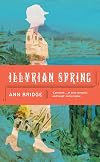
This 1935 novel, until recently mostly forgotten, was an absolute gem. The novel opens as our protagonist, Lady Kilmichael, is running away from her life and family for an indeterminable amount of time. Although an eminent artist, she feels belittled and out of step with her youngest daughter and husband (who she suspects of having an affair), so decides to secretly take off on a solo adventure to Split and Dubrovnik to find herself. En route in Torcello outside Venice, she has a random show more encounter with a young Englishman, and their paths become inexplicably entwined as they find themselves travelling along the remote Illyrian coast.
This was a novel full of heart with a tremendous sense of place. Despite the ending being a little pedestrian, I thoroughly enjoyed it - I'd had a bit of a fiction hiatus for a couple of months, and this was exactly what I needed to lose myself in a book once more.
4 stars - if you enjoy The Enchanted April, I would recommend this. show less
This was a novel full of heart with a tremendous sense of place. Despite the ending being a little pedestrian, I thoroughly enjoyed it - I'd had a bit of a fiction hiatus for a couple of months, and this was exactly what I needed to lose myself in a book once more.
4 stars - if you enjoy The Enchanted April, I would recommend this. show less
Apropos of nothing, I read this right in the middle of sort-of-accidentally watching a Spanish language series on Netflix called "The Time in Between", and some of the coincidental echoes, especially in the setting, were a lot of fun.
There was no forward to this book (or if there was, I missed it) to indicate that it was, in fact, not written in the 21st century, but in 1969. (This has happened a few times lately.) I started to twig to it pretty quickly, based on a scattering of clues; the show more style almost couldn't be a product of more recent years. It's very specific to British novels of the time – see also Mary Stewart, D.E. Stevenson, etc. And if the sheer style didn't give it away, now and then causal tossed-off phrases like "that bunch of pansies" and "the Gyppos" made it pretty clear. So while I enjoyed the writing (except for the pre-PC moments, always surprisingly difficult to stomach), I was a little disoriented for a while. (Let that be your warning if you don't feel like having to cope with it.)
Oh – Americans aren't exactly Ms. Bridge's favorite group, either, if some of the descriptions are anything to go by. Harrumph.
I love the premise. After a sudden death in the family, a family is left without anyone to run an estate. That is, there is someone (a woman! Isn't it amazing?) but she has her own plans for her life (a career! Will wonders never cease?); she is willing to handle things for a time, but the only solution seems to be for someone to go find the family's heir, who sailed off with some friends a while back and hasn't been seen since. So a clever cousin is called in (another woman!!) and recruited to go look for him, armed with very few clues (but, happily, lots of spending money).
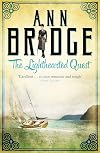
Julia is the young woman who is called upon to go hunt down the missing heir, and she embarks on her 'lighthearted quest" with a confident insouciance most of us can only dream of. Wander Europe with no solid idea where one man might be located? No problem. Make a temporary life in Tangier? No problem.
I'm really surprised, and sad, that I'd never heard of Ann Bridge before. I have been a huge Mary Stewart (no relation) fan for decades, along with Barbara Michaels and D.E. Stevenson and Elizabeth Cadell and so on – this series (because, I find, this book is the beginning of a series) would have been a terrific addition to that shelf. There's an intrepid young lady, exotic locales, vibrant background characters, sneaky and resourceful enemies, a dollop of romance, and a dash of archaeology – oh, and a glancing reference or two at Golden Age mystery – it's almost perfect. I would have loved it back in the day.
And I enjoyed it in the here and now. The writing – do I want to say it sparkles? Sure, why not – the writing sparkles. The story canters along happily to a suspenseful climax and a satisfying conclusion, and inspires a chuckle or two along the way ("storks have a capacity for looking disgusted almost equal to that of camels"). It sent me off down various eBay rabbitholes looking for trunks and other décor like that described in the book ("Moorish stuff—you know, antiques, leather goods and brass and so on.") "Why do you go hooshing off to find him in this completely wild-cat way?" – I want to start using "hooshing". And "The same to you, with knobs on!"
And one exchange proved that the more things change the more they stay the same:
"Has it ever struck you how apocalyptic the world is, today?"
"Yes, often," said Julia.
Me too.
Some notes which might be helpful to other American readers my age or younger:
"Le agradeço mucho su amabildad" is, in Spanish, "I really appreciate your kindness".
"the Old Lady of Thread-needle Street" is the Bank of England (I don't know why – I haven't investigated the story yet)
Tiens! Les petites feuilles – French: Look! Small leaves
Aucunément – French: nothing
Sabe todo – Spanish: (He/she) knows everything
Ah, méfiez-vous de cet homme-là – French: Ah, beware of this man!
The usual disclaimer: I received this book via Netgalley for review. show less
There was no forward to this book (or if there was, I missed it) to indicate that it was, in fact, not written in the 21st century, but in 1969. (This has happened a few times lately.) I started to twig to it pretty quickly, based on a scattering of clues; the show more style almost couldn't be a product of more recent years. It's very specific to British novels of the time – see also Mary Stewart, D.E. Stevenson, etc. And if the sheer style didn't give it away, now and then causal tossed-off phrases like "that bunch of pansies" and "the Gyppos" made it pretty clear. So while I enjoyed the writing (except for the pre-PC moments, always surprisingly difficult to stomach), I was a little disoriented for a while. (Let that be your warning if you don't feel like having to cope with it.)
Oh – Americans aren't exactly Ms. Bridge's favorite group, either, if some of the descriptions are anything to go by. Harrumph.
I love the premise. After a sudden death in the family, a family is left without anyone to run an estate. That is, there is someone (a woman! Isn't it amazing?) but she has her own plans for her life (a career! Will wonders never cease?); she is willing to handle things for a time, but the only solution seems to be for someone to go find the family's heir, who sailed off with some friends a while back and hasn't been seen since. So a clever cousin is called in (another woman!!) and recruited to go look for him, armed with very few clues (but, happily, lots of spending money).
Julia is the young woman who is called upon to go hunt down the missing heir, and she embarks on her 'lighthearted quest" with a confident insouciance most of us can only dream of. Wander Europe with no solid idea where one man might be located? No problem. Make a temporary life in Tangier? No problem.
I'm really surprised, and sad, that I'd never heard of Ann Bridge before. I have been a huge Mary Stewart (no relation) fan for decades, along with Barbara Michaels and D.E. Stevenson and Elizabeth Cadell and so on – this series (because, I find, this book is the beginning of a series) would have been a terrific addition to that shelf. There's an intrepid young lady, exotic locales, vibrant background characters, sneaky and resourceful enemies, a dollop of romance, and a dash of archaeology – oh, and a glancing reference or two at Golden Age mystery – it's almost perfect. I would have loved it back in the day.
And I enjoyed it in the here and now. The writing – do I want to say it sparkles? Sure, why not – the writing sparkles. The story canters along happily to a suspenseful climax and a satisfying conclusion, and inspires a chuckle or two along the way ("storks have a capacity for looking disgusted almost equal to that of camels"). It sent me off down various eBay rabbitholes looking for trunks and other décor like that described in the book ("Moorish stuff—you know, antiques, leather goods and brass and so on.") "Why do you go hooshing off to find him in this completely wild-cat way?" – I want to start using "hooshing". And "The same to you, with knobs on!"
And one exchange proved that the more things change the more they stay the same:
"Has it ever struck you how apocalyptic the world is, today?"
"Yes, often," said Julia.
Me too.
Some notes which might be helpful to other American readers my age or younger:
"Le agradeço mucho su amabildad" is, in Spanish, "I really appreciate your kindness".
"the Old Lady of Thread-needle Street" is the Bank of England (I don't know why – I haven't investigated the story yet)
Tiens! Les petites feuilles – French: Look! Small leaves
Aucunément – French: nothing
Sabe todo – Spanish: (He/she) knows everything
Ah, méfiez-vous de cet homme-là – French: Ah, beware of this man!
The usual disclaimer: I received this book via Netgalley for review. show less

Though written in the 30's this novel still has lots of relevance. I enjoyed it for the insight it gave me into how far women have come...and how far we still have to go. Plus it's a lovely travel fantasy; nothing wrong with that!
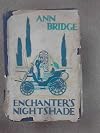
Many – maybe most – of Ann Bridges novel’s draw on her experiences of living overseas when when she was the wife of a diplomat, but ‘Enchanter’s Nightshade’ is a little different. It’s a period piece of Italian provincial society, set in the early years of the twentieth century, years when the author was still a girl. I have to believe that she visited that world then, because she captures it – the place and the people – quite beautifully.
The story is of a family that has show more grown so big that it has become a community, spending the summer months in the country. Days drift by as they exchange visits, go on picnics, and make trips to places of especial interest. The young are kept busy with lessons in the mornings before that are given their freedom in the afternoons and evenings. One family has a Swiss governess of many years standing who is wise and capable, and who has tactfully and effectively managed the household since the death of its mistress. Another family is awaiting the arrival of a new governess from England.
Almina Prestwich was Oxford educated and, because her father’s death had left his family ill provided for, she was setting out on a career as a governess. Her home and her family, her packing and her concern that she properly prepared for her new life, and her parting with her mother and her younger sisters were so beautifully drawn.
Everything in this book is beautifully drawn; every character, every scene, every room, even the furnishings in those rooms are carefully described. That might make the story sound slow, and it is a little, but it felt right. I loved watching the older governess managing her household, and I loved watching the younger governess taking in every detail of her new world.
Ann Bridge wrote with assurance and with finesse Every detail was right, every element of the story was beautifully realised, and the tone was so right. I’d describe it as teacherly in the very best of ways; Ann Bridge had the knack of making things interesting, her love and understanding shone, and I loved that she was prepared to accept that, though tradition was a wonderful thing, the old ways weren’t always the best, and that new ideas were something that should always be taken on board.
She drew me in, and she made me care.
Had she not married a diplomat she might have been a wonderful governess!
She manages a large cast very well. There is Marietta, Miss Prestwich’s bright young charge who is delighted with her new governess. There is her mother, Suzy, who is charming and indolent. There is her cousin, Guilio, who is studious and sensitive, and his sister Elena who is clever and clear-sighted. There is her Aunt Nadia, who is struggling to cope with her husband’s philandering. There is her Uncle Rofreddo who is charming, well-intentioned, but terribly thoughtless. There are two elderly spinster great-aunts, the Contessas Roma and Aspasia …..
Rofreddo charms the new governess and Suzy, used to being the centre of attention, is put out. One thoughtless act will lead to a long chain of consequences. The story becomes a little melodramatic but it works, because the foundations were laid in the early chapters of the book, and because everything is driven by the characters and their relationships to each other.
The story speaks thoughtfully about marriage; considering what might be its basis – romance or arrangement – and what differing expectations husbands and wives may have.
There is a tragedy, and not everything can be put right.
Some things can though, and it is the three elderly ladies, the two Contessas and the family’s matriarch, the Vecchia Marchesa, on the eve of her hundredth birthday, who will do what needs to be done.
They are of their time and class, they do not expect their world to change, and yet, unlikely though it may seem, some of their attitudes will make a 21st century feminist cheer!
I’d love to explain more, but I can’t without setting out almost the entire plot.
That plot is wonderfully dramatic, its world is beautifully realised, its characters are so real and engaging; and all of that together makes this book a lovely period piece. show less
The story is of a family that has show more grown so big that it has become a community, spending the summer months in the country. Days drift by as they exchange visits, go on picnics, and make trips to places of especial interest. The young are kept busy with lessons in the mornings before that are given their freedom in the afternoons and evenings. One family has a Swiss governess of many years standing who is wise and capable, and who has tactfully and effectively managed the household since the death of its mistress. Another family is awaiting the arrival of a new governess from England.
Almina Prestwich was Oxford educated and, because her father’s death had left his family ill provided for, she was setting out on a career as a governess. Her home and her family, her packing and her concern that she properly prepared for her new life, and her parting with her mother and her younger sisters were so beautifully drawn.
Everything in this book is beautifully drawn; every character, every scene, every room, even the furnishings in those rooms are carefully described. That might make the story sound slow, and it is a little, but it felt right. I loved watching the older governess managing her household, and I loved watching the younger governess taking in every detail of her new world.
Ann Bridge wrote with assurance and with finesse Every detail was right, every element of the story was beautifully realised, and the tone was so right. I’d describe it as teacherly in the very best of ways; Ann Bridge had the knack of making things interesting, her love and understanding shone, and I loved that she was prepared to accept that, though tradition was a wonderful thing, the old ways weren’t always the best, and that new ideas were something that should always be taken on board.
She drew me in, and she made me care.
Had she not married a diplomat she might have been a wonderful governess!
She manages a large cast very well. There is Marietta, Miss Prestwich’s bright young charge who is delighted with her new governess. There is her mother, Suzy, who is charming and indolent. There is her cousin, Guilio, who is studious and sensitive, and his sister Elena who is clever and clear-sighted. There is her Aunt Nadia, who is struggling to cope with her husband’s philandering. There is her Uncle Rofreddo who is charming, well-intentioned, but terribly thoughtless. There are two elderly spinster great-aunts, the Contessas Roma and Aspasia …..
Rofreddo charms the new governess and Suzy, used to being the centre of attention, is put out. One thoughtless act will lead to a long chain of consequences. The story becomes a little melodramatic but it works, because the foundations were laid in the early chapters of the book, and because everything is driven by the characters and their relationships to each other.
The story speaks thoughtfully about marriage; considering what might be its basis – romance or arrangement – and what differing expectations husbands and wives may have.
There is a tragedy, and not everything can be put right.
Some things can though, and it is the three elderly ladies, the two Contessas and the family’s matriarch, the Vecchia Marchesa, on the eve of her hundredth birthday, who will do what needs to be done.
They are of their time and class, they do not expect their world to change, and yet, unlikely though it may seem, some of their attitudes will make a 21st century feminist cheer!
I’d love to explain more, but I can’t without setting out almost the entire plot.
That plot is wonderfully dramatic, its world is beautifully realised, its characters are so real and engaging; and all of that together makes this book a lovely period piece. show less
Lists
Awards


You May Also Like


Associated Authors
Statistics
- Works
- 31
- Also by
- 13
- Members
- 1,166
- Popularity
- #22,047
- Rating
- 3.8
- Reviews
- 28
- ISBNs
- 81
- Languages
- 1
- Favorited
- 1