
J. L. Mackie (1917–1981)
Author of Ethics: Inventing Right and Wrong
About the Author
Image credit: Lunt's World
Works by J. L. Mackie
Associated Works
Tagged
Common Knowledge
- Legal name
- Mackie, John Leslie
- Birthdate
- 1917-08-28
- Date of death
- 1981-12-12
- Gender
- male
- Education
- Oxford University (Oriel College),
"University of Sydney (BA)" - Occupations
- philosopher
- Organizations
- University of Otago
University of Sydney
University of York
Oxford University - Relationships
- Mackie, Penelope (daughter)
- Nationality
- Australia
- Birthplace
- Killara, Sydney, Australia
- Place of death
- Oxford, England, UK
- Associated Place (for map)
- Australia
Members
Reviews
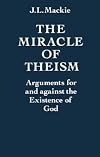
The Australian philosopher John Mackie, sadly now deceased, has always been one of my favorite philosophers, and when I heard from several religious people that this was in their view the best critique of religion, I decided to buy it at once. The book is indeed highly rewarding of its praise, for it is the most thorough philosophical (here as opposed to scientific) critique of all (mono)theist apologetics written so far.
Unlike such recent anti-theist writers as Dawkins and Dennett, Mackie show more is extraordinarily charitable to the theists' claims, making sure to mention every possible argument in their favor and using only counter-arguments that could not possibly be considered controversial or contingent on a given scientific theory, etc. In fact, he is much more charitable in some places than is really necessary; I would not have the same patience with the meaningless phrasings of Swinburne or Küng that Mackie has. In any case, Mackie diligently and cordially addresses each of the main issues surrounding theist apologetics: miracles, the ontological argument, the cosmological arguments (including Kalam), moral arguments, the issue of consciousness, free will, the argument from design, the argument from faith alone (Kierkegaard), the argument from popularity (William James), the problem of evil, the possibility of atheist morality, and so on.
Mackie shows himself at his best here - an impressive array of arguments and decisive counterarguments, even against such modern superstars of apologetics like William Lane Craig and Alvin Plantinga, are dealt with in sequence with seemingly no effort at all. Not a single theist argument remains standing, and Mackie is sure to remind us at all times that not only is the burden of proof on the theists, but they also have to show their view more likely than not as well as more likely than naturalist explanations, if their view is to succeed. As Mackie makes abundantly clear, this is a bar far too high for any theology whatever to achieve.
This book is strongly recommended for everyone interested in religion and philosophy, although the work is written at a high level and is not easy or 'popular' reading. To further dig into the issue of ethics and atheism, I would also recommend reading Mackie's defense of ethical anti-realism: "Ethics: Inventing Right and Wrong". show less
Unlike such recent anti-theist writers as Dawkins and Dennett, Mackie show more is extraordinarily charitable to the theists' claims, making sure to mention every possible argument in their favor and using only counter-arguments that could not possibly be considered controversial or contingent on a given scientific theory, etc. In fact, he is much more charitable in some places than is really necessary; I would not have the same patience with the meaningless phrasings of Swinburne or Küng that Mackie has. In any case, Mackie diligently and cordially addresses each of the main issues surrounding theist apologetics: miracles, the ontological argument, the cosmological arguments (including Kalam), moral arguments, the issue of consciousness, free will, the argument from design, the argument from faith alone (Kierkegaard), the argument from popularity (William James), the problem of evil, the possibility of atheist morality, and so on.
Mackie shows himself at his best here - an impressive array of arguments and decisive counterarguments, even against such modern superstars of apologetics like William Lane Craig and Alvin Plantinga, are dealt with in sequence with seemingly no effort at all. Not a single theist argument remains standing, and Mackie is sure to remind us at all times that not only is the burden of proof on the theists, but they also have to show their view more likely than not as well as more likely than naturalist explanations, if their view is to succeed. As Mackie makes abundantly clear, this is a bar far too high for any theology whatever to achieve.
This book is strongly recommended for everyone interested in religion and philosophy, although the work is written at a high level and is not easy or 'popular' reading. To further dig into the issue of ethics and atheism, I would also recommend reading Mackie's defense of ethical anti-realism: "Ethics: Inventing Right and Wrong". show less
begin sterker dan het eind. Alle mij bekende goede filosofische Godsbewijzen worden behandeld op een manier dat ik ze nu beter begrijp dan daarvoor. Daarna bestudeert deze kerel of ze houdbaar zijn. Naarmate het boek naar het einde nadert begint zijn schr
One of the only books I have saved from my undergrad days - he goes through all the historic western philosophical arguments for and against - a great introduction to a contentious topic. Mackey unfortunately died shortly after this book was published and the world is less for that.
One of the best philosophical critiques of theism in print.
Lists
You May Also Like


Associated Authors
Statistics
- Works
- 10
- Also by
- 5
- Members
- 1,132
- Popularity
- #22,674
- Rating
- 3.8
- Reviews
- 6
- ISBNs
- 34
- Languages
- 2
- Favorited
- 2