
About the Author
Katie Roiphe received her Ph.D. from Princeton University in English literature. Her articles have appeared in "The New York Times", "The Washington Post", "Esquire", "Harper's", and "The New Yorker", among many other publications. She lives in New York City. (Bowker Author Biography)
Image credit: (Illustration/Tim Bower)
Works by Katie Roiphe
Uncommon Arrangements: Seven Portraits of Married Life in London Literary Circles 1910-1939 (2007) 352 copies, 10 reviews
Associated Works
McSweeney's 12: Unpublished, Unknown, and/or Unbelievable (2003) — Contributor — 290 copies, 4 reviews
The Friend Who Got Away: Twenty Women's True Life Tales of Friendships that Blew Up, Burned Out or Faded Away (2005) — Contributor — 213 copies, 9 reviews
Tin House 17 (Fall 2003): Give — Contributor — 8 copies
Tagged
Common Knowledge
- Legal name
- Roiphe, Katherine Anne
- Birthdate
- 1968-07-13
- Gender
- female
- Education
- Harvard University
Brearley School, New York
Princeton University (PhD|literature) - Occupations
- professor
author
journalist - Organizations
- New York University
- Relationships
- Roiphe, Anne (mother)
Carter, Emily (sister) - Nationality
- USA
- Birthplace
- New York, New York, USA
- Places of residence
- New York, New York, USA
- Associated Place (for map)
- New York, New York, USA
Members
Reviews
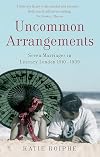
This book explores and illuminates the unconventional, and occasionally bizarre, marital arrangements and affairs of the heart of such literary lights as H. G. Wells, Katherine Mansfield, Vera Brittain, and Vanessa Bell. It isn't the least bit salacious, but there would be an uncomfortable element of voyeurism in reading it if not for the fact that so much of what is known about these relationships comes from the parties themselves, who wrote voluminously about the intimacies (and lack show more thereof) of their personal lives in letters, memoirs and autobiographies, to say nothing of the fictional versions they created. "Freedom" and "rationality" were the common themes in the alternative lifestyles documented here. Women who wanted to be free from the constraints of traditional marriage...free to pursue their own careers, to avoid male domination while enjoying male companionship, free to express love in multiple (often Platonic or nearly so) ways; men who wanted the comfort and security of a devoted wife who was "rational" enough to realize she might not satisfy all his needs; men and women who felt no one could maintain, with a single person, the high level of romantic interest necessary for emotional sustenance over time; men and women who were attracted in various ways to individuals of both sexes. It's fascinating stuff, but ultimately none of these arrangements seemed to work any better for everyone involved than more traditional unions. Because, after all, humans aren't all that rational when it comes to their passions and longings, and most experiments that attempt to impose rationality onto essentially emotional situations are bound to be no more than partially successful in the long run. In almost every instance related here, someone was ultimately exploited or shortchanged in some way. show less
I guess I missed the point.
Isn't historical fiction supposed to be about what actually happened, only trying to guess and fill in the details we don't know? As opposed to "making up vile statements out of whole cloth," which is generally referred to as "slander"?
I probably am not the target market for this book -- after all, I know some actual facts about Charles Dodgson, plus I am autistic (as Dodgson probably was), and I don't really understand the point of fiction when one could write a show more real biography. Others may not suffer those handicaps.
But still -- it's so wrong! Flat-out factually wrong. Let's clarify: The plot of this book is about the (documented and seemingly correct) estrangement between Charles Dodgson (Lewis Carroll) and the family of Dean Liddell, including Alice Liddell, the "real Alice in Wonderland." The real reason for this estrangement -- which was real but not as extreme as described in this volume -- is unknown.Author Roiphe suggests that the reason was that Dodgson took nude photographs of Alice.
There is good reason to think that Dodgson was not, in fact, a paedophile -- that his strange behaviors (and they certainly were strange!) came about because, as a person with autism, he had developed better social skills for dealing with children than adults. But that's only hypothesis. Perhaps he did lust after little girls.
That still doesn't cure the errors in the book. Far too many. A smattering of examples:
Page 3: At Christ Church, where Dodgson taught, a "student" was not "one who studies"; a studentship was a fellowship, entitling the holder to certain rights at the college.
Page 10: When Dodgson met Alice, she was not yet four -- yet here she is playing croquet and asking about being lectured. (This, I'll admit, may be my error. At times Roiphe jumps around in time and perspective in a way I found hard to follow.)
Page 36: Dodgson was not stooped; he was noteworthy for his extremely stiff posture. One of those who testified to this was Alice Hargreaves (the former Alice Liddell) herself.
Page 52 quotes Dodgson as telling "The Walrus and the Carpenter" to Alice. Not possible. Dodgson hadn't even decided it was a "Carpenter" at that time -- he didn't decide on a carpenter (as opposed to a couple of other things) until Tenniel told him which would be easier to illustrate, more than half a decade after the break-up with the Liddells.
Page 60: Dodgson "the only man in Oxford who didn't like the Dean"? Most of Christ Church was aghast at his appointment -- he was a reformer, and they didn't want to be reformed.
Page 155: This is a story about how Dodgson came to use the name "Lewis Carroll" on the Alice books. But Dodgson had already used "Lewis Carroll" before that, and the story of how he picked the name is well known, and this isn't it.
Page 166: Dodgson's diaries show that his faith in God was fervent and lifelong -- his heartfelt appeals to God in his diary show that. He lost his belief in eternal punishment, not his belief in God.
Page 168: He was not a mediocre mathematician; his works on logic, voting theory, and determinants were all original and noteworthy. And he wrote useful notes on Euclid, although he refused to go beyond what Euclid taught. This was his one real weakness as a mathematician. He was not great as Euler or Gauss were great, but he would have been an asset to any mathematical research department. As for Lorina Liddell's snarl on p. 217, "What has he ever produced," this is both wrong (his list of publications shows that he did produce) and wrong-headed (Dodgson lived before "publish or perish").
Page 176: We know from Dodgson's diaries that he did not take his first nude photograph until after his break with the Liddells. Nor did he take any without the parents' consent (although he sometimes angled hard for that consent). For one thing, it was too hard. His photographs weren't snapshots, which were not possible in that era; Victorian photographs needed good light, and a cooperative model, and a long time.
Page 194: "Respectable children did not pose for naked portraits." That's not history; that's modern opinion. In Victorian times, children often did -- there is reason to think that many of Dodgson's nude pictures were taken at the request of the parents. It was adults -- sinful, fallen adults -- who were not photographed naked. Go ahead, start looking at Victorian poetry books, and see how many of them feature illustrations of naked children.
I'm going on and on -- a trait I share with Dodgson. The point is, this book is false. The hypothesis doesn't hold water, and the supporting "data" didn't happen. Maybe it happened to someone else. But would you care if the people involved weren't "Lewis Carroll" and "Alice"? Problem is, they aren't Lewis Carroll and Alice. Whatever is the answer to the "Liddell Riddle," the greatest question in Dodgson scholarship, this is not it. show less
Isn't historical fiction supposed to be about what actually happened, only trying to guess and fill in the details we don't know? As opposed to "making up vile statements out of whole cloth," which is generally referred to as "slander"?
I probably am not the target market for this book -- after all, I know some actual facts about Charles Dodgson, plus I am autistic (as Dodgson probably was), and I don't really understand the point of fiction when one could write a show more real biography. Others may not suffer those handicaps.
But still -- it's so wrong! Flat-out factually wrong. Let's clarify: The plot of this book is about the (documented and seemingly correct) estrangement between Charles Dodgson (Lewis Carroll) and the family of Dean Liddell, including Alice Liddell, the "real Alice in Wonderland." The real reason for this estrangement -- which was real but not as extreme as described in this volume -- is unknown.
There is good reason to think that Dodgson was not, in fact, a paedophile -- that his strange behaviors (and they certainly were strange!) came about because, as a person with autism, he had developed better social skills for dealing with children than adults. But that's only hypothesis. Perhaps he did lust after little girls.
That still doesn't cure the errors in the book. Far too many. A smattering of examples:
Page 3: At Christ Church, where Dodgson taught, a "student" was not "one who studies"; a studentship was a fellowship, entitling the holder to certain rights at the college.
Page 10: When Dodgson met Alice, she was not yet four -- yet here she is playing croquet and asking about being lectured. (This, I'll admit, may be my error. At times Roiphe jumps around in time and perspective in a way I found hard to follow.)
Page 36: Dodgson was not stooped; he was noteworthy for his extremely stiff posture. One of those who testified to this was Alice Hargreaves (the former Alice Liddell) herself.
Page 52 quotes Dodgson as telling "The Walrus and the Carpenter" to Alice. Not possible. Dodgson hadn't even decided it was a "Carpenter" at that time -- he didn't decide on a carpenter (as opposed to a couple of other things) until Tenniel told him which would be easier to illustrate, more than half a decade after the break-up with the Liddells.
Page 60: Dodgson "the only man in Oxford who didn't like the Dean"? Most of Christ Church was aghast at his appointment -- he was a reformer, and they didn't want to be reformed.
Page 155: This is a story about how Dodgson came to use the name "Lewis Carroll" on the Alice books. But Dodgson had already used "Lewis Carroll" before that, and the story of how he picked the name is well known, and this isn't it.
Page 166: Dodgson's diaries show that his faith in God was fervent and lifelong -- his heartfelt appeals to God in his diary show that. He lost his belief in eternal punishment, not his belief in God.
Page 168: He was not a mediocre mathematician; his works on logic, voting theory, and determinants were all original and noteworthy. And he wrote useful notes on Euclid, although he refused to go beyond what Euclid taught. This was his one real weakness as a mathematician. He was not great as Euler or Gauss were great, but he would have been an asset to any mathematical research department. As for Lorina Liddell's snarl on p. 217, "What has he ever produced," this is both wrong (his list of publications shows that he did produce) and wrong-headed (Dodgson lived before "publish or perish").
Page 176: We know from Dodgson's diaries that he did not take his first nude photograph until after his break with the Liddells. Nor did he take any without the parents' consent (although he sometimes angled hard for that consent). For one thing, it was too hard. His photographs weren't snapshots, which were not possible in that era; Victorian photographs needed good light, and a cooperative model, and a long time.
Page 194: "Respectable children did not pose for naked portraits." That's not history; that's modern opinion. In Victorian times, children often did -- there is reason to think that many of Dodgson's nude pictures were taken at the request of the parents. It was adults -- sinful, fallen adults -- who were not photographed naked. Go ahead, start looking at Victorian poetry books, and see how many of them feature illustrations of naked children.
I'm going on and on -- a trait I share with Dodgson. The point is, this book is false. The hypothesis doesn't hold water, and the supporting "data" didn't happen. Maybe it happened to someone else. But would you care if the people involved weren't "Lewis Carroll" and "Alice"? Problem is, they aren't Lewis Carroll and Alice. Whatever is the answer to the "Liddell Riddle," the greatest question in Dodgson scholarship, this is not it. show less
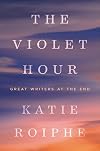
In this interesting collection, Roiphe pieces together the final days of 5 writers: Susan Sontag, Sigmund Freud, John Updike, Dylan Thomas and Maurice Sendak. Using original sources, letters, interviews and other impressive, exhaustive research she is able to paint a portrait of each writer's "final descent." Also included is a black and white photograph of each writer's office/work-space, which is a nice touch. Because it is all second-hand information, (except for James Salter in the show more epilogue, who is still a robust 89 and not anticipating death, whom Roiphe speaks to herself), sometimes the narrative is a little clunky, trying to make the pieces fit. For the most part though, it is an eloquent homage to both the life each artist lived and the death they faced. There are some beautiful lines here from Roiphe herself who is no stranger to the concept of death, having had a sickly childhood and other health set-backs as an adult, and the original words of her case-studies both in their published works and their private reflections resonate and ultimately comfort. Death is the only sure thing in life and though each had a different circumstance and approach (Sontag: relentless cancer treatment; Freud: no painkillers; Updike: published essentially from his hospital bed) they each have something worthwhile to impart. Kudos to Roiphe for tackling a difficult, often taboo subject in a respectful, enlightening way. Her commentary after the last author: "This seems to be key: staring into something you have always been terrified of and finding it beautiful." (247) show less
Uncommon Arrangements: Seven Portraits of Married Life in London Literary Circles 1919-1939 by Katie Roiphe
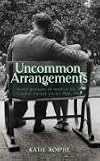
Dorothy Parker famously said the Bloomsbury group “lived in squares, painted in circles, and loved in triangles”.
This is a multiple biography, looking at seven literary “marriages” in the Bloomsbury group - London literati of 1910-1939.
At least one of each couple had other relationships with the knowledge and usually consent of the other. It includes HG Wells, Katherine Mansfield, Vanessa Bell, Ottoline Morrell and Radcliffe Hall. The book tries to dissect these relationships show more individually and in the context of their time. Things are further complicated by the fact that they all knew at least one of the other couples and had relationships with them in complex permutations. A Venn diagram would have been useful!
Reading it feels rather prurient, even though there are no graphic details and almost all of it is drawn from published material (though not necessarily intended for that when it was written). Even so, there is too much empty speculation for my liking, coupled with occasional confusion, contradiction and inaccuracy (“Oxford Cathedral” is never referred to as such; Malta has neither “dramatic cliffs” nor much in the way of “white beaches”, and Shirley Williams is far more famous for her role in the SDP and Lib Dems than the Labour party).
I’m not really sure who it’s aimed at: it’s too tame for those wanting really juicy gossip; if you love any of the writers covered, there are doubtless other books covering the same ground in more detail, and if you’re not particularly keen on any of them, it’s not especially relevant. Overall, it was moderately interesting – it’s not just modern celebrities who lead scandalous lives – but I only read it because I was given it. show less
This is a multiple biography, looking at seven literary “marriages” in the Bloomsbury group - London literati of 1910-1939.
At least one of each couple had other relationships with the knowledge and usually consent of the other. It includes HG Wells, Katherine Mansfield, Vanessa Bell, Ottoline Morrell and Radcliffe Hall. The book tries to dissect these relationships show more individually and in the context of their time. Things are further complicated by the fact that they all knew at least one of the other couples and had relationships with them in complex permutations. A Venn diagram would have been useful!
Reading it feels rather prurient, even though there are no graphic details and almost all of it is drawn from published material (though not necessarily intended for that when it was written). Even so, there is too much empty speculation for my liking, coupled with occasional confusion, contradiction and inaccuracy (“Oxford Cathedral” is never referred to as such; Malta has neither “dramatic cliffs” nor much in the way of “white beaches”, and Shirley Williams is far more famous for her role in the SDP and Lib Dems than the Labour party).
I’m not really sure who it’s aimed at: it’s too tame for those wanting really juicy gossip; if you love any of the writers covered, there are doubtless other books covering the same ground in more detail, and if you’re not particularly keen on any of them, it’s not especially relevant. Overall, it was moderately interesting – it’s not just modern celebrities who lead scandalous lives – but I only read it because I was given it. show less
Lists
READ 2025 (1)
Awards


You May Also Like


Associated Authors
Statistics
- Works
- 8
- Also by
- 4
- Members
- 1,233
- Popularity
- #20,820
- Rating
- 3.6
- Reviews
- 38
- ISBNs
- 40
- Languages
- 3
- Favorited
- 2