
Heinz Guderian (1888–1954)
Author of Panzer leader
About the Author
Heinz Guderian (1888-1954) rose through the Nazi ranks to become Chief of the General Staff under Adolf Hitler
Image credit: Image © ÖNB/Wien
Series
Works by Heinz Guderian
Tagged
Common Knowledge
- Legal name
- Guderian, Heinz Wilhelm
- Birthdate
- 1888-06-17
- Date of death
- 1954-05-14
- Gender
- male
- Occupations
- military theorist
soldier
officer (German Army) - Organizations
- Reichswehr
Wehrmacht - Nationality
- Germany
- Birthplace
- Kulm (West Prussia)
- Place of death
- Schwangau, Bavaria, Germany
- Burial location
- Friedhof Hildesheimer Strasse, Goslar, Lower Saxony, Germany
- Map Location
- Germany
Members
Reviews
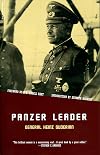
This book is the memoirs of Heinz Guderian, inventor of blitzkrieg and, to say the least, one of history's more capable generals; it focuses more or less exclusively on the Second World War, and details his role in the conquests of Poland and France more or less exhaustively. His style is engaging and memorable, but the reader becomes glad that he never had to have Guderian as a subordinate; the man must have been completely uncontrollable, given his penchant not just for disobeying orders show more (a venerable custom in the Prussian-German military), but disobeying them snidely. (He also had virtually complete impunity for his actions; Hitler fired him twice.)
But the question one has to ask about Guderian is this: he was a skilled, capable, personally fearless commander; did he really never notice who he was working for? Did he not know or not care that every victory he won established Hitler's power more securely -- that if he had deliberately lost the Battle of France, or just defected before the war, there would have been no Holocaust?
No; he did know. He may have been more enthusiastic for Naziism than he lets on in his book (or he might've just been paying the movement lip service; it's hard to imagine faking something like his take-down of Himmler); more likely, he might have been operating under the heuristic of the Thirty Years' War, that "provided we serve our master honestly, it matters not what master we serve." (Or it might just be that he was a career soldier, dedicated to serving Germany regardless of who Germany was ruled by at the time... Prussian Germany, with its long history of annexations and unjustifiable wars, /would/ tend to have officers like this.)
And, at least to hear him tell it, he did try to do something about the Holocaust; while he despised and refused to engage in the usual pattern of resistance, of telling Hitler everything he wanted to hear and then working against him behind his back, he did bring up the question of how Hitler was treating the Jews and Slavs, to Hitler's face. I think that Guderian was right in thinking that Hitler was more normal than we tend to imagine him as; had Guderian been supported by the rest of the General Staff, had it been impossible for Hitler to get anything done at a meeting because he was surrounded by people lecturing him about his massacres of Jews and Slavs, perhaps the Holocaust could have been stopped -- not by an all-out war, not by nuclear bombardment or saturation airstrikes, not even by assassinations, but by ordinary, old-fashioned peer pressure...
Or perhaps Guderian is just saying this because it's the postwar period and he doesn't want to get hanged. He was a slippery writer, by all indications, and one should not take everything in this memoir at face value: he appears to have been responsible for the awful lie about Polish cavalry charging German tanks; his soldiers may have used human shields in the invasion of Poland; and he apparently had a large, ugly role in the prosecutions after the July 20th plot.
After the war, the Poles and Russians wanted him hanged for war crimes; was this because he had actually committed them, or was it just because he had humiliated them by cutting their armies to ribbons? It's hard to tell from this book... although his joy in having arrived as a liberator in the Russian countryside, his disgust at the behavior of the Nazi civil authorities once conquered territory passed out of military control, and the little incidents like how he reopened a shoe factory and his soldiers helped with the harvest, feel hard to imagine as faked. (On the other hand, that harvest was probably one of those that the Germans stole from the Ukrainians -- a less bucolic and cheerful image than it sounds...!)
And, too, Guderian assumed, after the Sudetenland's annexation, that that was that -- that, by escaping the Peace of Versailles and annexing the biggest parts of Greater Germany, Hitler had accomplished enough for one lifetime and would spend the next twenty years modernizing and expanding the military, integrating Austria and the Sudetenland into Germany, and only then /perhaps/ fighting a war to humiliate the Western Allies. He was surprised and a little concerned when Hitler kept going -- and he was perhaps the only senior official in either country who thought that the Molotov-Ribbentrop Pact was for real, leading to history's most awkward military parade...
All told, Guderian is a hard figure to really form a full, confident appraisal of, and is almost as hard to trust as he is to mistrust (or perhaps the other way around). Would the reader behave better than he did, in his shoes? Part of answering that question is to determine what "better" would be in the first place; deliberately throwing the Battle of France, or defecting to England before the war, would probably have been the right choice, but such actions would have been hard to swallow...
I didn't spend much time writing about the book itself, did I? The secondary issues have a way of gripping the reader's attention. But Guderian's book itself is unquestionably lively, interesting, informative, and fascinating; were it not for the moral and political concerns above, I'd have given it five stars readily enough, and I certainly don't regret reading it even though it turns out that parts are highly unreliable... show less
But the question one has to ask about Guderian is this: he was a skilled, capable, personally fearless commander; did he really never notice who he was working for? Did he not know or not care that every victory he won established Hitler's power more securely -- that if he had deliberately lost the Battle of France, or just defected before the war, there would have been no Holocaust?
No; he did know. He may have been more enthusiastic for Naziism than he lets on in his book (or he might've just been paying the movement lip service; it's hard to imagine faking something like his take-down of Himmler); more likely, he might have been operating under the heuristic of the Thirty Years' War, that "provided we serve our master honestly, it matters not what master we serve." (Or it might just be that he was a career soldier, dedicated to serving Germany regardless of who Germany was ruled by at the time... Prussian Germany, with its long history of annexations and unjustifiable wars, /would/ tend to have officers like this.)
And, at least to hear him tell it, he did try to do something about the Holocaust; while he despised and refused to engage in the usual pattern of resistance, of telling Hitler everything he wanted to hear and then working against him behind his back, he did bring up the question of how Hitler was treating the Jews and Slavs, to Hitler's face. I think that Guderian was right in thinking that Hitler was more normal than we tend to imagine him as; had Guderian been supported by the rest of the General Staff, had it been impossible for Hitler to get anything done at a meeting because he was surrounded by people lecturing him about his massacres of Jews and Slavs, perhaps the Holocaust could have been stopped -- not by an all-out war, not by nuclear bombardment or saturation airstrikes, not even by assassinations, but by ordinary, old-fashioned peer pressure...
Or perhaps Guderian is just saying this because it's the postwar period and he doesn't want to get hanged. He was a slippery writer, by all indications, and one should not take everything in this memoir at face value: he appears to have been responsible for the awful lie about Polish cavalry charging German tanks; his soldiers may have used human shields in the invasion of Poland; and he apparently had a large, ugly role in the prosecutions after the July 20th plot.
After the war, the Poles and Russians wanted him hanged for war crimes; was this because he had actually committed them, or was it just because he had humiliated them by cutting their armies to ribbons? It's hard to tell from this book... although his joy in having arrived as a liberator in the Russian countryside, his disgust at the behavior of the Nazi civil authorities once conquered territory passed out of military control, and the little incidents like how he reopened a shoe factory and his soldiers helped with the harvest, feel hard to imagine as faked. (On the other hand, that harvest was probably one of those that the Germans stole from the Ukrainians -- a less bucolic and cheerful image than it sounds...!)
And, too, Guderian assumed, after the Sudetenland's annexation, that that was that -- that, by escaping the Peace of Versailles and annexing the biggest parts of Greater Germany, Hitler had accomplished enough for one lifetime and would spend the next twenty years modernizing and expanding the military, integrating Austria and the Sudetenland into Germany, and only then /perhaps/ fighting a war to humiliate the Western Allies. He was surprised and a little concerned when Hitler kept going -- and he was perhaps the only senior official in either country who thought that the Molotov-Ribbentrop Pact was for real, leading to history's most awkward military parade...
All told, Guderian is a hard figure to really form a full, confident appraisal of, and is almost as hard to trust as he is to mistrust (or perhaps the other way around). Would the reader behave better than he did, in his shoes? Part of answering that question is to determine what "better" would be in the first place; deliberately throwing the Battle of France, or defecting to England before the war, would probably have been the right choice, but such actions would have been hard to swallow...
I didn't spend much time writing about the book itself, did I? The secondary issues have a way of gripping the reader's attention. But Guderian's book itself is unquestionably lively, interesting, informative, and fascinating; were it not for the moral and political concerns above, I'd have given it five stars readily enough, and I certainly don't regret reading it even though it turns out that parts are highly unreliable... show less
Achtung-Panzer!: The Development of Armoured Forces, Their Tactics and Operational Potential by Heinz Guderian
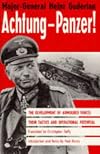
Ген. Хайнц Гудериан е може би най-успешният танков генерал на Вермахта през Втората световна война, създател на т.н. бърза война (блицкриг, макар че той не я нарича така), основата на която е бързо и агресивно навлизане на самостоятелни танкови части през линиите на show more противника дълбоко зад неговата бойна позиция.
Благодарение на тази тактика, Германия завладява за отрицателно време половин Европа, но по-интересното в случая е, че Гудериан разработва доктрината на използването на танкови сили в тази книга не само преди да има какъвто и да е опит в ръководството на такива, но и преди изобщо танковете да станат основна част от военните сили на която и да е държава. Така той става първият и основен визионер за това каква роля могат да изпълняват танковите части в модерната война - принципи, които важат и сега.
Книгата е доста скучна, написана с тежък, технически, военен език и на 70% от обема си описва дотогавашната история в развитието на танковете и участието им в битки (което е съвсем малко, предвид че за пръв път за използвани през Първата световна война, а книгата е написана през 30-те), а в останалата - визията си за бъдещото им използване и като цяло за това как би изглеждала една бъдеща, неизбежна (според него, отново визионер или пророк) световна война. show less
Благодарение на тази тактика, Германия завладява за отрицателно време половин Европа, но по-интересното в случая е, че Гудериан разработва доктрината на използването на танкови сили в тази книга не само преди да има какъвто и да е опит в ръководството на такива, но и преди изобщо танковете да станат основна част от военните сили на която и да е държава. Така той става първият и основен визионер за това каква роля могат да изпълняват танковите части в модерната война - принципи, които важат и сега.
Книгата е доста скучна, написана с тежък, технически, военен език и на 70% от обема си описва дотогавашната история в развитието на танковете и участието им в битки (което е съвсем малко, предвид че за пръв път за използвани през Първата световна война, а книгата е написана през 30-те), а в останалата - визията си за бъдещото им използване и като цяло за това как би изглеждала една бъдеща, неизбежна (според него, отново визионер или пророк) световна война. show less

Heinz was an early believer in the power of the tank to change the battlefield and the tactics of war. His views on the proper use of the tank found acceptance with Hitler early in the war when his tactics helped ensure victory against France and her allies on the European continent. He was sent to join the attack against Russia and was eventually relieved of command because of disagreements with Hitler on how to extend their efforts in Russia. You can read in between the lines about how show more disappointed in hindsight Guderian was that Germany attacked Poland and then later Russia.
General Guderian was eventually recalled to service and served as a leading general in Germany on Hitler's staff trying to stem the losing tide against the Russians. It is clear Hitler and he had some screaming matching with most of the screaming and carrying on being done by Hitler.
Of note, the book includes a chapter on personalities in command at the top in Germany. I copy this portion on Hitler:
I must now turn to Hitler's personal characteristics as they impressed me. What sort of man was he? He was a vegetarian, a teetotaler, and a non-smoker. These were, taken independently, very admirable qualities which derived from his personal convictions and from his ascetic way of life. But, connected with this, was his isolation as a human being. He had no real friend. His oldest Party comrades were, it is true, disciples, but they could hardly be described as friends. So far as I can see there was nobody who was really close to him. There was nobody in whom he would confide his deepest feelings. There was nobody with whom he could talk freely and openly. As he never found a true friend, so he was denied the ability to deeply love a woman. He remained unmarried. He had no children. Everything that on this earth that casts a glow of warmth over our life as mortals, friendship with fine men, the pure love for a wife, affection for one's own children, all this was and remained for ever unknown to him. His path thru the world was a solitary one and he followed it alone, with only his gigantic plans for company. His relationship with Eva Braun may be cited as a contradiction of what I have written. I can only say that I knew nothing of this and that so far as I am aware I never once saw Eva Braun, though for months on end I was with Hitler an his entourage almost every day. It was only in prison that I first learned of this liaison. It is obvious that this woman cannot have had any influence over Hitler, and the more's the pity, for it could only have been a softening one." General Heinz Guderian in his memoirs: Panzer Leader show less
General Guderian was eventually recalled to service and served as a leading general in Germany on Hitler's staff trying to stem the losing tide against the Russians. It is clear Hitler and he had some screaming matching with most of the screaming and carrying on being done by Hitler.
Of note, the book includes a chapter on personalities in command at the top in Germany. I copy this portion on Hitler:
I must now turn to Hitler's personal characteristics as they impressed me. What sort of man was he? He was a vegetarian, a teetotaler, and a non-smoker. These were, taken independently, very admirable qualities which derived from his personal convictions and from his ascetic way of life. But, connected with this, was his isolation as a human being. He had no real friend. His oldest Party comrades were, it is true, disciples, but they could hardly be described as friends. So far as I can see there was nobody who was really close to him. There was nobody in whom he would confide his deepest feelings. There was nobody with whom he could talk freely and openly. As he never found a true friend, so he was denied the ability to deeply love a woman. He remained unmarried. He had no children. Everything that on this earth that casts a glow of warmth over our life as mortals, friendship with fine men, the pure love for a wife, affection for one's own children, all this was and remained for ever unknown to him. His path thru the world was a solitary one and he followed it alone, with only his gigantic plans for company. His relationship with Eva Braun may be cited as a contradiction of what I have written. I can only say that I knew nothing of this and that so far as I am aware I never once saw Eva Braun, though for months on end I was with Hitler an his entourage almost every day. It was only in prison that I first learned of this liaison. It is obvious that this woman cannot have had any influence over Hitler, and the more's the pity, for it could only have been a softening one." General Heinz Guderian in his memoirs: Panzer Leader show less
Achtung-Panzer!: The Development of Armoured Forces, Their Tactics and Operational Potential by Heinz Guderian
It is interesting reading a book about history, that is itself, history. Published just before the second world war, this exceptional book is Heinz Guderian's play book for armoured warfare.
He in the text he first of all goes into exact detail on a number of battles from the First World War. Not necessarily the famous one's but battles that slowly build up a picture of the First World War methods used by the then infant tank troops. Then, he takes us through the developments after the First show more World War, concentrating on how Britian, France and Russia adapted the armoured warfare concept. Finally, he states the way he believes the next war should be fought. That of using the tank as the primary weapon to achieve victory.
It is very prophetic reading through his proposals and seeing just how many were applied by the Panzer forces, almost to the letter. In turn, some of his predictions on how enemies would react are spot-on. It is no wonder, reading through this book, that the Germany tank forces and indeed military as a whole were so successful during the opening years of the Second World War.
For military buff's, this is a must read and exceptionally well translated. An excellent book. show less
He in the text he first of all goes into exact detail on a number of battles from the First World War. Not necessarily the famous one's but battles that slowly build up a picture of the First World War methods used by the then infant tank troops. Then, he takes us through the developments after the First show more World War, concentrating on how Britian, France and Russia adapted the armoured warfare concept. Finally, he states the way he believes the next war should be fought. That of using the tank as the primary weapon to achieve victory.
It is very prophetic reading through his proposals and seeing just how many were applied by the Panzer forces, almost to the letter. In turn, some of his predictions on how enemies would react are spot-on. It is no wonder, reading through this book, that the Germany tank forces and indeed military as a whole were so successful during the opening years of the Second World War.
For military buff's, this is a must read and exceptionally well translated. An excellent book. show less
Lists
You May Also Like


Associated Authors
Statistics
- Works
- 20
- Members
- 1,284
- Popularity
- #19,973
- Rating
- 3.9
- Reviews
- 16
- ISBNs
- 51
- Languages
- 9
- Favorited
- 1