
António Lobo Antunes (1942–2026)
Author of The Land at the End of the World
About the Author
Lobo Antunes, a psychiatrist and a soldier in the Portuguese colonial wars in Angola, was born in Lisbon. "South of Nowhere", his second novel, published in 1980, became the center of controversy both because of its daring content and its novel structure. The action is very brief: it lasts only one show more night. The author tells a silent woman companion his frank impressions about his experience as a medical doctor in the war of liberation against Portuguese colonialism. In some passages, the novel makes allusion to The Lusiads and its allegorical intentions. It denounces with lucid sarcasm the failure of Portuguese colonization in Africa. (Bowker Author Biography) show less
Series
Works by António Lobo Antunes
Pack "Quarto Livro de Crónicas + CD" 2 copies
A Noite Treme - eBook 1 copy
Galhofa - eBook 1 copy
Libro de crónicas 1 copy
O Senhor Águas - eBook 1 copy
Inima inimii 1 copy
O ANJO BRANCO 1 copy
PEDRO Crónica 1 copy
CHIADO_TERRASSE, Crónica 1 copy
Vida em mim 1 copy
DA VIDA DOS MORTOS Crónicas 1 copy
POIS É Crónicas 1 copy
UM DÓ LI TÁ Crónicas 1 copy
Associated Works
Tagged
Common Knowledge
- Legal name
- Lobo Antunes, António
- Other names
- Lobo Antunes, António
- Birthdate
- 1942-09-01
- Date of death
- 2026-03-05
- Gender
- male
- Occupations
- psychiatrist
- Awards and honors
- Austrian State Prize for European Literature (2000)
Jerusalem Prize (2005)
Camões Prize (2007)
Latin Union International Prize (2003)
Ovidius Prize - Romania (2003)
Rosalía de Castro Prize (1999) (show all 12)
France Culture Prize (1996)
France Culture Prize (1997)
Prémio da Associação Portuguesa de Escritores (1985)
Ovid Prize (2003)
Grand Cross of the Order of Saint James of the Sword
Premio Juan Rulfo (2008) - Nationality
- Portugal
- Birthplace
- Lisbon, Portugal
- Places of residence
- Lisbon, Portugal
Vila Gago Coutinho, Angola
Chiúme, Angola
Malange, Angola - Associated Place (for map)
- Angola
Members
Reviews

António Lobo Antunes is generally considered to be one of the foremost Portuguese writers and there are many who think that he, rather than his compatriot José Saramago, should have received the Nobel prize for literature in 1998. However, since the Nobel prize committee has a distinct penchant for awarding mediocrity, it appears unlikely he will ever get it; for if there is one thing Lobo Antunes’ writing is not, it is mediocre, or indeed middle-of-the-road or mainstream, but each show more one of his (at the moment I am writing this) 24 novels has an irrepressible tendency towards the extreme, the unrestrained and excessive in their form as well as in their content.
This is already noticeable in his first novel Memória de Elefante from 1979 (which apparently has not been translated into English yet). The novel has no plot whatsoever; it simply follows a day in the life of a Portuguese psychiatrist who works in a hospital in Lisbon, hates his job, regrets just having left his second wife, remembers his time serving in the war in Angola and generally despises everything Portugal is, everything it was and everything it is turning into. In other words, Elefantengedächtnis (I read this in the German translation by Maralde Meyer-Minnemann who translated most of Lobo Antunes’ novels into German and who appears to have done an excellent job) is one long, angry rant and from the sheer intensity of his hate one might guess that this novel is autobiographical even if one were not already aware of it from the back cover. The novel is mainly written from the third person singular but occasionally veers into first person – and veering is probably the kind of motion that best describes the way Elephant’s Memory proceeds on all of its levels.
Even the novel’s non-plot does not unravel in a linear fashion but shifts and changes constantly between the present, the protagonist’s time in Angola during the war and his childhood as part of a bourgeois family – even the protagonist himself is not quite fixed and stable, as the frequent switching of the narrative voice indicates. In fact, reality itself appears quite elusive as Lobo Antues does his best to obscure and obfuscate what is happening by piling metaphors upon metaphors, shovelling hills, even mountains of images on top of each other that shoot off wildly in all kinds of different directions making it hard, if not impossible for the reader to follow their trajectories. This is where it is most apparent that Memória de Elefante is a debut novel – the author doesn’t have much control over his imagery, it seems like he lets his metaphors run wild and use his novel rather than reining them in and putting them into the service of his novel. As a result, his huge piles of images are always close to toppling and and often indeed come crashing down by veering into incoherency – metaphors here do not just get mixed but clash violently with each other and instead of making the narrative more vivid and intense they constantly threaten to make it more abstract, to make it poof in a cloud of glittering but ultimately random and insubstantial rhetoric.
However, Elefantengedächtnis to some degree makes up for that by a fervour, a furor even, that later, much more polished novels by Lobo Antunes never quite reach again – every sentence, every line of this novel is infused with anger, a relentless, unceasing rage against the world, mankind, Portugal, at its decay, its ugliness, its absurdity, at the stupidity, the blind greed and unrestrained malevolence of people. It is probably this which has garnered Lobo Antunes frequent comparisons with French author Louis-Ferdinand Céline, even though they read completely differently – where Céline’s writing is a fast-flowing stream that tears down everything in its way and pulls it along, Lobo Antunues’ writing is a slow river that rises slowly but steadily and floods everything along its path. But it is no less intense for that, and for all its flaws and occasional awkwardness, Elephant’s Memory already bears the distinct promise of greatness, a promise which Lobo Antunes would go on to fulfill with his second novel and several more (he is a very prolific writer) since then. show less
This is already noticeable in his first novel Memória de Elefante from 1979 (which apparently has not been translated into English yet). The novel has no plot whatsoever; it simply follows a day in the life of a Portuguese psychiatrist who works in a hospital in Lisbon, hates his job, regrets just having left his second wife, remembers his time serving in the war in Angola and generally despises everything Portugal is, everything it was and everything it is turning into. In other words, Elefantengedächtnis (I read this in the German translation by Maralde Meyer-Minnemann who translated most of Lobo Antunes’ novels into German and who appears to have done an excellent job) is one long, angry rant and from the sheer intensity of his hate one might guess that this novel is autobiographical even if one were not already aware of it from the back cover. The novel is mainly written from the third person singular but occasionally veers into first person – and veering is probably the kind of motion that best describes the way Elephant’s Memory proceeds on all of its levels.
Even the novel’s non-plot does not unravel in a linear fashion but shifts and changes constantly between the present, the protagonist’s time in Angola during the war and his childhood as part of a bourgeois family – even the protagonist himself is not quite fixed and stable, as the frequent switching of the narrative voice indicates. In fact, reality itself appears quite elusive as Lobo Antues does his best to obscure and obfuscate what is happening by piling metaphors upon metaphors, shovelling hills, even mountains of images on top of each other that shoot off wildly in all kinds of different directions making it hard, if not impossible for the reader to follow their trajectories. This is where it is most apparent that Memória de Elefante is a debut novel – the author doesn’t have much control over his imagery, it seems like he lets his metaphors run wild and use his novel rather than reining them in and putting them into the service of his novel. As a result, his huge piles of images are always close to toppling and and often indeed come crashing down by veering into incoherency – metaphors here do not just get mixed but clash violently with each other and instead of making the narrative more vivid and intense they constantly threaten to make it more abstract, to make it poof in a cloud of glittering but ultimately random and insubstantial rhetoric.
However, Elefantengedächtnis to some degree makes up for that by a fervour, a furor even, that later, much more polished novels by Lobo Antunes never quite reach again – every sentence, every line of this novel is infused with anger, a relentless, unceasing rage against the world, mankind, Portugal, at its decay, its ugliness, its absurdity, at the stupidity, the blind greed and unrestrained malevolence of people. It is probably this which has garnered Lobo Antunes frequent comparisons with French author Louis-Ferdinand Céline, even though they read completely differently – where Céline’s writing is a fast-flowing stream that tears down everything in its way and pulls it along, Lobo Antunues’ writing is a slow river that rises slowly but steadily and floods everything along its path. But it is no less intense for that, and for all its flaws and occasional awkwardness, Elephant’s Memory already bears the distinct promise of greatness, a promise which Lobo Antunes would go on to fulfill with his second novel and several more (he is a very prolific writer) since then. show less
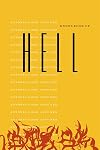
Excessive Figures of Speech as an Illness of Writing
Most of the online reviews of the English translation mention Antunes's language. The consumer reviews on Amazon and elsewhere call it "amazing," "dense," and "difficult." To be a little more specific, the complexity comes from French surrealism, Celine, and Latin American Magic Realism. Yet Antunes is different from Lispector, Lorca, Dos Passos, or any number of possible precedents, beause he is addicted to tropes. He lards sentences with show more as many figures of speech as he can, and seems not to pause to ask if his metaphors are appropriate to the narrative, or make sense together, or even make any kind of sense at all. "Language of Hell" seems entirely unedited, as if Antunes never met a metaphor he didn't like.
A review at Three Percent (www.rochester.edu/College/translation/threepercent/2008/04/03/knowledge-of-hell/) says Antunes's sentences are "labrinthine" and "carefully wrought." The first is sometimes true; the second almost never is. This book is partly about a psychiatric asylum outside Lisbon, and partly about the Angolan war of 1961-74. An interview in the "Paris Review" focuses on the trauma of that war, implying it is enough to account for the avalanche of tropes. But at an early point -- maybe ten pages in -- the "hell" of mental asylums and bloody wars became endless and therefore uninteresting. My only interest was diagnosing Antunes's severe addiction to metaphors.
Here's an opening example:
"...the sky was composed of successive layers of overlapping gray, the river shuddered with a fever all the way to the sea, and the rain furiously burrowed hundreds of crystal braids into the highway. The windshield wipers moved their shaky automaton elbows, shaving away the persistent acne of the raindrops." [p. 63]
In my count that is five tropes. The first is rare in this book, because it is only minimally figural. A river shuddering with fever is a good image, because it fits, in reverse, the narrator's rushed trip back to his more feverish life in Lisbon. The first part of the third trope ("the rain furiously burrowed") complements the river image, but the next part of doesn't ("hundreds of crystal braids"). The next two figures of speech veer into unrelated imagery, first robots and then pimples. In order, then: naturalistic, strong, overdone, rote, ridiculous.
(A note about these examples: I've tried to choose passages that are minimally dependent on the translator's choices. My comments here have to do with the logic of Antunes's tropes. Other tropes in the translation are undoubtedly modified from the original in ways that would make it necessary to look at the original.)
Many metaphors in "Knowledge of Hell" are maudlin, as when the narrator compares himself to a dead dog in a park, covered with leaves (p. 81), or when he defines loneliness as "the people standing before me and their gestures of wounded birds, their damp gentle gestures that seem to drag themselves [sic: the people], like dying animals, in search of impossible help." (p. 72) Antunes seems not to register the maudlin. It's not that he uses it too often, or believes in it too much: it's that he doesn't notice it. But the maudlin is part of a rainbow of moods, and for me the most affecting, because genuine, is the feeling of desperation that hangs over the sentences: he needs to escape from literal description. Every thought and image needs to be transformed. Inevitably some are cliches, many don't work, and some, like these two, are emotionally off-key. The anxiety about covering (or decorating, or beautifying, or intensifying) ordinary language is itself maudlin.
If Antunes's obsession (or addiction, or compulsion, or perceived duty) to chain tropes endlessly, and to avoid writing purely descriptive prose, can be imagined as an illness of writing, then one cure would be William Empson's "Seven Types of Ambiguity." That book is like a tonic for this one. Antunes seems never to interrogate his choices of tropes or pause to consider why he feels his narrative needs to be continuously transformed. He seems never to have paused to wonder what any given metaphor meant: it feels like inspiration was followed quickly by obliviousness, as if he felt his writing forced him to invent and move on. Empson is the exact opposite. He worryies at exhilirating length over a couplet in Shakespeare or a few lines of Wordsworth.
Another sense in which the endless figure of speech are like an illness is the juxtaposition of entirely unrelated tropes in long sentences. Another is Antunes's proclivity for tropes that are strong and suprising, but lose their meaning immediately after they're read or even while they're being read. Two examples:
"...in Messines the absence of the sea is so total that the wind hawks the phlegm of bronchitis in the throats of the streets" [p. 60].
And this one, which Antunes apparently especially likes, because he repeats it twice:
Loneliness "is a child's gun in a plastic bag in the hand of a frightened woman" [pp. 68, 71]
Empson might say: Well, let's see. What is a child's gun? A gun that doesn't function? And why is it in a plastic bag? Because that's cheaper than a paper bag or a handbag, and therefore indicates desperation? The kind of desperation that drives a person to go out carrying a plasic bag? And why is loneliness frightened? (And, although it's a different matter, why is loneliness personified by a woman, when the narrator is a man?)
I doubt Empson would have been engaged at all by Antunes. I imagine he would have thought the writing was too loose. In his headlong accumulation of tropes Antunes is very unlike Celine, Dos Passos, or Lispector: he'd more like a bad expressionist painter who feels compelled to use all the colors in the palette in every painting.
One more example:
"...he didn't realize he had left Albufeira until he stopped smelling in his nostrils the sweetish odor, of candied squash, from the sea. It was a smooth and bland odor identical to the perfume of coloring agents, to the aroma of liqueur-filled bonbons, to the lavender that emanates from linen in chests..." [p. 40]
In my count that is five metaphors and three qualities ("sweetish," "smooth," "bland"). They vary in legibility and pertinence, and they are presented without any connection to one another (except for the assertion that they are all "identical"). It's not that long sentences with enchained tropes are necessarily a bad thing, and it's not that writers need to choose the best of their tropes and delete the rest, and it's not that writing can't be interesting when it is wildly overstocked. (As in Celine.) It's that Antunes himself seems not to be listening. It's as if the author himself doesn't seem to be reading his own book. He operates under a compulsion much more stringent and unremitting even than the horrors of war in Angola or the tortured lives of the patients in the Lisbon asylum: he is pursued, deviled, by the feeling that every sentence, every thought, has to be ornamented, has to be brought out of its literal life, and then, because that operation is so violent and random, it has to be immediately forgotten. That itself is the content of the book for me: it's a pathology of writing, and for that reason it is interesting as long as I keep finding new symptoms, new clues to the ways he thinks. For me, that source of interest finally ran out, long before the book ended. show less
Most of the online reviews of the English translation mention Antunes's language. The consumer reviews on Amazon and elsewhere call it "amazing," "dense," and "difficult." To be a little more specific, the complexity comes from French surrealism, Celine, and Latin American Magic Realism. Yet Antunes is different from Lispector, Lorca, Dos Passos, or any number of possible precedents, beause he is addicted to tropes. He lards sentences with show more as many figures of speech as he can, and seems not to pause to ask if his metaphors are appropriate to the narrative, or make sense together, or even make any kind of sense at all. "Language of Hell" seems entirely unedited, as if Antunes never met a metaphor he didn't like.
A review at Three Percent (www.rochester.edu/College/translation/threepercent/2008/04/03/knowledge-of-hell/) says Antunes's sentences are "labrinthine" and "carefully wrought." The first is sometimes true; the second almost never is. This book is partly about a psychiatric asylum outside Lisbon, and partly about the Angolan war of 1961-74. An interview in the "Paris Review" focuses on the trauma of that war, implying it is enough to account for the avalanche of tropes. But at an early point -- maybe ten pages in -- the "hell" of mental asylums and bloody wars became endless and therefore uninteresting. My only interest was diagnosing Antunes's severe addiction to metaphors.
Here's an opening example:
"...the sky was composed of successive layers of overlapping gray, the river shuddered with a fever all the way to the sea, and the rain furiously burrowed hundreds of crystal braids into the highway. The windshield wipers moved their shaky automaton elbows, shaving away the persistent acne of the raindrops." [p. 63]
In my count that is five tropes. The first is rare in this book, because it is only minimally figural. A river shuddering with fever is a good image, because it fits, in reverse, the narrator's rushed trip back to his more feverish life in Lisbon. The first part of the third trope ("the rain furiously burrowed") complements the river image, but the next part of doesn't ("hundreds of crystal braids"). The next two figures of speech veer into unrelated imagery, first robots and then pimples. In order, then: naturalistic, strong, overdone, rote, ridiculous.
(A note about these examples: I've tried to choose passages that are minimally dependent on the translator's choices. My comments here have to do with the logic of Antunes's tropes. Other tropes in the translation are undoubtedly modified from the original in ways that would make it necessary to look at the original.)
Many metaphors in "Knowledge of Hell" are maudlin, as when the narrator compares himself to a dead dog in a park, covered with leaves (p. 81), or when he defines loneliness as "the people standing before me and their gestures of wounded birds, their damp gentle gestures that seem to drag themselves [sic: the people], like dying animals, in search of impossible help." (p. 72) Antunes seems not to register the maudlin. It's not that he uses it too often, or believes in it too much: it's that he doesn't notice it. But the maudlin is part of a rainbow of moods, and for me the most affecting, because genuine, is the feeling of desperation that hangs over the sentences: he needs to escape from literal description. Every thought and image needs to be transformed. Inevitably some are cliches, many don't work, and some, like these two, are emotionally off-key. The anxiety about covering (or decorating, or beautifying, or intensifying) ordinary language is itself maudlin.
If Antunes's obsession (or addiction, or compulsion, or perceived duty) to chain tropes endlessly, and to avoid writing purely descriptive prose, can be imagined as an illness of writing, then one cure would be William Empson's "Seven Types of Ambiguity." That book is like a tonic for this one. Antunes seems never to interrogate his choices of tropes or pause to consider why he feels his narrative needs to be continuously transformed. He seems never to have paused to wonder what any given metaphor meant: it feels like inspiration was followed quickly by obliviousness, as if he felt his writing forced him to invent and move on. Empson is the exact opposite. He worryies at exhilirating length over a couplet in Shakespeare or a few lines of Wordsworth.
Another sense in which the endless figure of speech are like an illness is the juxtaposition of entirely unrelated tropes in long sentences. Another is Antunes's proclivity for tropes that are strong and suprising, but lose their meaning immediately after they're read or even while they're being read. Two examples:
"...in Messines the absence of the sea is so total that the wind hawks the phlegm of bronchitis in the throats of the streets" [p. 60].
And this one, which Antunes apparently especially likes, because he repeats it twice:
Loneliness "is a child's gun in a plastic bag in the hand of a frightened woman" [pp. 68, 71]
Empson might say: Well, let's see. What is a child's gun? A gun that doesn't function? And why is it in a plastic bag? Because that's cheaper than a paper bag or a handbag, and therefore indicates desperation? The kind of desperation that drives a person to go out carrying a plasic bag? And why is loneliness frightened? (And, although it's a different matter, why is loneliness personified by a woman, when the narrator is a man?)
I doubt Empson would have been engaged at all by Antunes. I imagine he would have thought the writing was too loose. In his headlong accumulation of tropes Antunes is very unlike Celine, Dos Passos, or Lispector: he'd more like a bad expressionist painter who feels compelled to use all the colors in the palette in every painting.
One more example:
"...he didn't realize he had left Albufeira until he stopped smelling in his nostrils the sweetish odor, of candied squash, from the sea. It was a smooth and bland odor identical to the perfume of coloring agents, to the aroma of liqueur-filled bonbons, to the lavender that emanates from linen in chests..." [p. 40]
In my count that is five metaphors and three qualities ("sweetish," "smooth," "bland"). They vary in legibility and pertinence, and they are presented without any connection to one another (except for the assertion that they are all "identical"). It's not that long sentences with enchained tropes are necessarily a bad thing, and it's not that writers need to choose the best of their tropes and delete the rest, and it's not that writing can't be interesting when it is wildly overstocked. (As in Celine.) It's that Antunes himself seems not to be listening. It's as if the author himself doesn't seem to be reading his own book. He operates under a compulsion much more stringent and unremitting even than the horrors of war in Angola or the tortured lives of the patients in the Lisbon asylum: he is pursued, deviled, by the feeling that every sentence, every thought, has to be ornamented, has to be brought out of its literal life, and then, because that operation is so violent and random, it has to be immediately forgotten. That itself is the content of the book for me: it's a pathology of writing, and for that reason it is interesting as long as I keep finding new symptoms, new clues to the ways he thinks. For me, that source of interest finally ran out, long before the book ended. show less
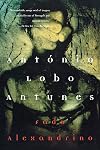
Grandmaster of Metaphor
Trying to come up with the right word to describe Antunes' prose is difficult. Any comparisons are superficial, but I'll mention all the writers he resembles in minor ways. The best single word I could find was "tintinnabulation." That's what his words do. They rattle around in your head, slide around like unsecured luggage on a freighter, jostle and chortle, and crowd one another out, the images swarm, magnify and recede, searing your mind, and continually, and over show more and again, tintinnabulating until you're terrorized, barreling forward into Surreal, fractured heavens and hells.
At times I was lost, groping through the text, wall-eyed with indefinable sensations. The difficulty level bordered on Faulkner's Absolom, Absolom! at first, but I could feel the blockage loosening up. The dams eventually burst and the rollicking, hedonistic, rambling, phantasmagoric words flooded in with Biblical insistence. The author's intrinsic reliance on crunchy, noodling metaphors within metaphors sold me on the style, but it took practice to acclimatize myself to the hailstorm of his method. Having read The Land at the End of the World, I immediately bought all 13 volumes of Antunes currently available in English. Fado Alexandrino is a doubly forceful encore to that book, vaster and braver and more insane in every way. His prophetic images, nuanced through bodies and minds, his visionary texturing of layer upon layer of perspective, the imagination, the absurdist comedy, the deep pathos, the bloody violence, all congealed into a twisted nightmare. It took me far too long to read. At times I recoiled, gasping, but I always dove in for more.
The book takes place in a restaurant so splattered that the colors all run together. The men who tell their stories here are tied together by the tragedies of war and the semblance of lives they lead afterward, some politics intrude, reality blends seamlessly with their words - it is sometimes impossible to tell if a line is spoken aloud by a character or not, since quotation marks were missing from Antunes' typewriter. There is an astounding richness of diction, an abundance of syntax that is most inspiring, a Nabokovian variety of descriptions, endless clarifications, and haunting, Kafkaesaue flights of fancy all intricately interwoven with contra-textual interpolations, until it becomes a fabric of dispossessed, roiling, shamanistic visions, belligerent speculations, Borgesian depths of irony and allusion, an ever-deepening darkness, a whirlpool, spewed out by the most expressive, articulate of cynics, amid the most entertaining and gruesome business of warfare, as he warps mentally between Mozambique and Lisbon, cradled by his whores, the narrator, abysmally in his cups, indulges in luscious flashbacks, which layer the novel with a hazy filter.
It is a book to be treasured, devoured, regurgitated, and savored repeatedly. It is sustained dementia, a mesmerizing panoply of humanity's willy-nilly selfishness. It's mind-boggling to conceive how Antunes' brain concocted all of this controlled chaos. The riveting imagery makes for an immersive experience, as crowded as an Altman film, with "the strange toothache of nostalgia," fading in and out, coupled with effective motifs and repetitions, as the characters "vomit out the sea."
It is an interior sea, as detailed and manic as Javier Marias at his best. The sea of human emotion and strife, language as a liquid, solidifying around them. The narrative flows. The chapter divisions become almost meaningless, but stopping reading is like coming up for air before plunging back down into an ocean of grease. It meanders, digresses, diverges, submerges you. You have to succumb to the galloping rhythm if you are going to make it all the way through this monumental work.
Schizo-phrenetic, with constant interruptions, confusing jump cuts and scene changes, often mid-sentence - just roll with it. It's a sophisticated form of impressionistic storytelling. The environment is constantly personified, wilderness mingles with urban settings, nurses become creatures, and the wildest illusions intrude into the mundane conversations of night club drifters. Get used to the feel of mud, insects, rot, destruction, toads, make way for sex, murder, strangulation, erotic fixations, bursting pustules everywhere, simply everywhere, war-torn landscapes of the mind, stumbling, delirious soldiers, and obviously, death as a hovering omniscience. Antunes is as acerbic as Céline, but somehow dignified in his irreverence. His prose is always biting, pissing and scratching as it scrambles through labyrinthine paragraphs, you are grabbed, manhandled and left in a slowly drying pool of excrement. The book is truly fecal in texture, with elephantine horrors sliding across the page, dwelling too long under your nose, dribbling over your mind, leaving a definitive, tongue-shriveling aftertaste, at times deliciously repulsive. Reminiscences manifesting with lucid detail, scenes morphing into still-lives, memories metamorphosed into fossilized hangover hallucinations - these are the corridors of this literary convolution. Remarkably, it is crystalline in structure, and gem-like metaphors sprout in abundance: "The washing machine was sobbing away at its work." - Hundreds of profound observations about the state and nature of objects and environments parade through the narrative, every character is caught with their pants perpetually down, trailing afterbirths, or excrement, like baffled fish in the grit-smeared tank of Antunes' mind.
The squelching, magnificent simile-metaphor sandwiches are to be re-read endlessly, like the following - "Madam Simone, hand-in-hand with the fellow in a red jacket, came back on stage rolling her ancient body with all the grace of a locomotive, and bending over in an awkward bow that made the vast withered mass of her mammaries pop out like cartilagenous heads of twins peeping out and hanging down in the course of a birth."
How could you not read this? show less
Trying to come up with the right word to describe Antunes' prose is difficult. Any comparisons are superficial, but I'll mention all the writers he resembles in minor ways. The best single word I could find was "tintinnabulation." That's what his words do. They rattle around in your head, slide around like unsecured luggage on a freighter, jostle and chortle, and crowd one another out, the images swarm, magnify and recede, searing your mind, and continually, and over show more and again, tintinnabulating until you're terrorized, barreling forward into Surreal, fractured heavens and hells.
At times I was lost, groping through the text, wall-eyed with indefinable sensations. The difficulty level bordered on Faulkner's Absolom, Absolom! at first, but I could feel the blockage loosening up. The dams eventually burst and the rollicking, hedonistic, rambling, phantasmagoric words flooded in with Biblical insistence. The author's intrinsic reliance on crunchy, noodling metaphors within metaphors sold me on the style, but it took practice to acclimatize myself to the hailstorm of his method. Having read The Land at the End of the World, I immediately bought all 13 volumes of Antunes currently available in English. Fado Alexandrino is a doubly forceful encore to that book, vaster and braver and more insane in every way. His prophetic images, nuanced through bodies and minds, his visionary texturing of layer upon layer of perspective, the imagination, the absurdist comedy, the deep pathos, the bloody violence, all congealed into a twisted nightmare. It took me far too long to read. At times I recoiled, gasping, but I always dove in for more.
The book takes place in a restaurant so splattered that the colors all run together. The men who tell their stories here are tied together by the tragedies of war and the semblance of lives they lead afterward, some politics intrude, reality blends seamlessly with their words - it is sometimes impossible to tell if a line is spoken aloud by a character or not, since quotation marks were missing from Antunes' typewriter. There is an astounding richness of diction, an abundance of syntax that is most inspiring, a Nabokovian variety of descriptions, endless clarifications, and haunting, Kafkaesaue flights of fancy all intricately interwoven with contra-textual interpolations, until it becomes a fabric of dispossessed, roiling, shamanistic visions, belligerent speculations, Borgesian depths of irony and allusion, an ever-deepening darkness, a whirlpool, spewed out by the most expressive, articulate of cynics, amid the most entertaining and gruesome business of warfare, as he warps mentally between Mozambique and Lisbon, cradled by his whores, the narrator, abysmally in his cups, indulges in luscious flashbacks, which layer the novel with a hazy filter.
It is a book to be treasured, devoured, regurgitated, and savored repeatedly. It is sustained dementia, a mesmerizing panoply of humanity's willy-nilly selfishness. It's mind-boggling to conceive how Antunes' brain concocted all of this controlled chaos. The riveting imagery makes for an immersive experience, as crowded as an Altman film, with "the strange toothache of nostalgia," fading in and out, coupled with effective motifs and repetitions, as the characters "vomit out the sea."
It is an interior sea, as detailed and manic as Javier Marias at his best. The sea of human emotion and strife, language as a liquid, solidifying around them. The narrative flows. The chapter divisions become almost meaningless, but stopping reading is like coming up for air before plunging back down into an ocean of grease. It meanders, digresses, diverges, submerges you. You have to succumb to the galloping rhythm if you are going to make it all the way through this monumental work.
Schizo-phrenetic, with constant interruptions, confusing jump cuts and scene changes, often mid-sentence - just roll with it. It's a sophisticated form of impressionistic storytelling. The environment is constantly personified, wilderness mingles with urban settings, nurses become creatures, and the wildest illusions intrude into the mundane conversations of night club drifters. Get used to the feel of mud, insects, rot, destruction, toads, make way for sex, murder, strangulation, erotic fixations, bursting pustules everywhere, simply everywhere, war-torn landscapes of the mind, stumbling, delirious soldiers, and obviously, death as a hovering omniscience. Antunes is as acerbic as Céline, but somehow dignified in his irreverence. His prose is always biting, pissing and scratching as it scrambles through labyrinthine paragraphs, you are grabbed, manhandled and left in a slowly drying pool of excrement. The book is truly fecal in texture, with elephantine horrors sliding across the page, dwelling too long under your nose, dribbling over your mind, leaving a definitive, tongue-shriveling aftertaste, at times deliciously repulsive. Reminiscences manifesting with lucid detail, scenes morphing into still-lives, memories metamorphosed into fossilized hangover hallucinations - these are the corridors of this literary convolution. Remarkably, it is crystalline in structure, and gem-like metaphors sprout in abundance: "The washing machine was sobbing away at its work." - Hundreds of profound observations about the state and nature of objects and environments parade through the narrative, every character is caught with their pants perpetually down, trailing afterbirths, or excrement, like baffled fish in the grit-smeared tank of Antunes' mind.
The squelching, magnificent simile-metaphor sandwiches are to be re-read endlessly, like the following - "Madam Simone, hand-in-hand with the fellow in a red jacket, came back on stage rolling her ancient body with all the grace of a locomotive, and bending over in an awkward bow that made the vast withered mass of her mammaries pop out like cartilagenous heads of twins peeping out and hanging down in the course of a birth."
How could you not read this? show less
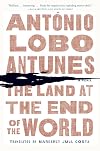
THE LAND AT THE END OF THE WORLD is a book that kept turning up in discussions of war lit, which is a specialized genre that always arouses my interest so I decided to give it a look. Considered the masterpiece of prolific Portuguese writer Antonio Lobo Antunes, the English title is a cleaned up version of something more like "The A**hole of the World." Any soldier who has ever been posted to a remote or primitive site with few of the amenities of civilized life will understand.
Told in a show more first person, circular, colorful narrative of seemingly endless runon sentences depicting nightmarish scenes of hideous combat injuries and disfigurements, interspersed with erotic sexual couplings, the aged narrator is looking back at his time as a new doctor conscripted into the Portuguese army and posted to the interior of Angola where a shadowy war continues to sputter and spark between stultifying boredom and explosions of bloody violence. (How's THAT for a runon?) Haunted by specific visions - his male nurse sitting stunned in the dust holding his bloody intestines in his hands following an attack, or the dead young soldier he wrapped gently in a sheet and put him in his own room, telling himself he was only asleep, or the camp dogs licking the operating room blood from his clothing, arms and hands - the narrator, in endless interior monologues to various sexual partners past and present, attempts to lose himself in drink and eroticism.
There are numerous flashbacks to his childhood and youth in Benfica and Lisbon, often skilfully contrasted with the awful circumstances of his two years of boredom, whoring, drinking and misery in Angola. I was often reminded of Yossarian and his "Snowdens of yesteryear." Think CATCH-22, but without the humor. There are also passing references to Fitzgerald, and maybe also to e.e. cummings' war novel, THE ENORMOUS ROOM, along with numerous allusions to Portuguese, Brazilian and other European writers, artists, politicians and more.
I can understand now why this book has earned a place in the canon of war literature. The writing is sinuous and graceful - although it's difficult to know how much the translator (Margaret Jull Costa) figures in. The endless, convoluted sentences were sometimes problematic, although you do get used to it after while. But war lit, yeah. It definitely belongs. I'm glad I read it, and will recommend it highly to fellow war lit buffs.
- Tim Bazzett, author of the Cold War memoir, SOLDIER BOY: AT PLAY IN THE ASA show less
Told in a show more first person, circular, colorful narrative of seemingly endless runon sentences depicting nightmarish scenes of hideous combat injuries and disfigurements, interspersed with erotic sexual couplings, the aged narrator is looking back at his time as a new doctor conscripted into the Portuguese army and posted to the interior of Angola where a shadowy war continues to sputter and spark between stultifying boredom and explosions of bloody violence. (How's THAT for a runon?) Haunted by specific visions - his male nurse sitting stunned in the dust holding his bloody intestines in his hands following an attack, or the dead young soldier he wrapped gently in a sheet and put him in his own room, telling himself he was only asleep, or the camp dogs licking the operating room blood from his clothing, arms and hands - the narrator, in endless interior monologues to various sexual partners past and present, attempts to lose himself in drink and eroticism.
There are numerous flashbacks to his childhood and youth in Benfica and Lisbon, often skilfully contrasted with the awful circumstances of his two years of boredom, whoring, drinking and misery in Angola. I was often reminded of Yossarian and his "Snowdens of yesteryear." Think CATCH-22, but without the humor. There are also passing references to Fitzgerald, and maybe also to e.e. cummings' war novel, THE ENORMOUS ROOM, along with numerous allusions to Portuguese, Brazilian and other European writers, artists, politicians and more.
I can understand now why this book has earned a place in the canon of war literature. The writing is sinuous and graceful - although it's difficult to know how much the translator (Margaret Jull Costa) figures in. The endless, convoluted sentences were sometimes problematic, although you do get used to it after while. But war lit, yeah. It definitely belongs. I'm glad I read it, and will recommend it highly to fellow war lit buffs.
- Tim Bazzett, author of the Cold War memoir, SOLDIER BOY: AT PLAY IN THE ASA show less
Lists
Five star books (1)
My TBR (1)
Awards


You May Also Like


Associated Authors
Statistics
- Works
- 74
- Also by
- 3
- Members
- 4,803
- Popularity
- #5,230
- Rating
- 3.9
- Reviews
- 99
- ISBNs
- 566
- Languages
- 21
- Favorited
- 30

