
About the Author
Daniel T. Willingham is Professor of Psychology at the University of Virginia. He is the author of several educational books, the columnist for "Ask the Cognitive Scientist" for American Educator, and a fellow of the American Psychological Association. He was appointed in 2017 by President Obama to show more serve as a Member of the National Board for Education Sciences. show less
Image credit: University of Virginia
Works by Daniel T. Willingham
Why Don't Students Like School?: A Cognitive Scientist Answers Questions About How the Mind Works and What It Means for the Classroom (2021) 679 copies, 12 reviews
The Reading Mind: A Cognitive Approach to Understanding How the Mind Reads (2017) 86 copies, 1 review
When Can You Trust the Experts?: How to Tell Good Science from Bad in Education (2012) 63 copies, 1 review
教師の勝算―勉強嫌いを好きにする9の法則 1 copy
Tagged
Common Knowledge
- Birthdate
- 1961
- Gender
- male
- Education
- Duke University (BA|Psychology in 1983)
Harvard University (PhD|Cognitive Psychology in 1990) - Occupations
- psychologist
university professor - Organizations
- University of Virginia
- Places of residence
- Charlottesville, Virginia, USA
- Associated Place (for map)
- Virginia, USA
Members
Reviews
Why Don't Students Like School: A Cognitive Scientist Answers Questions About How the Mind Works and What It Means for the Classroom by Daniel T. Willingham
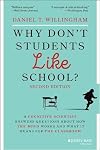
Very well-done book. Willingham pulls out nine principles that can ensure students learn better, explains and justifies each of them with examples, and makes the entirety extremely actionable. No slow non-fiction here, and all the repetition is for educational purposes -- smart repetitions of themes in sections that are clearly labeled review, rather than the awkward repetition of authors writing over many months forgetting what's already been touched on, or lacking enough of a message to show more fill a book.
My favorite is Chapter 2, which explains why background knowledge -- just knowing facts -- is prerequisite to critical thinking. In short: if you facts about what's going on already, you can free up your working memory to start to tease out comparisons and deeper analysis. If you're encountering material for the first time, it's biologically almost impossible to retain the facts and also analyze them. Also because we have a limited amount of working memory, knowing things already means you can learn more effectively; this leads to a rich-gets-richer effect in schools, where the best prepared students entering elementary school can learn faster and with less effort, because they already have more background knowledge. I wasn't sure where I stood on the debate of "higher order is what matters" vs. "facts first", but now I'm sold.
Another chapter debunked the idea of multiple intelligences -- my take-away here is that kids don't learn better with differentiated lessons because different kids do better under each approach, but because the students as a whole are less likely to get bored when the material presentation changes repeatedly: it keeps folks interested and on-topic.
Other interesting chapters are on praising effort rather than results, the need for thousands of hours of practice before expert status, and so on, but many of these have gotten enough coverage in the past five years that those chapters weren't as fascinating to me as they might have been if I'd read the book earlier.
Recommended as a well structured, fast read that brings insights. show less
My favorite is Chapter 2, which explains why background knowledge -- just knowing facts -- is prerequisite to critical thinking. In short: if you facts about what's going on already, you can free up your working memory to start to tease out comparisons and deeper analysis. If you're encountering material for the first time, it's biologically almost impossible to retain the facts and also analyze them. Also because we have a limited amount of working memory, knowing things already means you can learn more effectively; this leads to a rich-gets-richer effect in schools, where the best prepared students entering elementary school can learn faster and with less effort, because they already have more background knowledge. I wasn't sure where I stood on the debate of "higher order is what matters" vs. "facts first", but now I'm sold.
Another chapter debunked the idea of multiple intelligences -- my take-away here is that kids don't learn better with differentiated lessons because different kids do better under each approach, but because the students as a whole are less likely to get bored when the material presentation changes repeatedly: it keeps folks interested and on-topic.
Other interesting chapters are on praising effort rather than results, the need for thousands of hours of practice before expert status, and so on, but many of these have gotten enough coverage in the past five years that those chapters weren't as fascinating to me as they might have been if I'd read the book earlier.
Recommended as a well structured, fast read that brings insights. show less
Why Don't Students Like School: A Cognitive Scientist Answers Questions About How the Mind Works and What It Means for the Classroom by Daniel T. Willingham
In a pleasant tone, with lots of friendly examples and anecdotes, Daniel T. Willingham gets to the root of a teaching dilemma: how to convey information in a way that is meaningful to the student.
According to Willingham, thinking is "slow, effortful and uncertain." Apparently that explains why we often avoid doing it. And kids avoid doing it even more.
If we're not thinking, then what are we doing?
We're relying on memory to guide us through even the simplest tasks. It's what we mean when we show more say we're on "autopilot". Willingham uses the example of making spaghetti to illustrate his point: we don't peruse recipes and calculate nutrition stats, we just make spaghetti. The way we always do. Which might be boiling noodles and opening a jar of Ragu. To ponder, ruminate, calculate and cogitate on everything, all the time, would simply be too exhausting.
The good news is that we're naturally curious. The bad news is that curiosity has a short lifespan. Make a solution too difficult and we become frustrated. Make it too easy and we become bored.
What's a teacher to do?
Willingham offers suggestions like "begin with the end in mind" when planning lessons (what do you want your students to know?), pick your "puzzles" carefully (showy demos make classroom magic, but will the student remember or care about underlying principles?), change it up (short attention spans love it) and take notes (not the students, you, on what worked and what didn't).
Another premise is that "students come to understand new ideas by relating them to old ideas. If their knowledge is shallow, the process stops there." (p.94). In a lecture Willingham recently gave, he suggested that lots of shallow knowledge isn't necessarily bad. One needs to know a little about a lot of things to read the Wall Street Journal or NY Times, for example. (Lord knows, I wouldn't have passed the SAT without "Trivial Pursuit" and the card game "Masterpiece"!!)
Perhaps my favorite Willingham nugget is the one that offers the most hope: "Intelligence can be changed through sustained hard work."(p. 211). In other words, effort does make a difference.
How, teachers might ask, can I get my students to work? Willigham suggests that teachers make thoughtful decisions about what students need and then offer them opportunities for practice. Often. show less
According to Willingham, thinking is "slow, effortful and uncertain." Apparently that explains why we often avoid doing it. And kids avoid doing it even more.
If we're not thinking, then what are we doing?
We're relying on memory to guide us through even the simplest tasks. It's what we mean when we show more say we're on "autopilot". Willingham uses the example of making spaghetti to illustrate his point: we don't peruse recipes and calculate nutrition stats, we just make spaghetti. The way we always do. Which might be boiling noodles and opening a jar of Ragu. To ponder, ruminate, calculate and cogitate on everything, all the time, would simply be too exhausting.
The good news is that we're naturally curious. The bad news is that curiosity has a short lifespan. Make a solution too difficult and we become frustrated. Make it too easy and we become bored.
What's a teacher to do?
Willingham offers suggestions like "begin with the end in mind" when planning lessons (what do you want your students to know?), pick your "puzzles" carefully (showy demos make classroom magic, but will the student remember or care about underlying principles?), change it up (short attention spans love it) and take notes (not the students, you, on what worked and what didn't).
Another premise is that "students come to understand new ideas by relating them to old ideas. If their knowledge is shallow, the process stops there." (p.94). In a lecture Willingham recently gave, he suggested that lots of shallow knowledge isn't necessarily bad. One needs to know a little about a lot of things to read the Wall Street Journal or NY Times, for example. (Lord knows, I wouldn't have passed the SAT without "Trivial Pursuit" and the card game "Masterpiece"!!)
Perhaps my favorite Willingham nugget is the one that offers the most hope: "Intelligence can be changed through sustained hard work."(p. 211). In other words, effort does make a difference.
How, teachers might ask, can I get my students to work? Willigham suggests that teachers make thoughtful decisions about what students need and then offer them opportunities for practice. Often. show less
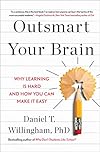
Willingham has written a well-organized book that can help all of us to become better learners by embracing practical strategies for fine-tuning our mental mindsets.
In all candor, this is not a fun-filled reading experience. It doesn’t serve up many vivid anecdotes or touches of humor. That’s not its intention. It offers dozens of tips (94, but who’s counting?) for students, educators and others who are eager to improve their mental acuity.
Speaking of students, some reviewers have show more accurately described the book as “very school focused.” As someone who has taught college communications classes on a part-time basis for nearly 4 decades, this emphasis was fine. But I believe the author could have broadened the overall appeal of the book by including more anecdotes and examples that involved workplace and lifestyle scenarios. Much of the content focuses on tips for understanding lectures, taking more helpful notes and taking tests. There is also some excellent advice for educators about preparing questions that make tests fair and effective.
Some content involves embarrassingly obvious stuff. Cramming for tests isn’t smart in most cases. Never write things in your notes that you don’t completely understand. You get the idea. But the book also includes dozens of fascinating insights. As someone who warns students about the dangers of procrastination, I was intrigued by the author’s approach to this common problem. He explores “the planning fallacy” that recognizes how people tend to underestimate the amount of time a task will take to complete. Think about your least favorite construction project. Willingham serves up tips for pummeling procrastination, including using to-do lists as visual incentives for logging incremental progress and training your brain to think of work tasks as less disagreeable, and the “fun” tasks less enjoyable.
Granted, many of the tips aren’t rocket science, and have been covered in other self- help books (example: set smaller, attainable goals to make intimidating tasks seem more manageable ones.) But I really liked his “Just start” strategy: Simply tell yourself “I will work five minutes, and if it’s miserable, I will stop.” You might be surprised how often you will not stop.
The book also includes some excellent tips for grappling with anxiety, a problem the author has encountered. One tip involves recognizing thought patterns that can make anxiety worse. Reinterpret what your body is feeling. Train your brain to not talk about yourself as being stressed out, but instead as being excited (“Your body is telling you it’s ready for adventure!”)
Could the content have been pruned to include only the 40 or 50 most insightful relearning strategies? Probably. Nevertheless, it’s a helpful primer who anyone who is eager to fine-tune learning skills. show less
In all candor, this is not a fun-filled reading experience. It doesn’t serve up many vivid anecdotes or touches of humor. That’s not its intention. It offers dozens of tips (94, but who’s counting?) for students, educators and others who are eager to improve their mental acuity.
Speaking of students, some reviewers have show more accurately described the book as “very school focused.” As someone who has taught college communications classes on a part-time basis for nearly 4 decades, this emphasis was fine. But I believe the author could have broadened the overall appeal of the book by including more anecdotes and examples that involved workplace and lifestyle scenarios. Much of the content focuses on tips for understanding lectures, taking more helpful notes and taking tests. There is also some excellent advice for educators about preparing questions that make tests fair and effective.
Some content involves embarrassingly obvious stuff. Cramming for tests isn’t smart in most cases. Never write things in your notes that you don’t completely understand. You get the idea. But the book also includes dozens of fascinating insights. As someone who warns students about the dangers of procrastination, I was intrigued by the author’s approach to this common problem. He explores “the planning fallacy” that recognizes how people tend to underestimate the amount of time a task will take to complete. Think about your least favorite construction project. Willingham serves up tips for pummeling procrastination, including using to-do lists as visual incentives for logging incremental progress and training your brain to think of work tasks as less disagreeable, and the “fun” tasks less enjoyable.
Granted, many of the tips aren’t rocket science, and have been covered in other self- help books (example: set smaller, attainable goals to make intimidating tasks seem more manageable ones.) But I really liked his “Just start” strategy: Simply tell yourself “I will work five minutes, and if it’s miserable, I will stop.” You might be surprised how often you will not stop.
The book also includes some excellent tips for grappling with anxiety, a problem the author has encountered. One tip involves recognizing thought patterns that can make anxiety worse. Reinterpret what your body is feeling. Train your brain to not talk about yourself as being stressed out, but instead as being excited (“Your body is telling you it’s ready for adventure!”)
Could the content have been pruned to include only the 40 or 50 most insightful relearning strategies? Probably. Nevertheless, it’s a helpful primer who anyone who is eager to fine-tune learning skills. show less
This book contains an overview of cognitive models of the different tasks involved in reading. The strength of this book is its clarity. Each chapter is focused and well structured to make it easy to understand the key points. Each chapter opens with an agenda for that chapter and ends with a summary and implications. The separation of the summary and implications highlights another strength of the books: Willingham's careful separation of what we know from research and ways that can be show more applied, e.g., in the classroom.
On the theoretical side, the tasks involved in reading are letter recognition, translating letters to sounds, translating sounds to words, figuring out the meanings of words, connecting the meanings of words to extract the meanings of sentences, of sentences to get the meaning of passages, and extracting ideas to get an overall sense of a text. The common theme among these is that at all levels, reading is a statistical process. We see information and it activates an information network. Identification is accomplished when one option is sufficiently more strongly activated than the rest. This is especially interesting in the context of word meanings. We do not represent words with concrete meanings. Rather words/concepts are connected with each other and the strength of connections define words.
On the practical side, the most important tool for improving all of the tasks involved in reading is to do more reading, especially in ways that encourage positive emotional attitudes. This may make improving reading skills seem like a hopeless, circular task. However, Willingham presents some ways of kickstarting the cycle. We can provide opportunities to read for utility (e.g., if kids are interested in pets or cooking, encourage them to read about the topic). We can also encourage positive associations with reading, e.g., bedtime reading, books as gifts, and reading as a family value.
Overall, this was a good read, despite the occasional flow-impacting meta that comes from reading a book about reading. :-) show less
On the theoretical side, the tasks involved in reading are letter recognition, translating letters to sounds, translating sounds to words, figuring out the meanings of words, connecting the meanings of words to extract the meanings of sentences, of sentences to get the meaning of passages, and extracting ideas to get an overall sense of a text. The common theme among these is that at all levels, reading is a statistical process. We see information and it activates an information network. Identification is accomplished when one option is sufficiently more strongly activated than the rest. This is especially interesting in the context of word meanings. We do not represent words with concrete meanings. Rather words/concepts are connected with each other and the strength of connections define words.
On the practical side, the most important tool for improving all of the tasks involved in reading is to do more reading, especially in ways that encourage positive emotional attitudes. This may make improving reading skills seem like a hopeless, circular task. However, Willingham presents some ways of kickstarting the cycle. We can provide opportunities to read for utility (e.g., if kids are interested in pets or cooking, encourage them to read about the topic). We can also encourage positive associations with reading, e.g., bedtime reading, books as gifts, and reading as a family value.
Overall, this was a good read, despite the occasional flow-impacting meta that comes from reading a book about reading. :-) show less
Lists
Awards

You May Also Like


Statistics
- Works
- 14
- Members
- 1,095
- Popularity
- #23,468
- Rating
- 4.1
- Reviews
- 19
- ISBNs
- 57
- Languages
- 8
- Favorited
- 1