
Jerold W. Apps
Author of Barns of Wisconsin
About the Author
Image credit: Found image in a Bing search.
Works by Jerold W. Apps
Ringlingville USA: The Stupendous Story of Seven Siblings and Their Stunning Circus Success (2004) 41 copies, 4 reviews
When the White Pine Was King: A History of Lumberjacks, Log Drives, and Sawdust Cities in Wisconsin (2020) 16 copies, 1 review
The Wisconsin Traveler's Companion : A Guide to Country Sights (Regional Wit and Wisdom from Jerry Apps) (1997) 12 copies
The Travels of Increase Joseph: A Historical Novel about a Pioneer Preacher (2003) 9 copies, 1 review
Leadership for the Emerging Age: Transforming Practice in Adult and Continuing Education (Jossey Bass Higher & Adult Education Series) (1994) 5 copies
Higher Education in a Learning Society: Meeting New Demands for Education and Training (Jossey Bass Higher & Adult Education Series) (1988) 4 copies
Teaching from the Heart (Professional Practices in Adult Education and Human Resource Development Series) (1996) 3 copies
Tagged
Common Knowledge
- Other names
- Apps, Jerry
- Birthdate
- 1934-07-25
- Gender
- male
- Education
- University of Wisconsin-Madison (BS, MS, PhD - Education and Rural Sociology)
- Occupations
- professor emeritus (History)
historian
novelist
non-fiction author
editor - Organizations
- Adult Education Association
Commission of Professors of Adult Education
Adult Education Association of Wisconsin
Gamma Sigma Delta
University of Wisconsin-Madison - Nationality
- USA
- Birthplace
- Wild Rose, Wisconsin, USA
- Places of residence
- Madison, Wisconsin, USA
- Associated Place (for map)
- Wisconsin, USA
Members
Reviews
When the White Pine Was King: A History of Lumberjacks, Log Drives, and Sawdust Cities in Wisconsin by Jerry Apps
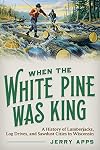
Explorers chart wildernesses and politicians draw boundaries, but businesses and industries build communities. “When The White Pine Was King” is the story of the transformative role the logging industry played in shaping communities and the economy of early Wisconsin.
The narrative begins with an introduction of the author’s association with Wisconsin’s logging heritage. It continues with accounts of how the glaciers shaped Wisconsin and the Indian nations and early explorers adapted show more to it. Wisconsin’s climate and soil set the stage for massive forests of white pine that was superior that the stands in other states. The forests attracted skilled loggers from New England and Canada’s Maritime provinces. Author Jerry Apps guides the readers through Wisconsin’s logging tales, both chronologically and by subject. He narrates the sagas of the techniques of cutting, transporting and processing the logs, the lumberjack’s camps and life, the sawmills and life in the sawmill towns.
Beginning well before the Civil War, Wisconsin logging reached its peak around 1890 after which it commenced a long decline. As harvestable timber was exhausted, many companies moved into other regions, leaving behind baren wastelands, although some sought to convert to sustainable planting and cutting. Attempts to convert abandoned forests to farmland predictably failed due to climate and soil quality. Eventually, reforestation was adopted as the only profitable use of the land.
This is another in Jerry Apps’ extensive canon focusing on Wisconsin history and memory. Unlike some authors who tell a story through essentially independently standing anecdotes, Apps again exhibits his ability to weave the stories of individuals, the rise and decline of communities, the business practices that directed an industry and its place in the American Pageant into a readable, informative and enjoyable tome. He chronicles the reasons logging and milling took place when and where the did. He highlights some of the giants who built their businesses, such as Frederick Weyerhaeuser. He confronts the reader with concept that “Ecologically, no force since the glaciers has rivaled northern logging in either its immediate or long-term effects.” (p. 116) The photos and notes supplement the text and the sidebars provide snippets of characters, lore and context that enhance the tales.
“When The White Pine Was King” is a treasure. I have read several of Jerry Apps’ books and my favorite has been “Wisconsin Agriculture” (see my review) for its saga of farming’s contribution to the building of the Dairy State. “White Pine” is similar, though shorter, and is a strong contender for my blue ribbon. I recommend it to anyone interested in the role of logging in building of civilizations in Northern Wisconsin or similar regions elsewhere on the continent.
I did receive a free copy of this book without an obligation to post a review. show less
The narrative begins with an introduction of the author’s association with Wisconsin’s logging heritage. It continues with accounts of how the glaciers shaped Wisconsin and the Indian nations and early explorers adapted show more to it. Wisconsin’s climate and soil set the stage for massive forests of white pine that was superior that the stands in other states. The forests attracted skilled loggers from New England and Canada’s Maritime provinces. Author Jerry Apps guides the readers through Wisconsin’s logging tales, both chronologically and by subject. He narrates the sagas of the techniques of cutting, transporting and processing the logs, the lumberjack’s camps and life, the sawmills and life in the sawmill towns.
Beginning well before the Civil War, Wisconsin logging reached its peak around 1890 after which it commenced a long decline. As harvestable timber was exhausted, many companies moved into other regions, leaving behind baren wastelands, although some sought to convert to sustainable planting and cutting. Attempts to convert abandoned forests to farmland predictably failed due to climate and soil quality. Eventually, reforestation was adopted as the only profitable use of the land.
This is another in Jerry Apps’ extensive canon focusing on Wisconsin history and memory. Unlike some authors who tell a story through essentially independently standing anecdotes, Apps again exhibits his ability to weave the stories of individuals, the rise and decline of communities, the business practices that directed an industry and its place in the American Pageant into a readable, informative and enjoyable tome. He chronicles the reasons logging and milling took place when and where the did. He highlights some of the giants who built their businesses, such as Frederick Weyerhaeuser. He confronts the reader with concept that “Ecologically, no force since the glaciers has rivaled northern logging in either its immediate or long-term effects.” (p. 116) The photos and notes supplement the text and the sidebars provide snippets of characters, lore and context that enhance the tales.
“When The White Pine Was King” is a treasure. I have read several of Jerry Apps’ books and my favorite has been “Wisconsin Agriculture” (see my review) for its saga of farming’s contribution to the building of the Dairy State. “White Pine” is similar, though shorter, and is a strong contender for my blue ribbon. I recommend it to anyone interested in the role of logging in building of civilizations in Northern Wisconsin or similar regions elsewhere on the continent.
I did receive a free copy of this book without an obligation to post a review. show less
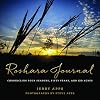
This is a beautiful book, both the writing and the photography. It chronicles 50 years on a family's weekend hobby farm, arranged by season so you get a look at mid-April weather in years both balmy and blizzard-ridden. By the time I finished the book I felt a great deal of affection for both the family and their enchanting acreage. Wisconsin is the landscape and the climate of my childhood and the images and narrative brought back multitudes of warm memories. However, more than the show more memories, Roshara Journal made me want to create a similar record of our own land on which our children grew up and which now is the home of our grandchildren. I'm about 25 years late starting! show less
 This review was written for LibraryThing Early Reviewers.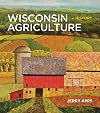
Wisconsin history is saturated with its agriculture heritage and Jerry Apps woven the two together in this delightful book from the Wisconsin Historical Press. Beginning with the glaciers that molded the Wisconsin landscape he carries the story through the Indians, pioneers, settlers, the wheat era that gave way to the Dairy State and the many supporting roles that make up the history of Wisconsin Agriculture.
The story is a progression of economic activity including mining and logging, show more fruits and vegetables, and processed foods including cheese and wine. Apps does an excellent job of relating his threads to larger themes in Wisconsin and American history. He shows how the secession of the cotton and sugar producing states during the Civil War stimulated booms in Wisconsin sheep and sorghum production and World War II shortages brought a revival of sorghum and made poultry an American staple. He relates how German immigrant brewers created a demand for hops. Agriculture provided the soil in which the “Wisconsin Idea”, that the limits of the University of Wisconsin are the boundaries of the state, took root as academians taught advanced farming methods from the lakes to the rivers. The saga of Wisconsin agriculture has many parts, including the North Country cranberries, Door County cherries, a wide variety of apples suited to diverse growing conditions, the hay grown for cattle, fish farming and mink raising. I learned new facts, such as why a silo is round, the way cranberries and cherries are harvested and how cooperatives shaped the rural landscape. Not limited to the past, readers are led up to the present and left with the challenges facing the Wisconsin farmer of the future.
This tome is a combination of narration and side bars with a generous selection of pictures that bring its words to life. Though not a resident of Wisconsin I am a frequent visitor. I enjoy its history, of which I now know more, have fond memories of visits to an aunt and uncle’s farm, which this rekindled, and appreciate The Badger State’s sights, of which I have more to look for. This is a book to read, set aside, refer to and leave out for your guests to page through. Jerry Apps has given us a treasure. Savor it!
I did receive a copy of this book to read and review. show less
The story is a progression of economic activity including mining and logging, show more fruits and vegetables, and processed foods including cheese and wine. Apps does an excellent job of relating his threads to larger themes in Wisconsin and American history. He shows how the secession of the cotton and sugar producing states during the Civil War stimulated booms in Wisconsin sheep and sorghum production and World War II shortages brought a revival of sorghum and made poultry an American staple. He relates how German immigrant brewers created a demand for hops. Agriculture provided the soil in which the “Wisconsin Idea”, that the limits of the University of Wisconsin are the boundaries of the state, took root as academians taught advanced farming methods from the lakes to the rivers. The saga of Wisconsin agriculture has many parts, including the North Country cranberries, Door County cherries, a wide variety of apples suited to diverse growing conditions, the hay grown for cattle, fish farming and mink raising. I learned new facts, such as why a silo is round, the way cranberries and cherries are harvested and how cooperatives shaped the rural landscape. Not limited to the past, readers are led up to the present and left with the challenges facing the Wisconsin farmer of the future.
This tome is a combination of narration and side bars with a generous selection of pictures that bring its words to life. Though not a resident of Wisconsin I am a frequent visitor. I enjoy its history, of which I now know more, have fond memories of visits to an aunt and uncle’s farm, which this rekindled, and appreciate The Badger State’s sights, of which I have more to look for. This is a book to read, set aside, refer to and leave out for your guests to page through. Jerry Apps has given us a treasure. Savor it!
I did receive a copy of this book to read and review. show less
This fine collaboration of Jerry Apps and his son Steve, diarist and photographer respectively, handsomely celebrates the world of Roshara, a Wisconsin farm, and the natural wonders seen in the change of seasons. The marriage of the diary entries, selected from the past fifty years, to exquisite photographs timelessly transports the reader season to season, enabling appreciation of nature’s abundant beauty and grace. The words provide keen observations and understated wisdom; the photos show more capture Roshara’s broad expanse as well as its minute details. An underlying theme is the growth and maturation of both the Apps family and Roshara itself across the generations. show less
This review was written for LibraryThing Early Reviewers.Lists
Books About Boys (1)
Awards


You May Also Like


Associated Authors
Statistics
- Works
- 67
- Members
- 928
- Popularity
- #27,658
- Rating
- 4.1
- Reviews
- 54
- ISBNs
- 138
- Languages
- 1
