
David A. Aguilar
Author of National Geographic Little Kids First Big Book of Space
About the Author
Image credit: San Jose Library / Flickr
Works by David A. Aguilar
National Geographic Little Kids First Big Book of Space (2012) — Illustrator — 1,171 copies, 8 reviews
Super Stars: The Biggest, Hottest, Brightest, and Most Explosive Stars in the Milky Way (National Geographic Kids) (2010) 117 copies
Alien Worlds: Your Guide to Extraterrestrial Life (National Geographic Kids) (2013) 61 copies, 1 review
Tagged
Common Knowledge
- Gender
- male
Members
Reviews
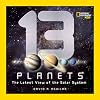
Finally, the astronomy powers-that-be got it sorted and here is the latest information on the solar system. Pluto is back as a "dwarf planet" and it brought along its friends! 13 Planets is very well presented, copiously illustrated, and includes all sorts of cool extras. My favourite was "shop for your own solar system at the grocery store" shopping list. With the sun represented as a grapefruit, Mercury is a grain of salt, Venus and the Earth are two grains of raw sugar and so on. You can show more pretty much fit the whole Solar System into your neighbourhood, and then it turns out that the orange you bought is Alpha Centauri and it's supposed to be 2400 miles away. Sorry, I'm just going to say it's hanging on a tree somewhere in California! show less
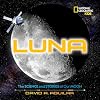
I have never really been all that interested in space. There, I said it. Even though I don't bother much with themes, I did try to keep up a little with the summer's "Universe of Stories" theme though, and that meant reading more space books than I really wanted to! However, David Aguilar is always a good read, even for someone who's not into the subject.
His latest book is about the moon, and there's a lot more to this satellite than you might think. Aguilar opens with the familiar facts and show more stories associated with the moon and the moon landing, but then goes far back in time to the origin of the moon. Chunks of text are set against artist's conceptions and photographs of space as Aguilar leads readers through the evolution of the moon, both in myth and fact.
The book goes on to compare earth and the moon, compare earth's moon to other moons in the galaxy, talk about the early history of moon exploration, and how earth is affected by the moon. These facts are interspersed with legends, from werewolves to hoaxes of moon people. In addition to explaining eclipses and tides, Aguilar also offers suggestions for using a telescope to explore the moon, identifying various features and specific topography. The last section of the book is devoted to the first moon landing and continued exploration of the moon, as well as a prediction of the future of the moon (hint - it's explosive).
Back matter includes several experiments of varying complexity, an index, additional resources, credits, and a final illustration showing Jules Verne's 1865 imagined space voyage.
Verdict: I consider Aguilar's work to be a good basic foundation for space books. This newest offering on the moon is no exception and will be an excellent resource for kids writing reports or just interested in learning more about space.
ISBN: 9781426333224; Published June 2019 by National Geographic; Review copy provided by publisher; Donated to the library show less
His latest book is about the moon, and there's a lot more to this satellite than you might think. Aguilar opens with the familiar facts and show more stories associated with the moon and the moon landing, but then goes far back in time to the origin of the moon. Chunks of text are set against artist's conceptions and photographs of space as Aguilar leads readers through the evolution of the moon, both in myth and fact.
The book goes on to compare earth and the moon, compare earth's moon to other moons in the galaxy, talk about the early history of moon exploration, and how earth is affected by the moon. These facts are interspersed with legends, from werewolves to hoaxes of moon people. In addition to explaining eclipses and tides, Aguilar also offers suggestions for using a telescope to explore the moon, identifying various features and specific topography. The last section of the book is devoted to the first moon landing and continued exploration of the moon, as well as a prediction of the future of the moon (hint - it's explosive).
Back matter includes several experiments of varying complexity, an index, additional resources, credits, and a final illustration showing Jules Verne's 1865 imagined space voyage.
Verdict: I consider Aguilar's work to be a good basic foundation for space books. This newest offering on the moon is no exception and will be an excellent resource for kids writing reports or just interested in learning more about space.
ISBN: 9781426333224; Published June 2019 by National Geographic; Review copy provided by publisher; Donated to the library show less
This book is a visual powerhouse! But more than that, it offers just the right text to visuals ratio. It appeals to the child who is visually stimulated while giving enough information to keep them moving along and wanting to learn more about the wonders of our solar system. Both my 9 year old, who LOVES anything related to space, and my 13 year old who is sort of "Meh" about space but, likes cool facts, LOVED this book! I would use it as a source to illustrate or add weight to any studies show more involving gravity, planet composition, biology, or meteorology. This book is well written and offers a sort of wry humor at different turns.
One of the most striking aspects of this book is that it is almost entirely ILLUSTRATED! I thought at first that most of the images were photographs. But they are illustrations.
The author, David Aguilar is an astronomer so I have no reason to doubt the information he is putting in his book, but he is also an artist. I would have to say he is an AMAZING artist as his art fooled me into thinking it was photographic.
I had to ding this book as the index was not helpful, telescope for instance, I could not find in there. I also could not find thermal vent, or STAR. In an astronomy book you should be able to find STAR in the index and then go from there. That is possibly the only real criticism I have. The bibliography is thorough for what it had to be, most of the knowledge comes from the author himself being an accomplished astronomer.
I definitely recommend this for any early finishers for a science classroom and bring it out during any discussion of the planets. Also, recommended for any children's or young adult's collection for any library. show less
One of the most striking aspects of this book is that it is almost entirely ILLUSTRATED! I thought at first that most of the images were photographs. But they are illustrations.
The author, David Aguilar is an astronomer so I have no reason to doubt the information he is putting in his book, but he is also an artist. I would have to say he is an AMAZING artist as his art fooled me into thinking it was photographic.
I had to ding this book as the index was not helpful, telescope for instance, I could not find in there. I also could not find thermal vent, or STAR. In an astronomy book you should be able to find STAR in the index and then go from there. That is possibly the only real criticism I have. The bibliography is thorough for what it had to be, most of the knowledge comes from the author himself being an accomplished astronomer.
I definitely recommend this for any early finishers for a science classroom and bring it out during any discussion of the planets. Also, recommended for any children's or young adult's collection for any library. show less
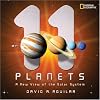
I think this book used the same images of the gods that were in the old National Geographic "Our Universe" book when I was a kid. Eris is, of course, new, and her image is much more modern seeming, more like a cartoon.
The book was published in 2006, after Spirit and Opportunity were landed on Mars, but before Curiosity. It has many exciting illustrations of planets and some very odd sentences. One of the best parts is the solar system in a grocery bag metaphor. In this metaphor the sun is a show more grapefruit, Jupiter is a cherry tomato, Saturn is a grape, and the earth is about the size of a single grain of fancy raw sugar. Helpful for keeping in mind that, although the sun is big, Jupiter isn't trivial in comparison. show less
The book was published in 2006, after Spirit and Opportunity were landed on Mars, but before Curiosity. It has many exciting illustrations of planets and some very odd sentences. One of the best parts is the solar system in a grocery bag metaphor. In this metaphor the sun is a show more grapefruit, Jupiter is a cherry tomato, Saturn is a grape, and the earth is about the size of a single grain of fancy raw sugar. Helpful for keeping in mind that, although the sun is big, Jupiter isn't trivial in comparison. show less
Awards


You May Also Like


Associated Authors
Statistics
- Works
- 17
- Members
- 2,312
- Popularity
- #11,104
- Rating
- 4.4
- Reviews
- 24
- ISBNs
- 55
- Languages
- 4
