

Marfé Ferguson Delano
Author of Explore My World: Butterflies
About the Author
Image credit: via Amazon.com
Works by Marfé Ferguson Delano
Helen's Eyes: A Photobiography of Annie Sullivan, Helen Keller's Teacher (2008) 118 copies, 6 reviews
Master George's People: George Washington, His Slaves, and His Revolutionary Transformation (2013) 45 copies, 6 reviews
Tagged
Common Knowledge
- Canonical name
- Ferguson Delano, Marfé
- Legal name
- Ferguson Delano, Marfé
- Gender
- female
- Nationality
- USA
- Places of residence
- Memphis, Tennessee, USA (birth)
- Associated Place (for map)
- Tennessee, USA
Members
Reviews

This was a very interesting nonfiction about how the discovery of Lucy required scientists to rethink the human family tree. Instead of being a linear progression, they realized the family tree was more like a bush, with some offshoots here and there that are difficult to explain. Lucy was a hominid (a bipedal primate mammal), but her brain size was small. Most other bipedals had larger brains, but Lucy was a mystery. Her discovery and the findings of other hominids shook up the scientific show more world, and still no one knows for sure how the human family “bush” should look.
The book tells of how Donald Johansen happened to find that fateful elbow sticking up out of the dirt in Ethiopia in 1974. It goes into detail with great photographs about how they made replicas of the fossilized bones and pieced them together. The explanation of how they dated the bones was well explained, and kids would find that the science in this book is accessible and made infinitely more interesting with the pictures and graphs along the way. It includes a good glossary, too. The best part was how scientists made an educated guess about what Lucy would have looked like. A paleo-artist constructed a life-size sculpture of Lucy that kids will love. I thought this book was great.
Personally, I love reading nonfiction for kids because it gives me just enough of this topic. If I were to research this topic, I would find tons of scholarly journals and monstrously boring books for adult scholars. I would quickly lose interest in the topic and probably not even bother. Kids’ nonfiction makes the topics fun, interesting, and informative. They are usually pretty well written, too, written to grab your attention and hold it. The photographs and drawings make the different facts come alive. This one was a real joy to read.
5 Stars! show less
The book tells of how Donald Johansen happened to find that fateful elbow sticking up out of the dirt in Ethiopia in 1974. It goes into detail with great photographs about how they made replicas of the fossilized bones and pieced them together. The explanation of how they dated the bones was well explained, and kids would find that the science in this book is accessible and made infinitely more interesting with the pictures and graphs along the way. It includes a good glossary, too. The best part was how scientists made an educated guess about what Lucy would have looked like. A paleo-artist constructed a life-size sculpture of Lucy that kids will love. I thought this book was great.
Personally, I love reading nonfiction for kids because it gives me just enough of this topic. If I were to research this topic, I would find tons of scholarly journals and monstrously boring books for adult scholars. I would quickly lose interest in the topic and probably not even bother. Kids’ nonfiction makes the topics fun, interesting, and informative. They are usually pretty well written, too, written to grab your attention and hold it. The photographs and drawings make the different facts come alive. This one was a real joy to read.
5 Stars! show less
Master George's People: George Washington, His Slaves, and His Revolutionary Transformation by Marfé Ferguson Delano
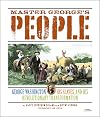
This is a very good book for grades five and up about the lives of slaves on George Washington’s plantation, Mount Vernon, and how Washington’s views on slavery evolved over the years.
Washington left voluminous papers at the time of his death, including his letters to farm managers at Mount Vernon while he was away - first fighting the Revolutionary War, and later serving as the nation’s first president.
He called his slaves “my people,” and told his managers he expected “that my show more people . . . be at their work as soon as it is light, work ‘till it is dark, and be diligent while they are at it.” He not only used slaves to do all the menial work of taking care of what eventually grew to 8,000 acres and a large house with constant visitors, but a number of them were skilled artisans as well.
Washington was a hard worker himself, but of course his life was his own to choose. He fed and clothed his slaves and took care of them in sickness, but expected in exchange “such labor as they ought to render.” Moreover, they received no more than the bare minimum, per Washington’s orders:
“It is not my wish or desire that my Negroes should have an ounce of meal more, nor less, than is sufficient to feed them plentifully.”
Since "plentifully” wasn’t usually enough, they were allowed to grow vegetables and sell items they made in their “free” time to buy more.
In addition, most married slaves were not able to live in the same place as their spouses; Washington had other farms, and housed them where they were assigned to do work. They generally used their one day off to walk the many miles necessary to see their partners. At age 11, children began work training, and at 14 they were assigned to adult duties.
Although Washington himself was not known to be physically abusive, this was not always true of his overseers. After one reported to Washington that he whipped a female slave for being “impudent,” Washington wrote back “Your treatment of Charlotte was very proper,” adding that “if she, or any other of the servants will not do their duty by fair means, or are impertinent, correction … must be administered.”
Occasionally, Washington’s slaves ran off. The author reports that between 1759 and 1799, at least 47 slaves ran away. She conjectures that more might have left had they not felt bound to Mount Vernon by strong family ties to other slaves. Washington “spared no expense” trying to track them down. He considered their behavior to be acts of betrayal and ingratitude.
In spite of all of this, over time Washington began to see slavery in a new light. Several of his close associates, including the Marquis de Lafayette and John Laurens, were avid abolitionists. When the Revolutionary Army began to take black soldiers, Washington got to see blacks from a different perspective. And a young African-born slave and poet named Phillis Wheatley sent a paean to him that impressed him greatly.
Eventually he decided to free those slaves that he could upon Martha’s death. (He could not free them at the time of his own death since some would revert to the estate of Martha’s family, the Custis estate, per “dower law.” Also, he did not want to break up the families of his own slaves who had intermarried with such “dower” slaves.) In addition, he stipulated in his will that slaves too old and sick to work were to be “comfortably fed and clothed by my heirs while they live.”
Washington’s relative benevolence was in stark contrast with most other Founding Fathers, including of course Thomas Jefferson, the author of the words “We hold these truths to be self-evident, that all men are created equal, that they are endowed by their Creator with certain unalienable Rights, that among these are Life, Liberty and the pursuit of Happiness.”
The book is illustrated with photos by Lori Epstein, pictures of costumed reenactors, and reproductions of portraits and drawings from the era.
The book also contains a chronology, bibliography, and list of sources at the end. show less
Washington left voluminous papers at the time of his death, including his letters to farm managers at Mount Vernon while he was away - first fighting the Revolutionary War, and later serving as the nation’s first president.
He called his slaves “my people,” and told his managers he expected “that my show more people . . . be at their work as soon as it is light, work ‘till it is dark, and be diligent while they are at it.” He not only used slaves to do all the menial work of taking care of what eventually grew to 8,000 acres and a large house with constant visitors, but a number of them were skilled artisans as well.
Washington was a hard worker himself, but of course his life was his own to choose. He fed and clothed his slaves and took care of them in sickness, but expected in exchange “such labor as they ought to render.” Moreover, they received no more than the bare minimum, per Washington’s orders:
“It is not my wish or desire that my Negroes should have an ounce of meal more, nor less, than is sufficient to feed them plentifully.”
Since "plentifully” wasn’t usually enough, they were allowed to grow vegetables and sell items they made in their “free” time to buy more.
In addition, most married slaves were not able to live in the same place as their spouses; Washington had other farms, and housed them where they were assigned to do work. They generally used their one day off to walk the many miles necessary to see their partners. At age 11, children began work training, and at 14 they were assigned to adult duties.
Although Washington himself was not known to be physically abusive, this was not always true of his overseers. After one reported to Washington that he whipped a female slave for being “impudent,” Washington wrote back “Your treatment of Charlotte was very proper,” adding that “if she, or any other of the servants will not do their duty by fair means, or are impertinent, correction … must be administered.”
Occasionally, Washington’s slaves ran off. The author reports that between 1759 and 1799, at least 47 slaves ran away. She conjectures that more might have left had they not felt bound to Mount Vernon by strong family ties to other slaves. Washington “spared no expense” trying to track them down. He considered their behavior to be acts of betrayal and ingratitude.
In spite of all of this, over time Washington began to see slavery in a new light. Several of his close associates, including the Marquis de Lafayette and John Laurens, were avid abolitionists. When the Revolutionary Army began to take black soldiers, Washington got to see blacks from a different perspective. And a young African-born slave and poet named Phillis Wheatley sent a paean to him that impressed him greatly.
Eventually he decided to free those slaves that he could upon Martha’s death. (He could not free them at the time of his own death since some would revert to the estate of Martha’s family, the Custis estate, per “dower law.” Also, he did not want to break up the families of his own slaves who had intermarried with such “dower” slaves.) In addition, he stipulated in his will that slaves too old and sick to work were to be “comfortably fed and clothed by my heirs while they live.”
Washington’s relative benevolence was in stark contrast with most other Founding Fathers, including of course Thomas Jefferson, the author of the words “We hold these truths to be self-evident, that all men are created equal, that they are endowed by their Creator with certain unalienable Rights, that among these are Life, Liberty and the pursuit of Happiness.”
The book is illustrated with photos by Lori Epstein, pictures of costumed reenactors, and reproductions of portraits and drawings from the era.
The book also contains a chronology, bibliography, and list of sources at the end. show less
Helen's Eyes: A Photobiography of Annie Sullivan, Helen Keller's Teacher (Photobiographies) by Marfé Ferguson Delano
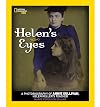
While the story of Helen Keller is widely known this book about Annie Sullivan was extremely informative. The book takes a look at the life of the teacher behind Helen Keller. Annie Sullivan had a difficult childhood, she was abandoned, mistreated, lived in a state poor house and was herself blind. This is a story of a woman who overcame many trials and obstacles, her time at Perkins school for the Blind and how she came to be the teacher of Helen Keller and how they inspired everyone around show more them.
I thoroughly enjoyed this book and especially the real life photos throughout the book of Annie, Helen, places and people in their lives. It is a book about hope and overcoming adversity. This would be a great book to open up discussion about people with special needs, differences as well as what the world look like during that time period. show less
I thoroughly enjoyed this book and especially the real life photos throughout the book of Annie, Helen, places and people in their lives. It is a book about hope and overcoming adversity. This would be a great book to open up discussion about people with special needs, differences as well as what the world look like during that time period. show less

Another excellent example of what an informational book should be like. I appreciate that this book doesn't only state the problem but also offers solutions. Kids will be excited to learn about the ways in which they can help their favorite animals. They will gain perspective on the fact that the world needs to be nourished and looked after. This is rather important for children who are able to empathize on so many levels and will grow to be great role models of how everyone should behave show more towards nature and its creatures. show less
Lists
Awards


You May Also Like


Associated Authors
Statistics
- Works
- 26
- Members
- 2,880
- Popularity
- #8,895
- Rating
- 4.1
- Reviews
- 55
- ISBNs
- 91
- Languages
- 5