
Stella Duffy
Author of Theodora: Actress, Empress, Whore
About the Author
Image credit: Courtesy of Serpent's Tail Press
Series
Works by Stella Duffy
Associated Works
Miss Marple : The Complete Short Stories (1985) — Introduction, some editions — 2,796 copies, 47 reviews
Tagged
Common Knowledge
- Birthdate
- 1963
- Gender
- female
- Education
- Victoria University of Wellington
- Occupations
- novelist
short story writer
playwright - Awards and honors
- CWA Short Story Award ('Martha Grace', 2002)
- Agent
- William Morris Agency
- Relationships
- Silas, Shelley (wife)
- Nationality
- England (birth)
UK - Birthplace
- Woolwich, London, England, UK
- Places of residence
- New Zealand
Lambeth, London, England, UK - Map Location
- UK
Members
Discussions
Chick lit, two couples, woman with it all loses it because of affair in Name that Book (March 2013)
Reviews

This is a continuation of an unfinished Marsh mystery. It has been on my radar since it was published in 2018 and I was wondering about why I didn’t feel a stronger desire to read it sooner. Was I influenced by my disappointment with the Dorothy L. Sayers continuation, Thrones, Dominations?
Because I can see now that with that book, I had high, and highly specific, expectations! I wanted more of two particular characters and more of their relationship, which isn’t a feature of all of show more Sayers’ other mysteries; I wanted a particular combination of intellectual complexity and emotion, which not all of Sayers’ mysteries contain either.
Marsh was arguably less brilliant than Sayers but much more consistent and more prolific too. I suspect that consequently her style is easier to mimic (and to sustain while also including a successful mystery plot), but even if her style isn’t, I think my expectations were more restrained.
Well. I wanted atmosphere and a clear sense of place. And I wanted Alleyn’s approach to detecting, which relies heavily on conversing with people and provides insight into their different personalities and concerns, whether or not those turn out to be connected to the mystery at hand. But Money in the Morgue delivered all of this!
It’s set in a New Zealand hospital during WWII. Chief Detective Inspector Roderick Alleyn of Scotland Yard happens to be on-site, secretly investigating something war-related, when a series of mysteries, beginning with missing money, are discovered. With the hospital cut off by road and phone due to a summer storm, Alleyn steps forward and reveals his true occupation (if not his mission).
I really enjoyed this. I listened to the audiobook, which is also read by Stella Duffy, and I was impressed by her work as both novelist and narrator -- she’s an excellent Marsh imitator. I came away feeling motivated to track down the two remaining Marsh mysteries I haven’t read, and also curious about Duffy’s own fiction.
(One reason to be glad I didn’t read this in 2018 is that I wasn’t very familiar with A Midsummer Night’s Dream then, and so wouldn’t have appreciated Alleyn’s quoting and references in the same way.)
Because I can see now that with that book, I had high, and highly specific, expectations! I wanted more of two particular characters and more of their relationship, which isn’t a feature of all of show more Sayers’ other mysteries; I wanted a particular combination of intellectual complexity and emotion, which not all of Sayers’ mysteries contain either.
Marsh was arguably less brilliant than Sayers but much more consistent and more prolific too. I suspect that consequently her style is easier to mimic (and to sustain while also including a successful mystery plot), but even if her style isn’t, I think my expectations were more restrained.
Well. I wanted atmosphere and a clear sense of place. And I wanted Alleyn’s approach to detecting, which relies heavily on conversing with people and provides insight into their different personalities and concerns, whether or not those turn out to be connected to the mystery at hand. But Money in the Morgue delivered all of this!
It’s set in a New Zealand hospital during WWII. Chief Detective Inspector Roderick Alleyn of Scotland Yard happens to be on-site, secretly investigating something war-related, when a series of mysteries, beginning with missing money, are discovered. With the hospital cut off by road and phone due to a summer storm, Alleyn steps forward and reveals his true occupation (if not his mission).
I really enjoyed this. I listened to the audiobook, which is also read by Stella Duffy, and I was impressed by her work as both novelist and narrator -- she’s an excellent Marsh imitator. I came away feeling motivated to track down the two remaining Marsh mysteries I haven’t read, and also curious about Duffy’s own fiction.
(One reason to be glad I didn’t read this in 2018 is that I wasn’t very familiar with A Midsummer Night’s Dream then, and so wouldn’t have appreciated Alleyn’s quoting and references in the same way.)
In the aftermath of twilight Sarah could just make out a black mass of buildings against the royal texture of the hills. Behind the hills, the main range, touched on its pinnacles with perpetual snow, awaited the night against a luminous sky. Although the sun was now below the horizon the cusp of Mount Seager was tinctured miraculously with clear rose. The windscreen of the bus framed a vast landscape quite free of human interest, unscarred by human occupation, moving because of its remoteness. [...] The mountains assumed an incredible depth of blue and the foothills turned more darkly purple. Their margins, folded together in a pattern of firm curves, were faintly haloed with light. The road ran forward into nothingness. The plains on either side of the road and stretching out behind them had taken on a bleached look, seeming to fade rather than to darken as night fell, turning the whole scene into an other-worldly monochrome. Sarah watched the road and her petrol gauge. With one layer of her mind she attended to her job, with another she saw that the landscape was quite beautiful, and yet with another she hunted for things to say to [her passengers.]show less

This is an odd little book I picked up because I think Tomas mentioned it on The Readers podcast. It reminded me a lot of So Many Ways to Begin by Jon McGregor which came out 2 years previously. They’re both what I call ‘slice of life’ novels. Sure, there is a nominal plot point to be revealed, but it isn’t urgent and not all of the narratives have anything more to do with each other than serendipity and propinquity. The thing that reminded me of the McGregor novel is the fact that show more both main characters save objects that most everyone else would throw away. In Duffy’s book it is a dry cleaner who picks his patrons’ pockets before doing the work and then files the things away just in case someone comes back to claim them. No one ever does and honestly the collection doesn’t have much bearing on anyone’s story, but works as a metaphor on its own.
The story mostly revolves around Robert and Akeel; Robert is selling his cleaning business and Akeel wants to buy it. In a sort of forced apprenticeship, Akeel must spend a year in the shop with Robert to learn the ropes. Slowly the men form a friendship all the while knowing it won’t last beyond the year. Robert’s wife Jean left him 25 years ago with their daughter Katie and has only recently communicated with him and it is not good news. Eventually we learn why they split and it’s a little surprising.
The stories of some of Robert’s customers are interspersed through the novel. Helen, the ex-pat from New Zealand. Dean the bad lad and drug dealer. Marilyn the home health worker who always seems to be eating. Mostly they hold your interest, but I found myself skimming some of Dean’s story.
Surprising also is the amount of racial pre-supposition that lurks waiting to trap the white reader. I admit I didn’t originally conceive of anyone in this book as other than white until explained otherwise. Certainly laid open my subconscious character imaginings. From what I understand it’s pretty common and not just to us pasty pale people. As a matter of fact, there’s a lot of about race relations in the book and it was enlightening and thought-provoking without being preachy. Also concealed are some other situations that I thought cleverly done.Like the whole introduction to Helen’s story leads us to believe she is the trapped wife and mother, but no, she’s the nanny; trapped also, but not equally.
The writing is engaging and she has some interesting turns of phrase like this one on page 62 - “St. Anne’s Residences were built in the 1890s, the work of a handful of London philanthropists, old men nervous of camel’s humps and needle’s eyes.”
All in all a satisfying book about a time and place and the people who live there, work there and are dying of love there. show less
The story mostly revolves around Robert and Akeel; Robert is selling his cleaning business and Akeel wants to buy it. In a sort of forced apprenticeship, Akeel must spend a year in the shop with Robert to learn the ropes. Slowly the men form a friendship all the while knowing it won’t last beyond the year. Robert’s wife Jean left him 25 years ago with their daughter Katie and has only recently communicated with him and it is not good news. Eventually we learn why they split and it’s a little surprising.
The stories of some of Robert’s customers are interspersed through the novel. Helen, the ex-pat from New Zealand. Dean the bad lad and drug dealer. Marilyn the home health worker who always seems to be eating. Mostly they hold your interest, but I found myself skimming some of Dean’s story.
Surprising also is the amount of racial pre-supposition that lurks waiting to trap the white reader. I admit I didn’t originally conceive of anyone in this book as other than white until explained otherwise. Certainly laid open my subconscious character imaginings. From what I understand it’s pretty common and not just to us pasty pale people. As a matter of fact, there’s a lot of about race relations in the book and it was enlightening and thought-provoking without being preachy. Also concealed are some other situations that I thought cleverly done.
The writing is engaging and she has some interesting turns of phrase like this one on page 62 - “St. Anne’s Residences were built in the 1890s, the work of a handful of London philanthropists, old men nervous of camel’s humps and needle’s eyes.”
All in all a satisfying book about a time and place and the people who live there, work there and are dying of love there. show less
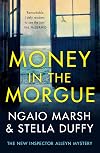
First the Money Disappears, Then the Bodies
Review of the Harper Collins paperback (2019) of the original Collins Crime Club hardcover (2018)
Money in the Morgue finds Chief Inspector Roderick Alleyn in New Zealand where his creator Ngaio Marsh was able to periodically locate him from his regular duties at Scotland Yard's CID. Alleyn is undercover at a wartime hospital where there is suspicion of spying activity. When the hospital is cut off from the outside world during a storm, the medical show more payroll is stolen and Alleyn is forced to reveal his true profession as being the only policeman on hand to investigate the crime. But then further complications arise as deaths occur and bodies begin to mysteriously disappear.
I very much enjoyed Money in the Morgue for its reenactment of the Golden Age of Crime due to Stella Duffy's perfect continuation of Ngaio Marsh's abandoned few chapters. For whatever reason Marsh abandoned the project (perhaps it seemed too close to a similar spy hunt in Colour Scheme (1943)), Duffy has completed the book extremely well in capturing Alleyn's character and interactions with the suspects. There is even an Inspector Fox proxy character in Sergeant Bix. Let us hope that Stella Duffy continues with further Alleyn mysteries.
Trivia and Link
Read an article about Stella Duffy's completion of Money in the Morgue in The Guardian here. show less
Review of the Harper Collins paperback (2019) of the original Collins Crime Club hardcover (2018)
Money in the Morgue finds Chief Inspector Roderick Alleyn in New Zealand where his creator Ngaio Marsh was able to periodically locate him from his regular duties at Scotland Yard's CID. Alleyn is undercover at a wartime hospital where there is suspicion of spying activity. When the hospital is cut off from the outside world during a storm, the medical show more payroll is stolen and Alleyn is forced to reveal his true profession as being the only policeman on hand to investigate the crime. But then further complications arise as deaths occur and bodies begin to mysteriously disappear.
I very much enjoyed Money in the Morgue for its reenactment of the Golden Age of Crime due to Stella Duffy's perfect continuation of Ngaio Marsh's abandoned few chapters. For whatever reason Marsh abandoned the project (perhaps it seemed too close to a similar spy hunt in Colour Scheme (1943)), Duffy has completed the book extremely well in capturing Alleyn's character and interactions with the suspects. There is even an Inspector Fox proxy character in Sergeant Bix. Let us hope that Stella Duffy continues with further Alleyn mysteries.
Trivia and Link
Read an article about Stella Duffy's completion of Money in the Morgue in The Guardian here. show less

Theodora had to earn a living on the stage since she was five, after her father was killed by his own bear. In her teens she also becomes a prostitute. Yet she ended up as Empress. Not surprisingly, she remains one of the more controversial and colourful figures of the Roman Empire.
In Theodora: Empress, Actress, Whore, Stella Duffy takes some of what is known about Theodora of 6th century Constantinople and turns it into a lively, rollicking historical novel. Theodora is an intelligent young show more woman who learns and takes on several different roles successfully. This is Duffy’s 12th novel but her first foray into historical fiction.
The story is told as a third person narrative, but it is often so vivid I think I must have been reading Theodora herself telling me it in the first person. Duffy also uses a lot of dialogue, often shown in quotation marks but without using “she said” or “he said” – this technique of writing bits like scenes from a play seems very appropriate for a story about a performer and actress and gives the story more immediacy. At the same time, using the third person, Duffy can report her heroine’s feelings and emotions in a way which would seem unrealistic in the first person. The dialogue includes quite a lot of swear words – they are not there to shock, but seem appropriate to the way in which the writer imagines her characters speaking and to the discussions they are having.
I was shocked by some scenes, particularly at the beginning where 11 year old Theodora is being brutally trained for theatre work – her teacher sounds like a thug and a bully yet she loves him (not in a sexual way) and continues to remember him with affection.
The author's forthright opinions on women's rights, sexuality and everything else are apparent here. I really enjoyed this, although others may object to the imagining of this real historical woman as a feminist icon. Various scenes show how the system is set up to oppress women and how Theodora resists this.
Despite the novel’s provocative title, Theodora's days as a performer and sex worker are mostly over at the start of the story in this book, and it is not another prostitute’s memoir turned into a novel and given a historical setting for flavour. There are quite a few sex scenes - sometimes the sex is recreational or romantic, sometimes it is for other purposes.
Between her life as a child actress and prostitute (or courtesan) and becoming Empress, Theodora travelled to Africa as the mistress of a man who had been sent there as governor. After this relationship ends messily, she had a series of adventures including religious conversion and a friendship/relationship with another woman before returning to Constantinople. I particularly enjoyed the part of the story involving a woman called Macedonia. The religious part of the story is interesting and important, as it was part of what happened next, but I am not sure I fully understood it. There is more to come before the end of the novel as there is the extraordinary story of how a woman from a lowly social class and of a questionable background became Empress.
I found the story of Stella Duffy’s Theodora compelling and entertaining and I would love to spend more time with her if there is a sequel. show less
In Theodora: Empress, Actress, Whore, Stella Duffy takes some of what is known about Theodora of 6th century Constantinople and turns it into a lively, rollicking historical novel. Theodora is an intelligent young show more woman who learns and takes on several different roles successfully. This is Duffy’s 12th novel but her first foray into historical fiction.
The story is told as a third person narrative, but it is often so vivid I think I must have been reading Theodora herself telling me it in the first person. Duffy also uses a lot of dialogue, often shown in quotation marks but without using “she said” or “he said” – this technique of writing bits like scenes from a play seems very appropriate for a story about a performer and actress and gives the story more immediacy. At the same time, using the third person, Duffy can report her heroine’s feelings and emotions in a way which would seem unrealistic in the first person. The dialogue includes quite a lot of swear words – they are not there to shock, but seem appropriate to the way in which the writer imagines her characters speaking and to the discussions they are having.
I was shocked by some scenes, particularly at the beginning where 11 year old Theodora is being brutally trained for theatre work – her teacher sounds like a thug and a bully yet she loves him (not in a sexual way) and continues to remember him with affection.
The author's forthright opinions on women's rights, sexuality and everything else are apparent here. I really enjoyed this, although others may object to the imagining of this real historical woman as a feminist icon. Various scenes show how the system is set up to oppress women and how Theodora resists this.
Despite the novel’s provocative title, Theodora's days as a performer and sex worker are mostly over at the start of the story in this book, and it is not another prostitute’s memoir turned into a novel and given a historical setting for flavour. There are quite a few sex scenes - sometimes the sex is recreational or romantic, sometimes it is for other purposes.
Between her life as a child actress and prostitute (or courtesan) and becoming Empress, Theodora travelled to Africa as the mistress of a man who had been sent there as governor. After this relationship ends messily, she had a series of adventures including religious conversion and a friendship/relationship with another woman before returning to Constantinople. I particularly enjoyed the part of the story involving a woman called Macedonia. The religious part of the story is interesting and important, as it was part of what happened next, but I am not sure I fully understood it. There is more to come before the end of the novel as there is the extraordinary story of how a woman from a lowly social class and of a questionable background became Empress.
I found the story of Stella Duffy’s Theodora compelling and entertaining and I would love to spend more time with her if there is a sequel. show less
Lists
Awards


You May Also Like


Associated Authors
Statistics
- Works
- 22
- Also by
- 21
- Members
- 1,522
- Popularity
- #16,892
- Rating
- 3.7
- Reviews
- 76
- ISBNs
- 116
- Languages
- 9
