
Jackie Kay
Author of Trumpet
About the Author
Image credit: Ian Oliver, July 1, 2007
Works by Jackie Kay
Associated Works
Chloe Plus Olivia: An Anthology of Lesbian Literature from the 17th Century to the Present (1994) — Contributor — 483 copies, 1 review
Daughters of Africa: An International Anthology of Words and Writings by Women of African Descent from the Ancient Egyptian to the Present (1992) — Contributor — 186 copies
Poems Between Women: Four Centuries of Love, Romantic Friendship, and Desire (1997) — Contributor — 97 copies, 1 review
I Wouldn't Thank You for a Valentine: Poems For Young Feminists (1992) — Contributor — 57 copies, 2 reviews
So Much Things to Say: 100 Poets from the First Ten Years of the Calabash International Literary Festival (2010) — Contributor — 26 copies, 1 review
Tagged
Common Knowledge
- Birthdate
- 1961-11-09
- Gender
- female
- Education
- University of Stirling
- Occupations
- poet
novelist
short story writer
professor - Organizations
- Newcastle University
- Awards and honors
- Eric Gregory Prize (1991)
Cholmondeley Award (2003)
Order of the British Empire (2006)
Scots Makar (2016-2021)
Royal Society of Edinburgh (fellow|2016) - Agent
- Pat Kavanagh (PFD)
- Short biography
- Jackie Kay is an eminent Scottish poet, novelist, and playwright. She studied at the University of Stirling. She served as the Scots Makar (National Poet of Scotland) from 2016 to 2021. Her debut poetry collection, The Adoption Papers, won a Forward Prize. She is a Commander of the Order of the British Empire (CBE) and a Fellow of the Royal Society of Literature.
- Nationality
- UK
- Birthplace
- Edinburgh, Scotland, UK
- Places of residence
- Bishopbriggs, Glasgow, Scotland, UK
Manchester, England, UK - Map Location
- Scotland, UK
Members
Discussions
British Author Challenge June 2022: Jackie Kay & E. F. Benson in 75 Books Challenge for 2022 (August 2022)
Reviews

“When the love of your life dies, the problem is not that some part of you dies too, which it does, but that some part of you is still alive.”
The opening sentence of this novel reads "I pull back the curtains an inch and see their heads bent together." but who are what are they? We soon learn that the speaker is a woman and the heads she views are members of the press camped outside her home. So what great crime has she committed to afford this attention? She spent many years married to show more a famous Jazz trumpeter called Joss Moody who despite being born a woman has lived most of her life as a man. A fact only discovered by everyone else on his deathbed.
However this isn't Joss's story. Instead it is the story of those his death has left behind namely his widow, Millie, and his adopted son, Colman. It is the story about identify and how people are seen by a wider audience. Joss was black, Millie white, both Scots who lived most of their lives and brought up their son in London. The book is actually based on a true story that of Billy Tipton a famous American jazz musician in the 1940's.
Most of the novel is based around Millie whose grieving is movingly portrayed. Colman in contrast feels betrayed by both his parents as he had no idea that Joss was really a woman until being shown by a funeral parlour owner and perhaps understandably is angry. In his anger he is befriended by an unscrupulous journalist seeking to write an expose about Joss the woman. She sees Joss as a sort of freak that will excite the public in the process making her rich yet to his friends and fellow band members although they at least profess ignorance (it is never quite clear whether or not they secretly knew) are happy to purely accept Joss at face value which ultimately is what Colman also does.
Racism both actual and implied are also touched upon but quite sensitively. At one stage Colman boards a train expecting there to be an issue with his seat or his ticket purely of his colour because that is what he has been conditioned to believe from past experience at the hands of whites.
Therefore this is a book about love, gender, grief, race and honesty but mainly it is a book about identity. Identity for all of of us is what we chose it to be rather than what others think that it should be. For a first novel it was a very admirable one that had plenty going for it. show less
The opening sentence of this novel reads "I pull back the curtains an inch and see their heads bent together." but who are what are they? We soon learn that the speaker is a woman and the heads she views are members of the press camped outside her home. So what great crime has she committed to afford this attention? She spent many years married to show more a famous Jazz trumpeter called Joss Moody who despite being born a woman has lived most of her life as a man. A fact only discovered by everyone else on his deathbed.
However this isn't Joss's story. Instead it is the story of those his death has left behind namely his widow, Millie, and his adopted son, Colman. It is the story about identify and how people are seen by a wider audience. Joss was black, Millie white, both Scots who lived most of their lives and brought up their son in London. The book is actually based on a true story that of Billy Tipton a famous American jazz musician in the 1940's.
Most of the novel is based around Millie whose grieving is movingly portrayed. Colman in contrast feels betrayed by both his parents as he had no idea that Joss was really a woman until being shown by a funeral parlour owner and perhaps understandably is angry. In his anger he is befriended by an unscrupulous journalist seeking to write an expose about Joss the woman. She sees Joss as a sort of freak that will excite the public in the process making her rich yet to his friends and fellow band members although they at least profess ignorance (it is never quite clear whether or not they secretly knew) are happy to purely accept Joss at face value which ultimately is what Colman also does.
Racism both actual and implied are also touched upon but quite sensitively. At one stage Colman boards a train expecting there to be an issue with his seat or his ticket purely of his colour because that is what he has been conditioned to believe from past experience at the hands of whites.
Therefore this is a book about love, gender, grief, race and honesty but mainly it is a book about identity. Identity for all of of us is what we chose it to be rather than what others think that it should be. For a first novel it was a very admirable one that had plenty going for it. show less
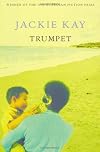
[b:Trumpet|195733|Trumpet|Jackie Kay|https://i.gr-assets.com/images/S/compressed.photo.goodreads.com/books/1403185988l/195733._SY75_.jpg|647113] is an exquisitely written novel about grief, death, and being trans. I read it all in one go on a Sunday afternoon, which I don't recommend as it left me in an odd headspace. The plot revolves around Joss Moody, a famous jazz trumpeter who has recently died. During his life only his wife knew he was trans. After his death his friends, son, and the show more public find out and react in a variety of ways. The narrative ranges across different points of view, including his son, his wife, a journalist writing a sensationalist book about him, his cleaner, and the registrar who signs his death certificate. These perspectives built up a rich picture of Joss' life and death. I found the funeral director's chapter particularly powerful and unsettling. I hadn't read anything else by Jackie Kay and am very impressed that this was her first novel. It is deftly structured, deeply evocative, and emotionally resonant. The characters, living and dead, are vividly drawn and the depiction of grief is utterly convincing:
I dry my hands and pour the water down the sink. I must remember things. I look out of the kitchen window. It has been raining. Tiny beads of rain have been painted on the window pane when I wasn't looking. It is a fine Impressionists' rain. Next door's rowan tree is still quite still, not at all flamboyant; it is not the season for flamboyance. I can see Elsa at her kitchen window peeling potatoes. The intimacy startles me. Seeing me staring, she waves at me. I wave back, suddenly glad of the human contact. If I pin myself down and remember the ordinary things, I will be able to manage. To get up each day and get washed and eat and sleep. To live a life without my companion. To live this life where I am exhausted with my own company, terrible thoughts spinning morning to night in my head. Maybe this is what people mean when they say they are lonely. Maybe they mean they are exhausted even with their own company. If I could just say I am lonely how lovely and ordinary that sounds.show less
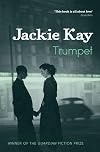
"When the love of your life dies, the problem is not that some part of you dies too, which it does, but that some part of you is still alive."
What makes up identity?
Is it your family?
You accent?
Where you're born?
Where you're raised?
Is it what you do?
Is it how you do it?
Is it the clothes you wear?
Is it your age?
Is your gender?
Is it who you fall in love with?
Is it who you respect?
Trumpet is a beautiful investigation into the question of how people derive a sense of identity under show more circumstances which seem to strip the members of the Moody family of all of the certainties they may have once held to be indestructible.
Jackie Kay wrote this poetic novel around Joss Moody, a fictional jazz musician, whose death leaves his family at a loss after a lifetime of constructing their own image of themselves in relation to Joss, their respective husband and father.
More than that, Kay beautifully describes how their grieving process helps them to figure out who they are.
"I was a traditional boy in an untraditional house. I was always going about the place freaked out and embarrassed. My parents were not like other people’s parents. Whenever they came to my school they stuck out like a sore thumb. I don’t know what it was. A different life makes people look different. Even their skin. Their clothes were more glamorous. They didn’t look like they worked a nine to five. I wanted parents that looked like they worked a nine to five. It was bad enough with all that jazz never mind this. My life was unconventional. A lot of my childhood was spent on the road. Touring. Place to fucking place. I’d have been happier at home watching Star Trek with a bowl of cornflakes. Too much, it was. All that razzamatazz. Other kids envied me and I envied other kids. That’s it." show less
What makes up identity?
Is it your family?
You accent?
Where you're born?
Where you're raised?
Is it what you do?
Is it how you do it?
Is it the clothes you wear?
Is it your age?
Is your gender?
Is it who you fall in love with?
Is it who you respect?
Trumpet is a beautiful investigation into the question of how people derive a sense of identity under show more circumstances which seem to strip the members of the Moody family of all of the certainties they may have once held to be indestructible.
Jackie Kay wrote this poetic novel around Joss Moody, a fictional jazz musician, whose death leaves his family at a loss after a lifetime of constructing their own image of themselves in relation to Joss, their respective husband and father.
More than that, Kay beautifully describes how their grieving process helps them to figure out who they are.
"I was a traditional boy in an untraditional house. I was always going about the place freaked out and embarrassed. My parents were not like other people’s parents. Whenever they came to my school they stuck out like a sore thumb. I don’t know what it was. A different life makes people look different. Even their skin. Their clothes were more glamorous. They didn’t look like they worked a nine to five. I wanted parents that looked like they worked a nine to five. It was bad enough with all that jazz never mind this. My life was unconventional. A lot of my childhood was spent on the road. Touring. Place to fucking place. I’d have been happier at home watching Star Trek with a bowl of cornflakes. Too much, it was. All that razzamatazz. Other kids envied me and I envied other kids. That’s it." show less

This collection of short stories are all about love, and mainly about loosing it. Noticeable that the majority deal with a lesbian relationship, which certainly allows a different take from the "oh, he's left me" style of love. Some of them grabbed me more than others, in some of them there's a sense of what happened next being a mystery - leaving Hamish & Don on a mountain in Scotland has to the be ultimate in cliff-hangers - which feels like there is unfinished business there. The other show more thing that dawned on me is that most of these tales are about a longer-standing relationship, some of them had been a couple for 10 to 15 years before we hear about them, this isn't the usual young love, this is a more mature, more settled kind of affection that is being turned on its head. Maybe that increases the surprise at the breakup at all.
Teh writing is at times start and at others lyrical. I believe she also writes poetry and in the rhythm of some of the sentences, that really comes out, she has a ear for a turn of phrase, that is for sure.
It's not always a very hopeful set of stories, in some of them you wonder how the narrator will extricate themselves from their situation. Yet, bizarrely, the one that I found most hopeful was the one about the man whose wife has left him and he's decided to commit suicide. Something in the fact that he wants to do it without it looking like suicide and by doing so starts to pull his life together makes me think that he, of anyone in the book, will make it through d out the other side of the breakup slough of despond. show less
Teh writing is at times start and at others lyrical. I believe she also writes poetry and in the rhythm of some of the sentences, that really comes out, she has a ear for a turn of phrase, that is for sure.
It's not always a very hopeful set of stories, in some of them you wonder how the narrator will extricate themselves from their situation. Yet, bizarrely, the one that I found most hopeful was the one about the man whose wife has left him and he's decided to commit suicide. Something in the fact that he wants to do it without it looking like suicide and by doing so starts to pull his life together makes me think that he, of anyone in the book, will make it through d out the other side of the breakup slough of despond. show less
Lists
Awards


You May Also Like


Associated Authors
Statistics
- Works
- 36
- Also by
- 37
- Members
- 1,675
- Popularity
- #15,348
- Rating
- 3.7
- Reviews
- 35
- ISBNs
- 120
- Languages
- 10
- Favorited
- 5