

Mike Grell
Author of The Mongoliad: Book One
About the Author
Series
Works by Mike Grell
Superboy and the Legion of Super-Heroes (Tabloid Edition) (2022) — Illustrator — 28 copies, 2 reviews
The Complete Mike Grell's Jon Sable, Freelance Volume 5 (Complete Mike Grell's Jon Sable, Freelance) (2006) 16 copies, 1 review
James Bond 007: Licence to Kill, the Official Comic Book Adaptation (1990) — Adapter — 14 copies, 1 review
Green Arrow [1988] #12 4 copies
Starslayer #1 — Author — 4 copies
Green Arrow [1988] #58 4 copies
Starslayer #6 — Author — 3 copies
The Warlord [1976] #10 3 copies
The Warlord [1976] #32 3 copies
Warlord by Mike Grell Omnibus Vol. 1 3 copies
Green Arrow [1988] #14 3 copies
Green Arrow [1988] #31 3 copies
Jon Sable Freelance Bloodtrail 03 2 copies
Spawn: The Impaler #1 2 copies
The Brave and the Bold #3 (Green Arrow The Butcher and The Question, #3 of Six -Issue Miniseries) (1992) 2 copies
Green Arrow [1988] #29 2 copies
The Warlord [1976] #56 2 copies
The Warlord [1976] #17 2 copies
Green Arrow [1988] #34 2 copies
Jon Sable Freelance #46 2 copies
Green Arrow [1988] #77 2 copies
Starslayer #8 — Author — 2 copies
Starslayer #7 — Author — 2 copies
Starslayer #4 — Author — 2 copies
The Warlord [1976] #33 2 copies
Green Arrow [1988] #65 2 copies
Green Arrow [1988] #75 2 copies
Green Arrow [1988] #74 2 copies
Green Arrow [1988] #24 2 copies
The Warlord [1976] #31 2 copies
Green Arrow: The Wonder Years 3 2 copies
Shaman's Tears No.03 Animus! 2 copies
The Warlord [1976] #46 2 copies
The Warlord [1976] #36 2 copies
Shaman's Tears No.06 Green Error 2 copies
The Warlord [1976] #40 2 copies
Maggie the Cat #1-2 1 copy
The Warlord [1976] #12 1 copy
The Warlord [1976] #13 1 copy
Pacific Comics Ad 1 copy
Spawn: The Impaler #2 1 copy
Warlord #s 1-3 1 copy
Green Arrow #76 (July 1993) 1 copy
Green Arrow #73 (April 1993) 1 copy
Spawn: The Impaler #3 1 copy
Starslayer #1 Origin Issue (The Log of the Jolly Roger, A Celtic Barbarian in the Far Flung Future) (1982) 1 copy
The Warlord [1976] #62 1 copy
The Warlord [1976] #61 1 copy
Shaman's Tears No.03 Ashcan 1 copy
Shado : song of the dragon 1 copy
The Warlord [1976] #34 1 copy
Jon Sable Freelance #48 1 copy
Mike Grell's Sable 2 1 copy
Iron Man (1998) #66 1 copy
Iron Man (1998) #65 1 copy
Iron Man (1998) #56 1 copy
The Warlord [1976] #30 1 copy
The Warlord [1976] #35 1 copy
Jon Sable Freelance #45 1 copy
The Warlord [1976] #41 1 copy
The Warlord [1976] #42 1 copy
The Warlord [1976] #43 1 copy
The Warlord [1976] #44 1 copy
The Warlord [1976] #45 1 copy
Jon Sable Freelance #47 1 copy
Green Arrow [1988] #80 1 copy
Green Arrow [1988] #63 1 copy
Shaman's Tears No.10 Help? 1 copy
Shaman's Tears No.00 1 copy
Warlord - der Kämpfer 1 copy
Warlord - Teufel aus Eisen 1 copy
Green Arrow [1988] #64 1 copy
Green Arrow [1988] #79 1 copy
Green Arrow [1988] #66 1 copy
Green Arrow [1988] #67 1 copy
Green Arrow [1988] #68 1 copy
Green Arrow [1988] #69 1 copy
Green Arrow [1988] #70 1 copy
Green Arrow [1988] #71 1 copy
Green Arrow [1988] #72 1 copy
Green Arrow [1988] #73 1 copy
Green Arrow [1988] #76 1 copy
Green Arrow [1988] #78 1 copy
Green Arrow [1988] #13 1 copy
Green Arrow [1988] #32 1 copy
Iron Man (1998) #61 1 copy
Iron Man (1998) #63 1 copy
The Warlord [1976] #18 1 copy
The Warlord [1976] #23 1 copy
The Warlord [1976] #24 1 copy
The Warlord [2009] #11 1 copy
Iron Man (1998) #62 1 copy
Iron Man (1998) #60 1 copy
Iron Man (1998) #59 1 copy
John Sable Freelance 1 copy
Set of Brave and the Bold 6-issue mini-series Green Arrow, The Butcher and The Question (1991) 1 copy
Iron Man (1998) #64 1 copy
Associated Works
Tagged
Common Knowledge
- Birthdate
- 1947-09-13
- Gender
- male
- Education
- University of Wisconsin-Green Bay
Chicago Academy of Fine Art - Occupations
- comic book writer
comic book artist - Nationality
- USA
- Map Location
- USA
Members
Reviews

I was introduced to (and fell in love with) the Legion of Super-Heroes via later collections like The Great Darkness Saga, The Curse, and Legion Lost. This caused me to want to dip further back and see the Legion's earlier adventures... well, hopefully some of the others are better, because this stuff is the Silver Age at its goofiest. Tons of characters, developed in piecemeal and arbitrary fashion, weird out-there plots. I know I love these characters from their later appearance, but show more they're largely interchangeable exposition-spouters here; it's like reading a Gardner Fox Justice League of America story. I want Saturn Girl to be awesome, damnit! Lots of potential, but Cary Bates and Jim Shooter aren't Paul Levitz, apparently. Mike Grell's art is fantastic, though, even if I feel a little skeevy looking at all these very well-developed teenage girls. show less

After years of feeling disaffected, Oliver Queen and Dinah Lance move to Seattle to start a new life... only to immediately be drawn into some mysterious killings. Of course. The plot here is convoluted, but that's not really the point of The Longbow Hunters, which is Green Arrow's emotional journey, as he transforms into a dark, urban hunter to fight this dark, modern world (it was the 1980s, after all). The worst of it is that Black Canary is kidnapped by a gang of thugs in the middle of show more an investigation and seemingly molested. It could easily be a case of women-in-refrigerators (and it very well might be), but as Meltzer does in Identity Crisis, Mike Grell handles it so that it works-- it feels real and not gratuitous. I think it's a matter of Grell's fantastic artwork for the story, which completely matches his writing in tone, aided by some great coloring. This is a much less fun Green Arrow than the one of the early years, or of Kevin Smith's run, but it works fantastically nonetheless. Grell wrote another eighty issues of Green Arrow after this, and it's a dang-old shame that none of them have been collected.
Green Arrow and Black Canary: « Previous in sequence | Next in sequence » show less
Green Arrow and Black Canary: « Previous in sequence | Next in sequence » show less
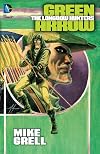
Mike Grell’s Green Arrow: The Longbow Hunters collects all three issues of the story Grell wrote and illustrated with colors by Julia Lacquement and lettering by Ken Bruzenak. The story focuses on an older Oliver Queen as he gets back to the basics of being Green Arrow following a move to Seattle. He investigates a series of slashings while Dinah Lance, the Black Canary, investigates some drug pushers. A new archer appears and begins targeting the powerful men who are driving the drug show more trade. As Oliver investigates, he learns that the drugs are connected to the secret funding of the Contras by men who committed terrible acts when they were in the OSS, later the CIA. Their actions are coming back to haunt them through the unknown archer, dispatched by the Yakuza. Oliver must decide how far he’s willing to go for justice and what he’ll allow others to do to get their own justice. Grell’s story takes Green Arrow from his more high-flying, fun-filled adventures into more gritty territory. In a way, it does for the character in the 1980s what Dennis O’Neil did with the Green Lantern-Green Arrow crossovers of the 1970s. The success of Grell’s reinvention of Green Arrow shaped the character through the late 1980s and into the 1990s. A classic story for a reason and one that fans mustn’t miss in their collections. show less

Access a version of the below that includes illustrations on my blog.
In the late 1980s, it came time to reinvent Blackhawk for the post-Crisis DC universe. This didn't just mean rethinking the continuity, but also rethinking the tone and style. Blackhawk had been a bloody and jingoistic war comic, a goofy sci-fi comic, a superhero comic, a nuanced war comic. What would it be in the 1980s?
The vehicle for this reinvention was a format I really enjoy, and have chronicled a lot on this blog: the show more three-double-length-issue miniseries. Previous examples include Green Arrow: The Longbow Hunters (1987), Black Orchid (1989), Hawkworld (1989), Adam Strange: The Man of Two Worlds (1990), and Twilight (1990-91). These comics tend to be creator-driven, giving a somewhat old-fashioned concept over to a high-profile creator (or creative team), who uses it to tell a single story with more mature themes. In many cases, they became springboards for ongoing series (of the above examples, that's true of all of them except Adam Strange and Twilight), but they weren't necessarily designed to be. I tend to really like these, and I wonder if there's any I've failed to track down at this point.
Blackhawk was given over to Howard Chaykin, who wrote and illustrated the story. (Blackhawk vol. 2 #1 was, in fact, Blackhawk's first #1, fact fans, because the original Blackhawk run confusingly began with issue #9.) Other than the premature existence of an atomic bomb (a common occurrence for the Blackhawks, I guess), the series is devoid of fantastic elements; it's an espionage thriller set during World War II.
The major continuity change is that Chaykin reinvents Blackhawk himself: instead of "Bart Hawk," he's now "Janos Prohaska," thank God. (However, as a Star Trek fan, I find the name kind of jarring.) We just get glimpses of his backstory, but we do learn that he's a former Communist, he flew with some private outfits early in the war, and he established the Blachkawks as an independent but Allies-funded fighting force. (I'll do a post on Blackhawk's post-Crisis continuity once I've read all of the relevant stories, but Chris Miller at The Unauthorized Chronology of the DC Universe suggests that the Mark Evanier–Dan Spiegle run could have largely happened as written prior to this miniseries; that run was set in 1940, compared to this series's 1943.) He's more of a 1980s character in terms of personality, though, sleeping with random women; you can definitely see why Chaykin might have written this series and worked on James Bond.
In terms of continuity, there are a couple other significant changes. One is that, for the first time, all the members of the squadron get last names! Olaf becomes Olaf Friedricksen (and he is relocated from Sweden to Denmark), Stanislaus is Stanislaus Drozdowski, Hendricksen is Ritter Hendricksen (he's from Holland here, which was true in some previous stories, I think, but in others, he was from Germany), Chuck is Carlo Sirianni, Andre is Andre Blanc-Dumont, and "Chop-Chop" keeps the name he was given by Evanier (he's Chinese-American here, not Chinese), Weng Chan (though Blackhawk still calls him "Chop-Chop," unlike in Evanier's series). The other members of the squadron aren't really focused on very much, though, and Stanislaus is killed off in issue #2 to prove the situation is serious.*
The other big change is the introduction of Natalie Reed nee Gurdin. Natalie is someone that Jan knew early in the war, from his Communist days, but instead of leaving the party like he did, she fully embraced it, moving to Russia in a pretty high-profile "defection" of sorts; she reenters his life here, proving herself a bit of a technical wizard by helping the Blackhawks out with their planes and other technologies. In one sequence, she exclaims, "I didn't build these planes so you could run off and get all the glory--I'm coming with you--I'm Lady Blackhawk--case closed..." So much for Zinda Blake?†
Anyway, obviously I could talk about the continuity all day... but how's the actual story? I found it a decent but not outstanding example of the format. Like a lot of 1980s prestige comics, it's hard work. Not in a bad way, I'm just saying that there's a lot of different strands to the story here, and Chaykin moves back and forth between them pretty freely, leaving the reader to do a lot of work to put it all together. There's a big Nazi conspiracy whose members include an old comrade of Jan's, a former English movie actor who now leads a Nazi counterpart to the Blackhawk Squadron, the White Lions, and a U.S. senator who has Jan barred from the country on the basis that he's a Communist and Reba McMahon, a woman who's sexually involved with both Blackhawk and Lord Death. To be honest, it seemed like at times that Chaykin was more interested in all these other characters more than Blackhawk himself, who feels a bit lost in the middle of all of it. I did like Natalie Reed a lot; she seems like a character with a lot of potential that's not totally delivered on here, though I did enjoy her back-and-forth with Jan.
It looks great, of course; Chaykin is one of the medium's best, and in the 1980s, he was arguably at his height, aided by some excellent colors from Steve Oliff.
This hardcover also collects a few other 1980s appearances of the post-Crisis Blackhawks. Chaykin didn't have anything to do with these stories, which are written and illustrated by other creators. The first of them is a Secret Origins issue that gives us the origin Chaykin only hinted at; it's basically the familiar pre-Crisis story but with the new elements of Prohaska's 1980's backstory, given a frame story set shortly after the miniseries. It does establish that the squadron also included character named "Boris" and "Zeg" at one point, but that they were dead by the time of Chaykin's story. (These are character names used as one-offs in early Blackhawk stories from Military Comics. Boris briefly reappeared during Steve Skeates's run.)
The bulk of the second half of the book comprises Blackhawk's appearances in Action Comics, during that title's brief run as a weekly anthology title. There are two eight-part stories and one six-part story, each part being eight pages longs. All three stories are illustrated by Rick Burchett; the first is written by Mike Grell, and the other two Martin Pasko (who would go on to write the Blackhawk ongoing). I had actually read all of these before, when I collected Action Comics Weekly many years ago, but at the time I lacked the context of any other Blackhawk adventures.
These move the new Blackhawks into the postwar era; taking their cues from Chaykin's miniseries, they're all gritty espionage thrillers. Grell's initial story, "Another Fine War," only really features Blackhawk himself, at loose ends after the war, persuaded into helping a woman run down some treasure in the Pacific. I want to note that I've seen people complain Chaykin turned Blackhawk into a lech, but I think that's more Grell than Blackhawk; Chaykin had him sleeping with multiple women, but it's Grell who makes him into a sleeze.
Pasko's two stories bring back the other members of the squadron, including Natalie Reed, as the Blackhawks reconstitute as a supposed courier service (Blackhawk Express) whose real purpose is doing dirty jobs for the newly formed CIA. They're all fun enough, but also hint at bigger and darker concerns, especially with Natalie, who has a child... but one she can't raise herself, since her Communist affiliations mean she can't get back into the U.S. in the era of the Red Scare. Natalie is also a victim of domestic abuse to the extent that she lost an eye; we don't learn anything about the guy in question, but I did find a bit where Jan briefly thinks Olaf to be responsible fairly contrived. I think Pasko is clearly very interested in Natalie (in a way that I don't think Chaykin or Grell were), and I look forward to seeing what he does with the character in the subsequent Blackhawk ongoing.
Burchett's style is certainly cartoonier than Chaykin's, but overall I found that it worked for these quick, action-focused stories, and he's got a strong sense of facial expressions. When the situation gets serious, Burchett does a good job shifting the art to match; there are a number of strong action sequences here. I think like a lot of Action Comcis Weekly creators, Pasko and Burchett struggle a bit with their small canvas, but they probably do better than most.
Lastly, the book contains "The Crash of 88," a story that crossed over a number of Action Comics Weekly's ongoing features: Green Lantern, Black Canary, Superman... and Blackhawk!? It's set in the present day; the Blackhawk presence is Weng Chan, who is now running Blackhawk Express. His plane crashes in a South American dictatorship, and the superheroes eventually turn up to rescue him.
I'm glad it's in this book for completion's sake, but it does read very weirdly after all the much less fantastic material that makes up the rest of the volume! In the letter page to Blackhawk vol. 3 #1, editor Mike Gold promises more "Blackhawk Express" stories set in the present as an ongoing feature, but I don't believe this ever eventuated, though Weng Chan did make a number of appearances during John Ostrander's run on Hawkworld (also edited by Gold).
Overall, I'm very glad this collected edition exists, and impressed at how comprehensive it is. It would have been easy for DC to have collected just the Chaykin material and called it a day! The rest of the volume isn't as distinctive, to be honest, but it is competent, and it's nice to have it more readily available than back issues of Action Comics Weekly. A similarly sized second volume would fit the entire Blackhawk volume 3 ongoing, I think, and would make a great companion to this one... but without a high-profile creator like Howard Chaykin, it probably is unlikely to ever appear. Maybe it can get a DC Finest edition sometime?
The Blackhawks: « Previous in sequence
* The DC wiki notes that Stanislaus does go on to appear in some later postwar Blackhawk stories, very much alive, and ascribes the change to the Crisis in Time.
† Except that, as a reader of Birds of Prey, I know she also continues to appear post-Crisis. I guess I shall see what explanation, if any, is offered for this. Blood & Iron does include all of the Blackhawk Who's Who pages, which include both one about the Blackhawk Squadron with Natalie on it and another about Zinda (complete with a beautiful Brian Bolland illustration), with no noting of the apparent contradiction. show less
In the late 1980s, it came time to reinvent Blackhawk for the post-Crisis DC universe. This didn't just mean rethinking the continuity, but also rethinking the tone and style. Blackhawk had been a bloody and jingoistic war comic, a goofy sci-fi comic, a superhero comic, a nuanced war comic. What would it be in the 1980s?
The vehicle for this reinvention was a format I really enjoy, and have chronicled a lot on this blog: the show more three-double-length-issue miniseries. Previous examples include Green Arrow: The Longbow Hunters (1987), Black Orchid (1989), Hawkworld (1989), Adam Strange: The Man of Two Worlds (1990), and Twilight (1990-91). These comics tend to be creator-driven, giving a somewhat old-fashioned concept over to a high-profile creator (or creative team), who uses it to tell a single story with more mature themes. In many cases, they became springboards for ongoing series (of the above examples, that's true of all of them except Adam Strange and Twilight), but they weren't necessarily designed to be. I tend to really like these, and I wonder if there's any I've failed to track down at this point.
Blackhawk was given over to Howard Chaykin, who wrote and illustrated the story. (Blackhawk vol. 2 #1 was, in fact, Blackhawk's first #1, fact fans, because the original Blackhawk run confusingly began with issue #9.) Other than the premature existence of an atomic bomb (a common occurrence for the Blackhawks, I guess), the series is devoid of fantastic elements; it's an espionage thriller set during World War II.
The major continuity change is that Chaykin reinvents Blackhawk himself: instead of "Bart Hawk," he's now "Janos Prohaska," thank God. (However, as a Star Trek fan, I find the name kind of jarring.) We just get glimpses of his backstory, but we do learn that he's a former Communist, he flew with some private outfits early in the war, and he established the Blachkawks as an independent but Allies-funded fighting force. (I'll do a post on Blackhawk's post-Crisis continuity once I've read all of the relevant stories, but Chris Miller at The Unauthorized Chronology of the DC Universe suggests that the Mark Evanier–Dan Spiegle run could have largely happened as written prior to this miniseries; that run was set in 1940, compared to this series's 1943.) He's more of a 1980s character in terms of personality, though, sleeping with random women; you can definitely see why Chaykin might have written this series and worked on James Bond.
In terms of continuity, there are a couple other significant changes. One is that, for the first time, all the members of the squadron get last names! Olaf becomes Olaf Friedricksen (and he is relocated from Sweden to Denmark), Stanislaus is Stanislaus Drozdowski, Hendricksen is Ritter Hendricksen (he's from Holland here, which was true in some previous stories, I think, but in others, he was from Germany), Chuck is Carlo Sirianni, Andre is Andre Blanc-Dumont, and "Chop-Chop" keeps the name he was given by Evanier (he's Chinese-American here, not Chinese), Weng Chan (though Blackhawk still calls him "Chop-Chop," unlike in Evanier's series). The other members of the squadron aren't really focused on very much, though, and Stanislaus is killed off in issue #2 to prove the situation is serious.*
The other big change is the introduction of Natalie Reed nee Gurdin. Natalie is someone that Jan knew early in the war, from his Communist days, but instead of leaving the party like he did, she fully embraced it, moving to Russia in a pretty high-profile "defection" of sorts; she reenters his life here, proving herself a bit of a technical wizard by helping the Blackhawks out with their planes and other technologies. In one sequence, she exclaims, "I didn't build these planes so you could run off and get all the glory--I'm coming with you--I'm Lady Blackhawk--case closed..." So much for Zinda Blake?†
Anyway, obviously I could talk about the continuity all day... but how's the actual story? I found it a decent but not outstanding example of the format. Like a lot of 1980s prestige comics, it's hard work. Not in a bad way, I'm just saying that there's a lot of different strands to the story here, and Chaykin moves back and forth between them pretty freely, leaving the reader to do a lot of work to put it all together. There's a big Nazi conspiracy whose members include an old comrade of Jan's, a former English movie actor who now leads a Nazi counterpart to the Blackhawk Squadron, the White Lions, and a U.S. senator who has Jan barred from the country on the basis that he's a Communist and Reba McMahon, a woman who's sexually involved with both Blackhawk and Lord Death. To be honest, it seemed like at times that Chaykin was more interested in all these other characters more than Blackhawk himself, who feels a bit lost in the middle of all of it. I did like Natalie Reed a lot; she seems like a character with a lot of potential that's not totally delivered on here, though I did enjoy her back-and-forth with Jan.
It looks great, of course; Chaykin is one of the medium's best, and in the 1980s, he was arguably at his height, aided by some excellent colors from Steve Oliff.
This hardcover also collects a few other 1980s appearances of the post-Crisis Blackhawks. Chaykin didn't have anything to do with these stories, which are written and illustrated by other creators. The first of them is a Secret Origins issue that gives us the origin Chaykin only hinted at; it's basically the familiar pre-Crisis story but with the new elements of Prohaska's 1980's backstory, given a frame story set shortly after the miniseries. It does establish that the squadron also included character named "Boris" and "Zeg" at one point, but that they were dead by the time of Chaykin's story. (These are character names used as one-offs in early Blackhawk stories from Military Comics. Boris briefly reappeared during Steve Skeates's run.)
The bulk of the second half of the book comprises Blackhawk's appearances in Action Comics, during that title's brief run as a weekly anthology title. There are two eight-part stories and one six-part story, each part being eight pages longs. All three stories are illustrated by Rick Burchett; the first is written by Mike Grell, and the other two Martin Pasko (who would go on to write the Blackhawk ongoing). I had actually read all of these before, when I collected Action Comics Weekly many years ago, but at the time I lacked the context of any other Blackhawk adventures.
These move the new Blackhawks into the postwar era; taking their cues from Chaykin's miniseries, they're all gritty espionage thrillers. Grell's initial story, "Another Fine War," only really features Blackhawk himself, at loose ends after the war, persuaded into helping a woman run down some treasure in the Pacific. I want to note that I've seen people complain Chaykin turned Blackhawk into a lech, but I think that's more Grell than Blackhawk; Chaykin had him sleeping with multiple women, but it's Grell who makes him into a sleeze.
Pasko's two stories bring back the other members of the squadron, including Natalie Reed, as the Blackhawks reconstitute as a supposed courier service (Blackhawk Express) whose real purpose is doing dirty jobs for the newly formed CIA. They're all fun enough, but also hint at bigger and darker concerns, especially with Natalie, who has a child... but one she can't raise herself, since her Communist affiliations mean she can't get back into the U.S. in the era of the Red Scare. Natalie is also a victim of domestic abuse to the extent that she lost an eye; we don't learn anything about the guy in question, but I did find a bit where Jan briefly thinks Olaf to be responsible fairly contrived. I think Pasko is clearly very interested in Natalie (in a way that I don't think Chaykin or Grell were), and I look forward to seeing what he does with the character in the subsequent Blackhawk ongoing.
Burchett's style is certainly cartoonier than Chaykin's, but overall I found that it worked for these quick, action-focused stories, and he's got a strong sense of facial expressions. When the situation gets serious, Burchett does a good job shifting the art to match; there are a number of strong action sequences here. I think like a lot of Action Comcis Weekly creators, Pasko and Burchett struggle a bit with their small canvas, but they probably do better than most.
Lastly, the book contains "The Crash of 88," a story that crossed over a number of Action Comics Weekly's ongoing features: Green Lantern, Black Canary, Superman... and Blackhawk!? It's set in the present day; the Blackhawk presence is Weng Chan, who is now running Blackhawk Express. His plane crashes in a South American dictatorship, and the superheroes eventually turn up to rescue him.
I'm glad it's in this book for completion's sake, but it does read very weirdly after all the much less fantastic material that makes up the rest of the volume! In the letter page to Blackhawk vol. 3 #1, editor Mike Gold promises more "Blackhawk Express" stories set in the present as an ongoing feature, but I don't believe this ever eventuated, though Weng Chan did make a number of appearances during John Ostrander's run on Hawkworld (also edited by Gold).
Overall, I'm very glad this collected edition exists, and impressed at how comprehensive it is. It would have been easy for DC to have collected just the Chaykin material and called it a day! The rest of the volume isn't as distinctive, to be honest, but it is competent, and it's nice to have it more readily available than back issues of Action Comics Weekly. A similarly sized second volume would fit the entire Blackhawk volume 3 ongoing, I think, and would make a great companion to this one... but without a high-profile creator like Howard Chaykin, it probably is unlikely to ever appear. Maybe it can get a DC Finest edition sometime?
The Blackhawks: « Previous in sequence
* The DC wiki notes that Stanislaus does go on to appear in some later postwar Blackhawk stories, very much alive, and ascribes the change to the Crisis in Time.
† Except that, as a reader of Birds of Prey, I know she also continues to appear post-Crisis. I guess I shall see what explanation, if any, is offered for this. Blood & Iron does include all of the Blackhawk Who's Who pages, which include both one about the Blackhawk Squadron with Natalie on it and another about Zinda (complete with a beautiful Brian Bolland illustration), with no noting of the apparent contradiction. show less
Lists
Awards

You May Also Like


Associated Authors
Statistics
- Works
- 349
- Also by
- 16
- Members
- 3,723
- Popularity
- #6,805
- Rating
- 3.6
- Reviews
- 94
- ISBNs
- 116
- Languages
- 6
- Favorited
- 4