
Rafael Medoff
Author of A Race Against Death: Peter Bergson, America, and the Holocaust
About the Author
Rafael Medoff is founding director of the David S. Wyman Institute for Holocaust Studies in Washington, D.C.
Works by Rafael Medoff
The Jews Should Keep Quiet: Franklin D. Roosevelt, Rabbi Stephen S. Wise, and the Holocaust (2019) 32 copies, 2 reviews
Militant Zionism in America: The Rise and Impact of the Jabotinsky Movement in the United States, 1926-1948 (Judaic Studies Series) (2002) 15 copies
Blowing the Whistle on Genocide: Josiah E. DuBois, Jr. and the Struggle for a U.S. Response to the Holocaust (Shofar Supplements in Jewish Studies) (2008) 8 copies, 1 review
Herbert Hoover and the Jews: The Origins of the "Jewish Vote" and Bipartisan Support for Israel (2012) 7 copies
Associated Works
Tagged
Common Knowledge
- Gender
- male
Members
Reviews
The Jews Should Keep Quiet: Franklin D. Roosevelt, Rabbi Stephen S. Wise, and the Holocaust by Rafael Medoff

Based on recently discovered documents, The Jews Should Keep Quiet reassesses the hows and whys behind the Franklin D. Roosevelt administration’s fateful policies during the Holocaust. Rafael Medoff delves into difficult truths: With FDR’s consent, the administration deliberately suppressed European immigration far below the limits set by U.S. law. His administration also refused to admit Jewish refugees to the U.S. Virgin Islands, dismissed proposals to use empty Liberty ships returning show more from Europe to carry refugees, and rejected pleas to drop bombs on the railways leading to Auschwitz, even while American planes were bombing targets only a few miles away—actions that would not have conflicted with the larger goal of winning the war. show less
The Jews Should Keep Quiet: Franklin D. Roosevelt, Rabbi Stephen S. Wise, and the Holocaust by Rafael Medoff
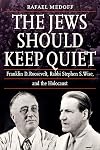
I just finished reading The Jews Should Keep Quiet: Franklin D. Roosevelt, Rabbi Stephen S. Wise and the Holocaust, by Rafael Medoff. All I can say is "wow." This book earns a definite Goodreads "Five Star." With apologies to the readership, large chunks of this review may find its way into related postings. Medoff's tour d' force is of a similar vein to While Six Million Died: A Chronicle of American Apathy by Arthur D. Morse. About two years ago I read 1944: FDR and the Year That Changed show more History by Jay Winik. This trilogy of books debunks the premise that FDR was any friend of the Jews, or had any particular principals other than a keen regard for his own political well-being.
FDR was elected with much Jewish support. The Jews' numbers were never important; their vote in electorally crucial states such as New York was. More important numerically was the nativist portions of non-urban America. However, Jews did play a leading role in media and academia, so arousing active Jewish opposition was a must to avoid. There were strenuous efforts to keep alarming reports by such people as Jan Karski and Rudolf Vrba from wide circulation. Those reports concerned some gruesome details of the slaughter as it unfolded.
Also mentioned in the book is his views of Japanese-Americans where he states:
FDR projected an image of compassionate caring. The reality, as shown in this book, was anything but.
Where this book goes further than the Morse or Winik books is his depiction of a leading figure in Jewish life at the time, Rabbi Stephen S. Wise. Rabbi Wise, a close political ally of FDR, is described by his rival, Rabbi Hillel Silver of being at worst a "Stadtlan" and his activities as a "shtadlanuth." P.261 of book. The term we would used is "useful idiot " (a phrase appearing nowhere in the book). Rabbi Wise was, according to the author, a victim of FDR's charm, and was manipulated to keep the U.S. Jewish population silent as 2,000,000, then 4,000,000, and finally 6,000,000 Jews were massacred. Other prominent Jewish figures such as Joseph Proskauer and Samuel Rosenman come in for similar criticism of "going along to get along." The book's conclusion addresses the question as to whether a more assertive posture would have done any good. Alternative history is not mine, or this author's field, but the implication is that given FDR's desire for Jewish and history's approval it might have. show less
FDR was elected with much Jewish support. The Jews' numbers were never important; their vote in electorally crucial states such as New York was. More important numerically was the nativist portions of non-urban America. However, Jews did play a leading role in media and academia, so arousing active Jewish opposition was a must to avoid. There were strenuous efforts to keep alarming reports by such people as Jan Karski and Rudolf Vrba from wide circulation. Those reports concerned some gruesome details of the slaughter as it unfolded.
Also mentioned in the book is his views of Japanese-Americans where he states:
Californians have properly objected [to Japanese immigration] on the sound basic ground that Japanese immigrants are not capable of assimilation into the American population.....Anyone who has traveled in the Far East knows that the mingling of Asiatic blood with European or American blood produces, in nine cases out of ten, the most unfortunate results.
FDR projected an image of compassionate caring. The reality, as shown in this book, was anything but.
Where this book goes further than the Morse or Winik books is his depiction of a leading figure in Jewish life at the time, Rabbi Stephen S. Wise. Rabbi Wise, a close political ally of FDR, is described by his rival, Rabbi Hillel Silver of being at worst a "Stadtlan" and his activities as a "shtadlanuth." P.261 of book. The term we would used is "useful idiot " (a phrase appearing nowhere in the book). Rabbi Wise was, according to the author, a victim of FDR's charm, and was manipulated to keep the U.S. Jewish population silent as 2,000,000, then 4,000,000, and finally 6,000,000 Jews were massacred. Other prominent Jewish figures such as Joseph Proskauer and Samuel Rosenman come in for similar criticism of "going along to get along." The book's conclusion addresses the question as to whether a more assertive posture would have done any good. Alternative history is not mine, or this author's field, but the implication is that given FDR's desire for Jewish and history's approval it might have. show less
Blowing the Whistle on Genocide: Josiah E. DuBois, Jr. and the Struggle for a U.S. Response to the Holocaust (Shofar Supplements in Jewish Studies) by Rafael Medoff
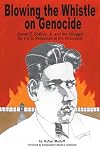
This book is an invaluable resource for students and researchers of America's response to the Holocaust. It contains rare transcripts of interviews with members of the Treasury Department in FDR's administration. These interviews are put in context for the reader by Medoff's short introductions to each chapter. The interviews reveal that thanks to members of the Treasury, pressure was placed on FDR to create an agency to help the Jews that would not be under the jurisdiction of the State show more Department.
Josiah DuBois was an important member of this team and the author of the report entitled "The Acquiescence of this Government in the Murder of the Jews," which he presented to his boss, Secretary of the Treasury Henry Morgenthau. The report, reprinted in this volume, shows State Department officials deliberately obstructed Jewish rescue. Thanks to a Jewish political action committee led by Peter Bergson, Congress was getting ready to pressure FDR to do something. Morgenthau used his good relations with FDR to convince him that DuBois' report was going to create a scandal, though he noted "the tide was with me" thanks to the attitude in Congress.
The book goes on to describe the work of the War Refugee Board--the new government agency created by FDR to help Jewish refugees--in the words of those who ran it. Many of these men were Treasury Department employees and few were Jewish. Since many of the interviewees have since passed away, having their comments on their work in this short volume is priceless. If you want to know how and why America finally decided to help Jews during the Holocaust, read this book. show less
Josiah DuBois was an important member of this team and the author of the report entitled "The Acquiescence of this Government in the Murder of the Jews," which he presented to his boss, Secretary of the Treasury Henry Morgenthau. The report, reprinted in this volume, shows State Department officials deliberately obstructed Jewish rescue. Thanks to a Jewish political action committee led by Peter Bergson, Congress was getting ready to pressure FDR to do something. Morgenthau used his good relations with FDR to convince him that DuBois' report was going to create a scandal, though he noted "the tide was with me" thanks to the attitude in Congress.
The book goes on to describe the work of the War Refugee Board--the new government agency created by FDR to help Jewish refugees--in the words of those who ran it. Many of these men were Treasury Department employees and few were Jewish. Since many of the interviewees have since passed away, having their comments on their work in this short volume is priceless. If you want to know how and why America finally decided to help Jews during the Holocaust, read this book. show less
I liked Stan Lee's foreword more than anything in this collection. The rest is good too. Especially the first story.
You May Also Like


Associated Authors
Statistics
- Works
- 32
- Also by
- 2
- Members
- 294
- Popularity
- #79,673
- Rating
- 4.1
- Reviews
- 8
- ISBNs
- 54