
Ann Malaspina
Author of Touch the Sky: Alice Coachman, Olympic High Jumper
About the Author
Ann Malaspina has written many books for young people, including Chelsea House's The Underground Railroad: The Journey to Freedom. She began her career as a newspaper reporter in Boston. Malaspina likes to read newspapers with her family in Northern New Jersey.
Series
Works by Ann Malaspina
Phillis Sings Out Freedom : the Story of George Washington and Phillis Wheatley (2010) 35 copies, 1 review
Tagged
Common Knowledge
- Gender
- female
- Education
- Kenyon College (BA | 1978)
Vermont College of Fine Arts (MFA, Writing for Children & Young Adults) - Short biography
- [excerpt from author's website]
I'm the author of over 30 books for children and teens. I write about the environment, history, social justice, and people who make a difference. My books have been honored with the Asian/Pacific American Library Association Award for Literature ( Picture Book), Amelia Bloomer Top Ten List, Junior Library Guild Selection, SCBWI Martha Weston Grant, Paterson Prize for Books for Young People (Picture Book), and more.
I have an MFA in Writing for Children and Young Adults from Vermont College of Fine Arts. The college is on a hill in Montpelier, the state capital, where the temperature is way below zero in January. The only way to keep warm is to write faster.
Members
Reviews
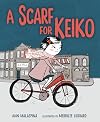
A Scarf for Keiko is set in early 1942, when FDR has just issued Executive Order 9066 authorizing the internment of Japanese Americans. Sam, a Jewish boy who is neighbors and classmates with Keiko, is struggling with worry about his brother Mike fighting oversees and learning how to knit at school so he can support the war effort. Keiko is a star knitter who has offered to help Sam, but because of the growing resentment and hostility toward Japanese Americans, he brushes her off and begins show more to ignore her. When Sam's mom learns from Keiko's parents that they are being interned in the California deserts, Sam feels badly about the way he's been treating Keiko. It's not long before Keiko and her family are gone. Left behind is Keiko's bike, a pair of knitted socks, and a note for Sam saying that she had made the socks for Mike and that Sam can borrow her bike while she is away. Determined to show Keiko his appreciation, he works hard to knit a simple scarf to send to her.
As a knitter and history enthusiast, this book checked so many boxes for me. There is no sugar-coating to be found in this book, but the story is quite sweet. This is a historically accurate representation of the early years of WWII in the united states. Characters struggle with the complexity and trauma of the war while demonstrating the power of human kindness. Students will find countless messages to be taken away from this story. The illustrations are simple, charming, and incomportate period-approriate fashion. This book is a 5 out of 5 for me! show less
As a knitter and history enthusiast, this book checked so many boxes for me. There is no sugar-coating to be found in this book, but the story is quite sweet. This is a historically accurate representation of the early years of WWII in the united states. Characters struggle with the complexity and trauma of the war while demonstrating the power of human kindness. Students will find countless messages to be taken away from this story. The illustrations are simple, charming, and incomportate period-approriate fashion. This book is a 5 out of 5 for me! show less
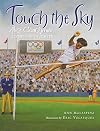
Alice Coachman was the first African American woman to win a gold medal at the Olympics, when she won the high jump (setting a new record) in 1948 at age 24.
Touch the Sky: Alice Coachman, Olympic High Jumper, written by Ann Malaspina and richly illustrated by Eric Velasquez with oil paintings, is for younger readers. Pictures of Alice running through the fields near her house are accompanied with rhythmic simple lines:
"Alice Coachman raced
down the dirt road,
bare feet flying,
long legs show more spinning,
braids flapping
in the wind…."
Still, the text does not shy away from the obstacles Alice faced:
"Fields shut.
Tracks shut.
Doors shut
to girls like Alice."
But Ann Malaspina does not paint a depressing picture. Instead, she focuses on Alice’s hard work, talent, and the good times Alice had, such as this accounting of life on her high school track team:
"Traveling wasn’t easy for the Golden Tigeretts.
Whites-only restaurants shut.
Restrooms shut
to girls like them.
They ate supper on the roadside.
After dark, they hurried on.
Together, the team held strong.
Laughing. Teasing. Having fun.
When they got to the meets,
all that mattered was
sprinting,
throwing,
running,
jumping.
No one jumped higher than Alice.
National champion.
Shining star."
The story ends after the 1948 Olympics, when “Alice had finally touched the sky.”
In the Afterword, there are terrific pictures of Alice and her teammates, an Author’s Note, and a Bibliography. show less
Touch the Sky: Alice Coachman, Olympic High Jumper, written by Ann Malaspina and richly illustrated by Eric Velasquez with oil paintings, is for younger readers. Pictures of Alice running through the fields near her house are accompanied with rhythmic simple lines:
"Alice Coachman raced
down the dirt road,
bare feet flying,
long legs show more spinning,
braids flapping
in the wind…."
Still, the text does not shy away from the obstacles Alice faced:
"Fields shut.
Tracks shut.
Doors shut
to girls like Alice."
But Ann Malaspina does not paint a depressing picture. Instead, she focuses on Alice’s hard work, talent, and the good times Alice had, such as this accounting of life on her high school track team:
"Traveling wasn’t easy for the Golden Tigeretts.
Whites-only restaurants shut.
Restrooms shut
to girls like them.
They ate supper on the roadside.
After dark, they hurried on.
Together, the team held strong.
Laughing. Teasing. Having fun.
When they got to the meets,
all that mattered was
sprinting,
throwing,
running,
jumping.
No one jumped higher than Alice.
National champion.
Shining star."
The story ends after the 1948 Olympics, when “Alice had finally touched the sky.”
In the Afterword, there are terrific pictures of Alice and her teammates, an Author’s Note, and a Bibliography. show less
A Scarf for Keiko tells the story of Sam, a young boy living in Los Angeles during World War II. He is trying to knit scarves for his brother and soldiers like him fighting abroad but can't get the hang of it. His classmate and neighbor, Keiko, offers to help when he gets stuck, but Sam is hesitant to accept help or even talk to her because she is Japanese-American. He watches Keiko be mistreated and, eventually, forced from her home. Through this, he sees how wrong such treatment is and show more works hard to show he cares. The story is touching, though we don't get to see Keiko as a fully developed character as we only see her through Sam's eyes. show less
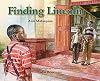
Its 1952 in Alabama and Louis wants nothing more but to write a paper about when Abraham Lincoln was a little boy. The problem is its 1952 and Louis is not allowed to enter or check out books from the public library because of the sign that reads “white-only”. Mama tries to help by taking him to the church library, but they don’t have any books about Abraham Lincoln. Louis takes a chance and goes to the public library anyway. Louis is made to feel unwelcome by the people in the library show more and is escorted out of the library, but one of the librarians tells him to return the next day after five. When Louis returns the librarian helps him find a book and allows him to check it out. Louis writes his report and dreams of getting more books from the library.
The illustrations in the books depict how eager Louis was just to be able to enter the library to count the books. It seemed like such a large amount because Louis was denied access to such a wide variety of books. The library is painted with its doors open suggesting that everyone is invited in but right by the entrance is a small sign that says “whites only.” In the scene where Mama and Louis are in the church library, it is clear how small the selection of books offered to him is. The best illustration is the scene when Louis finally has the courage to enter the library. The reader can clearly see how frighten Louis is and instead of appearing helpful the people in the library are angry at him. I think on this page I would ask a child to imagine people angry with you because you walk into a library to check out a book. I think this would truly drive home the point of how absurd the laws of society were at this time.
The book gives an overall sense of the life of people during this time period. Through the librarian, the book also addresses how some people helped African Americans in ways that could have caused negative consequences for themselves. show less
The illustrations in the books depict how eager Louis was just to be able to enter the library to count the books. It seemed like such a large amount because Louis was denied access to such a wide variety of books. The library is painted with its doors open suggesting that everyone is invited in but right by the entrance is a small sign that says “whites only.” In the scene where Mama and Louis are in the church library, it is clear how small the selection of books offered to him is. The best illustration is the scene when Louis finally has the courage to enter the library. The reader can clearly see how frighten Louis is and instead of appearing helpful the people in the library are angry at him. I think on this page I would ask a child to imagine people angry with you because you walk into a library to check out a book. I think this would truly drive home the point of how absurd the laws of society were at this time.
The book gives an overall sense of the life of people during this time period. Through the librarian, the book also addresses how some people helped African Americans in ways that could have caused negative consequences for themselves. show less
Lists
Awards


You May Also Like


Associated Authors
Statistics
- Works
- 44
- Members
- 690
- Popularity
- #36,665
- Rating
- 4.3
- Reviews
- 40
- ISBNs
- 139