
Ruth Kinna
Author of The Government of No One: The Theory and Practice of Anarchism
About the Author
Ruth Kinna is Professor of Political Theory at Loughborough University. She has published widely on the history of anarchist ideas and on nineteenth-century socialist and anarchist thought.
Series
Works by Ruth Kinna
Errico Malatesta 3 copies
Michael Bakunin 3 copies
Voltairine De Cleyre 2 copies
William Godwin 2 copies
Great Anarchists 5, Oscar Wilde 2 copies
Lucy Parsons 2 copies
Pierre-joseph Proudhon 2 copies
Max Stirner 2 copies
Louise Michel 2 copies
Oscar Wilde 2 copies
Anarchism and Non-Domination 2 copies
When Kropotkin Met Lenin 1 copy
Utopianism and Prefiguration 1 copy
Peter Kropotkin 1 copy
Associated Works
D. I. Y. Culture 10: The Anarchist Revolition - Then and Now — Contributor, some editions — 1 copy, 1 review
Tagged
Common Knowledge
- Gender
- female
- Nationality
- United Kingdom
- Associated Place (for map)
- United Kingdom
Members
Reviews
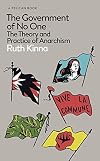
This book by Ruth Kinna is good, but not perfect. It is a good place to start if you want to understand the historical antecedents of anarchic thought. It appears, however, that most authors who developed and propagated anarchic thought lived in Europe towards the end of the 19th century.
Ruth Kinna has focussed, therefore, on these authors. There are some significant points that most people forget and which she points out:
1. Most anarchists are doomed to failure or do not fully achieve show more their ends
2. Anarchism does not equate with violence.
While she has done an excellent job in analyzing people like Tolstoy or Kropotin she has not paid enough attention to modern anarchists. Political and social contexts have changed since the 19th century, and the world is an interconnected place. There are anarchists everywhere.
She ought to write a follow-up book that brings anarchic thought into the current context. show less
Ruth Kinna has focussed, therefore, on these authors. There are some significant points that most people forget and which she points out:
1. Most anarchists are doomed to failure or do not fully achieve show more their ends
2. Anarchism does not equate with violence.
While she has done an excellent job in analyzing people like Tolstoy or Kropotin she has not paid enough attention to modern anarchists. Political and social contexts have changed since the 19th century, and the world is an interconnected place. There are anarchists everywhere.
She ought to write a follow-up book that brings anarchic thought into the current context. show less

How to summarise a book which is itself a summary of a vast body of thought? Probably it's not possible, but here goes. The book spends a lot of time on what anarchism is not. This is understandable since it has been so frequently labeled by its enemies and misunderstood by the general public. So anarchy is not disorder, chaos, lack of government. It is instead lack of hierarchy. It is organising, but by voluntary participation rather than violence and fear. This is of course difficult to show more do, especially because we have become so used to the state and dependent on it for support and protection, so getting rid of it is hard even to imagine. But anarchism entails an utter rejection of the state, defined as the entity holding a monopoly on violence in a particular territory. Government would instead be based on grassroots organisations, local decision-making, with power dispersed as widely as possible instead of being concentrated among just a few people at the top.
The book categorises the various types of anarchists: anarcho-syndicalists, anarcha-feminists, primitivists, eco-anarchists, etc. Also lots on the various proposed forms of organisation, most of which involve some version of local communities making decisions but also linked together in a federated structure to allow coordination across wider areas.
The final section is on strategies for transforming society, from protest, strikes and gradualism through to assassinations and guerilla warfare. This section was more depressing, since it was more a catalogue of failed tactics than anything else. Overall I got a great taste of anarchism, its ideas and main thinkers, and most of all there were very detailed sources - I now have a long, long anarchist wishlist, along with a ton of websites to visit. show less
The book categorises the various types of anarchists: anarcho-syndicalists, anarcha-feminists, primitivists, eco-anarchists, etc. Also lots on the various proposed forms of organisation, most of which involve some version of local communities making decisions but also linked together in a federated structure to allow coordination across wider areas.
The final section is on strategies for transforming society, from protest, strikes and gradualism through to assassinations and guerilla warfare. This section was more depressing, since it was more a catalogue of failed tactics than anything else. Overall I got a great taste of anarchism, its ideas and main thinkers, and most of all there were very detailed sources - I now have a long, long anarchist wishlist, along with a ton of websites to visit. show less
The title should be: Beginner's guide to the history of anarchism. An important distinction I think. I wanted to learn something about anarchism but I learned more from reading wikipedia for 10 minutes. I assume this was some student's end term paper. The sudden and jarring insert in the middle discussing some obscure film was just bizarre and it's the only thing that kept me scratching my head.
Lists
Awards


You May Also Like


Statistics
- Works
- 58
- Also by
- 1
- Members
- 339
- Popularity
- #70,284
- Rating
- 3.6
- Reviews
- 3
- ISBNs
- 47
- Languages
- 1